Siada Opens RAK Sovereign AI Data Centre Without Naming GPU Count
IOPn and Innovation City said Siada has opened access to a Ras Al Khaimah sovereign AI data centre powered by NVIDIA B200 GPUs, with GPU count, power capacity, pricing and named customers still outside the public record.
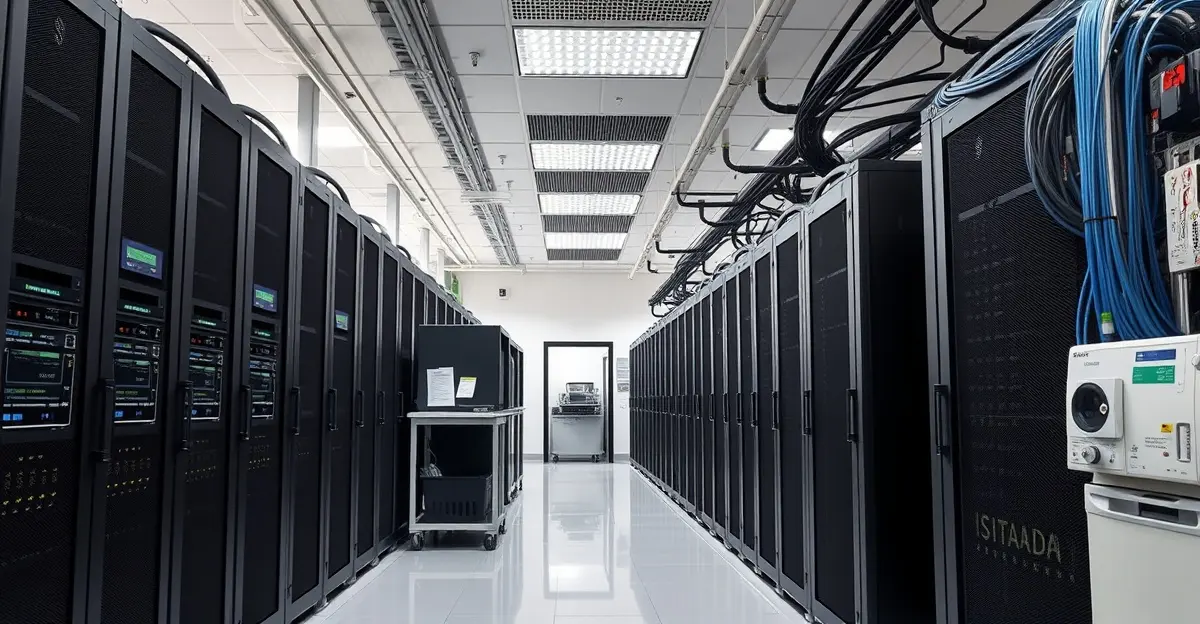
Siada Says RAK AI Data Centre Is Live On NVIDIA B200 GPUs
IOPn's enterprise unit Siada and Innovation City have announced live access to sovereign AI compute in Ras Al Khaimah, with the companies saying the deployment uses NVIDIA B200 GPUs inside the Ras Al Khaimah free zone.
The announcement described the site as the UAE's first sovereign AI data centre, while the public record still lacks GPU count, power capacity, customer names or commercial pricing.
The Ras Al Khaimah sovereign AI data centre launch gives companies in the Innovation City ecosystem three routes to compute: hourly access, reserved long-term capacity and fully managed on-premises environments.
IOPn and Innovation City said Siada is the builder, owner and operator of the infrastructure, while the free zone is the first launch ecosystem for the deployment.
Innovation City Companies Get Hourly And Reserved Compute Access
The companies said the infrastructure is designed for AI builders, enterprises and regulated businesses that want high-performance compute while keeping workloads and data under UAE jurisdiction.
That jurisdictional claim is central to the product because IOPn and Innovation City frame sovereign compute as infrastructure control, not only as a compliance label.
Free-zone chief executive Paul Dawalibi said the partnership is meant to solve infrastructure pain points for technology and AI companies operating in the free zone.
His comments positioned the free zone as more than a licensing and company-formation venue, because the deployment adds local compute access to the business setup offer.
The stated model covers three operating choices.
Companies can use the facility by the hour, reserve longer-term capacity, or ask Siada to operate managed environments where models run in isolated sovereign infrastructure.
The announcement did not specify contract minimums, service-level guarantees, cloud-management software, or whether companies outside the free zone can buy the same capacity.
IOPn Frames Siada Around Data Control And Infrastructure Choice
IOPn chief executive Mojtaba Asadian said sovereignty is about who decides how data, identity and intelligence are handled, not only where data is stored.
He said IOPn built Siada so people, businesses and governments can choose infrastructure that keeps control with the institutions using it.
Those claims remain company-owned.
Independent security audit, data-residency certification, government customer reference and third-party benchmark evidence for the B200 deployment remain outside the report.
The regulated sectors with committed workloads at the Ras Al Khaimah site are also outside the public account.
The free zone presents the deployment as part of its positioning across artificial intelligence, Web3, gaming, robotics and healthtech.
For regulated companies in those fields, the operational distinction is whether model training, inference and data processing can remain inside a UAE-governed environment rather than moving to offshore infrastructure.
Ras Al Khaimah Free Zone Pushes Beyond Licensing
The project gives Ras Al Khaimah's technology free-zone proposition a physical infrastructure layer.
The operator has been building its model around new-economy sectors, and the deployment adds local compute to the usual free-zone ingredients of licensing, incorporation and investor access.
Unlock Blockchain reported that the facility is already live and operational, while the public record still leaves a go-live customer list and future expansion timetable outside the public record.
Rack count, megawatt capacity, water or cooling details, network providers, uptime targets and the number of NVIDIA B200 GPUs installed at the site remain outside the public record.
Companies evaluating sovereign AI capacity still need availability, price and reliability evidence against their workloads.
Named customers, GPU quantity, power capacity, pricing, expansion dates, and independent security and performance validation remain outside the public record.