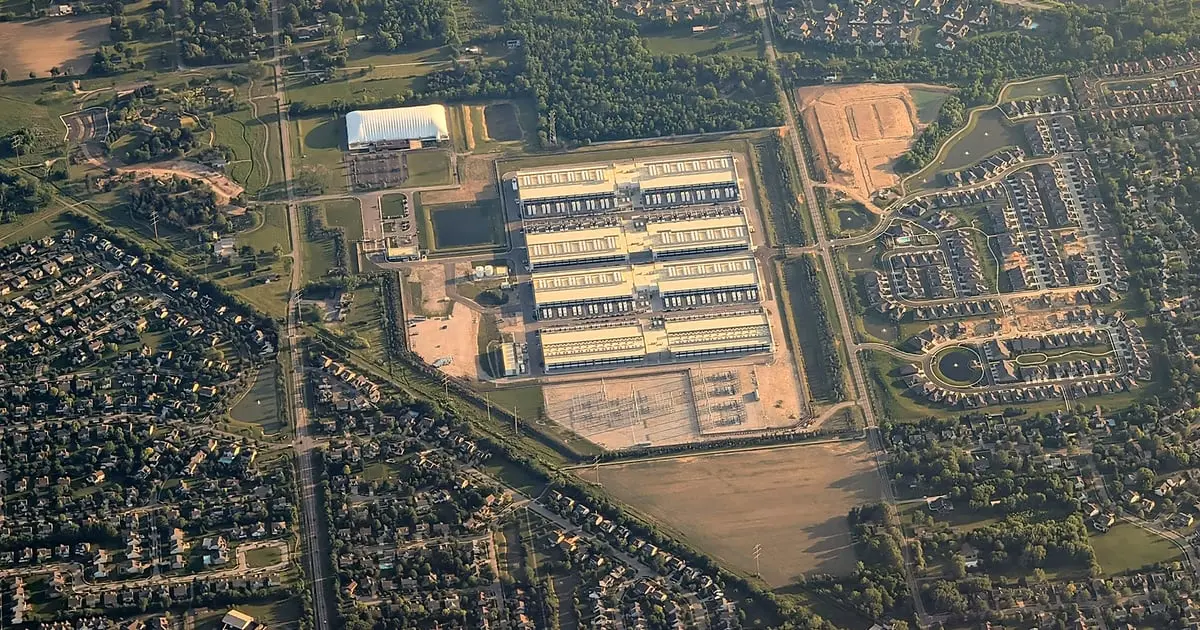
PJM Plan Makes AI Data Centres Bring Power Or Accept Curtailment
Data Center Knowledge reported that PJM's proposed IRAS framework would separate grid connection from firm service for new AI-scale loads, pushing data centre developers to bring capacity, contract bilaterally or accept curtailment during shortages.

Grid access is starting to look less like a guaranteed power promise for AI data centre campuses in the eastern United States: Data Center Knowledge reported that PJM Interconnection is preparing rules that would require many new large electricity users to back their load with capacity or accept curtailment when supply is tight.
The proposal puts a new condition in front of hyperscale growth.
A campus may be physically connected, yet still fall short of the reliability treatment that existing customers receive unless its developer can point to enough generation, contracted capacity or flexible demand to cover the load it wants to place on the system.
For cloud builders, that is a material shift in project design.
Power can no longer sit at the end of the planning chain after land, fiber, cooling equipment and server orders.
The grid operator is asking whether a new load has a credible supply position before it receives the economics and operating assumptions attached to firm service.
Firm service becomes a capacity test
PJM's board approved the framework on July 27 and plans to send it to the Federal Energy Regulatory Commission.
The grid operator coordinates wholesale power across 13 states and the District of Columbia, so the filing will be watched beyond one regional market.
The reliability backdrop is severe enough to explain the move.
PJM expects roughly 70GW of additional large-load demand by 2038.
At the same time, about 15GW of generation has left the system since 2022, and recent capacity auction results have underscored how thin the reserve picture has become.
AI data centres sit at the centre of that tension because their loads can arrive in large blocks and cluster around transmission-constrained sites.
Under the proposal, a developer seeking the same firm-service footing as legacy customers would need to bring supply, contract for it or accept a more interruptible position until adequate resources are available.
IRAS creates a lower-firmness lane
The mechanism is called Interim Resource Adequacy Service, or IRAS.
If federal regulators approve the plan, it would begin on June 1, 2027 for new large loads that PJM cannot serve under its normal reliability standard.
IRAS would not block a site from becoming part of the grid.
Instead, it would define how the site is treated when the market lacks enough capacity.
During shortage conditions, customers in that lane would be curtailed before PJM uses wider pre-emergency load-management measures.
That design gives data centre operators a clearer risk map.
A project with verified generation, bilateral capacity, storage or demand-side flexibility can argue for firmer treatment.
A project without that backing may still connect, but its commercial model must absorb the possibility that power availability changes in stressed periods.
PJM also wants a Large Load Registry.
Better visibility into major electricity users would help forecasting, and states could use the data when they decide how retail costs should be assigned.
The regional grid operator itself does not control retail rate classes, leaving part of the burden with state authorities.
Backstop buying handles the supply shortage
The large-load framework is paired with a one-time Reliability Backstop Procurement scheduled for September.
The procurement is designed to seek extra capacity after the 2028-2029 Base Residual Auction showed a 6,831MW gap.
The procurement target would be adjusted for capacity already tied to signed contracts, approved generation and large-load projects that commit to demand-side participation.
That approach is meant to avoid paying twice for resources already attached to specific arrangements.
Demand response and distributed energy resources could also qualify if developers can show real sites and durable commitments.
Those projects would still move through PJM's normal interconnection process, so the backstop does not create a separate fast lane for supply projects.
Power strategy joins the financing stack
The immediate consequence for AI campuses is a higher bar for credible power planning.
Dedicated generation, battery storage, virtual power plants, bilateral capacity deals and flexible-load contracts become financing tools, not optional sustainability extras.
That may favor developers that can combine land acquisition with energy procurement early, or partner with suppliers able to carry capacity obligations through a stressed grid event.
It may also slow projects that depend on speculative load requests without firm commitments behind the megawatts.
The open test is proof under pressure.
PJM still needs federal approval, states still need to decide how costs are assigned, and developers still need to show that promised capacity or flexibility will be available when the grid is short.
Until those pieces are visible, firm service for AI-scale campuses remains a reliability claim that must be earned rather than assumed.