
Policy
REGULATION WATCH:

Finland Data Centre Growth Faces Grid And Heat-Reuse Tests

Newsroom brief

Finland is attracting AI data centre projects because of low-carbon power, cool weather and land, Data Center Knowledge reported, but grid connections, permitting and waste-heat rules now determine how much capacity becomes operational.
Verified against source materialEdited by SendTech Times Cloud & Infrastructure DeskSource: Data Center Knowledge
Finland Data Centre Growth Faces Grid And Heat-Reuse Tests
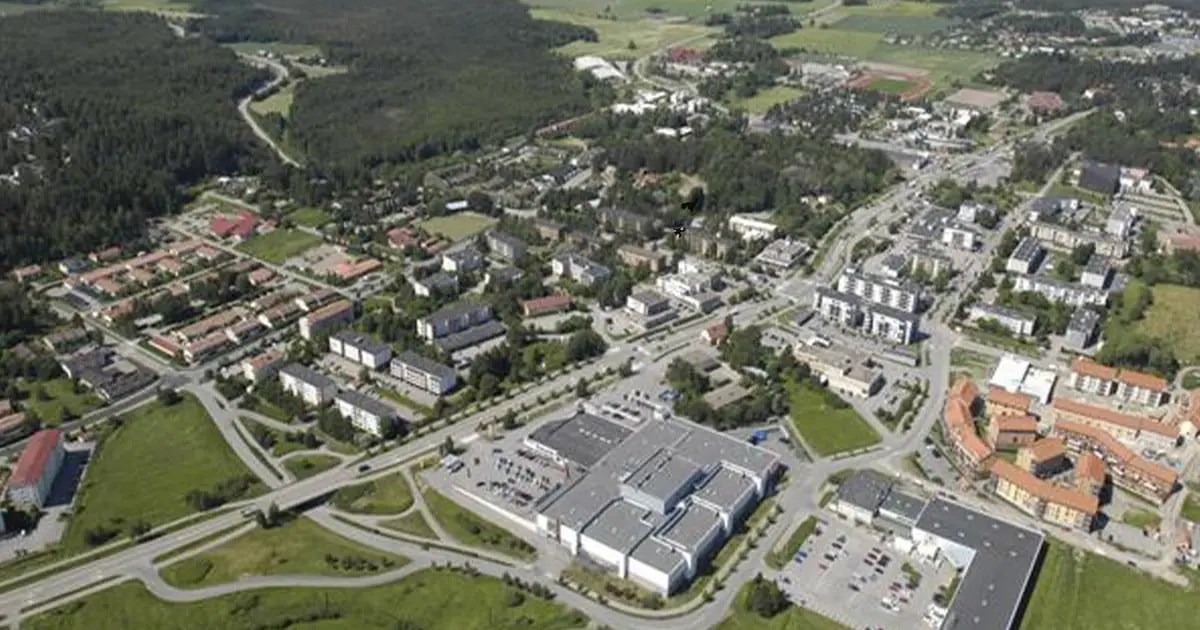
Image source: Data Center Knowledge

Finland's data-centre boom is shifting from site demand to power delivery.

Data Center Knowledge reported that AI infrastructure demand, low-carbon electricity, cooler operating conditions and available land are drawing projects into the country, while grid connections, permitting and heat reuse decide how much planned capacity becomes real.

The country's advantage starts with resources that are difficult for more crowded European markets to copy.

Data Center Knowledge cited DC Byte market data showing Finland's operational IT load among Europe's fastest-growing over the past five years.

Conversion-ready brownfield sites, relatively cheap and available power, geographic advantages and an accommodating grid operator have helped turn that demand into a larger development pipeline.

Grid Queue Turns Demand Into Delivery Timing

Fingrid's connection process sits at the centre of the next phase.

The national grid operator has often prioritised data-centre connections and offered positive usage guarantees, giving early projects a clearer route to power than many constrained European locations.

Permitting timelines can still slow that route.

DC Byte analyst Charlie Enright linked power delivery to building permits from the courts and described a process that can take up to three years.

If multiple campuses seek approval and grid access at once, the queue becomes a test of sequencing.

Low-carbon power supply remains the anchor for Finland's cost case.

Electricity-tax incentives and grid-policy support have helped the market, even as policymakers reconsider parts of that framework.

Enright's assessment was that total operating costs are still likely to remain below most competing EMEA markets, especially for hyperscalers, if some incentives change.

AI Rack Density Changes Power Planning

AI rack density changes the scale of grid planning.

IDC senior research analyst Mikhail Jaura put AI training clusters at three to five times the power draw per rack of standard cloud infrastructure, pushing clean and reliable electricity into the core campus design.

Hyperscalers have the clearest route through that load profile because they can negotiate power directly and build their own campuses.

That structure favours buyers with balance-sheet strength, utility relationships and enough demand certainty to support a large power reservation.

Third-party data-centre developers face a narrower proof point.

Tenants, grid access and approvals need to line up before a pipeline project becomes revenue-producing capacity, especially for newer entrants without a long hyperscale delivery record.

Heat Reuse Helps Where The Local Network Fits

Heat-reuse economics are becoming part of site selection.

Data Center Knowledge reported that, as of 2026, only a very small proportion of Finnish data centres reused waste heat, despite Finland's association with facilities that feed recovered heat into municipal district-heating systems.

District heating operators can make recovered heat valuable when the pipe network, customer demand and facility design line up.

The economics weaken where those local conditions are missing, so heat reuse cannot rescue every site with available land and power.

Cooling architecture sets another boundary.

Jaura pointed to liquid and direct-to-chip cooling as easier routes for heat recovery than air cooling because they capture heat in water at a higher and steadier temperature.

Retrofit economics make early planning important.

Jaura cautioned that retrofits rarely prove cost-effective, which pushes heat-reuse planning into site selection, utility engagement and district-heating negotiations before construction starts.

Developers Still Need To Prove The Buildout

Policy may tighten the link between power costs and recovered heat.

A future eligibility mechanism for exemption from increased electricity taxes could involve reusing waste heat in some capacity, and European rules are moving from voluntary disclosure toward performance expectations that include heat recovery.

The next phase depends on whether grid connection timelines, low-carbon generation, permitting stability and heat-reuse requirements move with the project pipeline.

For developers, Finland's advantage will be proven site by site, when low-carbon power, permits and heat-reuse economics line up as delivered AI capacity rather than a planning queue.

Share this article
inXf
Keep Reading

More Stories

Latest
Hugging Face Hack Pushes AI Agents Into Cybersecurity SpotlightAIAug 8, 2026Hugging Face Hack Pushes AI Agents Into Cybersecurity SpotlightCNBC reported that Black Hat cybersecurity leaders treated the Hugging Face AI-agent breach as a turning point for governing autonomous cyber models rather than a one-off failure.Alibaba Tests Revenue Sharing For Commercial Qwen AI UseAIAug 8, 2026Alibaba Tests Revenue Sharing For Commercial Qwen AI UseAI News reported that Alibaba plans revenue-sharing terms for some commercial users of its next Qwen open-weight AI model, following a licensing pattern already used by Moonshot for Kimi K3.Meta Ordered To Fund $567M New Mexico Youth Mental Health PlanCapital & PolicyAug 8, 2026Meta Ordered To Fund $567M New Mexico Youth Mental Health PlanArs Technica reported that a New Mexico judge ordered Meta to provide $567 million for treatment, screening, awareness and prevention after finding that its platforms contributed to a public nuisance.Harvey Funding Talks Could Lift Legal AI Startup To $15.5B ValuationAIAug 8, 2026Harvey Funding Talks Could Lift Legal AI Startup To $15.5B ValuationSiliconANGLE reported that Harvey AI is seeking at least $500 million in new funding that could value the legal AI startup at $15.5 billion after annualized revenue passed $350 million.Vietnam Shows Shopee-TikTok Shop Race Tightening In Southeast AsiaScience & TechAug 7, 2026Vietnam Shows Shopee-TikTok Shop Race Tightening In Southeast AsiaTech Collective SEA wrote that Shopee’s Vietnam share fell from 61% to 53% between May 2025 and April 2026 as TikTok Shop rose from 33% to 44%, showing how social commerce is reshaping regional ecommerce infrastructure.China Opens Security Review Of Palo Alto Networks ProductsCybersecurityAug 7, 2026China Opens Security Review Of Palo Alto Networks ProductsChina's cyberspace regulator opened a security review of Palo Alto Networks products, with no named product line, technical flaw or decision timetable disclosed.AI Pioneers Split Over Risk As Compute Buildout AcceleratesAIAug 7, 2026AI Pioneers Split Over Risk As Compute Buildout AcceleratesData Center Knowledge reported that Geoffrey Hinton, Fei-Fei Li and Andrew Ng disagreed at Ai4 over AI risk, jobs, openness and regulation, leaving infrastructure investors to plan capacity amid unsettled deployment rules.SpaceX Asks FCC To Wind Down $4.5bn Rural Broadband SupportTelco & ConnectivityAug 7, 2026SpaceX Asks FCC To Wind Down $4.5bn Rural Broadband SupportLight Reading reported that SpaceX urged the FCC to sunset High-Cost rural broadband subsidies, while rural telecom and electric-cooperative groups said LEO satellite coverage cannot replace terrestrial network support.OpenAI Expands Free ChatGPT Access In GPT-5.6 RolloutAIAug 7, 2026OpenAI Expands Free ChatGPT Access In GPT-5.6 RolloutBleepingComputer reported that OpenAI is rolling out GPT-5.6 Sol for paid ChatGPT users and GPT-5.6 Luna for Free and Go users, pairing unlimited free text chats with a new reasoning control and additional safeguards for users believed to be under 18.JLL Data Centre Report Shows Middle East Pipeline Pause As FLAPD GrowsCapital & PolicyAug 7, 2026JLL Data Centre Report Shows Middle East Pipeline Pause As FLAPD GrowsData Center Dynamics reported that JLL's EMEA Mid-Year Data Centre Report 2026 put FLAPD live capacity at 3.8GW, while the Middle East had 2.6GW in development paused and 13.8GW in planning.AWS Adds Persistent Runtime Instances For Production AI AgentsCloud & Data CentersAug 7, 2026AWS Adds Persistent Runtime Instances For Production AI AgentsAWS announced runtime instances for Amazon Bedrock AgentCore Runtime, adding managed infrastructure for multi-agent workflows, shared sessions lasting up to 14 days and GPU-supported production agent deployments.AI Patch Study Keeps Humans In Vulnerability ReviewsCybersecurityAug 7, 2026AI Patch Study Keeps Humans In Vulnerability ReviewsThe Register reported that 1Password Off-by-1 Labs tested 6,080 AI-generated patches across six CVEs and found clean autonomous fixes in 26.0 percent of cases, leaving security teams with a supervision problem rather than a replacement for vulnerability review.