SendTech Times
News
SUPPLY CHECK:

LineShine Tops TOP500 Without Nvidia, Intel Or AMD Chips

Newsroom brief

China’s LineShine supercomputer reached 2.198 Exaflop/s on the TOP500 list using local LX2 processors, but its Armv9 design and Linux base show that compute sovereignty still depends on global technology layers.
Verified against source materialEdited by SendTech Times Chips & Compute DeskSource: The Register
LineShine Tops TOP500 Without Nvidia, Intel Or AMD Chips
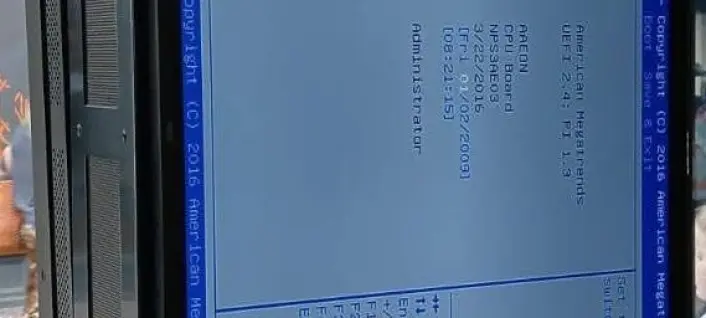
Image source: The Register

LineShine Takes The TOP500 Lead With Local CPUs

China's LineShine supercomputer has taken first place on the TOP500 list with 2.198 Exaflop/s of sustained double-precision performance, doing so without Nvidia, Intel or AMD processors.

The system is housed at the National Supercomputer Center in Shenzhen and uses LX2 processors described as a local effort.

The technical detail is more complicated than a clean break from foreign technology because the processors use Armv9 designs and the machine runs KylinOS, a Linux distribution.

LineShine comprises 20,480 computing nodes.

Each LX2 processor integrates two compute dies with 304 cores in total and eight on-package HBM stacks with 32 GB and 4 TB/s of aggregate bandwidth.

Each compute die carries 152 cores.

The design pairs off-package DDR memory with four NUMA domains, and a dedicated SDMA engine moves data between DDR and HBM.

The pre-press paper described LX2 support for FP64, FP32, FP16 and INT8 through SME and SVE units.

It puts per-processor performance at up to 60.3 TFLOPS in FP64 and 120.6 TFLOPS in FP32, adding another technical marker to the system's CPU-only claim.

CPU-Only Exascale Creates A Different AI Compute Signal

LineShine became the first TOP500 system to exceed two exaflops of sustained double-precision performance using CPUs only.

TOP500 curators said the system could perform better in future tests because it reached about 80 percent of its 2.736 Exaflop/s theoretical peak.

The interconnect is part of the sovereignty claim.

Nodes are linked through the LingQi high-speed network, a dual-plane multi-rail fat-tree topology that offers 1.6 Tb/s bandwidth per node.

The network comes from Hangzhou LingQi Technology Co.

The result gives Beijing a concrete example of domestic high-performance computing at a time when the government is steering local organizations toward made-in-China technology.

It also gives Chinese AI and scientific computing programs a flagship system at the top of the global ranking.

The ranking does not put China in control of the whole list.

Nvidia, AMD and Intel still dominate this TOP500 edition, even as LineShine gives China the leading individual system.

The technical stack still shows dependence on international layers.

Arm architecture and Linux keep LineShine tied to technologies and communities outside China, even as the processors and interconnect are presented as local components.

Export Controls Keep The Supply Chain Question Open

The ranking arrives while US restrictions limit GPU sales to China.

Those controls have made compute supply chains a direct policy issue for AI, military modernization and industrial planning.

LineShine does not remove that pressure.

The machine demonstrates that China can assemble a world-leading CPU-only supercomputer, but the article does not establish whether the design can replace restricted GPUs for the full range of AI workloads.

China's GPU industry remains early, with current products described as trailing Nvidia and AMD by four or five years.

That keeps LineShine's CPU result separate from the accelerator supply problem created by export controls.

The system's benchmark also leaves scaling questions beyond the TOP500 result.

Sustained double-precision performance is central to high-performance computing rankings, while AI training and inference depend on software, memory movement, accelerators, networking and workload-specific economics.

LineShine now gives China the leading TOP500 machine, 20,480 nodes and a local interconnect, while its Armv9 base, Linux operating system and unresolved GPU-substitution question keep the compute-sovereignty story tied to global technology dependencies.
Share this article
inXf

Related articles

More
IBM Shows Sub-1 Nanometer Chip Research, With Production Proof Still Missing
Chips & Semiconductors

IBM Shows Sub-1 Nanometer Chip Research, With Production Proof Still Missing

IBM unveiled a 0.7 nm nanostack chip technology with nearly 100 billion transistors, but the company has not announced a manufacturing partner, production date or customer design win.

Nvidia Tops 400 Systems On TOP500 Supercomputer List
Chips & Semiconductors

Nvidia Tops 400 Systems On TOP500 Supercomputer List

Nvidia says its technology now powers more than 400 of the world’s 500 fastest supercomputers, with Grace CPUs, GPUs and networking expanding across AI and science systems.

Arm Neoverse CSS N4 Sets 3nm Base For Future DPUs And Servers
Chips & Semiconductors

Arm Neoverse CSS N4 Sets 3nm Base For Future DPUs And Servers

Arm introduced the Neoverse CSS N4 compute subsystem, pairing up to 128 cores with CMN S4, faster memory options and PCIe Gen7 for future infrastructure chips.

Cerebras Plans 8x To 10x Manufacturing Scale-Up For AI Inference
Chips & Semiconductors

Cerebras Plans 8x To 10x Manufacturing Scale-Up For AI Inference

Cerebras chief executive Andrew Feldman said the company plans to scale manufacturing capacity by 8x to 10x this year and claimed its systems can run inference 10, 15, 20 or 30 times faster than GPUs. The interview-led source named customers including AlphaSense, Cognition AI, OpenAI, Block and GlaxoSmithKline, The public record still lacks third-party benchmark methodology.

QIA Joins $380 Million Nearfield Round For AI Chip Metrology
Chips & Semiconductors

QIA Joins $380 Million Nearfield Round For AI Chip Metrology

Nearfield Instruments raised $380 million at a $1.6 billion valuation, with Qatar Investment Authority joining a semiconductor metrology round aimed at advanced AI chip manufacturing.

AMD Helios AI Racks Bring Epyc CPUs To Nvidia Compute Challenge
Chips & Semiconductors

AMD Helios AI Racks Bring Epyc CPUs To Nvidia Compute Challenge

Data Center Knowledge reported that AMD moved Helios into production with MI455X GPUs, Epyc processors, Pensando networking and ROCm software, while vendor performance claims still lack third-party benchmark validation.

Gulf AI Plans Still Depend On Nvidia Chips Despite Supplier Push
Chips & Semiconductors

Gulf AI Plans Still Depend On Nvidia Chips Despite Supplier Push

Rest of World reported that Saudi Arabia and the UAE are trying to diversify AI chip supply while major projects still rely on Nvidia hardware. The report cited Humain data-centre plans, G42’s Stargate project and analyst warnings that U.S. approvals, TSMC capacity and high-bandwidth memory remain constraints.

Nvidia's 70% Revenue Forecast Meets Memory Supply Constraint
Chips & Semiconductors

Nvidia's 70% Revenue Forecast Meets Memory Supply Constraint

Nvidia forecast 70 per cent revenue growth for the fiscal year ending January 2028 while warning that memory shortages, component costs and China uncertainty still limit the AI compute boom.

Keep Reading

More Stories

Latest
Ethereum Testnet Update Targets 200 Million-Gas BlocksCrypto/Web3Oct 6, 2026Ethereum Testnet Update Targets 200 Million-Gas BlocksEthereum developers released Prysm 7.2.1 so the Sepolia trial of Glamsterdam can test 200 million-gas blocks, more than three times the prior 60 million setting, before any main-network change.Kepler Targets 2027 Production for HBM Replacement MemoryCloud & Data CentersOct 6, 2026Kepler Targets 2027 Production for HBM Replacement MemoryEE Times reports that Kepler Computing is preparing 3D ferroelectric memory for 2027 production, promising higher capacity and bandwidth per watt while limiting reliance on advanced-node lithography.Yokogawa Opens Singapore Hub For Industrial Cyber ResilienceCapital & PolicyOct 6, 2026Yokogawa Opens Singapore Hub For Industrial Cyber ResilienceYokogawa Engineering Asia has launched a Singapore center focused on OT cyber resilience, training, response planning and recovery coordination for Southeast Asia, Oceania and Taiwan.ClickFix Attack Uses Browser Cache To Hide Malware PayloadCybersecurityOct 6, 2026ClickFix Attack Uses Browser Cache To Hide Malware PayloadMicrosoft Threat Intelligence traced a ClickFix cache-smuggling method that preloads malware into browser caches, then uses file size checks and a pasted Run command to launch later credential-theft stages.VOA Tests Six-Month Startup Buildout Before Funding DecisionsFintech & Digital PaymentsOct 6, 2026VOA Tests Six-Month Startup Buildout Before Funding DecisionsTechCabal’s interview with VOA Venture Partners founder Victoria Olayide Adesanya describes a six-month build programme that lets the firm work inside African financial-infrastructure startups before deciding whether to invest.Bitcoin Holds $86,000 As Dollar Index Hits 18-Month HighCrypto/Web3Oct 6, 2026Bitcoin Holds $86,000 As Dollar Index Hits 18-Month HighCoinDesk reported that bitcoin stayed near $86,000 while the U.S. Dollar Index reached about 102.5, with U.S. rate expectations and European political risks strengthening the dollar backdrop.Google Freezes OSS Bug Bounty Reports After AI Submission FloodCybersecurityOct 6, 2026Google Freezes OSS Bug Bounty Reports After AI Submission FloodGoogle has stopped accepting new product vulnerability reports in its OSS VRP after invalid automated submissions swamped reviewers, while older reports and some Cloud VRP routes remain open.Fleuret AI Raises €4M For Continuous AI Pentesting PlatformCybersecurityOct 6, 2026Fleuret AI Raises €4M For Continuous AI Pentesting PlatformTech.eu reported that French startup Fleuret AI raised €4 million in pre-seed funding to develop an agentic-AI platform that turns penetration testing into a continuous security process.GFT Analysis Says AI Documentation Can Cut Maintenance Work 30%Fintech & Digital PaymentsOct 6, 2026GFT Analysis Says AI Documentation Can Cut Maintenance Work 30%A GFT Technologies analysis says AI-linked software documentation can cut maintenance effort and speed developer onboarding when knowledge assets stay synchronized with code changes.Schneider Electric Lines Up $22.6 Billion PTC DealAIOct 5, 2026Schneider Electric Lines Up $22.6 Billion PTC DealSchneider Electric plans to buy PTC in a cash transaction valuing the US engineering software provider’s equity at about $22.6 billion, adding product-lifecycle software to its industrial AI push.Aggarwal Pledges Ola Electric Stake To Fund ₹1,000 Cr Rights IssueCapital & PolicyOct 5, 2026Aggarwal Pledges Ola Electric Stake To Fund ₹1,000 Cr Rights IssueOla Electric founder Bhavish Aggarwal pledged 20 Cr shares to finance his participation in a rights issue that forms part of a larger ₹1,500 Cr fundraising plan.Natrona Schools AI Review Puts Student Privacy Ahead Of Classroom Tool UseAIOct 5, 2026Natrona Schools AI Review Puts Student Privacy Ahead Of Classroom Tool UseNatrona County trustees questioned whether teacher AI tools expose student data, even as existing district rules already ban unauthorized generative AI use by students.