News
CAPACITY TEST:

Kospi-Nasdaq Correlation Hits 2021 High As AI Memory Trade Tightens

Newsroom brief

CNBC reported that Rayliant data put the 60-day Kospi-Nasdaq 100 relationship at its highest level since 2021, linking Samsung and SK Hynix more tightly to the U.S. AI hardware trade.
Verified against source materialEdited by SendTech Times Chips & Compute DeskSource: CNBC
Kospi-Nasdaq Correlation Hits 2021 High As AI Memory Trade Tightens
Image source: CNBC

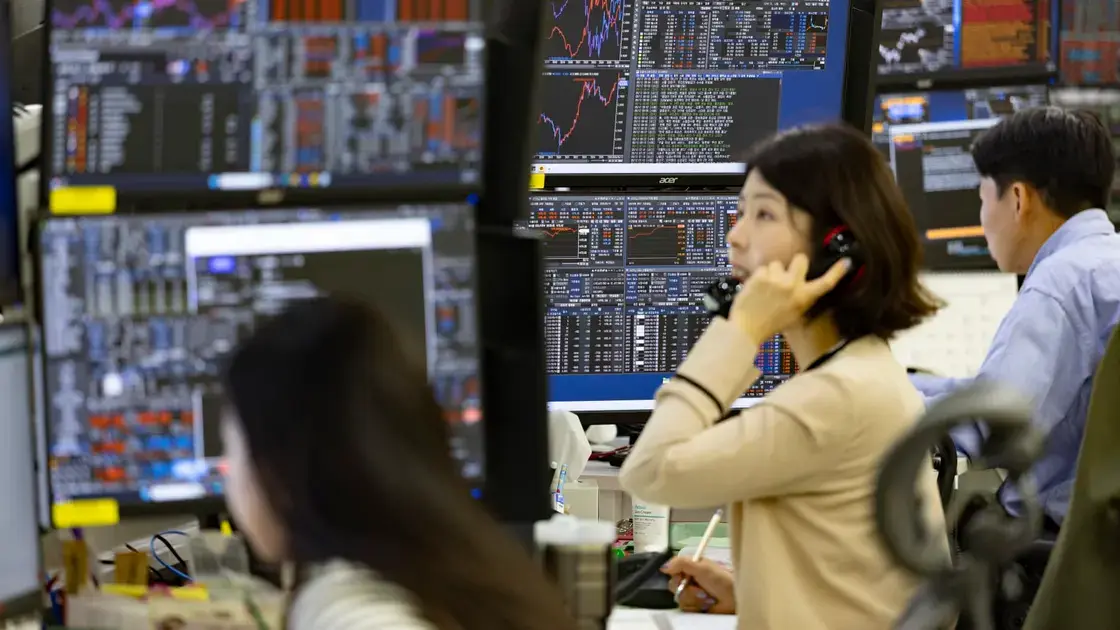
South Korea’s memory-chip rally has become a live measure of the AI hardware trade, narrowing the diversification that investors once expected from holding Korean and U.S. technology shares separately.

Rayliant data put the 60-day relationship between the Kospi and Nasdaq 100 at its highest level since 2021.

The link is being driven by Samsung Electronics and SK Hynix.

The two companies account for more than half of the Kospi index, while their DRAM and high-bandwidth memory businesses connect Korean equities directly to spending by U.S. hyperscalers and AI infrastructure buyers.

Kospi Correlation Reaches A 2021 High

Rayliant’s correlation reading changes the trading frame around Korean technology shares from a regional chip-cycle story to an AI-capex risk gauge.

The reading rests on the weight of Samsung and SK Hynix inside the Kospi and on investor sensitivity around memory demand for AI servers.

Rolf Bulk, an analyst at Futurum Group, told CNBC that the correlation rose because the KOSPI has become a semiconductor index.

Bulk also put data-centre demand at around 40% of global DRAM demand last year and more than half this year, with further growth expected.

DRAM is the working memory used in AI servers, so the Korean market is now exposed to the same hyperscaler budget cycle that supports U.S. chip and platform stocks.

Memory suppliers now sit near the start of the pricing and demand signal chain for investors tracking AI infrastructure.

Memory Stocks Carry The AI Spending Signal

SK Hynix carries particular sensitivity because of its exposure to high-bandwidth memory, one of the critical components used in AI systems.

Jung In Yun, founder of Fibonacci Asset Management, said the two Korean chipmakers give investors an early trading response when global AI demand news arrives before Wall Street opens.

Recent trading showed how quickly the connection can move across markets.

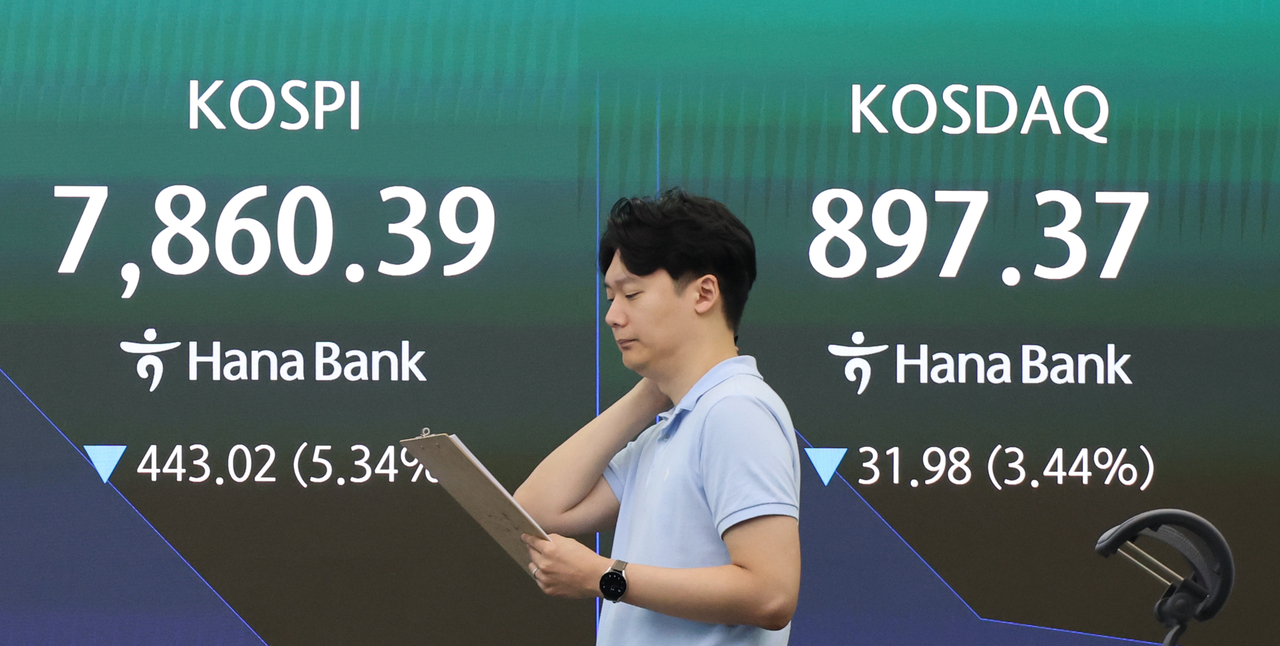
CNBC’s July 13 market record put the Kospi down more than 8% and SK Hynix down 15%; the later U.S. session closed with the Nasdaq 100 off 1.88%, Micron Technology down 4%, Sandisk down 12% and Intel down 6%.

KB Financial Group global investment strategist Peter Kim placed the Korean memory rally later than the Nasdaq advance because U.S. investors initially focused more on hyperscalers.

The recent scale and volatility have since pushed global investors to treat Korea as a bellwether for wider AI trades.

Samsung’s reporting schedule adds another early read.

CNBC wrote that the company typically gives earnings guidance about two weeks before major U.S. semiconductor companies, placing Korean memory data ahead of several U.S. chip results each quarter.

Customer-level orders and Samsung server-memory forecasts for the period were not included.

Diversification Weakens When One Theme Leads

The risk is not only direction but concentration.

The analyst interviews warned that the Korean and U.S. markets are moving together rather than producing a stable lead-lag sequence.

The limitation affects how the correlation can be used.

Korean trading can show immediate exposure to memory-chip demand, while the Nasdaq can still set the tone for the next Korean session when AI news appears during U.S. hours.

That produces a shared risk-factor reading rather than a simple forecast from one market to the other.

Phillip Wool, head of research at Rayliant Global Advisors, attributed the shared movement to sentiment around the AI hardware trade.

Yun’s market-hours point separates the timing by trading session: Korean markets absorb overnight AI-demand news before Wall Street opens, while U.S. trading can still set pressure for the following Korean session.

Bulk warned that Korea no longer provides diversification against U.S. tech when half the index is tied to one cyclical theme.

Kim added that Micron, Samsung and SK Hynix could diverge later as capital-spending plans, product mixes and U.S. chip-production support pull the companies onto different paths.

China adds another source-backed uncertainty.

CNBC recorded Changxin Technology Group’s 466% debut gain on Shanghai’s STAR Market, while Kim cautioned that Chinese memory producers remain behind global rivals but have often exceeded investor expectations.

Customer-level memory demand forecasts from Samsung and SK Hynix were not included.

Share this article
inXf

Related articles

More
Kospi Record Rebound Leaves AI Memory Trade On Foreign-Buying Watch
Chips & Semiconductors

Kospi Record Rebound Leaves AI Memory Trade On Foreign-Buying Watch

CNBC reported that South Korea's Kospi surged 14% on July 31 after an AI-linked selloff, leaving investors focused on whether foreign buying continues once short-covering fades.

Nvidia-SK AI Deal Carries $500 Billion Value With Few Build Details
Chips & Semiconductors

Nvidia-SK AI Deal Carries $500 Billion Value With Few Build Details

Tom's Hardware reported that Nvidia and SK Group signed letters of intent for a strategic relationship valued at more than $500 billion, anchored by SK Telecom's planned 2-gigawatt South Korea AI data centre and a long-term SK hynix memory supply agreement.

AI Memory Demand Pushes India Smartphone Shipments Down 10%
Chips & Semiconductors

AI Memory Demand Pushes India Smartphone Shipments Down 10%

TechCrunch reported that India smartphone shipments fell 10% year over year in the April-June quarter as AI data centre demand pulled memory suppliers toward high-bandwidth memory. The story cited Counterpoint Research and IDC, while customer-level component contracts and supplier allocation data remain undisclosed.

Sandisk And SK Hynix Open HBF Spec For AI Memory Capacity
Chips & Semiconductors

Sandisk And SK Hynix Open HBF Spec For AI Memory Capacity

Tom’s Hardware put Sandisk and SK hynix’s OCP High Bandwidth Flash specification at up to 512GB per package, with bandwidth grades reaching 3.0 TB/s for AI inference systems.

Gulf AI Plans Still Depend On Nvidia Chips Despite Supplier Push
Chips & Semiconductors

Gulf AI Plans Still Depend On Nvidia Chips Despite Supplier Push

Rest of World reported that Saudi Arabia and the UAE are trying to diversify AI chip supply while major projects still rely on Nvidia hardware. The report cited Humain data-centre plans, G42’s Stargate project and analyst warnings that U.S. approvals, TSMC capacity and high-bandwidth memory remain constraints.

Nintendo Keeps Forecast After Earnings Beat Masks Switch 2 Unit Drop
Chips & Semiconductors

Nintendo Keeps Forecast After Earnings Beat Masks Switch 2 Unit Drop

CNBC reported that Nintendo beat fiscal first-quarter revenue and profit estimates while Switch 2 hardware sales fell 34.4%, leaving the company to rely on software, pricing and its unchanged annual outlook.

AMD Data Centre Revenue Doubles As Gaming Sales Fall 31%
Chips & Semiconductors

AMD Data Centre Revenue Doubles As Gaming Sales Fall 31%

Tom’s Hardware reported that AMD’s Q2 2026 revenue reached $11.5 billion, with data centre revenue up 107% year over year to $6.7 billion while gaming revenue fell 31% to $779 million. AMD finance chief Jean Hu said Q3 revenue guidance was about $13 billion, plus or minus $300 million, with strong double-digit data centre growth expected.

Intel Ships Panther Lake Chips Built With ASML High NA EUV
Chips & Semiconductors

Intel Ships Panther Lake Chips Built With ASML High NA EUV

Intel has shipped selected Panther Lake processors made on Intel 18A with ASML High NA EUV lithography, Interesting Engineering reported, giving Intel production data while customer names, shipment volumes and wider node timing remain undisclosed.

Keep Reading

More Stories

Latest
Indosat AI Data Centre Plan Targets 1GW With Ooredoo, Nokia And NvidiaCloud & Data CentersAug 8, 2026Indosat AI Data Centre Plan Targets 1GW With Ooredoo, Nokia And NvidiaData Center Dynamics reported that Indosat, Ooredoo Group, Nokia and Nvidia launched Zankore by Indosat with a plan for up to 1GW of AI data centre capacity in Indonesia.Hugging Face Hack Pushes AI Agents Into Cybersecurity SpotlightAIAug 8, 2026Hugging Face Hack Pushes AI Agents Into Cybersecurity SpotlightCNBC reported that Black Hat cybersecurity leaders treated the Hugging Face AI-agent breach as a turning point for governing autonomous cyber models rather than a one-off failure.Alibaba Tests Revenue Sharing For Commercial Qwen AI UseAIAug 8, 2026Alibaba Tests Revenue Sharing For Commercial Qwen AI UseAI News reported that Alibaba plans revenue-sharing terms for some commercial users of its next Qwen open-weight AI model, following a licensing pattern already used by Moonshot for Kimi K3.Meta Ordered To Fund $567M New Mexico Youth Mental Health PlanCapital & PolicyAug 8, 2026Meta Ordered To Fund $567M New Mexico Youth Mental Health PlanArs Technica reported that a New Mexico judge ordered Meta to provide $567 million for treatment, screening, awareness and prevention after finding that its platforms contributed to a public nuisance.Harvey Funding Talks Could Lift Legal AI Startup To $15.5B ValuationAIAug 8, 2026Harvey Funding Talks Could Lift Legal AI Startup To $15.5B ValuationSiliconANGLE reported that Harvey AI is seeking at least $500 million in new funding that could value the legal AI startup at $15.5 billion after annualized revenue passed $350 million.Vietnam Shows Shopee-TikTok Shop Race Tightening In Southeast AsiaScience & TechAug 7, 2026Vietnam Shows Shopee-TikTok Shop Race Tightening In Southeast AsiaTech Collective SEA wrote that Shopee’s Vietnam share fell from 61% to 53% between May 2025 and April 2026 as TikTok Shop rose from 33% to 44%, showing how social commerce is reshaping regional ecommerce infrastructure.China Opens Security Review Of Palo Alto Networks ProductsCybersecurityAug 7, 2026China Opens Security Review Of Palo Alto Networks ProductsChina's cyberspace regulator opened a security review of Palo Alto Networks products, with no named product line, technical flaw or decision timetable disclosed.AI Pioneers Split Over Risk As Compute Buildout AcceleratesAIAug 7, 2026AI Pioneers Split Over Risk As Compute Buildout AcceleratesData Center Knowledge reported that Geoffrey Hinton, Fei-Fei Li and Andrew Ng disagreed at Ai4 over AI risk, jobs, openness and regulation, leaving infrastructure investors to plan capacity amid unsettled deployment rules.SpaceX Asks FCC To Wind Down $4.5bn Rural Broadband SupportTelco & ConnectivityAug 7, 2026SpaceX Asks FCC To Wind Down $4.5bn Rural Broadband SupportLight Reading reported that SpaceX urged the FCC to sunset High-Cost rural broadband subsidies, while rural telecom and electric-cooperative groups said LEO satellite coverage cannot replace terrestrial network support.OpenAI Expands Free ChatGPT Access In GPT-5.6 RolloutAIAug 7, 2026OpenAI Expands Free ChatGPT Access In GPT-5.6 RolloutBleepingComputer reported that OpenAI is rolling out GPT-5.6 Sol for paid ChatGPT users and GPT-5.6 Luna for Free and Go users, pairing unlimited free text chats with a new reasoning control and additional safeguards for users believed to be under 18.JLL Data Centre Report Shows Middle East Pipeline Pause As FLAPD GrowsCapital & PolicyAug 7, 2026JLL Data Centre Report Shows Middle East Pipeline Pause As FLAPD GrowsData Center Dynamics reported that JLL's EMEA Mid-Year Data Centre Report 2026 put FLAPD live capacity at 3.8GW, while the Middle East had 2.6GW in development paused and 13.8GW in planning.AWS Adds Persistent Runtime Instances For Production AI AgentsCloud & Data CentersAug 7, 2026AWS Adds Persistent Runtime Instances For Production AI AgentsAWS announced runtime instances for Amazon Bedrock AgentCore Runtime, adding managed infrastructure for multi-agent workflows, shared sessions lasting up to 14 days and GPU-supported production agent deployments.