Kospi Record Rebound Leaves AI Memory Trade On Foreign-Buying Watch
CNBC reported that South Korea's Kospi surged 14% on July 31 after an AI-linked selloff, leaving investors focused on whether foreign buying continues once short-covering fades.

South Korea's record stock-market reversal has turned the AI memory trade into a foreign-flow test, after CNBC placed the Kospi's July 31 surge at 14% while SK Hynix and Samsung Electronics rebounded from a bruising selloff.
Upbeat U.S. technology earnings gave the session its global backdrop.
Korean equities had spent the month tracking expectations for artificial intelligence infrastructure spending, and LSEG data carried the benchmark Kospi's largest one-day jump signal as SK Hynix moved into record-rebound territory.
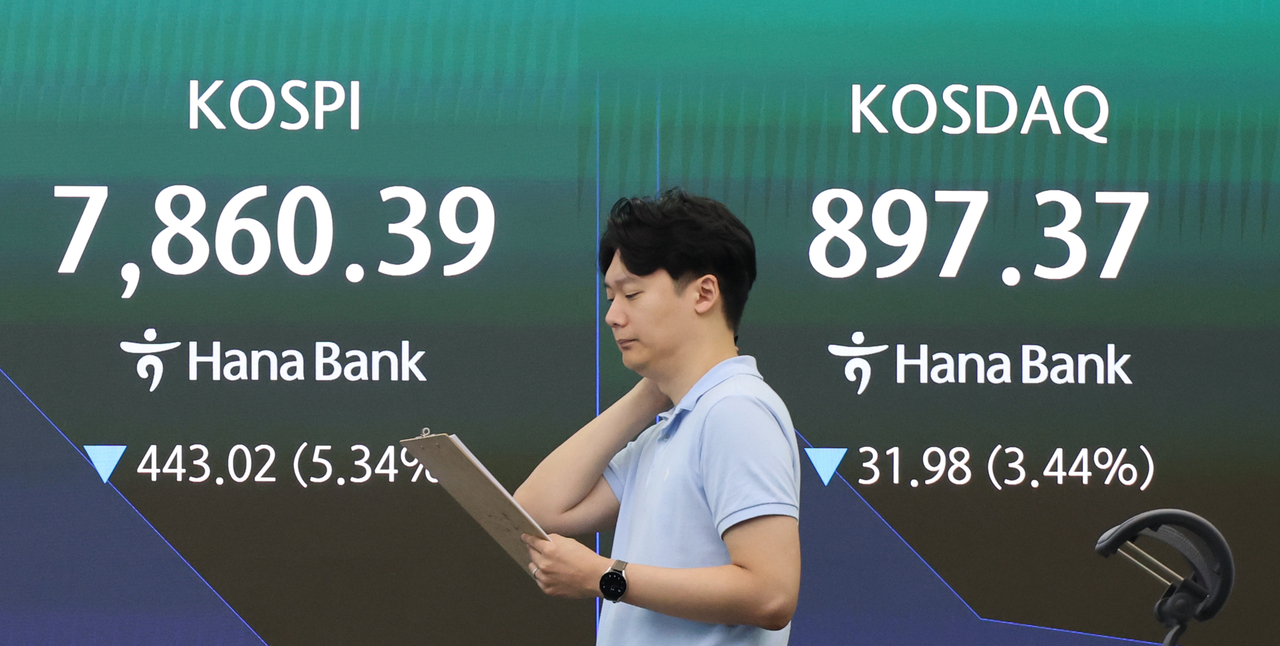
Kospi Jumps 14% After An AI Selloff
The rally reversed part of the pressure that had hit Korean equities only days earlier, when stretched AI valuations, leverage concerns and signs of forced liquidation moved through semiconductor stocks.
The sharpest disclosed number was the Kospi's 14% surge, tied to LSEG data.
SK Group Chairman Chey Tae-won's disclosed purchases of SK Hynix shares added support for the rebound.
The buying placed SK Hynix near the centre of the AI memory trade without turning the session into proof that chip-stock risk had disappeared.
Jung In Yun of Fibonacci Asset Management told CNBC that foreign investors appeared to be the main force behind the rally.
Jung also linked the session to traders closing bearish bets, leveraged ETF rebalancing and new cash-deposit requirements for leveraged ETF investors that took effect on July 31.
Foreign Buying Carries The Recovery Question
The market contrast is unusually clear: the same exchange that suffered one of its worst recent selloffs moved into a record rebound within days.
Jung cautioned that gains of that magnitude were unlikely to continue, while extremely bearish positioning and SK Hynix's AI-memory fundamentals left room for more recovery.
The recovery depends less on one dramatic session than on who keeps buying after forced positioning unwinds.
Continued overseas fund demand would give the rally a firmer capital-flow base; a retreat after short-covering would leave Friday as another leveraged swing around the AI infrastructure theme.
Rolf Bulk, semiconductor analyst at Futurum Group, treated the rally as a sign that investors were rebuilding trust in continued AI-cycle spending rather than pricing a broad change in fundamentals.
His remarks also placed recent forced selling largely in the past and found no sign that the AI infrastructure build-out was slowing down.
Leverage Keeps The AI Trade Exposed
Paul Gambles, co-founder of MBMG Family Office Group, took the opposite side of the risk argument.
He warned that Friday's jump might fade after one session or extend for longer, while pointing to heavy leverage and fragile confidence as reasons the market could remain vulnerable.
That split leaves Korean chip stocks exposed to both AI spending expectations and investor-positioning risk.
The rebound was strongest where memory exposure and AI infrastructure optimism overlap, but valuation worries can still move quickly through the market.
Overseas fund buying after the short-covering phase remains the visible condition for a durable recovery.