SendTech Times
Analysis
SUPPLY CHECK:

Korea’s Chip Bonuses Turn AI Memory Profits Into An Inflation Test

Newsroom brief

South Korea’s central bank says exceptional IT-sector performance bonuses could feed wider wage and spending pressure, tying the AI memory boom at Samsung Electronics and SK Hynix to a macroeconomic risk beyond chip supply.
Verified against source materialEdited by SendTech Times Chips & Compute DeskSource: CNBC
Korea’s Chip Bonuses Turn AI Memory Profits Into An Inflation Test
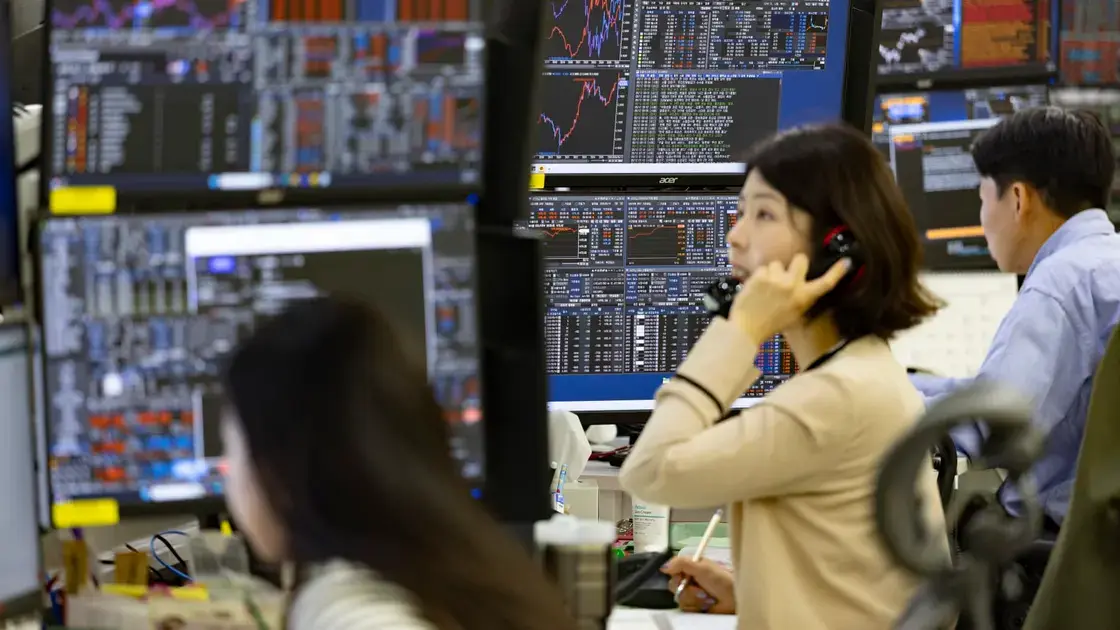
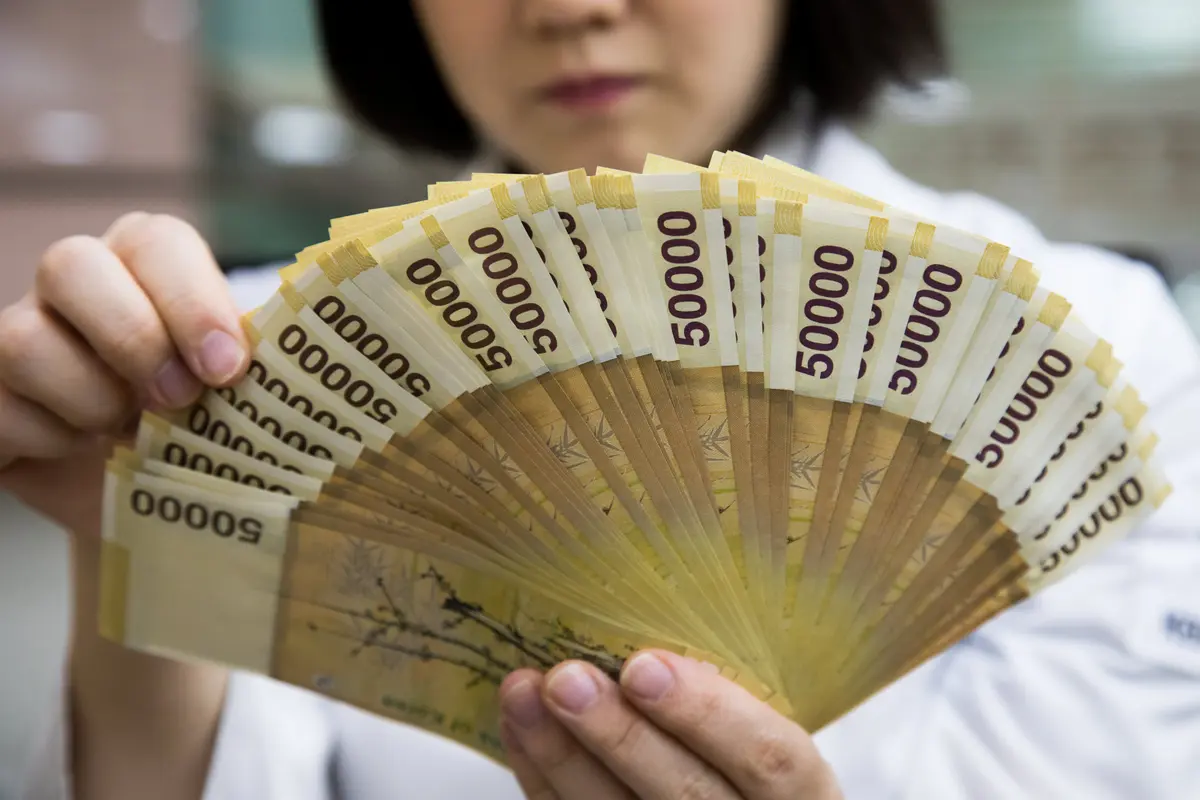
Image source: CNBC

Korea’s Chip Bonuses Put Wages On Inflation Watch

South Korea’s AI memory boom is no longer only a semiconductor supply story.

The Bank of Korea has warned that unusually large performance bonuses at major IT companies could spread into broader wage increases and add pressure to prices.

The warning came in a June 17 report that said inflation this year has been driven largely by energy price increases linked to the Iran war.

The central bank added that, even if that conflict subsides, stronger income conditions and broader wage growth could gradually lift inflation pressure.

South Korea is already above the central bank’s target.

The Bank of Korea projects full year inflation at 2.7%, compared with its 2% target.

Chip-sector windfalls now give policymakers a narrower test: whether the cash stays with a small group of workers or becomes a signal for wages and spending across other industries.

Samsung And SK Hynix Bonuses Set The Scale

The debate starts with workers at SK Hynix and Samsung Electronics.

Both companies are benefiting from heavy demand for memory used in AI systems.

The public record still lacks exact bonus amounts in the source, but the wage formulas show why policymakers are watching.

SK Hynix agreed last September to set aside 10% of operating profits as bonuses for workers.

Samsung workers had reportedly agreed that 10.5% of semiconductor operating profit would go toward special bonuses for chip workers after threatening an 18-day strike in May.

For an individual benchmark, an unidentified union source put one memory-chip employee’s expected total payout at around 626 million won ($410,000) this year on base pay of 80 million won ($52,400).

Separately, the SK Hynix formula could top 700 million won ($454,851) per employee under an annual profit outcome of 250 trillion won this year.

The payouts sit far outside routine pay adjustments.

The Bank of Korea said bonuses normally do not add much demand pressure because they are not permanent income.

It warned, however, that special bonuses expanding unusually and substantially could increase both supply- and demand-side inflationary pressure.

Gyeonggi Luxury Sales Show Where Bonus Cash May Surface

The central bank’s worry is not only about pay packets.

Deputy Governor Lee Jiho said on June 17 that sales had increased significantly in places such as Suwon and in luxury goods sections of department stores, with the potential to spread further.

Gyeonggi Province is a key test area because it is home to major Samsung Electronics and SK Hynix semiconductor facilities.

The Bank of Korea said payment-card growth this year ran relatively higher around chip production sites and nearby residential districts than in other regions.

Luxury consumption appears to be one visible outlet for the bonus effect.

At a Shinsegae department store branch in Gyeonggi Province, luxury sales rose 53.6% year-on-year in May.

Luxury jewelry increased 146.3%, luxury watches rose 85.3%, and overall store sales grew 19%.

The stock market has also priced in stronger high-end consumption.

Lotte Shopping has surged more than 148% year to date, including a 67% gain over the past three months.

Hyundai Department Store is up 120% year to date and 113% in the last three months, while Shinsegae is up 190% from the start of the year and 107% in the last three months.

Chip Bonuses Could Stay Local Or Set A Wage Benchmark

The report stops short of saying chip bonuses have already changed South Korea’s national wage path.

It also does not quantify a national bonus contribution to inflation.

But the central bank is treating AI-era semiconductor profits as a possible macroeconomic channel, not just a company compensation issue.

Investors, retailers and policymakers have to separate those outcomes.

If the bonuses remain concentrated among workers at Samsung Electronics and SK Hynix, the impact may stay local and luxury-heavy.

If other sectors use those payouts as a benchmark, South Korea’s AI memory cycle could feed wage bargaining and inflation expectations well beyond the chip fabs.
Share this article
inXf

Related articles

More
South Korea Chip Plan Names 800 Trillion Won Without Funding Split
Chips & Semiconductors

South Korea Chip Plan Names 800 Trillion Won Without Funding Split

South Korea announced an 800 trillion won ($520 billion) public-private semiconductor investment plan with Samsung Electronics and SK Hynix. The plan centers on four production facilities and HBM capacity, but it does not specify how much money will come from the state, Samsung or SK Hynix.

Kospi Record Rebound Leaves AI Memory Trade On Foreign-Buying Watch
Chips & Semiconductors

Kospi Record Rebound Leaves AI Memory Trade On Foreign-Buying Watch

CNBC reported that South Korea's Kospi surged 14% on July 31 after an AI-linked selloff, leaving investors focused on whether foreign buying continues once short-covering fades.

Kospi-Nasdaq Correlation Hits 2021 High As AI Memory Trade Tightens
Chips & Semiconductors

Kospi-Nasdaq Correlation Hits 2021 High As AI Memory Trade Tightens

CNBC reported that Rayliant data put the 60-day Kospi-Nasdaq 100 relationship at its highest level since 2021, linking Samsung and SK Hynix more tightly to the U.S. AI hardware trade.

Kospi Drops 7.89 Percent As Samsung And SK hynix Lead Chip Sell-Off
Chips & Semiconductors

Kospi Drops 7.89 Percent As Samsung And SK hynix Lead Chip Sell-Off

The Korea Herald reported that the Kospi fell 7.89 percent on Thursday as Samsung Electronics and SK hynix led a semiconductor sell-off tied to renewed AI-capacity and chip-competition concerns. The report cited a Korea Exchange sell-side sidecar, heavy foreign and institutional selling and 48.86 trillion won in trading value, but it did not report confirmed order cuts, revised chipmaker forecasts or measured AI-capacity utilisation.

SK Hynix Plans Nasdaq ADR As AI Memory Demand Lifts Fundraising
Chips & Semiconductors

SK Hynix Plans Nasdaq ADR As AI Memory Demand Lifts Fundraising

SK Hynix plans a Nasdaq ADR listing that could raise 45.45 trillion won, giving global investors a new route into AI memory demand while capacity plans remain tied to Korea and Indiana.

SK hynix Uses HPE Discover to Push AI Memory Beyond HBM
Chips & Semiconductors

SK hynix Uses HPE Discover to Push AI Memory Beyond HBM

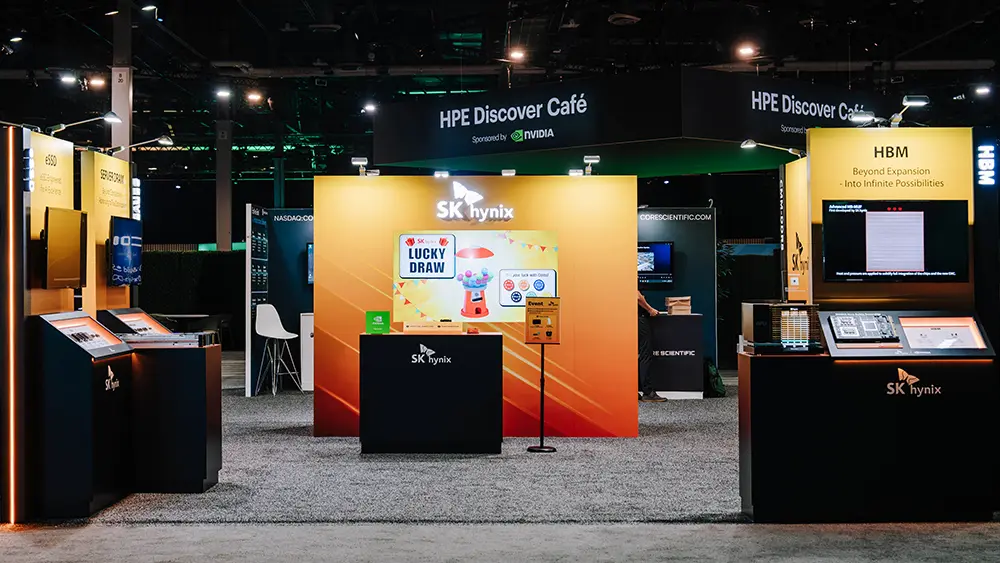
SK hynix used HPE Discover 2026 in Las Vegas to showcase HBM, CMM-DDR5, eSSD and server DRAM products for AI infrastructure buyers. The company said HPE-certified products already deployed in HPE servers include PS1010 E3.S eSSDs based on 176-layer 4D NAND and 64GB DDR5 RDIMM modules built on 1c process technology. The clearest commercial point is HPE certification and supply; the booth display does not by itself show broader customer adoption.

SK hynix And NVIDIA Push AI Factory Memory Into A Manufacturing Test
Chips & Semiconductors

SK hynix And NVIDIA Push AI Factory Memory Into A Manufacturing Test

SK hynix and NVIDIA announced a multi-year partnership covering next-generation memory, AI infrastructure systems and factory digital twins for semiconductor production.

SK hynix Ships HBM4E Samples. AI Memory Buyers Still Need Volume Proof.
Chips & Semiconductors

SK hynix Ships HBM4E Samples. AI Memory Buyers Still Need Volume Proof.

SK hynix has sent 12-layer HBM4E samples to major customers, citing 16Gbps per pin speed and a 48GB stack. The announcement shifts the AI memory race from specification claims toward customer qualification and production timing.

Keep Reading

More Stories

Latest
Kepler Targets 2027 Production for HBM Replacement MemoryCloud & Data CentersOct 6, 2026Kepler Targets 2027 Production for HBM Replacement MemoryEE Times reports that Kepler Computing is preparing 3D ferroelectric memory for 2027 production, promising higher capacity and bandwidth per watt while limiting reliance on advanced-node lithography.Yokogawa Opens Singapore Hub For Industrial Cyber ResilienceCapital & PolicyOct 6, 2026Yokogawa Opens Singapore Hub For Industrial Cyber ResilienceYokogawa Engineering Asia has launched a Singapore center focused on OT cyber resilience, training, response planning and recovery coordination for Southeast Asia, Oceania and Taiwan.ClickFix Attack Uses Browser Cache To Hide Malware PayloadCybersecurityOct 6, 2026ClickFix Attack Uses Browser Cache To Hide Malware PayloadMicrosoft Threat Intelligence traced a ClickFix cache-smuggling method that preloads malware into browser caches, then uses file size checks and a pasted Run command to launch later credential-theft stages.VOA Tests Six-Month Startup Buildout Before Funding DecisionsFintech & Digital PaymentsOct 6, 2026VOA Tests Six-Month Startup Buildout Before Funding DecisionsTechCabal’s interview with VOA Venture Partners founder Victoria Olayide Adesanya describes a six-month build programme that lets the firm work inside African financial-infrastructure startups before deciding whether to invest.Bitcoin Holds $86,000 As Dollar Index Hits 18-Month HighCrypto/Web3Oct 6, 2026Bitcoin Holds $86,000 As Dollar Index Hits 18-Month HighCoinDesk reported that bitcoin stayed near $86,000 while the U.S. Dollar Index reached about 102.5, with U.S. rate expectations and European political risks strengthening the dollar backdrop.Google Freezes OSS Bug Bounty Reports After AI Submission FloodCybersecurityOct 6, 2026Google Freezes OSS Bug Bounty Reports After AI Submission FloodGoogle has stopped accepting new product vulnerability reports in its OSS VRP after invalid automated submissions swamped reviewers, while older reports and some Cloud VRP routes remain open.Fleuret AI Raises €4M For Continuous AI Pentesting PlatformCybersecurityOct 6, 2026Fleuret AI Raises €4M For Continuous AI Pentesting PlatformTech.eu reported that French startup Fleuret AI raised €4 million in pre-seed funding to develop an agentic-AI platform that turns penetration testing into a continuous security process.GFT Analysis Says AI Documentation Can Cut Maintenance Work 30%Fintech & Digital PaymentsOct 6, 2026GFT Analysis Says AI Documentation Can Cut Maintenance Work 30%A GFT Technologies analysis says AI-linked software documentation can cut maintenance effort and speed developer onboarding when knowledge assets stay synchronized with code changes.Schneider Electric Lines Up $22.6 Billion PTC DealAIOct 5, 2026Schneider Electric Lines Up $22.6 Billion PTC DealSchneider Electric plans to buy PTC in a cash transaction valuing the US engineering software provider’s equity at about $22.6 billion, adding product-lifecycle software to its industrial AI push.Aggarwal Pledges Ola Electric Stake To Fund ₹1,000 Cr Rights IssueCapital & PolicyOct 5, 2026Aggarwal Pledges Ola Electric Stake To Fund ₹1,000 Cr Rights IssueOla Electric founder Bhavish Aggarwal pledged 20 Cr shares to finance his participation in a rights issue that forms part of a larger ₹1,500 Cr fundraising plan.Natrona Schools AI Review Puts Student Privacy Ahead Of Classroom Tool UseAIOct 5, 2026Natrona Schools AI Review Puts Student Privacy Ahead Of Classroom Tool UseNatrona County trustees questioned whether teacher AI tools expose student data, even as existing district rules already ban unauthorized generative AI use by students.AMD Prices 256-Core EPYC 9996 At $14,904 For Server BuyersChips & SemiconductorsOct 5, 2026AMD Prices 256-Core EPYC 9996 At $14,904 For Server BuyersTechRadar reports that AMD’s 6th Gen EPYC 9006 “Venice” lineup includes a 256-core EPYC 9996 with 512 threads, 1GB of L3 cache, a 600W default power rating and a $14,904 list price for 1,000-unit orders.