SendTech Times
News
INFRASTRUCTURE CONSTRAINT:

Intel And AMD Push ACE To Move AI Math Back Onto x86 CPUs

Newsroom brief

Intel and AMD have released the ACE specification for x86 processors, using AVX10 registers and dedicated matrix-multiplication silicon to make some AI tasks more power-efficient on CPUs rather than GPUs or NPUs.
Verified against source materialEdited by SendTech Times Chips & Compute DeskSource: Tom's Hardware
Intel And AMD Push ACE To Move AI Math Back Onto x86 CPUs
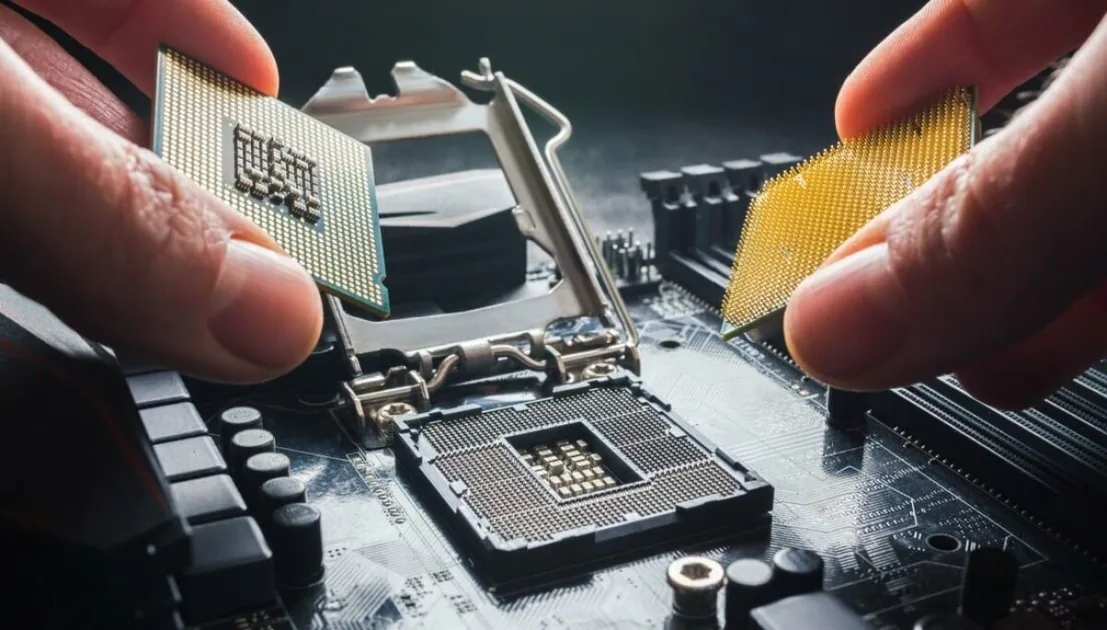
Image source: Tom's Hardware

ACE Reframes The CPU Role In AI

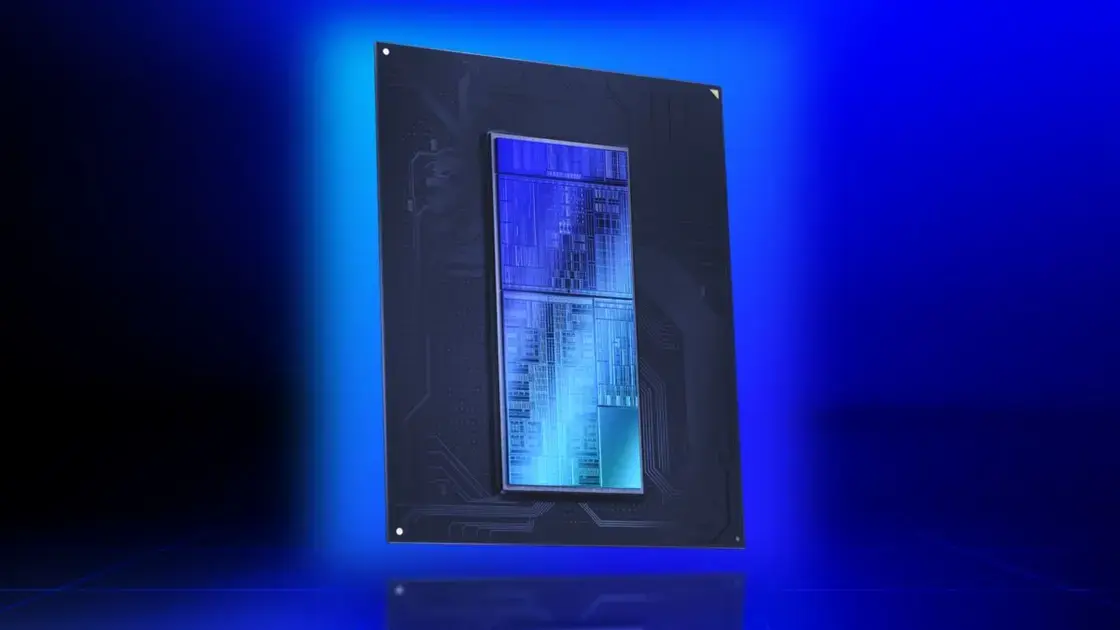
Intel and AMD have released the full specification for ACE CPU extensions, a move aimed at making x86 processors more useful for AI tasks that do not always belong on GPUs.

The change targets smaller models, latency-sensitive single-user work and situations where no capable GPU is available.

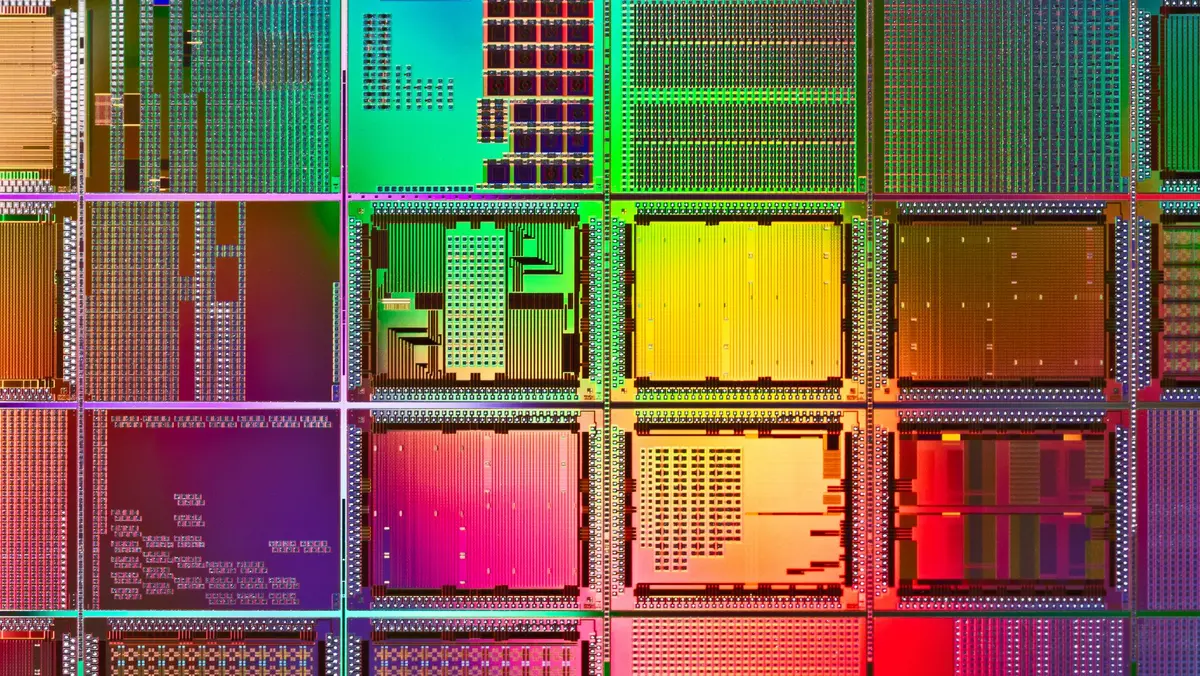
The standard uses existing AVX10 registers while adding silicon dedicated to matrix multiplication.

That combination is meant to preserve links to current x86 designs while giving developers a more direct path for AI math.

The practical claim is not that CPUs replace accelerators, but that some AI work can run with less overhead when it stays close to the processor already handling the system.

That matters because AI infrastructure is not only a GPU story.

CPUs still manage operating systems, memory movement, storage, networking and many edge or client-side tasks.

If ACE gives x86 chips a more efficient way to handle matrix operations, Intel and AMD gain a clearer response to AI workloads that are too small, too latency-sensitive or too scattered for dedicated accelerators.

Matrix Multiplication Gets Dedicated Silicon

Matrix multiplication sits at the center of many AI workloads.

CPUs can already run those operations, but the process can be slow and power-hungry when it relies on general vector instructions.

AVX10 multiply-accumulate instructions can help, but the source material describes that path as a workaround because AVX was not designed around 2D matrix operations.

ACE changes the approach by adding hardware support for matrix multiplication while continuing to use 512-bit AVX inputs.

That design is meant to simplify integration with existing x86 processor designs because ACE does not need a separate input format.

At equal input-vector counts, the ACE design is described as capable of 16x the operations available through AVX10.

That is not the same as a promised 16x real-world speedup, because each processor implementation will determine delivered performance.

Still, packing more matrix work into each instruction can reduce instruction overhead and may improve RAM bandwidth use.

The design also keeps the CPU discussion tied to software practicality rather than benchmark claims alone.

ACE is useful only if the instruction path can be exposed in ways that compiler writers, library maintainers and framework teams can adopt without fragmenting support across every x86 implementation.

A Common Target For AI Frameworks

The developer angle may be as important as the hardware change.

ACE is intended to be implementation-agnostic, so machine-learning frameworks and libraries such as PyTorch and TensorFlow can target one code path rather than building many variations around different levels of AVX support.

The standard also supports data types used in machine-learning operations, including INT8, INT32, FP8, FP16, FP32 and BF16.

It can also use Open Compute Project MX block-scaled formats natively, which AVX10 does not provide.

That gives Intel and AMD a way to make x86 CPUs a more consistent fallback or primary target for selected inference work.

Developers could move some NPU-specific workloads back to CPUs when they need quick execution and do not want to handle different NPU designs.

The Watchpoint Is Real Implementation

The specification gives Intel and AMD a shared technical direction, but the commercial test will come from silicon and software adoption.

ACE needs processor implementations, compiler support and framework support before it changes how AI workloads are deployed.

The open question is where ACE fits against GPUs and NPUs.

GPUs will remain central for large-scale training and heavy inference.

NPUs will keep serving power-sensitive client workloads.

ACE is more likely to matter in the middle: small models, fallback execution, CPU-only environments and workflows where moving data to another accelerator adds more overhead than value.

If Intel and AMD execute well, ACE could make x86 CPUs a more credible part of the AI stack rather than just the host around accelerators.

If support arrives slowly, it may remain a useful specification without becoming a practical deployment target for mainstream AI frameworks.
Share this article
inXf

Related articles

More
Intel 18A-P Enters Risk Production, but Foundry Proof Still Depends on Yield
Chips & Semiconductors

Intel 18A-P Enters Risk Production, but Foundry Proof Still Depends on Yield

Intel has started risk production of its 18A-P node, adding performance and power claims to its foundry pitch, while outside-customer commitments, Arm manufacturing proof and packaging capacity remain the next tests.

AMD Server CPU Share Hits 33.2% as AI Server Demand Lifts the Segment
Chips & Semiconductors

AMD Server CPU Share Hits 33.2% as AI Server Demand Lifts the Segment

AMD reached 33.2 percent of the server CPU market in the first quarter of 2026 as overall x86 processor shipments fell by more than six percent. Server CPU unit shipments rose by more than 10 percent from a year earlier, while Intel still held roughly two-thirds of the server CPU market. The next signal is whether AI server demand keeps server processors stronger than the wider PC and client CPU cycle.

Intel 18A-P Enters Risk Production With Foundry Proof Still Pending
Chips & Semiconductors

Intel 18A-P Enters Risk Production With Foundry Proof Still Pending

Intel Foundry says Intel 18A-P has entered risk production and brings performance, power and thermal gains over Intel 18A, but the update still leaves customer tape-outs and volume manufacturing undisclosed.

AMD Prices 256-Core EPYC 9996 At $14,904 For Server Buyers
Chips & Semiconductors

AMD Prices 256-Core EPYC 9996 At $14,904 For Server Buyers

TechRadar reports that AMD’s 6th Gen EPYC 9006 “Venice” lineup includes a 256-core EPYC 9996 with 512 threads, 1GB of L3 cache, a 600W default power rating and a $14,904 list price for 1,000-unit orders.

Intel Dunlow Manifests Point To 28-Core Nova Lake-S Xeon Platform
Chips & Semiconductors

Intel Dunlow Manifests Point To 28-Core Nova Lake-S Xeon Platform

Tom's Hardware reported that NBD shipment manifests point to an Intel Dunlow workstation and entry-server platform with up to 28 cores, LGA1954 packaging, dual-channel memory and 95W processor base power. The details remain pre-launch documentation, and launch dates, pricing, core mix and customers remain outside Intel confirmation.

Memory Prices Push US PC Shipments Down 7%
Chips & Semiconductors

Memory Prices Push US PC Shipments Down 7%

Omdia data cited by Tom Hardware showed US PC shipments fell to 15.8 million units in the first quarter of 2026, as memory and storage chip shortages hit entry-level laptops and pushed the market toward a forecast 14.4% contraction.

Quantum Data Centre Push Shifts From Qubit Counts To Hybrid Workloads
Cloud & Data Centers

Quantum Data Centre Push Shifts From Qubit Counts To Hybrid Workloads

Data Center Knowledge reported that quantum computing work is shifting toward hybrid systems that connect QPUs with GPU and CPU infrastructure. Hyperion estimated the market at $1.4 billion in 2025 and projected about $3 billion by 2028, while the article did not identify production customers, signed deployment contracts or facility-level power loads.

AI Data Centres Face Heat And Severe Weather Costs As Buildouts Move Beyond Hubs
Cloud & Data Centers

AI Data Centres Face Heat And Severe Weather Costs As Buildouts Move Beyond Hubs

CNBC reports that severe weather now drives a third of Zurich’s U.S. data centre builders’ risk losses, while new AI data-center construction moves into markets with grid, roof and cooling exposure.

Keep Reading

More Stories

Latest
Kepler Targets 2027 Production for HBM Replacement MemoryCloud & Data CentersOct 6, 2026Kepler Targets 2027 Production for HBM Replacement MemoryEE Times reports that Kepler Computing is preparing 3D ferroelectric memory for 2027 production, promising higher capacity and bandwidth per watt while limiting reliance on advanced-node lithography.Yokogawa Opens Singapore Hub For Industrial Cyber ResilienceCapital & PolicyOct 6, 2026Yokogawa Opens Singapore Hub For Industrial Cyber ResilienceYokogawa Engineering Asia has launched a Singapore center focused on OT cyber resilience, training, response planning and recovery coordination for Southeast Asia, Oceania and Taiwan.ClickFix Attack Uses Browser Cache To Hide Malware PayloadCybersecurityOct 6, 2026ClickFix Attack Uses Browser Cache To Hide Malware PayloadMicrosoft Threat Intelligence traced a ClickFix cache-smuggling method that preloads malware into browser caches, then uses file size checks and a pasted Run command to launch later credential-theft stages.VOA Tests Six-Month Startup Buildout Before Funding DecisionsFintech & Digital PaymentsOct 6, 2026VOA Tests Six-Month Startup Buildout Before Funding DecisionsTechCabal’s interview with VOA Venture Partners founder Victoria Olayide Adesanya describes a six-month build programme that lets the firm work inside African financial-infrastructure startups before deciding whether to invest.Bitcoin Holds $86,000 As Dollar Index Hits 18-Month HighCrypto/Web3Oct 6, 2026Bitcoin Holds $86,000 As Dollar Index Hits 18-Month HighCoinDesk reported that bitcoin stayed near $86,000 while the U.S. Dollar Index reached about 102.5, with U.S. rate expectations and European political risks strengthening the dollar backdrop.Google Freezes OSS Bug Bounty Reports After AI Submission FloodCybersecurityOct 6, 2026Google Freezes OSS Bug Bounty Reports After AI Submission FloodGoogle has stopped accepting new product vulnerability reports in its OSS VRP after invalid automated submissions swamped reviewers, while older reports and some Cloud VRP routes remain open.Fleuret AI Raises €4M For Continuous AI Pentesting PlatformCybersecurityOct 6, 2026Fleuret AI Raises €4M For Continuous AI Pentesting PlatformTech.eu reported that French startup Fleuret AI raised €4 million in pre-seed funding to develop an agentic-AI platform that turns penetration testing into a continuous security process.GFT Analysis Says AI Documentation Can Cut Maintenance Work 30%Fintech & Digital PaymentsOct 6, 2026GFT Analysis Says AI Documentation Can Cut Maintenance Work 30%A GFT Technologies analysis says AI-linked software documentation can cut maintenance effort and speed developer onboarding when knowledge assets stay synchronized with code changes.Schneider Electric Lines Up $22.6 Billion PTC DealAIOct 5, 2026Schneider Electric Lines Up $22.6 Billion PTC DealSchneider Electric plans to buy PTC in a cash transaction valuing the US engineering software provider’s equity at about $22.6 billion, adding product-lifecycle software to its industrial AI push.Aggarwal Pledges Ola Electric Stake To Fund ₹1,000 Cr Rights IssueCapital & PolicyOct 5, 2026Aggarwal Pledges Ola Electric Stake To Fund ₹1,000 Cr Rights IssueOla Electric founder Bhavish Aggarwal pledged 20 Cr shares to finance his participation in a rights issue that forms part of a larger ₹1,500 Cr fundraising plan.Natrona Schools AI Review Puts Student Privacy Ahead Of Classroom Tool UseAIOct 5, 2026Natrona Schools AI Review Puts Student Privacy Ahead Of Classroom Tool UseNatrona County trustees questioned whether teacher AI tools expose student data, even as existing district rules already ban unauthorized generative AI use by students.New Relic Reports US$18 Million GreenOps Savings After AI CertificationCloud & Data CentersOct 5, 2026New Relic Reports US$18 Million GreenOps Savings After AI CertificationA New Relic company news item carried by iTWire says the observability vendor has earned ISO/IEC 42001 certification, joined the EU AI Pact and reported US$18 million in GreenOps savings from more than 80 engineering initiatives.