SendTech Times
Analysis
INFRASTRUCTURE CONSTRAINT:

Intel 18A-P Enters Risk Production, but Foundry Proof Still Depends on Yield

Newsroom brief

Intel has started risk production of its 18A-P node, adding performance and power claims to its foundry pitch, while outside-customer commitments, Arm manufacturing proof and packaging capacity remain the next tests.
Verified against source materialEdited by SendTech Times Chips & Compute DeskSource: CNBC Technology
Intel 18A-P Enters Risk Production, but Foundry Proof Still Depends on Yield
Image source: CNBC Technology

Intel Moves 18A-P From Pitch to Early Production

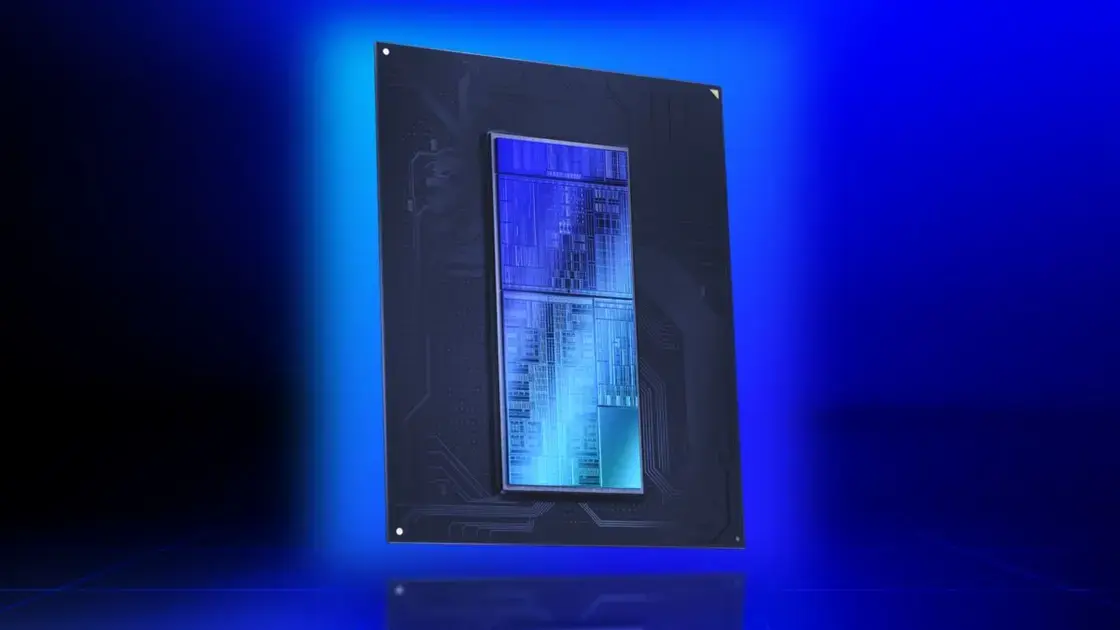
Intel has begun risk production of 18A-P, its most advanced chip node and the next test of whether Intel Foundry can win manufacturing work beyond Intel’s own products.

The company announced the step at the VLSI Symposium in Honolulu, Hawaii, on Tuesday.

This production stage is early and does not mark final qualification.

Intel describes risk production as a phase in which data indicates the process will meet customer requirements once qualification is complete.

For foundry customers, that distinction is important because a process node must prove yield, compatibility and delivery discipline before a chip designer commits a major product.

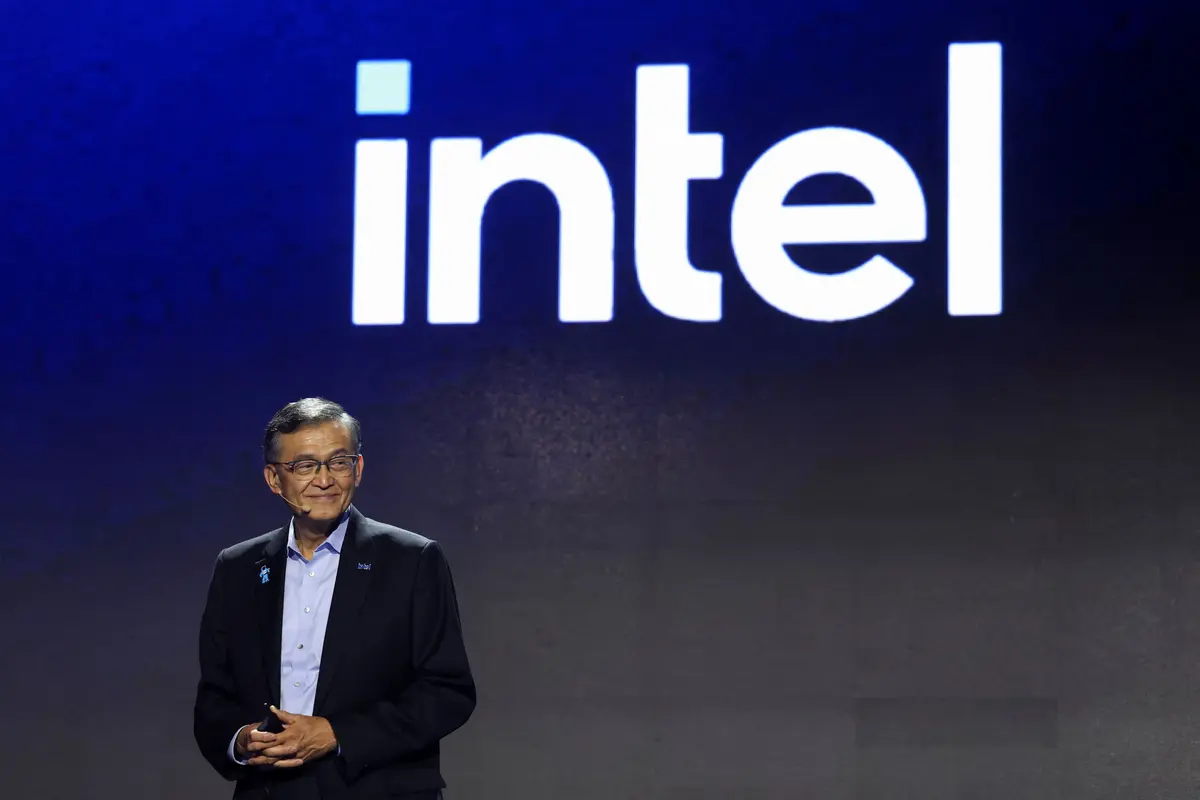
Naga Chandrasekaran, Intel’s foundry head, said the company still has “more work ahead” and described the update as a signal to Intel Foundry customers and partners that Intel remains committed to leading-edge process innovation over the long term.

The message targets customers that have watched Intel try to turn its manufacturing base into a third-party foundry business.

The 18A-P Claim Focuses on Efficiency, Not Just Naming

Intel presents the 18A-P improvement in two ways: up to 9% more performance, or power consumption that is 18% lower than 18A.

The company also says the node is at least 20% more heat resistant and fully compatible with existing 18A deployments.

Those claims give Intel a sharper foundry pitch than the original 18A rollout.

Intel brought 18A to PC chips in January and has been producing 18A at volume at its Arizona chip plant since December, but the company has not yet secured a major outside customer.

The new process variant is therefore a more visible proving point for external designs.

The customer timeline is now close enough to face public scrutiny.

Intel CEO Lip-Bu Tan said in May that multiple foundry-customer commitments are expected in the second half of 2026, so 18A-P must move from technical readiness into customer qualification.

Until those commitments arrive, the node remains a proof point rather than a confirmed external production franchise.

Yield remains the operational test.

Counterpoint Research analyst Neil Shah put yield rate first and said Intel could draw more customers if first-month yield exceeds 90%.

Apple Interest Does Not Remove the Architecture Gap

The outside-customer question is tied in part to Apple.

Intel shares rose nearly 14% in May on reports that Intel had reached a preliminary deal to make chips for Apple, and chip analyst Ben Bajarin said Apple is likely to wait for 18A-P before making chips there.

A customer win would matter for Intel because the company has presented 18A as part of a turnaround after years of manufacturing missteps and low yields.

Wall Street has already priced in a stronger story: Intel shares are up more than 200% this year after rising 84% in 2025.

The U.S. government took a 10% stake in August, and Nvidia followed with a $5 billion investment in September.

The technical barrier is not limited to node performance.

Shah said Intel’s manufacturing base is centered on x86, while Apple, Google, Amazon and other custom-chip customers build around Arm architecture.

He said Intel has not built Arm chips, while TSMC has mastered that work.

Packaging May Be the First Customer Opening

Intel’s first major external win may come through advanced packaging rather than a full process-node customer.

Advanced packaging connects individual chip dies into larger systems, and Intel’s EMIB technology competes with TSMC’s CoWoS packaging.

That route matters because packaging capacity is a live constraint in AI and high-performance computing supply chains.

Shah said TSMC faces packaging bottlenecks and described the area as a low-hanging opportunity for Intel.

TSMC is also expanding its own $165 billion chipmaking campus about 50 miles north of Intel’s Arizona plant.

Intel’s next checkpoint is therefore concrete customer qualification for 18A-P, or a packaging customer that shows Intel Foundry can win useful outside work before a full Apple-scale manufacturing commitment arrives.


Share this article
inXf

Related articles

More
Intel 18A-P Enters Risk Production With Foundry Proof Still Pending
Chips & Semiconductors

Intel 18A-P Enters Risk Production With Foundry Proof Still Pending

Intel Foundry says Intel 18A-P has entered risk production and brings performance, power and thermal gains over Intel 18A, but the update still leaves customer tape-outs and volume manufacturing undisclosed.

Claros Turns Samsung Foundry Into a Test for Its AI Power Chip
Chips & Semiconductors

Claros Turns Samsung Foundry Into a Test for Its AI Power Chip

Claros says Samsung Electronics will manufacture its integrated voltage regulator at the Austin, Texas, fab, giving the startup a U.S. production route for chips designed to reduce power loss near AI processors and support 800 VDC data-center designs.

Samsung UFS 5.0 Turns Phone Storage Into An On-Device AI Constraint
Chips & Semiconductors

Samsung UFS 5.0 Turns Phone Storage Into An On-Device AI Constraint

Samsung says its UFS 5.0 storage reaches 10.8 GB/s read speed, improves power efficiency by more than 40% and will enter mass production in the fourth quarter of this year.

Intel Dunlow Manifests Point To 28-Core Nova Lake-S Xeon Platform
Chips & Semiconductors

Intel Dunlow Manifests Point To 28-Core Nova Lake-S Xeon Platform

Tom's Hardware reported that NBD shipment manifests point to an Intel Dunlow workstation and entry-server platform with up to 28 cores, LGA1954 packaging, dual-channel memory and 95W processor base power. The details remain pre-launch documentation, and launch dates, pricing, core mix and customers remain outside Intel confirmation.

Unconventional AI Tests Oscillator Models Before Power-Efficient Chip Proof
Chips & Semiconductors

Unconventional AI Tests Oscillator Models Before Power-Efficient Chip Proof

Unconventional AI has released the Un-0 model series to test oscillator-based image generation, but the work still runs on simulated oscillators rather than a physical AI accelerator.

Samsung Starts PM1763 PCIe 6.0 SSD Production For AI Servers
Chips & Semiconductors

Samsung Starts PM1763 PCIe 6.0 SSD Production For AI Servers

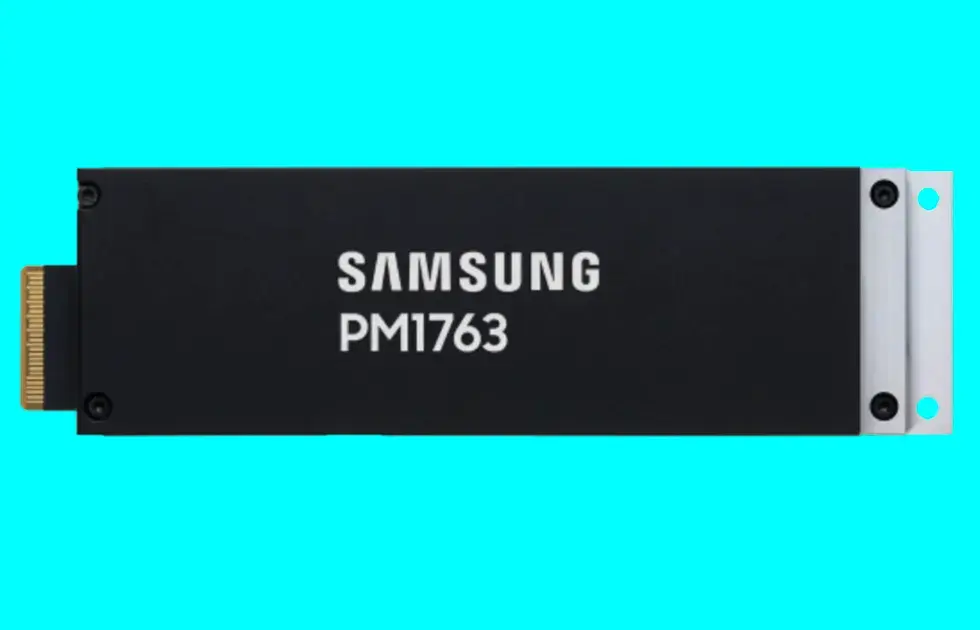
Samsung has started mass production of the PM1763, a PCIe 6.0 enterprise SSD for AI and HPC servers with 28,400 MB/s sequential reads in a 16TB configuration, according to ServeTheHome. Customers, pricing, shipment volumes and server qualification dates remain outside the report.

Samsung Sets HBM And Server SSD Efficiency Targets With Fab Water Gap Still Open
Chips & Semiconductors

Samsung Sets HBM And Server SSD Efficiency Targets With Fab Water Gap Still Open

Samsung’s 2026 Sustainability Report says lower-power HBM and server SSD targets support AI infrastructure, while its semiconductor division still has a 2050 net-zero timetable and limited product-level commercial detail.

Samsung $15 Billion Power Prepayment Proposal Ties Fabs to Grid Funding
Chips & Semiconductors

Samsung $15 Billion Power Prepayment Proposal Ties Fabs to Grid Funding

Reuters reports that KEPCO asked Samsung to consider a roughly $15 billion electricity prepayment as South Korea weighs grid funding for chip plants and AI data centres.

Keep Reading

More Stories

Latest
Kepler Targets 2027 Production for HBM Replacement MemoryCloud & Data CentersOct 6, 2026Kepler Targets 2027 Production for HBM Replacement MemoryEE Times reports that Kepler Computing is preparing 3D ferroelectric memory for 2027 production, promising higher capacity and bandwidth per watt while limiting reliance on advanced-node lithography.Yokogawa Opens Singapore Hub For Industrial Cyber ResilienceCapital & PolicyOct 6, 2026Yokogawa Opens Singapore Hub For Industrial Cyber ResilienceYokogawa Engineering Asia has launched a Singapore center focused on OT cyber resilience, training, response planning and recovery coordination for Southeast Asia, Oceania and Taiwan.ClickFix Attack Uses Browser Cache To Hide Malware PayloadCybersecurityOct 6, 2026ClickFix Attack Uses Browser Cache To Hide Malware PayloadMicrosoft Threat Intelligence traced a ClickFix cache-smuggling method that preloads malware into browser caches, then uses file size checks and a pasted Run command to launch later credential-theft stages.VOA Tests Six-Month Startup Buildout Before Funding DecisionsFintech & Digital PaymentsOct 6, 2026VOA Tests Six-Month Startup Buildout Before Funding DecisionsTechCabal’s interview with VOA Venture Partners founder Victoria Olayide Adesanya describes a six-month build programme that lets the firm work inside African financial-infrastructure startups before deciding whether to invest.Bitcoin Holds $86,000 As Dollar Index Hits 18-Month HighCrypto/Web3Oct 6, 2026Bitcoin Holds $86,000 As Dollar Index Hits 18-Month HighCoinDesk reported that bitcoin stayed near $86,000 while the U.S. Dollar Index reached about 102.5, with U.S. rate expectations and European political risks strengthening the dollar backdrop.Google Freezes OSS Bug Bounty Reports After AI Submission FloodCybersecurityOct 6, 2026Google Freezes OSS Bug Bounty Reports After AI Submission FloodGoogle has stopped accepting new product vulnerability reports in its OSS VRP after invalid automated submissions swamped reviewers, while older reports and some Cloud VRP routes remain open.Fleuret AI Raises €4M For Continuous AI Pentesting PlatformCybersecurityOct 6, 2026Fleuret AI Raises €4M For Continuous AI Pentesting PlatformTech.eu reported that French startup Fleuret AI raised €4 million in pre-seed funding to develop an agentic-AI platform that turns penetration testing into a continuous security process.GFT Analysis Says AI Documentation Can Cut Maintenance Work 30%Fintech & Digital PaymentsOct 6, 2026GFT Analysis Says AI Documentation Can Cut Maintenance Work 30%A GFT Technologies analysis says AI-linked software documentation can cut maintenance effort and speed developer onboarding when knowledge assets stay synchronized with code changes.Schneider Electric Lines Up $22.6 Billion PTC DealAIOct 5, 2026Schneider Electric Lines Up $22.6 Billion PTC DealSchneider Electric plans to buy PTC in a cash transaction valuing the US engineering software provider’s equity at about $22.6 billion, adding product-lifecycle software to its industrial AI push.Aggarwal Pledges Ola Electric Stake To Fund ₹1,000 Cr Rights IssueCapital & PolicyOct 5, 2026Aggarwal Pledges Ola Electric Stake To Fund ₹1,000 Cr Rights IssueOla Electric founder Bhavish Aggarwal pledged 20 Cr shares to finance his participation in a rights issue that forms part of a larger ₹1,500 Cr fundraising plan.Natrona Schools AI Review Puts Student Privacy Ahead Of Classroom Tool UseAIOct 5, 2026Natrona Schools AI Review Puts Student Privacy Ahead Of Classroom Tool UseNatrona County trustees questioned whether teacher AI tools expose student data, even as existing district rules already ban unauthorized generative AI use by students.AMD Prices 256-Core EPYC 9996 At $14,904 For Server BuyersChips & SemiconductorsOct 5, 2026AMD Prices 256-Core EPYC 9996 At $14,904 For Server BuyersTechRadar reports that AMD’s 6th Gen EPYC 9006 “Venice” lineup includes a 256-core EPYC 9996 with 512 threads, 1GB of L3 cache, a 600W default power rating and a $14,904 list price for 1,000-unit orders.