SendTech Times
News
SYSTEMS SHIFT:

China’s AI Labs Turn Self-Improving Models Into A Chip-Efficiency Test

Newsroom brief

Chinese AI teams are tying recursive self-improvement claims to research automation and kernel optimisation, but the strongest evidence still sits in narrow engineering tasks rather than full autonomous AI research.
Verified against source materialEdited by SendTech Times AI & Enterprise DeskSource: South China Morning Post
China’s AI Labs Turn Self-Improving Models Into A Chip-Efficiency Test
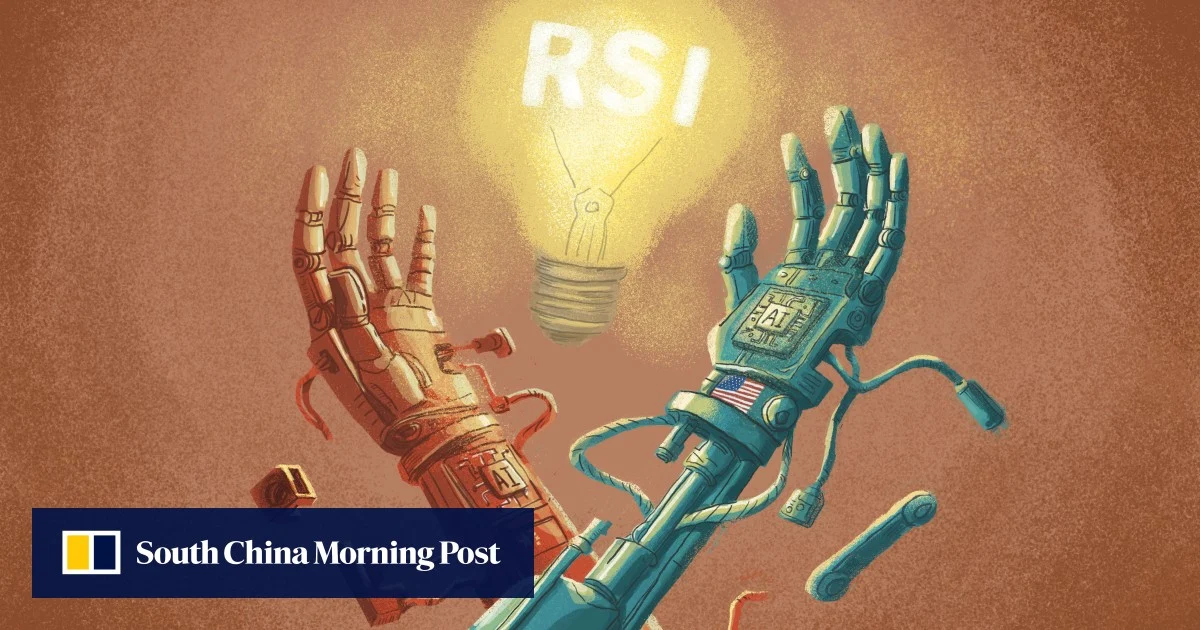
Image source: South China Morning Post

China’s AI Labs Move From Chatbots To Research Automation

Chinese AI developers are pushing recursive self-improvement from a speculative safety debate into concrete engineering claims.

The race is centred on systems that can help improve AI research itself, including model work, coding and chip-software optimisation.

The most important China signal is not a single product launch.

It is the clustering of claims from Xiaomi-linked model work, MiniMax, Alibaba's Qwen team, ByteDance and Tsinghua University researchers around AI systems that automate parts of development.

Luo Fuli leads Xiaomi's MiMo AI model work and told the Zhongguancun Forum in March that self-evolution was becoming a near-term AI priority, revising her earlier expectation from three to five years down to one to two years.

That shifts the competitive frame.

US companies such as Anthropic are still treated as coding and research-automation leaders, but Chinese teams are using the same frontier to offset hardware limits, especially where software efficiency can improve the use of scarce AI chips.

Kernel Optimisation Becomes The Hard Test

The clearest technical evidence sits in kernel work, not general claims about autonomous intelligence.

ByteDance and Tsinghua University researchers described a February system that used an AI agent to optimise kernels for Nvidia's CUDA ecosystem.

Their benchmark put the resulting workflow at 100 per cent faster than existing automation methods.

MiniMax made a more product-facing claim around its M3 model.

The company said the model optimised a production-grade FP8 GEMM kernel on Nvidia GPUs in around 24 hours without information that would let it copy an existing answer.

The same task would otherwise have required a human team up to two weeks, according to the company's description.

Alibaba's Qwen team pointed to a similar direction on its own hardware stack.

For Alibaba, the Qwen3.7-Max claim was tied to the company's in-house parallel processing unit platform: the model completed a kernel optimisation run in around 35 hours, or 10 times faster than the alternative process.

Those examples matter because kernel performance affects the cost and speed of large-model inference, where China faces continuing pressure from chip restrictions.

The Measurement Gap Remains Large

The caution is that task automation is not the same as proven recursive self-improvement.

Xu Weixian, an undergraduate AI researcher at Shanghai Jiao Tong University, warned that AI may be accelerating idea discovery without proving that the ideas are meaningful solutions.

Anthropic has made a similar distinction, noting a large gap between autonomous AI research tasks and autonomous goal-setting for research.

The market also lacks stable metrics.

London-based governance researcher Alan Chan said the field remains early and does not yet have concrete ways to measure progress.

Code-generation figures are useful but incomplete: Anthropic put Claude's contribution above 80 per cent of merged code as of May, and a 130-employee poll estimated that Mythos delivered a fourfold productivity gain.

The next watchpoint is whether Chinese and US AI labs publish stronger evidence that automation is improving research outcomes, not just producing faster code.

Until then, recursive self-improvement remains a strategic target with real engineering milestones and unresolved proof standards.


Share this article
inXf

Related articles

More
China’s AI Boom Faces A Demand Test As Chip Bottlenecks Raise The Cost Of Growth
AI

China’s AI Boom Faces A Demand Test As Chip Bottlenecks Raise The Cost Of Growth

China’s AI investment exceeds one trillion yuan a year, but Nomura economist Lu Ting says chip constraints, capital-market gaps and city-level concentration limit its wider economic lift.

Unconventional AI Tests Oscillator Models Before Power-Efficient Chip Proof
Chips & Semiconductors

Unconventional AI Tests Oscillator Models Before Power-Efficient Chip Proof

Unconventional AI has released the Un-0 model series to test oscillator-based image generation, but the work still runs on simulated oscillators rather than a physical AI accelerator.

Huawei's Tau scaling puts architecture at the center of China's AI-chip push
Chips & Semiconductors

Huawei's Tau scaling puts architecture at the center of China's AI-chip push

Huawei proposed Tau scaling, a framework focused on shorter signal paths rather than only smaller transistors. LogicFolding is planned for Kirin chips in fall and winter 2026, with Huawei claiming a density jump to 238 million transistors per square millimeter. The test is whether architecture-led gains can be validated in commercial chips amid export-control limits on advanced tools.

Chinese Brain-Mapping Chip Claims 478 Times NVIDIA A100 Speed Without Clinical Proof
Chips & Semiconductors

Chinese Brain-Mapping Chip Claims 478 Times NVIDIA A100 Speed Without Clinical Proof

A Peking University and Chinese Academy of Sciences team reported a 40-nanometre computing-in-memory chip that maps the brain’s folded cortex in less than 0.5 seconds, while the public record still lacks clinical validation or a commercial release plan.

ByteDance’s 10T-Parameter AI Target Puts China’s Compute Stack On Trial
AI

ByteDance’s 10T-Parameter AI Target Puts China’s Compute Stack On Trial

Capacity Media reported that ByteDance is pre-training a frontier model that could reach 10 trillion parameters, tying China’s AI race to chip supply, power and data-centre capacity.

Korea’s Chip Bonuses Turn AI Memory Profits Into An Inflation Test
Chips & Semiconductors

Korea’s Chip Bonuses Turn AI Memory Profits Into An Inflation Test

South Korea’s central bank says exceptional IT-sector performance bonuses could feed wider wage and spending pressure, tying the AI memory boom at Samsung Electronics and SK Hynix to a macroeconomic risk beyond chip supply.

SK And Nvidia Expand Korea Chip Alliance Into AI Factory Plans
AI

SK And Nvidia Expand Korea Chip Alliance Into AI Factory Plans

SK Group and Nvidia plan to extend their chip partnership into Korean AI factories, with SK Telecom expected to operate the infrastructure push and SK hynix remaining central to Nvidia memory supply.

Om AI Bets on Edge Multimodal Models as China AI Startups Move Toward Deployment
AI

Om AI Bets on Edge Multimodal Models as China AI Startups Move Toward Deployment

Om AI Technology is focusing on compact edge-side multimodal vision models for PCs, cameras, robots and other devices rather than very large cloud models. At BEYOND Expo 2026, the company showed OttoBox AI Studio, a local-AI content tool for video analysis, asset matching, script generation and fast production. The next test is whether its VLX edge multimodal model can improve video understanding and decision-making while keeping operating costs lower.

Keep Reading

More Stories

Latest
The Loop X Opens Flagship Store Built Around Hands-On Device TestingDevices & Consumer TechOct 6, 2026The Loop X Opens Flagship Store Built Around Hands-On Device TestingThe Loop X opened its first flagship store at SM North EDSA The Annex, combining phones, laptops, wearables, accessories, experience zones and an in-store matcha bar.Ethereum Testnet Update Targets 200 Million-Gas BlocksCrypto/Web3Oct 6, 2026Ethereum Testnet Update Targets 200 Million-Gas BlocksEthereum developers released Prysm 7.2.1 so the Sepolia trial of Glamsterdam can test 200 million-gas blocks, more than three times the prior 60 million setting, before any main-network change.Kepler Targets 2027 Production for HBM Replacement MemoryCloud & Data CentersOct 6, 2026Kepler Targets 2027 Production for HBM Replacement MemoryEE Times reports that Kepler Computing is preparing 3D ferroelectric memory for 2027 production, promising higher capacity and bandwidth per watt while limiting reliance on advanced-node lithography.Yokogawa Opens Singapore Hub For Industrial Cyber ResilienceCapital & PolicyOct 6, 2026Yokogawa Opens Singapore Hub For Industrial Cyber ResilienceYokogawa Engineering Asia has launched a Singapore center focused on OT cyber resilience, training, response planning and recovery coordination for Southeast Asia, Oceania and Taiwan.ClickFix Attack Uses Browser Cache To Hide Malware PayloadCybersecurityOct 6, 2026ClickFix Attack Uses Browser Cache To Hide Malware PayloadMicrosoft Threat Intelligence traced a ClickFix cache-smuggling method that preloads malware into browser caches, then uses file size checks and a pasted Run command to launch later credential-theft stages.VOA Tests Six-Month Startup Buildout Before Funding DecisionsFintech & Digital PaymentsOct 6, 2026VOA Tests Six-Month Startup Buildout Before Funding DecisionsTechCabal’s interview with VOA Venture Partners founder Victoria Olayide Adesanya describes a six-month build programme that lets the firm work inside African financial-infrastructure startups before deciding whether to invest.Bitcoin Holds $86,000 As Dollar Index Hits 18-Month HighCrypto/Web3Oct 6, 2026Bitcoin Holds $86,000 As Dollar Index Hits 18-Month HighCoinDesk reported that bitcoin stayed near $86,000 while the U.S. Dollar Index reached about 102.5, with U.S. rate expectations and European political risks strengthening the dollar backdrop.Google Freezes OSS Bug Bounty Reports After AI Submission FloodCybersecurityOct 6, 2026Google Freezes OSS Bug Bounty Reports After AI Submission FloodGoogle has stopped accepting new product vulnerability reports in its OSS VRP after invalid automated submissions swamped reviewers, while older reports and some Cloud VRP routes remain open.Fleuret AI Raises €4M For Continuous AI Pentesting PlatformCybersecurityOct 6, 2026Fleuret AI Raises €4M For Continuous AI Pentesting PlatformTech.eu reported that French startup Fleuret AI raised €4 million in pre-seed funding to develop an agentic-AI platform that turns penetration testing into a continuous security process.GFT Analysis Says AI Documentation Can Cut Maintenance Work 30%Fintech & Digital PaymentsOct 6, 2026GFT Analysis Says AI Documentation Can Cut Maintenance Work 30%A GFT Technologies analysis says AI-linked software documentation can cut maintenance effort and speed developer onboarding when knowledge assets stay synchronized with code changes.Schneider Electric Lines Up $22.6 Billion PTC DealAIOct 5, 2026Schneider Electric Lines Up $22.6 Billion PTC DealSchneider Electric plans to buy PTC in a cash transaction valuing the US engineering software provider’s equity at about $22.6 billion, adding product-lifecycle software to its industrial AI push.Aggarwal Pledges Ola Electric Stake To Fund ₹1,000 Cr Rights IssueCapital & PolicyOct 5, 2026Aggarwal Pledges Ola Electric Stake To Fund ₹1,000 Cr Rights IssueOla Electric founder Bhavish Aggarwal pledged 20 Cr shares to finance his participation in a rights issue that forms part of a larger ₹1,500 Cr fundraising plan.