SendTech Times
News
SUPPLY CHECK:

Huawei's Tau scaling puts architecture at the center of China's AI-chip push

Newsroom brief

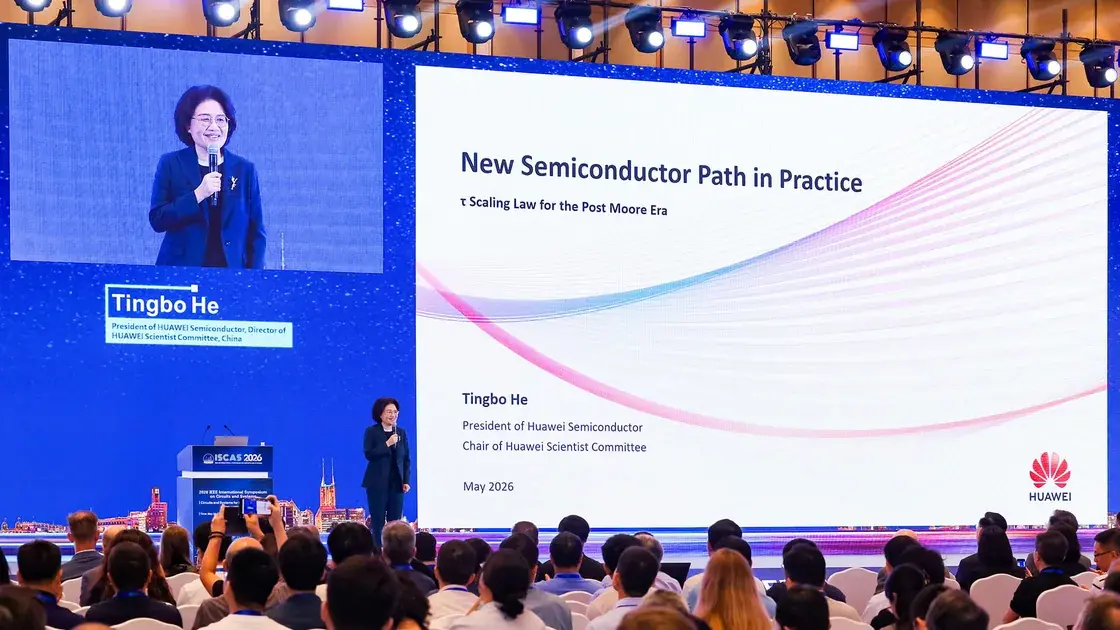
Huawei proposed Tau scaling, a framework focused on shorter signal paths rather than only smaller transistors. LogicFolding is planned for Kirin chips in fall and winter 2026, with Huawei claiming a density jump to 238 million transistors per square millimeter. The test is whether architecture-led gains can be validated in commercial chips amid export-control limits on advanced tools.
Verified against source materialEdited by SendTech Times Chips & Compute DeskSource: Kr Asia
Huawei's Tau scaling puts architecture at the center of China's AI-chip push
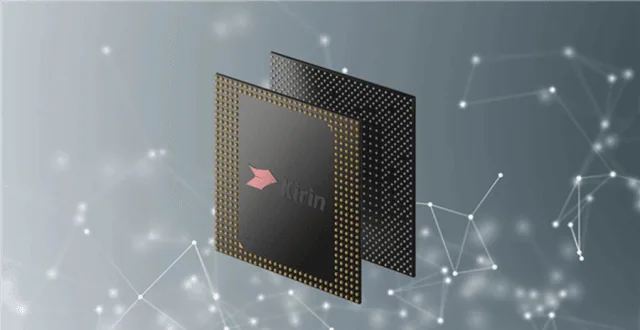
Image source: KrASIA

What happened

Huawei has introduced Tau scaling, a semiconductor development framework meant to improve chip performance as conventional transistor shrinking becomes harder.

Huawei executive He Tingbo presented the proposal on May 25 at the IEEE International Symposium on Circuits and Systems in Shanghai.

KrASIA identifies He as the head of Huawei's semiconductor business and chair of the company's scientist committee.

The idea shifts emphasis from geometric scaling to time-based gains.

Rather than relying only on smaller transistors, Huawei is trying to shorten signal paths across devices, circuits, chips and systems.

Its LogicFolding architecture is the first practical step.

The company said Kirin chips planned for fall and winter 2026 will be the first to adopt the design.

Huawei said LogicFolding will move Kirin chips from a single-layer design to a double-layer structure.

He said density would rise from 155 million transistors per square millimeter to 238 million in 2026, after an earlier three-year move from 126 million to 155 million.

Why it matters

The market signal is not that Huawei has announced true 1.4-nanometer manufacturing.

KrASIA reports the goal as density comparable to 14 angstroms, or 1.4-nm-class processes, by 2031 through architecture, circuit design and system-level optimization.

That difference changes the story because Chinese chipmakers still face limits on advanced production tools under US and allied export controls.

If Huawei can validate performance gains through layout and signal-efficiency changes, it could ease some pressure on China's AI chip ecosystem.

It would not remove the need for commercial chips, manufacturing yields or independent benchmarks.

Who is affected

The immediate audience is China's AI chip sector, smartphone silicon teams and domestic semiconductor manufacturers trying to extend performance without matching the newest global nodes.

Customers watching future Kirin devices would also be affected if the claimed density gains translate into real products.

TSMC, Intel and Samsung remain the global comparison points.

TSMC announced its A14 1.4-nm-class process in 2025 and said production is planned for 2028, while Intel and Samsung are pursuing next-generation nodes around 2-nm and angstrom-class technologies.

What to watch next

The key test is whether LogicFolding appears in 2026 Kirin chips as described, and whether real-world performance, density and power results support Huawei's claims.

Readers should also watch whether Tau scaling becomes a repeatable roadmap or remains a one-generation architecture adjustment.

For AI infrastructure buyers, the practical question is whether the design can support competitive chips under real manufacturing constraints.

Share this article
inXf

Related articles

More
Warren Hearing Request Puts Nvidia China Chip Sales Under Export-Control Scrutiny
Chips & Semiconductors

Warren Hearing Request Puts Nvidia China Chip Sales Under Export-Control Scrutiny

Sen. Elizabeth Warren invited Nvidia CEO Jensen Huang to testify before the Senate Banking Committee on June 11 over China chip sales and export controls. The request focuses on Nvidia's views on U.S. export control laws and its business in China as lawmakers scrutinize advanced AI chip flows. The next signal is whether Huang appears and gives senators enough detail on Nvidia's China strategy and national-security posture.

EU Tech Sovereignty Push Puts Cloud Providers And AI Chips Under Policy Scrutiny
Cloud & Data Centers

EU Tech Sovereignty Push Puts Cloud Providers And AI Chips Under Policy Scrutiny

The European Commission proposed a tech-sovereignty package covering chips, AI and cloud services. The package includes the Cloud and AI Development Act and Chips Act 2.0, and still needs approval from all 27 EU member states. The next signal is whether member states convert the proposals into cloud procurement rules and semiconductor investment priorities.

Huawei’s Kirin 9050 highlights 3D stacking and Tau Law ahead of the Mate 90 launch
Chips & Semiconductors

Huawei’s Kirin 9050 highlights 3D stacking and Tau Law ahead of the Mate 90 launch

Huawei plans to introduce the Kirin 9050 with the Mate 90 series this fall, with September 2026 indicated for the phone launch window. Reports tied to industry channels and an ISCAS 2026 conference presentation describe the chip as moving past Apple’s A18 while nearing first-generation 3nm-class density. The central issue is whether 3D IC stacking and Tau Law can deliver high-end results without relying on the most advanced EUV lithography tools.

Nvidia ‘likely the most concerned’ as Huawei bets on new chip architecture law
Chips & Semiconductors

Nvidia ‘likely the most concerned’ as Huawei bets on new chip architecture law

Huawei says its new Tau Scaling Law could support transistor density equivalent to a 1.4-nanometre process in high-end chips by 2031. Analysts said the move could weaken US-led export-control leverage as China pushes semiconductor self-sufficiency under sanctions. Omdia said Nvidia is likely the most concerned, while Chinese state media cast the effort as a technological Long March.

Groq Raises $650 Million As Its AI Chip Story Turns Toward Neocloud Scale
Chips & Semiconductors

Groq Raises $650 Million As Its AI Chip Story Turns Toward Neocloud Scale

Groq announced a $650 million round after Nvidia licensed its technology and hired senior leaders, leaving the AI chip company to rebuild around a neocloud business spanning 13 data centers.

Huawei Uses Mate XT 2 Launch To Put New Kirin Chip Back On Flagship Stage
Chips & Semiconductors

Huawei Uses Mate XT 2 Launch To Put New Kirin Chip Back On Flagship Stage

Huawei introduced the Kirin 9050 Pro in the Mate XT 2 Ultimate, pairing a tri-folding smartphone launch with claims on chip density, CPU performance, ray tracing and battery life.

Huawei's Tau Law redefines chip scaling with logic folding as the post-Dennard path to 1.4nm
Chips & Semiconductors

Huawei's Tau Law redefines chip scaling with logic folding as the post-Dennard path to 1.4nm

Huawei introduced the Tau Scaling Law at ISCAS 2026 in Shanghai as a semiconductor scaling framework built around temporal minimization through logic folding. The company said the approach could deliver transistor densities equivalent to 1.4nm by 2031, offering a path beyond geometric shrinking alone. Huawei also said it has already designed and shipped 381 chips using this architectural approach, with a new Kirin processor set to be the first commercial product with full logic folding technology.

Taiwan AI Chip Control Plan Tests Asia's Semiconductor Enforcement Gap
Chips & Semiconductors

Taiwan AI Chip Control Plan Tests Asia's Semiconductor Enforcement Gap

Taiwan is weighing stricter AI chip export controls that could criminalize smuggling of Nvidia-class hardware to China, raising compliance pressure on server assemblers and deepening Asia's split over US-aligned semiconductor enforcement.

Keep Reading

More Stories

Latest
Kepler Targets 2027 Production for HBM Replacement MemoryCloud & Data CentersOct 6, 2026Kepler Targets 2027 Production for HBM Replacement MemoryEE Times reports that Kepler Computing is preparing 3D ferroelectric memory for 2027 production, promising higher capacity and bandwidth per watt while limiting reliance on advanced-node lithography.Yokogawa Opens Singapore Hub For Industrial Cyber ResilienceCapital & PolicyOct 6, 2026Yokogawa Opens Singapore Hub For Industrial Cyber ResilienceYokogawa Engineering Asia has launched a Singapore center focused on OT cyber resilience, training, response planning and recovery coordination for Southeast Asia, Oceania and Taiwan.ClickFix Attack Uses Browser Cache To Hide Malware PayloadCybersecurityOct 6, 2026ClickFix Attack Uses Browser Cache To Hide Malware PayloadMicrosoft Threat Intelligence traced a ClickFix cache-smuggling method that preloads malware into browser caches, then uses file size checks and a pasted Run command to launch later credential-theft stages.VOA Tests Six-Month Startup Buildout Before Funding DecisionsFintech & Digital PaymentsOct 6, 2026VOA Tests Six-Month Startup Buildout Before Funding DecisionsTechCabal’s interview with VOA Venture Partners founder Victoria Olayide Adesanya describes a six-month build programme that lets the firm work inside African financial-infrastructure startups before deciding whether to invest.Bitcoin Holds $86,000 As Dollar Index Hits 18-Month HighCrypto/Web3Oct 6, 2026Bitcoin Holds $86,000 As Dollar Index Hits 18-Month HighCoinDesk reported that bitcoin stayed near $86,000 while the U.S. Dollar Index reached about 102.5, with U.S. rate expectations and European political risks strengthening the dollar backdrop.Google Freezes OSS Bug Bounty Reports After AI Submission FloodCybersecurityOct 6, 2026Google Freezes OSS Bug Bounty Reports After AI Submission FloodGoogle has stopped accepting new product vulnerability reports in its OSS VRP after invalid automated submissions swamped reviewers, while older reports and some Cloud VRP routes remain open.Fleuret AI Raises €4M For Continuous AI Pentesting PlatformCybersecurityOct 6, 2026Fleuret AI Raises €4M For Continuous AI Pentesting PlatformTech.eu reported that French startup Fleuret AI raised €4 million in pre-seed funding to develop an agentic-AI platform that turns penetration testing into a continuous security process.GFT Analysis Says AI Documentation Can Cut Maintenance Work 30%Fintech & Digital PaymentsOct 6, 2026GFT Analysis Says AI Documentation Can Cut Maintenance Work 30%A GFT Technologies analysis says AI-linked software documentation can cut maintenance effort and speed developer onboarding when knowledge assets stay synchronized with code changes.Schneider Electric Lines Up $22.6 Billion PTC DealAIOct 5, 2026Schneider Electric Lines Up $22.6 Billion PTC DealSchneider Electric plans to buy PTC in a cash transaction valuing the US engineering software provider’s equity at about $22.6 billion, adding product-lifecycle software to its industrial AI push.Aggarwal Pledges Ola Electric Stake To Fund ₹1,000 Cr Rights IssueCapital & PolicyOct 5, 2026Aggarwal Pledges Ola Electric Stake To Fund ₹1,000 Cr Rights IssueOla Electric founder Bhavish Aggarwal pledged 20 Cr shares to finance his participation in a rights issue that forms part of a larger ₹1,500 Cr fundraising plan.Natrona Schools AI Review Puts Student Privacy Ahead Of Classroom Tool UseAIOct 5, 2026Natrona Schools AI Review Puts Student Privacy Ahead Of Classroom Tool UseNatrona County trustees questioned whether teacher AI tools expose student data, even as existing district rules already ban unauthorized generative AI use by students.AMD Prices 256-Core EPYC 9996 At $14,904 For Server BuyersChips & SemiconductorsOct 5, 2026AMD Prices 256-Core EPYC 9996 At $14,904 For Server BuyersTechRadar reports that AMD’s 6th Gen EPYC 9006 “Venice” lineup includes a 256-core EPYC 9996 with 512 threads, 1GB of L3 cache, a 600W default power rating and a $14,904 list price for 1,000-unit orders.