SendTech Times
News
SYSTEMS SHIFT:

China’s AI Boom Faces A Demand Test As Chip Bottlenecks Raise The Cost Of Growth

Newsroom brief

China’s AI investment exceeds one trillion yuan a year, but Nomura economist Lu Ting says chip constraints, capital-market gaps and city-level concentration limit its wider economic lift.

Verified against source materialEdited by SendTech Times AI & Enterprise DeskSource: South China Morning Post
China’s AI Boom Faces A Demand Test As Chip Bottlenecks Raise The Cost Of Growth
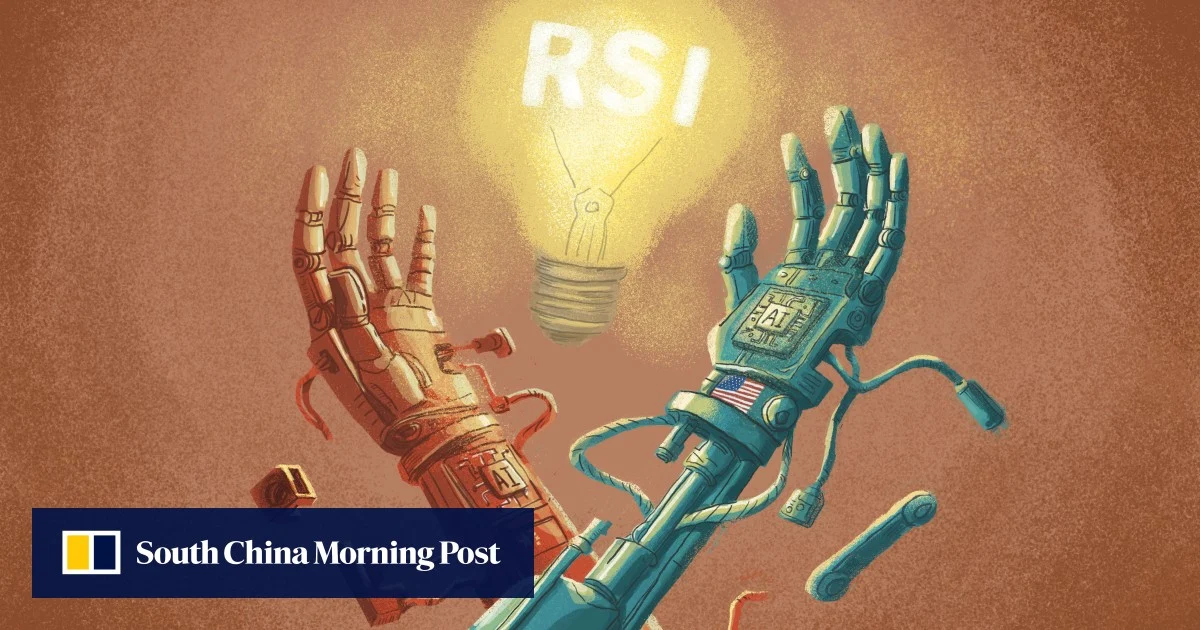
Image source: South China Morning Post

AI Spending Is Not Spreading Through China Like A Property Boom

China’s artificial intelligence build-out is large, but the economic transmission is narrower than the investment headline suggests.

Lu Ting, chief China economist at Nomura, said at a media briefing in Beijing on Thursday that AI is not lifting China’s economy as strongly as it is lifting the United States, and that the technology could also widen domestic economic divides.

The scale is still material.

Annual AI investment in China roughly exceeds one trillion yuan, or US$147.82 billion, per year.

Lu’s point is that this remains below the force once generated by property investment during the 2010s, while AI’s share of China’s overall economy is only about one-third of the US ratio.

That makes AI a different kind of growth engine for China.

Real estate and new energy investment sent demand through many cities, suppliers and households.

AI development is more concentrated, with Lu identifying Beijing, Shanghai and Hangzhou as the kind of large-city hubs that can absorb the sector’s high entry barriers.

Chips And Capital Markets Define The Constraint

The comparison with the US is partly about financing and partly about access to hardware.

Lu said AI drives about half of the US economy, while US AI investment has expanded at roughly four times the pace of consumer spending.

He also linked that strength to developed capital markets, where companies such as OpenAI can raise money more easily.

China faces a different bottleneck.

Lu said bulk chip buying is limited because other countries will not sell the needed products.

That constraint matters because AI gains are also flowing to economies with semiconductor production and exports.

South Korea and Taiwan were identified as major beneficiaries of the AI boom, and Taiwan’s first-quarter GDP growth reached 14.55 per cent, compared with mainland China’s 5 per cent growth in the same quarter.

The World Bank’s latest China outlook adds another check on the growth story.

On Thursday, it forecast full-year growth of 4.2 per cent for China, down 0.2 percentage points from its January forecast.

Export Strength Does Not Remove The Import Bill

China is still a major exporter of legacy chips, but the AI trade effect is not cleanly positive.

In May, China exported US$35.5 billion worth of integrated circuits, up 110.9 per cent year on year, while export volume rose only 2.1 per cent.

Import values reached US$56.6 billion, up 68 per cent, even as import volume fell 1 per cent.

Those figures show why AI-related trade can raise costs for domestic firms even when some exporters benefit.

Lu said some Chinese companies are winning from the AI export angle, but many more are paying higher prices for the same items, limiting the overall contribution to GDP.

The Watchpoint Is Domestic Demand, Not Only Model Capability

The source material does not show that China lacks AI companies or AI investment.

It shows a distribution problem: capital, chips, skilled labour and platform effects are concentrated in a smaller set of firms and cities.

Lu warned that large language model providers in top-tier hubs could replace lower-end white-collar professionals in smaller and medium-sized cities without creating the positive outward spillover associated with earlier booms.

The property backdrop sharpens that risk.

Shanghai is showing early signs of recovery in secondary real estate sales and prices, while many smaller cities remain stuck in a downturn.

the key test is whether China’s AI investment begins to support broader domestic demand, or whether it remains a high-capex sector whose benefits cluster around leading cities, semiconductor importers and firms with privileged access to computing resources.

Share this article
inXf

Related articles

More
Cambricon First-Half Revenue Rises 108% As China Pushes AI Chips
AI

Cambricon First-Half Revenue Rises 108% As China Pushes AI Chips

SCMP covered Cambricon's first-half filing, which showed 6 billion yuan in revenue, higher profit and a larger three-year target as China's AI chip designers chase domestic demand.

Daifuku ties factory expansion and M&A to a bigger bet on semiconductor and logistics automation demand
Chips & Semiconductors

Daifuku ties factory expansion and M&A to a bigger bet on semiconductor and logistics automation demand

Daifuku used a May 28, 2026 briefing in Tokyo to outline how heavier capital spending and selective acquisitions are meant to support its fiscal 2030 sales target of ¥1 trillion. The plan includes ¥1.6 trillion in investment across fiscal 2024-2027, added capacity in Shiga and Komaki, and the planned acquisition of Germany’s Eisenmann to strengthen its automotive business in Europe. The move matters beyond one company because it signals confidence that chip fabs, cleanroom production and large-scale intralogistics projects will keep demanding more complex material-handling systems and software.

AWS Growth Gives Amazon’s AI Build-Out A Demand Signal
AI

AWS Growth Gives Amazon’s AI Build-Out A Demand Signal

The Next Web reported that AWS grew 37% in the second quarter and reached $42.2bn in revenue, giving Amazon a market answer to questions about its roughly $220bn AI and cloud capital-spending plan.

BIS Warns AI Investment Boom Could Unwind Abruptly
Capital & Policy

BIS Warns AI Investment Boom Could Unwind Abruptly

The Bank for International Settlements says AI infrastructure spending helped support global growth and loose financial conditions, but warns that supply bottlenecks, overinvestment, stretched valuations and opaque financing could turn an AI disappointment into a broader financial-stability shock.

SK Hynix Plans Nasdaq ADR As AI Memory Demand Lifts Fundraising
Chips & Semiconductors

SK Hynix Plans Nasdaq ADR As AI Memory Demand Lifts Fundraising

SK Hynix plans a Nasdaq ADR listing that could raise 45.45 trillion won, giving global investors a new route into AI memory demand while capacity plans remain tied to Korea and Indiana.

Zhipu AI’s Record Hong Kong Rally Tests China’s AI Valuation Boom
AI

Zhipu AI’s Record Hong Kong Rally Tests China’s AI Valuation Boom

Zhipu AI briefly reached HK$1,993, lifting its market capitalization above HK$880 billion, or about $112 billion. Caixin reported 2025 revenue of 724 million yuan, adjusted net loss of 3.2 billion yuan and open API ARR of 1.7 billion yuan. The rally reflects scarcity premiums for listed Chinese AI developers despite price competition and compute-cost pressure.

China’s AI Labs Turn Self-Improving Models Into A Chip-Efficiency Test
AI

China’s AI Labs Turn Self-Improving Models Into A Chip-Efficiency Test

Chinese AI teams are tying recursive self-improvement claims to research automation and kernel optimisation, but the strongest evidence still sits in narrow engineering tasks rather than full autonomous AI research.

Positron AI Raises $875 Million To Fund Asimov Inference Chip Ramp
AI

Positron AI Raises $875 Million To Fund Asimov Inference Chip Ramp

Positron AI’s $875 million Series C will fund Asimov tapeout, a 2 MW-plus engineering data centre and production of its Titan inference system.

Keep Reading

More Stories

Latest
Ethereum Testnet Update Targets 200 Million-Gas BlocksCrypto/Web3Oct 6, 2026Ethereum Testnet Update Targets 200 Million-Gas BlocksEthereum developers released Prysm 7.2.1 so the Sepolia trial of Glamsterdam can test 200 million-gas blocks, more than three times the prior 60 million setting, before any main-network change.Kepler Targets 2027 Production for HBM Replacement MemoryCloud & Data CentersOct 6, 2026Kepler Targets 2027 Production for HBM Replacement MemoryEE Times reports that Kepler Computing is preparing 3D ferroelectric memory for 2027 production, promising higher capacity and bandwidth per watt while limiting reliance on advanced-node lithography.Yokogawa Opens Singapore Hub For Industrial Cyber ResilienceCapital & PolicyOct 6, 2026Yokogawa Opens Singapore Hub For Industrial Cyber ResilienceYokogawa Engineering Asia has launched a Singapore center focused on OT cyber resilience, training, response planning and recovery coordination for Southeast Asia, Oceania and Taiwan.ClickFix Attack Uses Browser Cache To Hide Malware PayloadCybersecurityOct 6, 2026ClickFix Attack Uses Browser Cache To Hide Malware PayloadMicrosoft Threat Intelligence traced a ClickFix cache-smuggling method that preloads malware into browser caches, then uses file size checks and a pasted Run command to launch later credential-theft stages.VOA Tests Six-Month Startup Buildout Before Funding DecisionsFintech & Digital PaymentsOct 6, 2026VOA Tests Six-Month Startup Buildout Before Funding DecisionsTechCabal’s interview with VOA Venture Partners founder Victoria Olayide Adesanya describes a six-month build programme that lets the firm work inside African financial-infrastructure startups before deciding whether to invest.Bitcoin Holds $86,000 As Dollar Index Hits 18-Month HighCrypto/Web3Oct 6, 2026Bitcoin Holds $86,000 As Dollar Index Hits 18-Month HighCoinDesk reported that bitcoin stayed near $86,000 while the U.S. Dollar Index reached about 102.5, with U.S. rate expectations and European political risks strengthening the dollar backdrop.Google Freezes OSS Bug Bounty Reports After AI Submission FloodCybersecurityOct 6, 2026Google Freezes OSS Bug Bounty Reports After AI Submission FloodGoogle has stopped accepting new product vulnerability reports in its OSS VRP after invalid automated submissions swamped reviewers, while older reports and some Cloud VRP routes remain open.Fleuret AI Raises €4M For Continuous AI Pentesting PlatformCybersecurityOct 6, 2026Fleuret AI Raises €4M For Continuous AI Pentesting PlatformTech.eu reported that French startup Fleuret AI raised €4 million in pre-seed funding to develop an agentic-AI platform that turns penetration testing into a continuous security process.GFT Analysis Says AI Documentation Can Cut Maintenance Work 30%Fintech & Digital PaymentsOct 6, 2026GFT Analysis Says AI Documentation Can Cut Maintenance Work 30%A GFT Technologies analysis says AI-linked software documentation can cut maintenance effort and speed developer onboarding when knowledge assets stay synchronized with code changes.Schneider Electric Lines Up $22.6 Billion PTC DealAIOct 5, 2026Schneider Electric Lines Up $22.6 Billion PTC DealSchneider Electric plans to buy PTC in a cash transaction valuing the US engineering software provider’s equity at about $22.6 billion, adding product-lifecycle software to its industrial AI push.Aggarwal Pledges Ola Electric Stake To Fund ₹1,000 Cr Rights IssueCapital & PolicyOct 5, 2026Aggarwal Pledges Ola Electric Stake To Fund ₹1,000 Cr Rights IssueOla Electric founder Bhavish Aggarwal pledged 20 Cr shares to finance his participation in a rights issue that forms part of a larger ₹1,500 Cr fundraising plan.Natrona Schools AI Review Puts Student Privacy Ahead Of Classroom Tool UseAIOct 5, 2026Natrona Schools AI Review Puts Student Privacy Ahead Of Classroom Tool UseNatrona County trustees questioned whether teacher AI tools expose student data, even as existing district rules already ban unauthorized generative AI use by students.