SendTech Times
News
SUPPLY CHECK:

ASML Warning Pushes Europe’s AI Sovereignty Debate Up The Stack

Newsroom brief

ASML chief Christophe Fouquet’s criticism of EU chip-intervention thinking puts the focus on where Europe can still build leverage: trusted compute, data governance, hosting, network interfaces and niche AI supply-chain strengths.

Verified against source materialEdited by SendTech Times Chips & Compute DeskSource: RCR Wireless News
ASML Warning Pushes Europe’s AI Sovereignty Debate Up The Stack
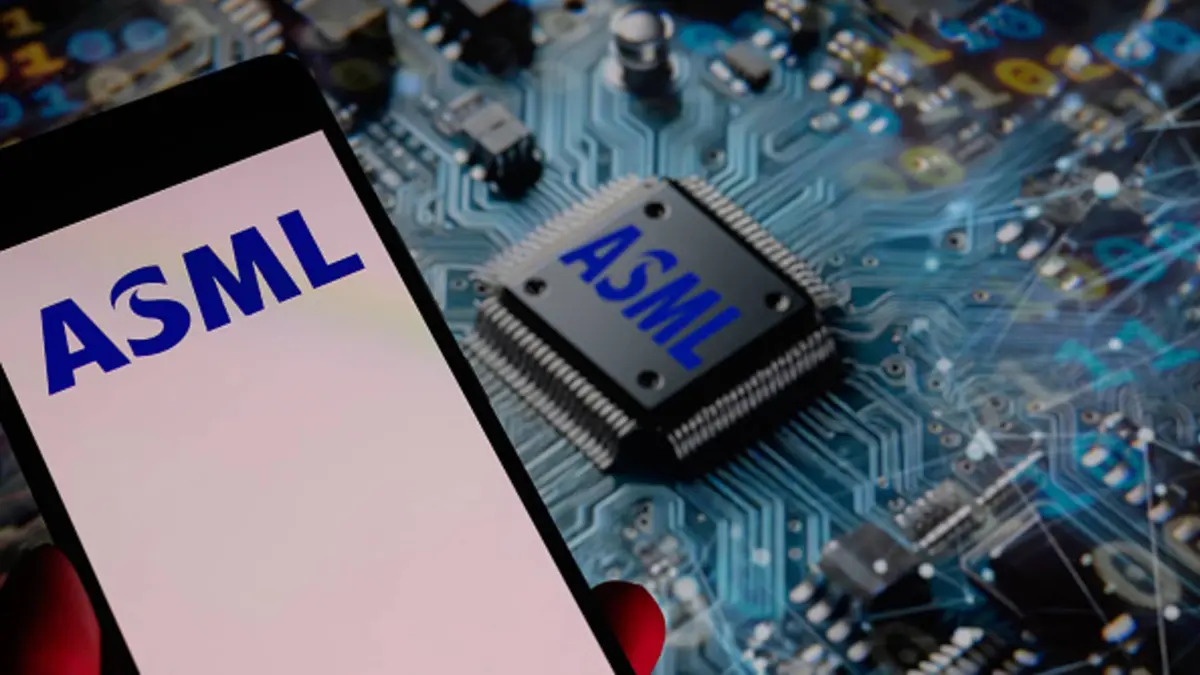
Image source: RCR Wireless News

ASML Narrows The Sovereignty Question

ASML chief Christophe Fouquet’s warning over Europe’s chip-intervention approach puts a harder question in front of policymakers: which parts of the AI supply chain can Europe realistically influence.

The argument is not that semiconductors no longer matter.

It is that the AI stack now links chips, memory, cloud infrastructure, packaging, telecom networks, power systems and capital markets in ways that no single region fully controls.

The policy target is the EU’s evolving Chips Act 2.0 framework, which is moving from subsidy-led capacity building toward supply-chain coordination in shortage conditions.

Fouquet’s concern is that directing chip flows from the top down may overstate Europe’s leverage at the base layer.

ASML is a global choke point in advanced lithography, but the EU accounts for only one percent of EUV sales, limiting how far regional political control can reach through one supplier.

That limitation matters because semiconductors sit inside many strategic systems at once.

The same supply discussion touches data centres, power grids, telecom networks and defence systems.

A rule aimed at one shortage can therefore collide with memory, packaging and cloud dependencies that are controlled elsewhere and priced through global markets.

Control Moves Toward Compute And Trust

The practical alternative is not to abandon sovereignty.

It is to move the leverage point higher.

France and the UK are described as taking a more pragmatic route around sovereign AI by focusing on compute infrastructure, data governance, trusted hosting, niche specialties and national assets.

France brings nuclear power into the discussion, while the UK points to supercomputers, chip design, GPU networking, R&D clusters and early-stage startups.

That approach fits a layered AI economy better than an attempt to command every supply input.

Critical sectors still depend on memory, cloud, packaging and other supplies controlled outside Europe.

The more workable question is where jurisdiction, access rules and trusted infrastructure can create durable influence for governments, telcos and industrial users.

Space Networks Do Not Remove Jurisdiction

The same logic applies beyond terrestrial infrastructure.

SpaceX is presented as a parallel infrastructure layer that combines rockets and satellites, fills rural coverage gaps and could eventually support niche segmented compute workloads.

But orbital systems do not erase geography.

They still rely on ground stations, spectrum authorisations, regulatory frameworks, gateways, user devices and Earthbound supply chains.

The constraints are practical as well as legal.

The source frames space infrastructure as a way around some planning and connectivity bottlenecks, not as a full cloud layer above national control.

Latency, transport, maintenance and economics remain part of the infrastructure equation, which keeps terrestrial policy and network interfaces relevant.

That makes sovereignty more distributed, not less relevant.

Control points now sit across terrestrial, subsea, airborne and orbital systems.

Europe’s next test is whether its AI policy can identify those interfaces instead of treating the whole supply chain as a hierarchy that can be commanded through chip allocation.

The concrete watchpoint is how the EU’s Chips Act 2.0 process balances shortage coordination with the higher-stack controls around compute, hosting, data and network access that France and the UK are already emphasising.

Share this article
inXf

Related articles

More
Europe Is Making Money From AI Without Owning the Models
AI

Europe Is Making Money From AI Without Owning the Models

TNW reported that European industrial and software incumbents are benefiting from AI demand through chip tools, enterprise systems and data-centre infrastructure even as the region remains dependent on foreign frontier models.

ASML Raises 2026 Sales Forecast As AI Chip Orders Lift Capacity Plans
Chips & Semiconductors

ASML Raises 2026 Sales Forecast As AI Chip Orders Lift Capacity Plans

ASML said 2026 sales should now reach 43 billion euros to 45 billion euros after stronger AI-chip equipment demand, up from its earlier 36 billion euro to 40 billion euro range. The company also targeted 30% additions to 2026 low NA EUV and DUV immersion capacity, but it did not name customer order volumes or ramp dates.

Tencent’s Canghai V2 Chip Pushes Video Encoding Into Its Cloud Infrastructure Stack
Chips & Semiconductors

Tencent’s Canghai V2 Chip Pushes Video Encoding Into Its Cloud Infrastructure Stack

Tencent Cloud says its self-developed Canghai V2 video encoding chip has entered mass production after leading MSU hardware encoding benchmarks. The company is positioning the chip as a way to cut bandwidth and compute costs for AI video, live streaming and cloud media workloads. The next test is whether benchmark leadership turns into wider deployment across Tencent Cloud services and external customers.

Apple's Memory Warning Shows AI Server Demand Reaching Consumer Devices
Chips & Semiconductors

Apple's Memory Warning Shows AI Server Demand Reaching Consumer Devices

Apple is preparing customers for higher prices as AI data-center demand tightens memory supply, exposing how HBM demand from Nvidia-class systems can raise costs for phones, PCs and tablets.

Samsung and TSMC Move Toward ASML’s $400M High-NA Chip Tools
Chips & Semiconductors

Samsung and TSMC Move Toward ASML’s $400M High-NA Chip Tools

Samsung and TSMC plan to adopt ASML high-NA EUV systems, joining Intel in a photomask shift that could lift productivity on the new chipmaking machines by 40 percent.

ByteDance’s 10T-Parameter AI Target Puts China’s Compute Stack On Trial
AI

ByteDance’s 10T-Parameter AI Target Puts China’s Compute Stack On Trial

Capacity Media reported that ByteDance is pre-training a frontier model that could reach 10 trillion parameters, tying China’s AI race to chip supply, power and data-centre capacity.

Intel Ships Panther Lake Chips Built With ASML High NA EUV
Chips & Semiconductors

Intel Ships Panther Lake Chips Built With ASML High NA EUV

Intel has shipped selected Panther Lake processors made on Intel 18A with ASML High NA EUV lithography, Interesting Engineering reported, giving Intel production data while customer names, shipment volumes and wider node timing remain undisclosed.

T-Head V900 Pushes Alibaba AI Chips Toward Full-Stack Infrastructure
Chips & Semiconductors

T-Head V900 Pushes Alibaba AI Chips Toward Full-Stack Infrastructure

TechNode reported that Alibaba chip subsidiary T-Head unveiled the Zhenwu V900 AI chip, a supernode server design and a Yitian CPU roadmap aimed at larger AI training and inference systems.

Keep Reading

More Stories

Latest
Ethereum Testnet Update Targets 200 Million-Gas BlocksCrypto/Web3Oct 6, 2026Ethereum Testnet Update Targets 200 Million-Gas BlocksEthereum developers released Prysm 7.2.1 so the Sepolia trial of Glamsterdam can test 200 million-gas blocks, more than three times the prior 60 million setting, before any main-network change.Kepler Targets 2027 Production for HBM Replacement MemoryCloud & Data CentersOct 6, 2026Kepler Targets 2027 Production for HBM Replacement MemoryEE Times reports that Kepler Computing is preparing 3D ferroelectric memory for 2027 production, promising higher capacity and bandwidth per watt while limiting reliance on advanced-node lithography.Yokogawa Opens Singapore Hub For Industrial Cyber ResilienceCapital & PolicyOct 6, 2026Yokogawa Opens Singapore Hub For Industrial Cyber ResilienceYokogawa Engineering Asia has launched a Singapore center focused on OT cyber resilience, training, response planning and recovery coordination for Southeast Asia, Oceania and Taiwan.ClickFix Attack Uses Browser Cache To Hide Malware PayloadCybersecurityOct 6, 2026ClickFix Attack Uses Browser Cache To Hide Malware PayloadMicrosoft Threat Intelligence traced a ClickFix cache-smuggling method that preloads malware into browser caches, then uses file size checks and a pasted Run command to launch later credential-theft stages.VOA Tests Six-Month Startup Buildout Before Funding DecisionsFintech & Digital PaymentsOct 6, 2026VOA Tests Six-Month Startup Buildout Before Funding DecisionsTechCabal’s interview with VOA Venture Partners founder Victoria Olayide Adesanya describes a six-month build programme that lets the firm work inside African financial-infrastructure startups before deciding whether to invest.Bitcoin Holds $86,000 As Dollar Index Hits 18-Month HighCrypto/Web3Oct 6, 2026Bitcoin Holds $86,000 As Dollar Index Hits 18-Month HighCoinDesk reported that bitcoin stayed near $86,000 while the U.S. Dollar Index reached about 102.5, with U.S. rate expectations and European political risks strengthening the dollar backdrop.Google Freezes OSS Bug Bounty Reports After AI Submission FloodCybersecurityOct 6, 2026Google Freezes OSS Bug Bounty Reports After AI Submission FloodGoogle has stopped accepting new product vulnerability reports in its OSS VRP after invalid automated submissions swamped reviewers, while older reports and some Cloud VRP routes remain open.Fleuret AI Raises €4M For Continuous AI Pentesting PlatformCybersecurityOct 6, 2026Fleuret AI Raises €4M For Continuous AI Pentesting PlatformTech.eu reported that French startup Fleuret AI raised €4 million in pre-seed funding to develop an agentic-AI platform that turns penetration testing into a continuous security process.GFT Analysis Says AI Documentation Can Cut Maintenance Work 30%Fintech & Digital PaymentsOct 6, 2026GFT Analysis Says AI Documentation Can Cut Maintenance Work 30%A GFT Technologies analysis says AI-linked software documentation can cut maintenance effort and speed developer onboarding when knowledge assets stay synchronized with code changes.Schneider Electric Lines Up $22.6 Billion PTC DealAIOct 5, 2026Schneider Electric Lines Up $22.6 Billion PTC DealSchneider Electric plans to buy PTC in a cash transaction valuing the US engineering software provider’s equity at about $22.6 billion, adding product-lifecycle software to its industrial AI push.Aggarwal Pledges Ola Electric Stake To Fund ₹1,000 Cr Rights IssueCapital & PolicyOct 5, 2026Aggarwal Pledges Ola Electric Stake To Fund ₹1,000 Cr Rights IssueOla Electric founder Bhavish Aggarwal pledged 20 Cr shares to finance his participation in a rights issue that forms part of a larger ₹1,500 Cr fundraising plan.Natrona Schools AI Review Puts Student Privacy Ahead Of Classroom Tool UseAIOct 5, 2026Natrona Schools AI Review Puts Student Privacy Ahead Of Classroom Tool UseNatrona County trustees questioned whether teacher AI tools expose student data, even as existing district rules already ban unauthorized generative AI use by students.