SendTech Times
News
DEPLOYMENT WATCH:

Apple's Memory Warning Shows AI Server Demand Reaching Consumer Devices

Newsroom brief

Apple is preparing customers for higher prices as AI data-center demand tightens memory supply, exposing how HBM demand from Nvidia-class systems can raise costs for phones, PCs and tablets.

Verified against source materialEdited by SendTech Times Chips & Compute DeskSource: CNBC
Apple's Memory Warning Shows AI Server Demand Reaching Consumer Devices
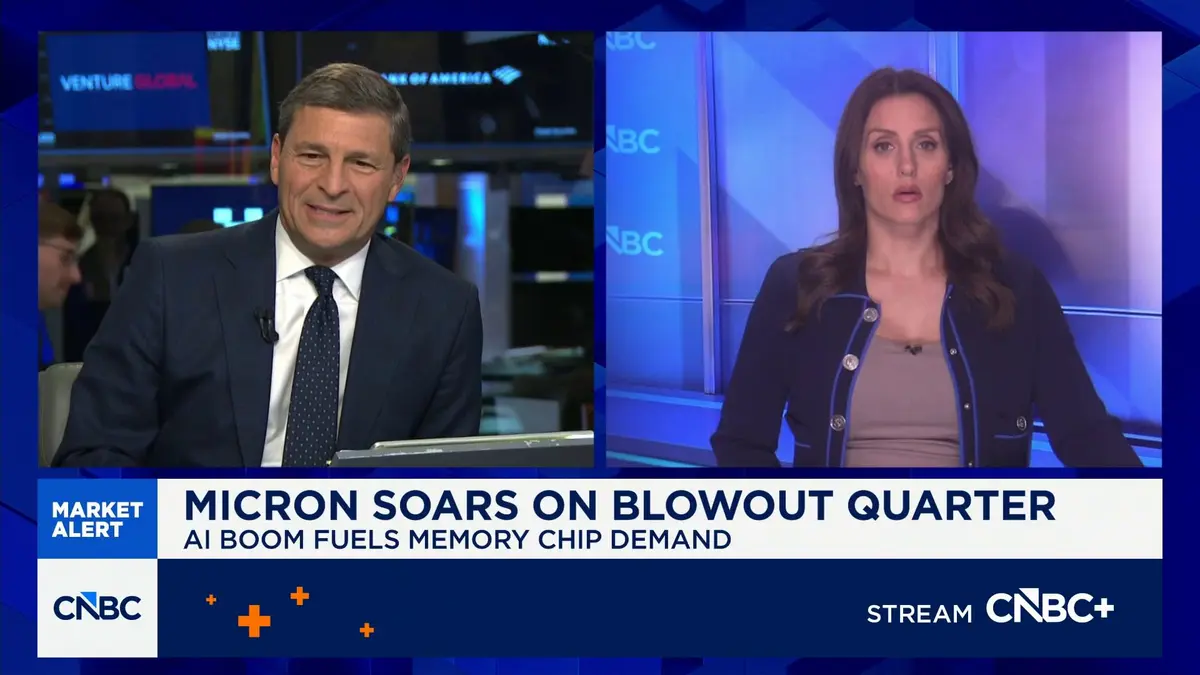
Image source: CNBC

AI Memory Demand Is Moving Into Device Prices

Apple's warning on memory costs turns the AI infrastructure boom into a consumer hardware problem.

The pressure is not only inside data centers.

It is also reaching smartphones, PCs and tablets that rely on the same limited supplier base for memory capacity.

Apple CEO Tim Cook told the Wall Street Journal that product price increases are planned because of ongoing memory shortages.

The public record still lacks when the increases would begin or which devices and models would be affected.

Apple also declined to comment to CNBC, leaving the immediate pricing map unclear.

That uncertainty is the central business tension.

Apple has usually been viewed as better protected than other device makers because of its scale, supplier relationships and pricing power.

Ranjit Atwal, an analyst at Gartner, said the situation shows the depth of the problem and that even Apple cannot fully shield itself from the shortage.

The supply squeeze begins with AI hardware.

Nvidia-class data-center chips use high-bandwidth memory, and that demand is pulling capacity toward AI servers.

Consumer device makers still need DRAM and NAND for phones, PCs and other products, but they must compete for output from the same memory industry.

The article identifies Micron, SK Hynix and Samsung as the three primary suppliers behind that capacity.

HBM Economics Create A Consumer Trade-Off

The reason this shortage is difficult to absorb is that suppliers face a production trade-off.

When Micron makes one unit of HBM, it gives up three units of more conventional smartphone memory.

HBM is also described as more profitable, so new capacity may continue to favor AI systems even as fabs are built.

That makes the memory shortage different from a normal component cycle.

Data-center AI processors rely on HBM, a faster and more power-hungry memory class than the DRAM used in phones.

One Nvidia Blackwell B200 chip carries 192GB of HBM, while large clusters can reach over 2,000 servers.

An iPhone, by contrast, uses 8GB or 12GB of DRAM, so the gap between server memory demand and handset memory needs is enormous even before supplier allocation decisions are made.

Those figures explain why consumer devices are exposed to AI buildouts even when they do not use the same memory type.

The capacity decision happens upstream.

Suppliers must decide which products receive wafers, tools and factory output, and the most profitable AI memory can crowd out conventional memory needed by handset and PC makers.

Francisco Jeronimo, an IDC analyst, framed the effect as consumers paying for AI before they receive the full benefit of on-device AI.

Apple is putting more RAM into each phone for AI features, while some newer Siri and dictation capabilities are expected to be limited to newer iPhones, iPads and Macs because older or less expensive devices cannot handle the memory-hungry options.

Apple Still Has Pricing Choices

Several Apple responses remain possible, but there is no confirmed price list.

Jeronimo expects the $999 iPhone Pro and the $1,199 iPhone Pro Max to absorb the increase pressure, with lower-end devices left unchanged.

BofA Securities analysts also expect price increases for most Mac and iPad models.

Apple could also use the shortage competitively.

It has recently targeted budget-conscious buyers with the $599 MacBook Neo and $599 iPhone 16e.

Some analysts expect Android manufacturers to cut specifications or raise prices, while IDC expects average smartphone prices to increase by 20% this year.

That creates a strategic fork.

Apple can protect margins by raising prices on premium devices, use budget models to pressure Android rivals, or spend from its balance sheet to help expand supply.

Cook said Apple is willing to use its balance sheet as part of the solution, but the source does not describe a specific supply deal.

The next test is whether memory shortages remain a data-center cost story or become a broader consumer electronics reset.

If AI server demand keeps pulling capacity toward HBM, device makers may have to explain why phones and PCs cost more before users see the promised benefits of on-device AI.
Share this article
inXf

Related articles

More
Micron’s AI Memory Surge Still Depends On Long-Term Contract Demand
Chips & Semiconductors

Micron’s AI Memory Surge Still Depends On Long-Term Contract Demand

Micron’s revenue jumped from $9.3 billion to $41.46 billion as AI data centres tightened memory supply, with 16 long-term agreements now carrying $22 billion in expected commitments.

SK hynix And NVIDIA Push AI Factory Memory Into A Manufacturing Test
Chips & Semiconductors

SK hynix And NVIDIA Push AI Factory Memory Into A Manufacturing Test

SK hynix and NVIDIA announced a multi-year partnership covering next-generation memory, AI infrastructure systems and factory digital twins for semiconductor production.

SK And Nvidia Expand Korea Chip Alliance Into AI Factory Plans
AI

SK And Nvidia Expand Korea Chip Alliance Into AI Factory Plans

SK Group and Nvidia plan to extend their chip partnership into Korean AI factories, with SK Telecom expected to operate the infrastructure push and SK hynix remaining central to Nvidia memory supply.

Nvidia's 70% Revenue Forecast Meets Memory Supply Constraint
Chips & Semiconductors

Nvidia's 70% Revenue Forecast Meets Memory Supply Constraint

Nvidia forecast 70 per cent revenue growth for the fiscal year ending January 2028 while warning that memory shortages, component costs and China uncertainty still limit the AI compute boom.

Nvidia-SK AI Deal Carries $500 Billion Value With Few Build Details
Chips & Semiconductors

Nvidia-SK AI Deal Carries $500 Billion Value With Few Build Details

Tom's Hardware reported that Nvidia and SK Group signed letters of intent for a strategic relationship valued at more than $500 billion, anchored by SK Telecom's planned 2-gigawatt South Korea AI data centre and a long-term SK hynix memory supply agreement.

SK hynix Sets $713 Billion Korea Memory Plan As HBM4E Customers Stay Unnamed
Chips & Semiconductors

SK hynix Sets $713 Billion Korea Memory Plan As HBM4E Customers Stay Unnamed

SK hynix plans 1,100 trillion South Korean won in domestic manufacturing investment, a Nasdaq listing and HBM4E sample shipments. HBM4E customers or tenant commitments for the related 15 gigawatts of AI data centre infrastructure remain outside the public record.

US Export-Control Shift Opens UAE AI Chip Access, DCD Reports
Chips & Semiconductors

US Export-Control Shift Opens UAE AI Chip Access, DCD Reports

Data Center Dynamics reported that the US government has moved the UAE into a lower-restriction export-control category, giving UAE companies broader access to advanced AI chips from Nvidia and AMD. The account names G42 and hyperscaler data-centre projects, but it does not list chip volumes, approved licences or specific UAE projects.

CXMT’s 4.13 Trillion Yuan Rally Puts AI Memory Supply In Focus
Chips & Semiconductors

CXMT’s 4.13 Trillion Yuan Rally Puts AI Memory Supply In Focus

South China Morning Post reported that CXMT’s market value reached 4.13 trillion yuan after a record close, as investors priced in tight memory supply tied to AI data-centre demand.

Keep Reading

More Stories

Latest
Kepler Targets 2027 Production for HBM Replacement MemoryCloud & Data CentersOct 6, 2026Kepler Targets 2027 Production for HBM Replacement MemoryEE Times reports that Kepler Computing is preparing 3D ferroelectric memory for 2027 production, promising higher capacity and bandwidth per watt while limiting reliance on advanced-node lithography.Yokogawa Opens Singapore Hub For Industrial Cyber ResilienceCapital & PolicyOct 6, 2026Yokogawa Opens Singapore Hub For Industrial Cyber ResilienceYokogawa Engineering Asia has launched a Singapore center focused on OT cyber resilience, training, response planning and recovery coordination for Southeast Asia, Oceania and Taiwan.ClickFix Attack Uses Browser Cache To Hide Malware PayloadCybersecurityOct 6, 2026ClickFix Attack Uses Browser Cache To Hide Malware PayloadMicrosoft Threat Intelligence traced a ClickFix cache-smuggling method that preloads malware into browser caches, then uses file size checks and a pasted Run command to launch later credential-theft stages.VOA Tests Six-Month Startup Buildout Before Funding DecisionsFintech & Digital PaymentsOct 6, 2026VOA Tests Six-Month Startup Buildout Before Funding DecisionsTechCabal’s interview with VOA Venture Partners founder Victoria Olayide Adesanya describes a six-month build programme that lets the firm work inside African financial-infrastructure startups before deciding whether to invest.Bitcoin Holds $86,000 As Dollar Index Hits 18-Month HighCrypto/Web3Oct 6, 2026Bitcoin Holds $86,000 As Dollar Index Hits 18-Month HighCoinDesk reported that bitcoin stayed near $86,000 while the U.S. Dollar Index reached about 102.5, with U.S. rate expectations and European political risks strengthening the dollar backdrop.Google Freezes OSS Bug Bounty Reports After AI Submission FloodCybersecurityOct 6, 2026Google Freezes OSS Bug Bounty Reports After AI Submission FloodGoogle has stopped accepting new product vulnerability reports in its OSS VRP after invalid automated submissions swamped reviewers, while older reports and some Cloud VRP routes remain open.Fleuret AI Raises €4M For Continuous AI Pentesting PlatformCybersecurityOct 6, 2026Fleuret AI Raises €4M For Continuous AI Pentesting PlatformTech.eu reported that French startup Fleuret AI raised €4 million in pre-seed funding to develop an agentic-AI platform that turns penetration testing into a continuous security process.GFT Analysis Says AI Documentation Can Cut Maintenance Work 30%Fintech & Digital PaymentsOct 6, 2026GFT Analysis Says AI Documentation Can Cut Maintenance Work 30%A GFT Technologies analysis says AI-linked software documentation can cut maintenance effort and speed developer onboarding when knowledge assets stay synchronized with code changes.Schneider Electric Lines Up $22.6 Billion PTC DealAIOct 5, 2026Schneider Electric Lines Up $22.6 Billion PTC DealSchneider Electric plans to buy PTC in a cash transaction valuing the US engineering software provider’s equity at about $22.6 billion, adding product-lifecycle software to its industrial AI push.Aggarwal Pledges Ola Electric Stake To Fund ₹1,000 Cr Rights IssueCapital & PolicyOct 5, 2026Aggarwal Pledges Ola Electric Stake To Fund ₹1,000 Cr Rights IssueOla Electric founder Bhavish Aggarwal pledged 20 Cr shares to finance his participation in a rights issue that forms part of a larger ₹1,500 Cr fundraising plan.Natrona Schools AI Review Puts Student Privacy Ahead Of Classroom Tool UseAIOct 5, 2026Natrona Schools AI Review Puts Student Privacy Ahead Of Classroom Tool UseNatrona County trustees questioned whether teacher AI tools expose student data, even as existing district rules already ban unauthorized generative AI use by students.AMD Prices 256-Core EPYC 9996 At $14,904 For Server BuyersChips & SemiconductorsOct 5, 2026AMD Prices 256-Core EPYC 9996 At $14,904 For Server BuyersTechRadar reports that AMD’s 6th Gen EPYC 9006 “Venice” lineup includes a 256-core EPYC 9996 with 512 threads, 1GB of L3 cache, a 600W default power rating and a $14,904 list price for 1,000-unit orders.