TSMC Raises Arizona Plan To $265 Billion After Profit Jump
CNBC reported that TSMC posted a 77.4% second-quarter profit jump and said its Arizona investment will rise to $265 billion after an additional $100 billion commitment. The report did not name the U.S. customers, fab opening dates, order volumes or pricing terms attached to the expanded plan.
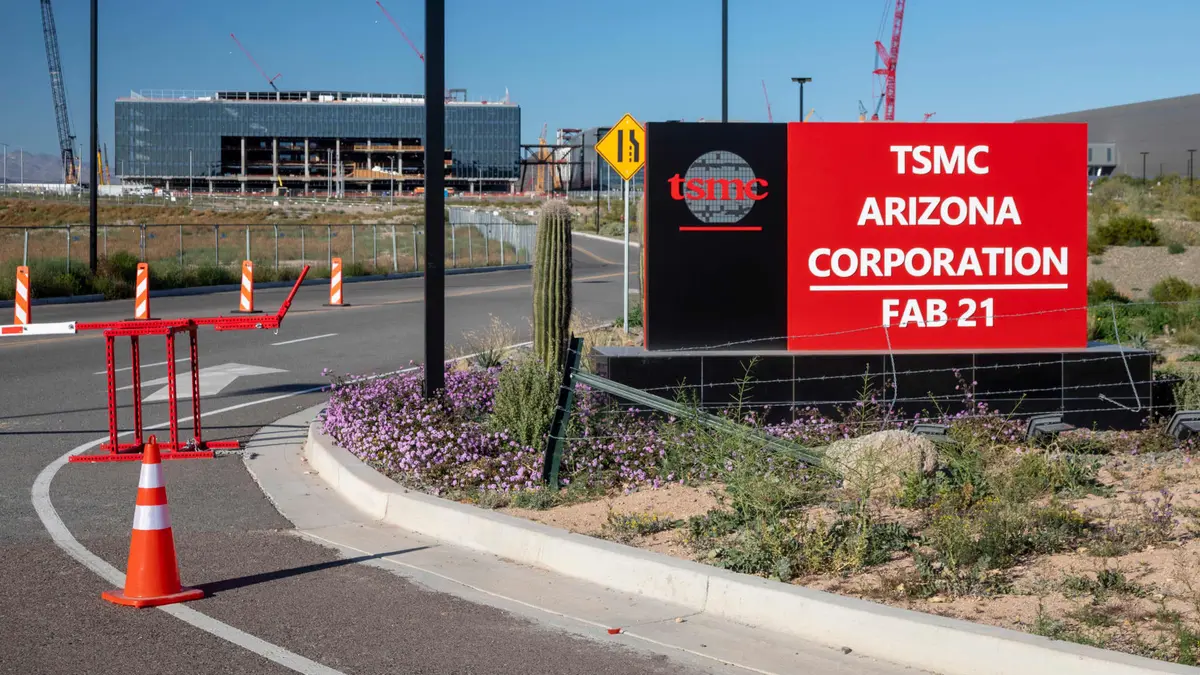
CNBC's latest earnings report linked TSMC's second-quarter profit with its Arizona expansion plans, as the chipmaker posted a 77.4% year-on-year profit jump and indicated that its total Arizona commitment will rise to $265 billion.
Taiwan Semiconductor Manufacturing Co beat LSEG SmartEstimates for the quarter while demand for AI chips kept advanced manufacturing capacity tight.
The Arizona plan now sits beside the profit surge as evidence of how quickly AI infrastructure spending is pulling leading-edge chip manufacturing into the United States.
Arizona Investment Rises To $265 Billion
Chief executive C.C. Wei outlined an additional $100 billion investment in Arizona, bringing the company's total commitment in the state to $265 billion.
He described the spending as intended to build several or more logic wafer fabs for two-nanometer mass-production technologies, along with advanced packaging fabs for leading U.S. customers.
CFO Wendell Huang outlined a higher capital budget for this year of between $60 billion and $64 billion on the earnings call cited by CNBC.
That increase was not attached to a single named customer order.
The Arizona expansion is therefore both a customer-supply decision and a geopolitical manufacturing decision.
Advanced packaging and leading-edge logic capacity are becoming part of U.S. AI infrastructure strategy, while TSMC still has to protect margins in a cycle where equipment, memory and construction costs are rising.
Advanced Nodes Carried Most Wafer Revenue
For the three months ended in June, TSMC's net income reached a record high for a fifth consecutive quarter and rose 23.4% from the previous quarter.
Revenue reached NT$1.27 trillion, up 36% from NT$933.79 billion in the same period a year earlier.
The company said advanced technologies of 7-nanometer and under accounted for 77% of total wafer revenue.
On the earnings call, Huang noted that 5-nanometer process technology contributed 33% of second-quarter revenue, followed by 3-nanometer at 30%.
The company's 2026 platform breakdown listed high-performance computing at 66% of revenue, followed by smartphones at 22% and Internet of Things at 5%.
CNBC identified Nvidia, Apple and Broadcom among the global technology companies whose AI-chip demand has supported the Taiwanese manufacturer.
Pricing Power Meets Customer Pressure
SemiAnalysis analyst Sravan Kundojjala argued that TSMC has more pricing power than it is using.
In his view, the company is capturing more value through selective price increases while trying to keep margins healthy without squeezing customers.
He also pointed to the memory boom as a squeeze on TSMC's non-AI business, with consumer and price-sensitive end markets hit by rising memory prices and tight component supply.
The public record does not name the U.S. customers behind the Arizona expansion or break the $265 billion commitment into site-level budgets.
Those details will determine how much of the plan is near-term capacity, long-term option value or customer-backed strategic reserve for advanced AI manufacturing.