Texas AI Campus Filing Names 525.5 MW Behind One Wind Interconnection
Texas regulators are considering whether Crusoe and Ensign Infrastructure must curtail a second AI data-centre load behind the Goodnight 1 wind farm during grid emergencies. Data Center Knowledge reported that the combined behind-the-meter load would reach 525.5 MW under the Senate Bill 6 review.
Texas Weighs Full Emergency Curtailment for Crusoe AI Expansion
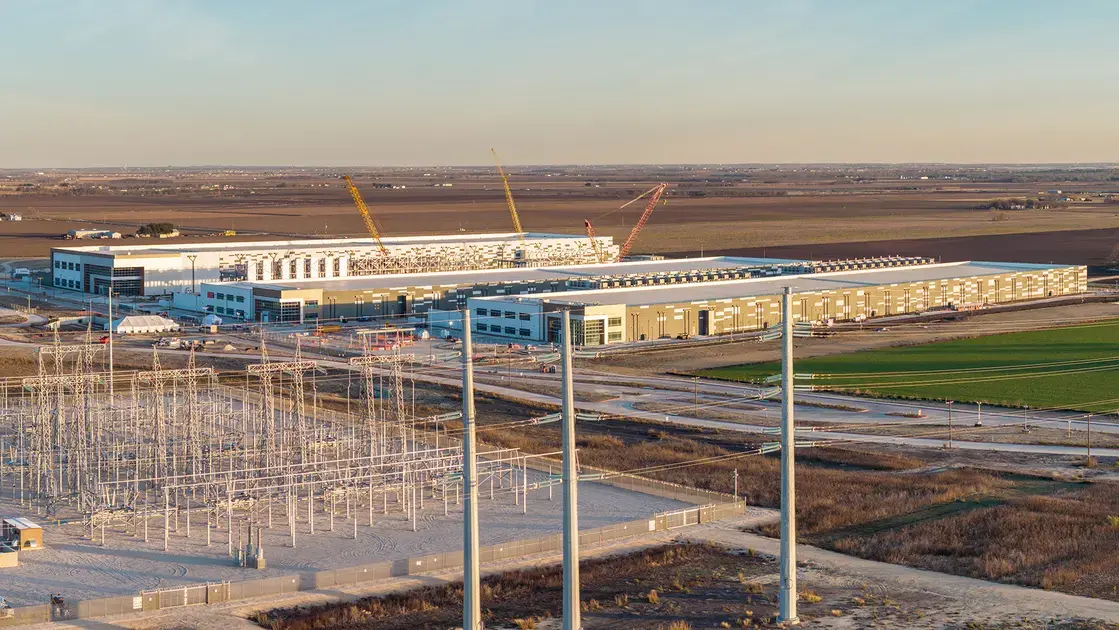
A proposed 260 MW AI data centre would nearly match the capacity of the wind farm behind which it would operate, forcing Texas regulators to decide whether the entire facility must be ready to shut down during grid emergencies.
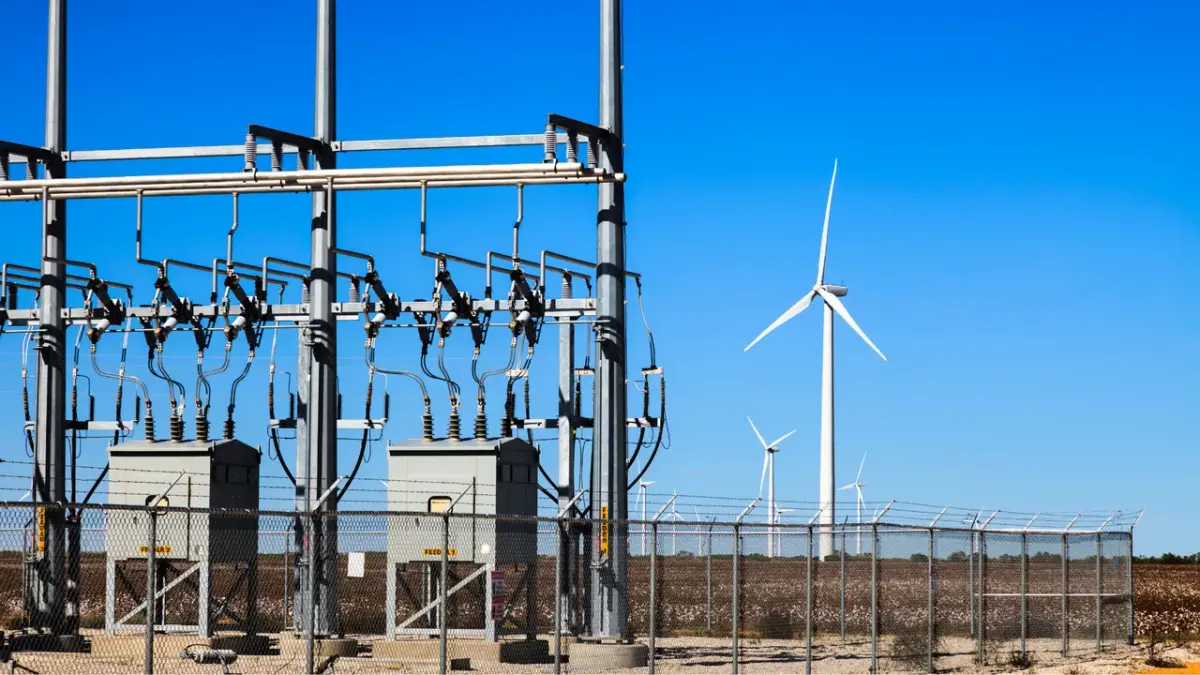
PUCT staff has endorsed operating conditions proposed by ERCOT for Crusoe and Ensign Infrastructure’s Crusoe Load 2 project behind the 265.5-MW Goodnight 1 wind farm in Armstrong County.
Data Center Knowledge reported that the expansion would share Goodnight 1’s existing point of interconnection with the previously approved 265.5-MW Crusoe Load 1, creating 525.5 MW of behind-the-meter AI load.
The arrangement places the data centres on the generator’s side of the connection to the ERCOT grid.
Using an existing interconnection can shorten the timeline for bringing large loads online, but it also raises the question of how reliability obligations should apply when a major load is located behind a generator’s connection.
The shared interconnection
The proceeding is one of the first tests of Texas’s new rules for colocating large electric loads with existing generation.
The Commission recently adopted PUCT Rule 25.205 to implement Senate Bill 6 procedures for reviewing net-metering arrangements between existing generators and large loads sharing a point of interconnection.
In a June 26, 2026, initial brief, PUCT staff recommended approving Crusoe Load 2 subject to the same six operating conditions imposed earlier this year on Crusoe Load 1.
ERCOT argues that the developers could have avoided the review by constructing a separate point of interconnection for the expansion.
By choosing Goodnight 1’s existing connection, the second load became subject to the Senate Bill 6 process, ERCOT says.
How curtailment would work
Under the proposed conditions, Crusoe Load 2 would have to curtail within 30 minutes when ERCOT determines that Goodnight 1’s generation is needed to address a transmission emergency or an Energy Emergency Alert.
The deadline could fall to 10 minutes if the facility later demonstrates that capability.
PUCT staff and ERCOT want both AI facilities to remain capable of curtailing so Goodnight 1’s output can be made available to the ERCOT market when the grid needs it.
Commission staff says the shared point of interconnection should control the analysis, rather than the order in which the two projects were added behind it.
The proportionality dispute
Ensign does not dispute the Commission’s authority to impose reliability conditions, but argues that ERCOT’s proposed requirements exceed what PURA §39.169 authorizes for the project.
Crusoe Load 1 already must curtail up to 265.5 MW during emergency conditions.
Ensign’s position is that this obligation restores Goodnight 1’s generating capability to the ERCOT market, leaving no remaining reliability deficit that would require Crusoe Load 2 to curtail as well.
The company has also urged regulators to examine net system effects rather than the total amount of behind-the-meter load.
Ensign cited ERCOT studies that found no thermal or voltage violations and no need for new transmission facilities.
PUCT staff rejected that interpretation.
Staff also discounted reliance on Goodnight 2, a planned wind project, because it falls outside the current application.
ERCOT likewise says the future project does not change the statutory analysis: Crusoe Load 2 would still be interconnected behind Goodnight 1.
What the ruling could change
Chris Talley, co-founder of Interconnection.fyi, said the Commission’s decision could influence how developers design future AI campuses in Texas.
“The precedent is really about proportionality,” Talley said.
“If ERCOT wins, colocating any load with any qualifying standalone generator locks in 100% curtailment risk on the entirety of that load, plus exclusion from all demand response programs, regardless of how small the generator is relative to the load.”
Talley pointed to a hypothetical in Ensign’s brief: whether a 1 GW data centre colocated with a 50 MW generator could be required to curtail the full 1,000 MW facility during emergencies.
“If ERCOT wins, colocation becomes viable primarily for developers who can build on-site backup generation sized to serve their entire facility load,” Talley said.
He contrasted the case with Amazon Data Services’ pending Project Spectrum application involving the Comanche Peak nuclear plant, where the data centre would transition to customer-owned backup generation while returning the plant’s output to the grid in emergencies.
Talley said many inference-focused facilities and hyperscale data centres with strict uptime service-level agreements already plan for full backup capacity, which could reduce the policy’s deterrent effect.
He also said colocation can reduce the need for new transmission and improve grid resilience if operators can return generator output to ERCOT during emergencies.
A PUCT decision is expected later this summer.
Along with several other pending Senate Bill 6 proceedings, the ruling will provide an early indication of how Texas applies its colocation framework as AI developers seek power for new campuses.