SK Telecom Targets 15GW AI Data Centre Buildout Without Full Timeline
SK Telecom said its South Korea AI data centre plan could reach 15GW, while the government cited an initial 8.4GW programme. SKT did not give a full cost or delivery timetable for the remaining 10GW.
SK Telecom is targeting 15GW of AI data centre capacity in South Korea, but its disclosed domestic rollout currently covers 5GW, with staged openings planned from 2029.
The remaining 10GW has no complete delivery timetable or total cost estimate, leaving the company’s long-term ambition well ahead of its publicly detailed buildout.
The 5GW domestic buildout
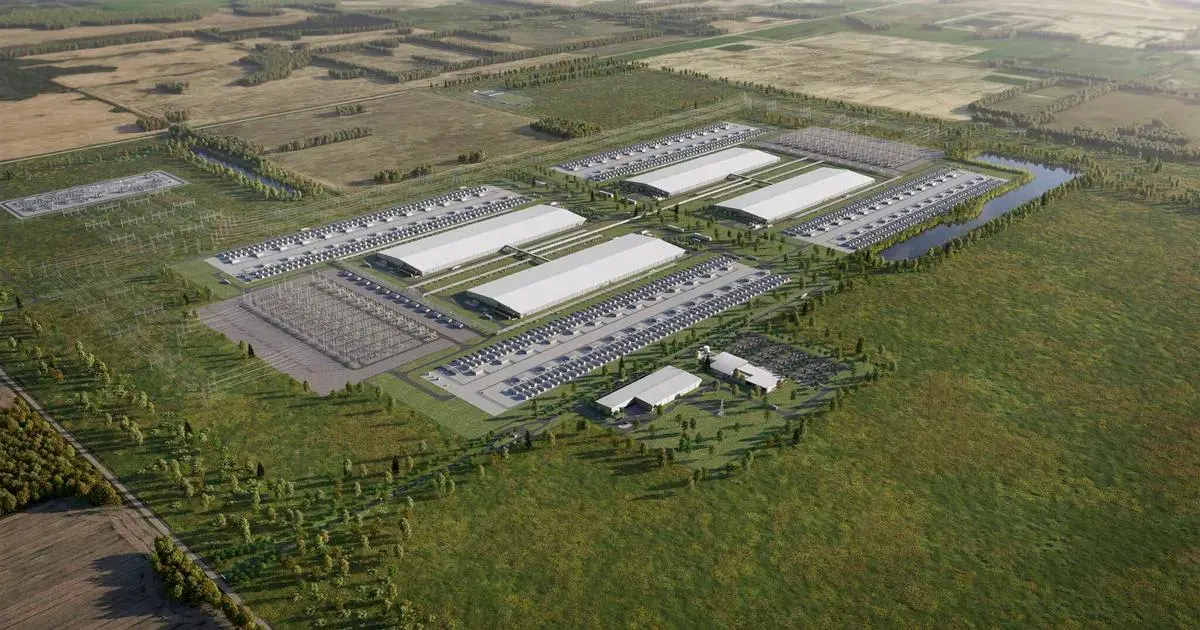
SKT’s first phase will build on an AI data centre already under construction in Ulsan.
The company plans to develop more than 2GW across the southeastern Gyeongsang region, with Ulsan as the base of the cluster, and add another 1GW in the southwestern Jeolla region.
Together, those projects would bring SKT’s domestic AI data centre capacity to 5GW.
SKT said the full programme will be developed in stages and will cover site selection, power supply, construction, operations and customer demand.
The company is also assessing how the facilities could support South Korea’s regional development goals.
Its AI data centre strategy is tied to the government’s “AI G3” objective of making South Korea one of the world’s three leading AI powers alongside the United States and China.
The government’s broader first phase involves SK, GS Group and Naver.
It includes about 550 trillion won of planned investment and 8.4GW of combined AI data centre capacity, with construction targeted to begin by the first half of 2028.
South Korea’s science minister said total investment in the wider programme could exceed 1,000 trillion won by around 2035.
The cost of gigawatt-scale capacity
SKT said a typical 1GW-class AI data centre could require about KRW 70 trillion because of high-performance computing infrastructure and rising memory prices.
That figure is a construction reference, not a total budget for the company’s 15GW plan.
Funding is expected to combine SKT’s own investment, strategic partner investment, long-term customer contracts and project financing.
In a regulatory filing, the company said it was considering structures involving strategic partners, including global technology companies and overseas capital.
SKT cited McKinsey & Company forecasts that global data centre demand will grow 19% to 22% annually and could reach 171GW to 219GW by 2030.
The United States alone could face a shortfall of about 15GW by then.
The infrastructure and supply chain
South Korea’s proposed capacity expansion depends on more than data centre construction.
SKT identified the country’s high-bandwidth memory production, nuclear and liquefied natural gas-based power supply, and experience operating large semiconductor facilities as relevant advantages.
The International Energy Agency’s Base Case projects global data centre electricity consumption will double to around 945 TWh by 2030, with AI the main driver alongside other digital services.
Uptime Institute has also identified power and cooling as constraints for very high-density AI cabinets; its survey found that 29% of operators are upgrading existing data hall space for high-performance IT systems.
The wider Korean investment plan
Reuters reported that Samsung plans to invest 400 trillion won in new semiconductor fabs in Gwangju and 56 trillion won in advanced high-bandwidth memory fabs in Cheonan and Onyang.
Samsung’s regulatory filing separately outlines 2,450 trillion won of domestic investment between 2026 and 2040, including 2,100 trillion won for semiconductor clusters such as Pyeongtaek and the Yongin industrial complex.
SK Group has long-term plans for about 1,100 trillion won in semiconductor projects and about 1,000 trillion won in AI data centre projects.
Chairman Chey Tae-won said the group expects to invest more than 100 trillion won a year on average in South Korea over the next decade.
SK Hynix plans to complete the fourth fab at its Yongin semiconductor cluster by 2033, moving the target forward from 2045.
It also plans a 400 trillion won chip production base in the country’s southwest, with execution staged according to market demand and board approvals.
SKT will lead the design, construction and operation of the planned AI data centre facilities.