Malaysia Chip Outlook Rides AI Demand But Advanced Packaging Gap Remains
Maybank, Kenanga, MBSB and TA Securities said AI and data centre demand is supporting Malaysia’s technology sector, while Kenanga said exposure to higher-value advanced packaging remains limited. TA cited MYR 59.9 billion in semiconductor-related investments under the National Semiconductor Strategy.

Malaysia’s technology sector is heading into the second half of 2026 with AI and data-centre demand as its main growth engine, even as traditional markets face sharper pressure.
Global semiconductor sales are projected to exceed $1.5 trillion in 2026 and approach $1.9 trillion in 2027, while global PC shipments are expected to fall 11.3 percent and smartphone shipments 13.9 percent in 2026, according to research houses cited by TechNode Global.
Maybank Investment Bank said sustained hyperscaler capital expenditure should continue supporting Malaysia’s technology sector.
It expects most Malaysian technology companies to deliver results broadly within expectations and favours companies with direct exposure to AI and data-centre activity.
Segments with less exposure could see slower growth.
The next phase of expansion extends beyond server demand.
Maybank identified photonics and optical transceivers as moving into a mainstream growth phase, while advanced cooling, testing and inspection solutions are entering fresh investment cycles.
Advanced packaging could provide a meaningful capability upgrade and a potential re-rating catalyst for companies that execute successfully.
Maybank also maintained a positive view of software.
Companies in the sector generally have domestic or regional operating footprints, giving them a degree of protection from global geopolitical disruption.
Broad digitalisation trends and sustained demand, the bank said, should keep the sector resilient in the second half of the year.
Kenanga Research described the global semiconductor industry as entering a new AI supercycle.
It said accelerating investment in AI infrastructure, high-bandwidth memory (HBM) and advanced computing is driving the expansion.
Unlike earlier upcycles led by personal computers, smartphones and consumer electronics, the current cycle is being supported by structural AI capital expenditure, higher semiconductor content and greater value creation in leading-edge logic, memory and advanced packaging.
Malaysia can participate through its established semiconductor ecosystem, Kenanga said, although its exposure to higher-value advanced-packaging technologies remains relatively limited.
MBSB Research kept a neutral view on Malaysia’s technology sector.
It said semiconductor fundamentals are becoming more favourable because of AI, but AI-led revenue does not yet represent the largest share of total industry revenue.
That share is expected to grow over time.
The traditional device markets remain a drag.
MBSB pointed to memory shortages and geopolitical tensions affecting smartphones, while saying Apple, Samsung and Huawei are better positioned than their peers.
Tariff and foreign-exchange risks could also affect earnings.
TA Securities likewise expects semiconductor momentum to continue but cited a more cautious outlook for PCs and smartphones.
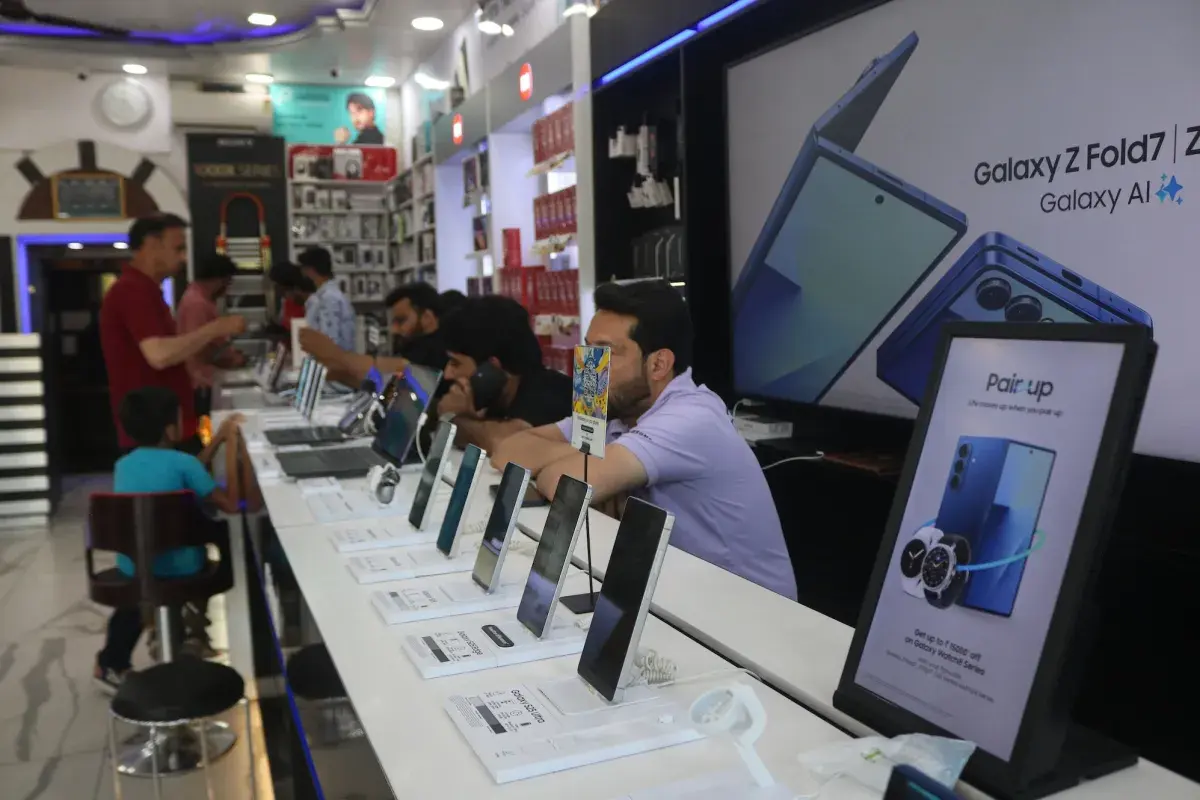
It said global smartphone shipments could decline 13.9 percent year on year to approximately 1.1 billion units in 2026, the steepest annual contraction on record.
Rising memory costs are expected to raise device prices and weigh further on consumer demand.
Malaysia’s National Semiconductor Strategy is intended to improve the country’s position in that changing market.
Between January 2024 and September 2025, the strategy attracted MYR 59.9 billion ($14.69 billion) in semiconductor-related investment, including MYR 56.8 billion ($12.93 billion) in foreign direct investment and MYR 3.1 billion ($760 million) in domestic direct investment, TA said, citing Deputy Investment, Trade and Industry Minister Sim Tze Tzin.
The strategy focuses on high-value technology segments, skilled talent and the ownership and commercialisation of locally developed intellectual property.
It also aims to move Malaysia beyond traditional back-end activities into integrated-circuit design and wafer fabrication.
One initiative involves a collaboration with UK-based Arm Holdings plc.
The government has awarded Arm design tokens to three local companies to accelerate their IC-design capabilities.
Budget 2026 has also allocated nearly MYR 2 billion ($490 million) for semiconductor-related development initiatives supporting implementation of the strategy.
TA said the measures could strengthen Malaysia’s semiconductor ecosystem, improve domestic technological capabilities and create more opportunities for local companies in higher-value activities as the AI, advanced-computing and semiconductor investment cycle continues.