SendTech Times
News
INFRASTRUCTURE CONSTRAINT:

Imec Says AI Inference Pushes Optical I/O Closer To Chips

Newsroom brief

Imec researchers told EE Times that AI inference is shifting the interconnect problem from rack-scale optics towards 2.5D and 3D optical I/O near processors. The group discussed a 250 Tb/s bandwidth projection while the public record still lacks commercial product timing, customer deployments or cooling test results.

Verified against source materialEdited by SendTech Times Chips & Compute DeskSource: EE Times
Imec Says AI Inference Pushes Optical I/O Closer To Chips
Image source: EE Times

Imec researchers say AI inference is pushing the optical I/O roadmap closer to processors, because large models now need faster movement of data between accelerators as well as more compute.

The AI inference optical I/O roadmap described by imec starts with co-packaged optics, and the research group says future systems may need 2.5D and 3D integration to control bandwidth, latency and power.

Imec Projects 250 Tb/s Bandwidth Demand For Future AI Processors

Peter Ossieur, portfolio director at imec and professor at Ghent University, told EE Times that inference needs to be reactive because it is the moment when users interact with a model.

EE Times said those workloads can combine extended prompts, retrieval tools, reasoning chains, multimodal inputs and agent-style systems.

Imec described scale-up networking as the more difficult domain.

Scale-out networks connect racks and systems across a data centre, while scale-up links GPUs or other accelerators tightly enough that applications can treat them as one larger processor.

Today's scale-up fabric is often copper-based and mostly constrained to the rack, according to imec.

That model becomes harder as AI systems move towards hundreds, thousands or tens of thousands of accelerators working together.

Co-Packaged Optics Is Not The End Of Imec's Roadmap

Imene Jadli, portfolio manager for optical interconnect at imec, told the report that co-packaged optics is a logical next step and not the end of the roadmap.

Co-packaged optics moves optical engines into the package and shortens the electrical path between the optical module and the processor or switch.

The power limit is the main constraint in the figures discussed by imec.

One future-system projection used by imec puts processor input and output bandwidth at roughly 250 Tb/s.

Anticipated co-packaged optics approaches could require about 1.25 kW for the optics alone, on top of processors that may already consume several kilowatts.

Ossieur told the report that imec needs an approach that is better than co-packaged optics.

The research group's proposed path is 2.5D optical I/O, where optics is integrated at the interposer or substrate level to shorten the electrical path and lower the power needed to move data.

2.5D Optical I/O Could Cut Optical Power Below 200 W

Ossieur said the same imec projection showed 2.5D optical I/O reducing optical power from about 1.25 kW to below 200 W. Imec describes the approach as "wide and slow", using many lanes at moderate speeds instead of a smaller number of very high-speed lanes with heavier signal processing.

The materials work remains broad.

Co-packaged optics still needs compact, efficient and high-bandwidth devices, including electro-absorption modulators and high-speed photodetectors.

Imec is exploring barium titanate and III-V compounds alongside silicon photonics because silicon remains attractive for CMOS manufacturing and may not provide every property needed for future optical I/O.

Imec's longer-term endpoint is 3D optical I/O, where optics becomes part of the 3D compute stack.

That roadmap could move optical links into advanced packages for processor-to-processor and memory-to-processor data movement, including high-bandwidth memory and stacked processors.

A commercial product timetable, named AI-system customers, manufacturing-yield data, optical-coupling results and cooling test results for 3D optical I/O remain outside the public record.


Share this article
inXf

Related articles

More
Cerebras Plans 8x To 10x Manufacturing Scale-Up For AI Inference
Chips & Semiconductors

Cerebras Plans 8x To 10x Manufacturing Scale-Up For AI Inference

Cerebras chief executive Andrew Feldman said the company plans to scale manufacturing capacity by 8x to 10x this year and claimed its systems can run inference 10, 15, 20 or 30 times faster than GPUs. The interview-led source named customers including AlphaSense, Cognition AI, OpenAI, Block and GlaxoSmithKline, The public record still lacks third-party benchmark methodology.

Arm and Supermicro Put Agentic AI Servers to a CPU Test
Chips & Semiconductors

Arm and Supermicro Put Agentic AI Servers to a CPU Test

Supermicro has introduced new server platforms built around Arm’s AGI CPU for inference-heavy and agentic AI workloads across cloud, enterprise and edge deployments. Arm says the AGI CPU includes up to 136 Arm Neoverse V3 cores, 12 DDR5 memory channels running at up to 8800 MT/s and PCIe Gen6 connectivity within a 300W power envelope. The key test is whether operators can use these CPU-heavy designs to add inference capacity without creating new pressure on power and cooling.

UMC Starts Singapore Silicon Photonics Production For AI Networks
Chips & Semiconductors

UMC Starts Singapore Silicon Photonics Production For AI Networks

CNBC reported that United Microelectronics Corporation has started mass production of silicon photonics wafers in Singapore with SILITH Technology after an 18-month development push. The company plans a 12-inch platform for customer product development by 2027, while the report did not name first customers or supply commitments.

FuriosaAI Starts RNGD Accelerator Deployment At Equinix Lisbon Datacenter
Chips & Semiconductors

FuriosaAI Starts RNGD Accelerator Deployment At Equinix Lisbon Datacenter

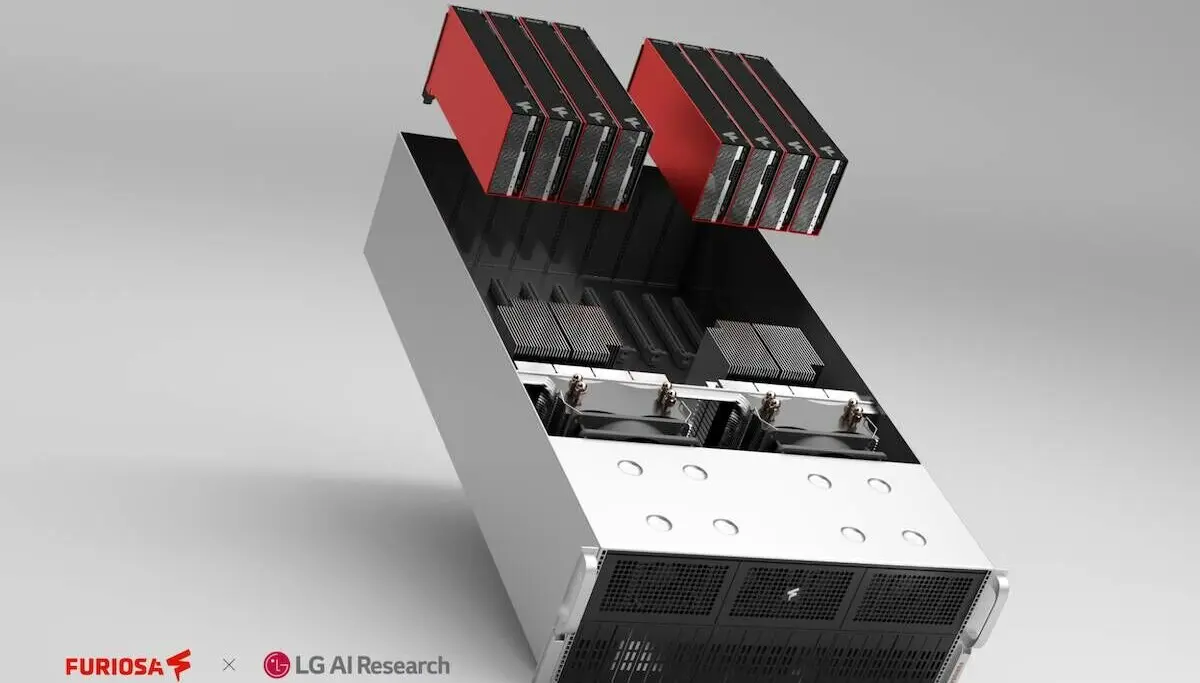
FuriosaAI has begun deploying its RNGD AI accelerators at Equinix’s LS2 datacenter in Lisbon as the South Korean chip startup looks for European sovereign AI demand. The company describes 48 GB of HBM3, 1.5 TB/s memory bandwidth and 512 teraFLOPS of dense FP8 performance per card, but its Broadcom-linked next-generation accelerator still depends on HBM4 and HBM4e timing.

SK hynix Memristor AI Chip Shows 21.3 TOPS/W But Leaves Throughput Gap
Chips & Semiconductors

SK hynix Memristor AI Chip Shows 21.3 TOPS/W But Leaves Throughput Gap

SK hynix, TetraMem and USC researchers developed a 65 nm memristor-based in-memory computing chip for edge AI. The paper listed 21.3 TOPS/W at 100 MHz, while the public record still lacks full-chip saturated throughput.

AMD Linux Patch Adds Low-Power CPU Core Support For Future Chips
Chips & Semiconductors

AMD Linux Patch Adds Low-Power CPU Core Support For Future Chips

AMD has submitted Linux kernel patches that add a low-power CPU core classification beside performance and efficiency cores, The public record still lacks the first processor, launch date or product line that will use the new core type.

Sandisk And SK Hynix Open HBF Spec For AI Memory Capacity
Chips & Semiconductors

Sandisk And SK Hynix Open HBF Spec For AI Memory Capacity

Tom’s Hardware put Sandisk and SK hynix’s OCP High Bandwidth Flash specification at up to 512GB per package, with bandwidth grades reaching 3.0 TB/s for AI inference systems.

Intel Ships Panther Lake Chips Built With ASML High NA EUV
Chips & Semiconductors

Intel Ships Panther Lake Chips Built With ASML High NA EUV

Intel has shipped selected Panther Lake processors made on Intel 18A with ASML High NA EUV lithography, Interesting Engineering reported, giving Intel production data while customer names, shipment volumes and wider node timing remain undisclosed.

Keep Reading

More Stories

Latest
Kepler Targets 2027 Production for HBM Replacement MemoryCloud & Data CentersOct 6, 2026Kepler Targets 2027 Production for HBM Replacement MemoryEE Times reports that Kepler Computing is preparing 3D ferroelectric memory for 2027 production, promising higher capacity and bandwidth per watt while limiting reliance on advanced-node lithography.Yokogawa Opens Singapore Hub For Industrial Cyber ResilienceCapital & PolicyOct 6, 2026Yokogawa Opens Singapore Hub For Industrial Cyber ResilienceYokogawa Engineering Asia has launched a Singapore center focused on OT cyber resilience, training, response planning and recovery coordination for Southeast Asia, Oceania and Taiwan.ClickFix Attack Uses Browser Cache To Hide Malware PayloadCybersecurityOct 6, 2026ClickFix Attack Uses Browser Cache To Hide Malware PayloadMicrosoft Threat Intelligence traced a ClickFix cache-smuggling method that preloads malware into browser caches, then uses file size checks and a pasted Run command to launch later credential-theft stages.VOA Tests Six-Month Startup Buildout Before Funding DecisionsFintech & Digital PaymentsOct 6, 2026VOA Tests Six-Month Startup Buildout Before Funding DecisionsTechCabal’s interview with VOA Venture Partners founder Victoria Olayide Adesanya describes a six-month build programme that lets the firm work inside African financial-infrastructure startups before deciding whether to invest.Bitcoin Holds $86,000 As Dollar Index Hits 18-Month HighCrypto/Web3Oct 6, 2026Bitcoin Holds $86,000 As Dollar Index Hits 18-Month HighCoinDesk reported that bitcoin stayed near $86,000 while the U.S. Dollar Index reached about 102.5, with U.S. rate expectations and European political risks strengthening the dollar backdrop.Google Freezes OSS Bug Bounty Reports After AI Submission FloodCybersecurityOct 6, 2026Google Freezes OSS Bug Bounty Reports After AI Submission FloodGoogle has stopped accepting new product vulnerability reports in its OSS VRP after invalid automated submissions swamped reviewers, while older reports and some Cloud VRP routes remain open.Fleuret AI Raises €4M For Continuous AI Pentesting PlatformCybersecurityOct 6, 2026Fleuret AI Raises €4M For Continuous AI Pentesting PlatformTech.eu reported that French startup Fleuret AI raised €4 million in pre-seed funding to develop an agentic-AI platform that turns penetration testing into a continuous security process.GFT Analysis Says AI Documentation Can Cut Maintenance Work 30%Fintech & Digital PaymentsOct 6, 2026GFT Analysis Says AI Documentation Can Cut Maintenance Work 30%A GFT Technologies analysis says AI-linked software documentation can cut maintenance effort and speed developer onboarding when knowledge assets stay synchronized with code changes.Schneider Electric Lines Up $22.6 Billion PTC DealAIOct 5, 2026Schneider Electric Lines Up $22.6 Billion PTC DealSchneider Electric plans to buy PTC in a cash transaction valuing the US engineering software provider’s equity at about $22.6 billion, adding product-lifecycle software to its industrial AI push.Aggarwal Pledges Ola Electric Stake To Fund ₹1,000 Cr Rights IssueCapital & PolicyOct 5, 2026Aggarwal Pledges Ola Electric Stake To Fund ₹1,000 Cr Rights IssueOla Electric founder Bhavish Aggarwal pledged 20 Cr shares to finance his participation in a rights issue that forms part of a larger ₹1,500 Cr fundraising plan.Natrona Schools AI Review Puts Student Privacy Ahead Of Classroom Tool UseAIOct 5, 2026Natrona Schools AI Review Puts Student Privacy Ahead Of Classroom Tool UseNatrona County trustees questioned whether teacher AI tools expose student data, even as existing district rules already ban unauthorized generative AI use by students.AMD Prices 256-Core EPYC 9996 At $14,904 For Server BuyersChips & SemiconductorsOct 5, 2026AMD Prices 256-Core EPYC 9996 At $14,904 For Server BuyersTechRadar reports that AMD’s 6th Gen EPYC 9006 “Venice” lineup includes a 256-core EPYC 9996 with 512 threads, 1GB of L3 cache, a 600W default power rating and a $14,904 list price for 1,000-unit orders.