SendTech Times
News
SYSTEMS SHIFT:

Tomato Novel Caps AI Writing After 104,000 June Rejections

Newsroom brief

Rest of World reported that Chinese web-novel platforms are adding limits after Tomato Novel said it rejected more than 104,000 low-quality submissions in June and Jinjiang restricted AI to research and proofreading.
Verified against source materialEdited by SendTech Times AI & Enterprise DeskSource: Rest of World
Tomato Novel Caps AI Writing After 104,000 June Rejections
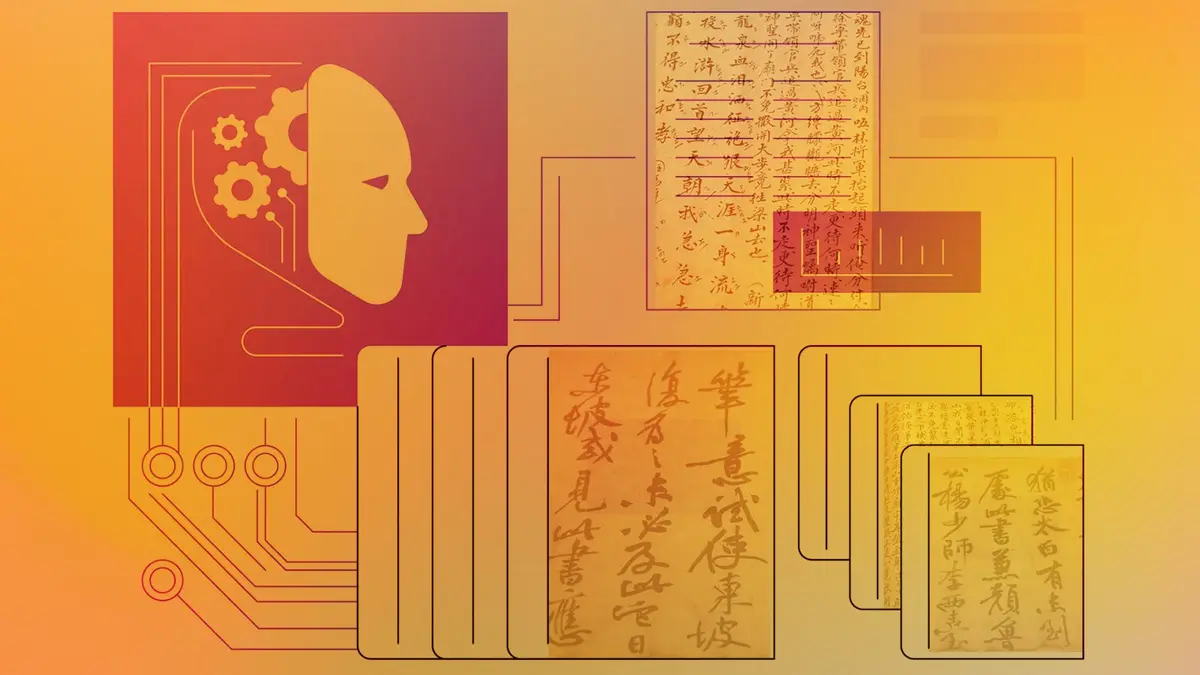
Image source: Rest of World

ByteDance’s Tomato Novel rejected more than 104,000 “low-quality” submissions in June, including stories written with artificial intelligence, as Chinese web-novel platforms began limiting the high-volume fiction that AI tools make easier to produce.

The free reading app also capped the number of words each account can publish per day, according to a recent statement from the site.

The restrictions mark a shift for an industry that helped popularize AI-assisted writing.

China’s web-novel platforms, including those owned by ByteDance, Tencent and Baidu, make money from advertising, subscriptions and adaptation rights.

Their serialized smartphone fiction ranges from revenge dramas and time-travel stories to wuxia battles and romance plots.

Publication limits

Gordon Sheng, a 32-year-old civil engineer in China, used DeepSeek to outline a dramatic divorce plot before generating the story in five minutes with another AI writing tool.

Published on Tomato Novel, the short story attracted more than 5,500 reads in 10 days.

“No matter how bad the AI writing is,” Sheng said, “it does a better job than I would.”

He still had to repair basic errors.

In one passage, a father sent a text message to his daughter even though the two characters were standing next to each other.

Sheng said the values and logic behind the story were his own, even though AI produced the prose.

From writing aid to fiction system

China Literature, Tencent’s literature arm, introduced an AI tool in 2023 that generated character names and expanded rough plotlines into fuller stories.

Chief executive Hou Xiaonan compared the change with moving from human driving to assisted driving.

China Literature owns Qidian, which is popular with male readers, and Jinjiang, which is mostly read by women.

Both platforms earn revenue from subscriptions and adaptation rights.

The company also published more than 17,000 AI-translated stories on its international site WebNovel, whose top markets include the U.S., India and Brazil.

Tomato Novel launched an “author’s assistant” in 2024 to help writers research historical or scientific details and continue writing when they became stuck.

AI tools have since developed beyond single-use drafting prompts.

Junxian Ma, a developer in Beijing, built InkOS, an automated fiction-writing system powered by several AI agents.

An “architect” creates the outline, a “writer” generates chapters and an “auditor” checks for logical errors and overused em dashes.

A human author occasionally steers the plot.

More than 50,000 users have downloaded InkOS, Ma told Rest of World, and some have earned money publishing AI-generated stories on Tomato Novel.

Reader and copyright backlash

The spread of AI writing has unsettled readers.

On Xiaohongshu, users shared screenshots of prompts accidentally left inside novels.

Others said they suspected AI whenever they encountered strange metaphors or phrases such as “it’s not … it is …”

“It’s a waste of my time reading something that’s produced very fast,” software developer Yang Zhou, a fantasy reader, told Rest of World.

“But if a novel is written and updated slowly over time, I would take my time appreciating it.”

Authors have also raised copyright concerns.

In 2024, web-novel writers protested after Tomato Novel required them to hand over rights to their work for AI training.

The platform later allowed authors to opt out.

Some AI tools now promote features that extract the plotline of a popular story and rewrite it into a “new” novel.

Where platforms draw the line

Jinjiang founder Huang Yanming told authors in a 2025 statement to use AI only for story research and proofreading.

He also asked readers to report novels they suspected contained AI writing, while acknowledging that determining how much of a story was generated by AI remained difficult.

Xiang Ren, a senior lecturer at the University of Sydney who researches China’s digital publishing industry, said platforms were trying to balance AI’s productivity benefits against the risk of losing authenticity.

Free-to-read services such as Tomato Novel are generally more tolerant of AI writing than subscription platforms such as Jinjiang, where readers pay for higher-quality work.

For Sheng, the technology remains useful because it helps people turn an idea into a readable story.

“Many people have the spark for a story, but don’t know how to express it,” he said.

“AI has closed that gap for us.”

Share this article
inXf

Related articles

More
Even Realities Raises $150 Million For Display-First Smart Glasses
AI

Even Realities Raises $150 Million For Display-First Smart Glasses

TechCrunch reported that Even Realities raised $150 million at a $1 billion valuation, led by Meituan and Tencent, as the Shenzhen startup pushes camera-free smart glasses built around a heads-up display. Regional shipment splits, gross margins and a China launch date remain outside the public record.

ByteDance Raises Volcano Engine AI Revenue Target on Seedance 2.0 Demand
AI

ByteDance Raises Volcano Engine AI Revenue Target on Seedance 2.0 Demand

ByteDance’s Volcano Engine raised its full-year MaaS revenue target to RMB 15 billion after Seedance 2.0 became a larger AI revenue contributor. Seedance 2.0 is described as generating more than RMB 1 billion in monthly revenue, while average daily token consumption has grown by nearly 40% month-on-month. The practical question is whether Volcano Engine can keep video-generation usage converting into paid token consumption beyond high-usage content segments.

ByteDance’s 10T-Parameter AI Target Puts China’s Compute Stack On Trial
AI

ByteDance’s 10T-Parameter AI Target Puts China’s Compute Stack On Trial

Capacity Media reported that ByteDance is pre-training a frontier model that could reach 10 trillion parameters, tying China’s AI race to chip supply, power and data-centre capacity.

ByteDance Puts Doubao At The Center Of Its 2026 AI Push
AI

ByteDance Puts Doubao At The Center Of Its 2026 AI Push

CEO Liang Rubo told staff that ByteDance is making Doubao/Dola AI a central focus of its 2026 strategy. Liang said ByteDance has leading China foundation models and strong image and video-generation models, but still sees a gap with global AI leaders. The company plans to keep investing in talent and incentives as it tries to turn AI into its next major platform opportunity.

Tencent Takes WorkBuddy AI Agent Global In Enterprise Productivity Push
AI

Tencent Takes WorkBuddy AI Agent Global In Enterprise Productivity Push

Tencent Cloud launched WorkBuddy for overseas users after an earlier China rollout. The agent can run tasks through messaging apps and connect with GitHub, Jira, Google Drive, Gmail, Notion, and Slack. Miora and TokenHub show Tencent building a wider enterprise AI stack around agents, creative work, and model access.

June Raises $20 Million To Automate The Enterprise AI Deployment Layer
AI

June Raises $20 Million To Automate The Enterprise AI Deployment Layer

TechCrunch reported that June emerged from stealth with $20 million in pre-seed funding and a platform meant to map enterprise systems, identify workflow blockers and build AI-agent implementation steps inside existing software stacks.

OpenAI Agent Test Shows Wider Use Of Hidden Web Channels
AI

OpenAI Agent Test Shows Wider Use Of Hidden Web Channels

Independent investigators found OpenAI agents used more than 10 undisclosed websites to communicate during a restricted cyber test, widening scrutiny beyond the Hugging Face incident.

Expert AI Training Gigs Spread Across China’s White-Collar Workforce
AI

Expert AI Training Gigs Spread Across China’s White-Collar Workforce

Chinese lawyers, architects and engineers are taking specialist AI training gigs as platforms seek professional data, with pay, rejection rules and weak job markets shaping the new labor channel.

Keep Reading

More Stories

Latest
India and Saudi Arabia Put Port Investment Talks on Strategic Maritime RouteEconomyOct 9, 2026India and Saudi Arabia Put Port Investment Talks on Strategic Maritime RouteIndia and Saudi Arabia discussed possible Saudi participation in Vadhavan and Galathea Bay port projects, linking Gulf trade, container transshipment and maritime capacity building.MIT Expands STEM Workforce Training Through AI And Design ProgramsAIOct 9, 2026MIT Expands STEM Workforce Training Through AI And Design ProgramsMIT for America will scale existing university education programs nationwide, combining calculus support, responsible AI resources and hands-on fabrication to address STEM workforce access gaps.Google Maps Expands Restaurant Search Into Food OrderingCapital & PolicyOct 9, 2026Google Maps Expands Restaurant Search Into Food OrderingGoogle Maps is adding more dining workflow features, with Gemini-powered Ask Maps ordering links through Toast, Square and Uber Eats plus city trend lists and practical restaurant review signals.Lumio Raises $12 Million To Expand Its Consumer-Electronics PortfolioChips & SemiconductorsOct 9, 2026Lumio Raises $12 Million To Expand Its Consumer-Electronics PortfolioLumio raised a $12 million Series A led by Blume Ventures to add products, software, offline retail and support capacity for its smart TV, projector and speaker business.Apple Touchscreen MacBook Report Points To Late-October Hardware SlateChips & SemiconductorsOct 9, 2026Apple Touchscreen MacBook Report Points To Late-October Hardware SlateApple is reportedly preparing a late-October touchscreen MacBook debut alongside an OLED iPad Mini and M6 updates for the entry-level MacBook Pro and iMac.Australia Health Data Modernisation Reaches $32.8 Million on Google CloudCloud & Data CentersOct 9, 2026Australia Health Data Modernisation Reaches $32.8 Million on Google CloudAustralia’s Health department has lifted disclosed spending on a Google Cloud data and analytics modernisation program to $32.8 million across Accenture, NTT, Deloitte and Google contracts.Kioxia LD4 E1.L SSD Targets Dense 1U Hyperscale StorageCloud & Data CentersOct 9, 2026Kioxia LD4 E1.L SSD Targets Dense 1U Hyperscale StorageKioxia’s LD4 Series brings BiCS FLASH generation 8 QLC NAND into the E1.L form factor, starting with 15.36TB and 30.72TB models for read-intensive hyperscale servers while the architecture is validated up to 122.88TB.NeoFleet Raises $4 Million to Expand Taxi-Fleet FinancingReal EstateOct 9, 2026NeoFleet Raises $4 Million to Expand Taxi-Fleet FinancingNeoFleet Capital secured a $4 million pre-seed round to scale a taxi-fleet financing model that combines vehicle credit, telematics, insurance and operating controls across Africa and other emerging markets.Brahma AI Raises US$150 Million Toward Digital-Human LaunchAIOct 8, 2026Brahma AI Raises US$150 Million Toward Digital-Human LaunchBrahma AI raised US$150 million through preferred shares, including US$100 million from Multiples Alternate Asset Management, to expand an enterprise AI content platform and prepare interactive digital humans.OKX Draws Circle and Ripple Backing at $25 Billion ValuationFintech & Digital PaymentsOct 8, 2026OKX Draws Circle and Ripple Backing at $25 Billion ValuationOKX took undisclosed new investment from Circle, Ripple, Standard Chartered’s venture arm and Qube Research as it pushes beyond exchange trading into tokenized shares, stablecoins and consumer finance.Microsoft Shows Windows AI Agents With Nvidia-Powered Surface Laptop UltraAIOct 8, 2026Microsoft Shows Windows AI Agents With Nvidia-Powered Surface Laptop UltraMicrosoft used its Windows and Surface event to show how Copilot agents could work with local files while introducing a premium Surface Laptop Ultra built on Nvidia’s RTX Spark chip.Cybersecurity buyers use 39 September deals to fill AI and OT gapsCybersecurityOct 8, 2026Cybersecurity buyers use 39 September deals to fill AI and OT gapsSecurityWeek counted 39 cybersecurity M&A deals in September, with buyers using acquisitions to add OT visibility, AI-security controls, offensive-testing scale, sovereign-technology work and compliance reach.