India and Saudi Arabia Put Port Investment Talks on Strategic Maritime Route
India and Saudi Arabia discussed possible Saudi participation in Vadhavan and Galathea Bay port projects, linking Gulf trade, container transshipment and maritime capacity building.

Arab News reported that India and Saudi Arabia are discussing Saudi participation in strategic Indian port projects, turning a maritime conference in New Delhi into a test of how far Gulf capital could move into South Asian logistics infrastructure.
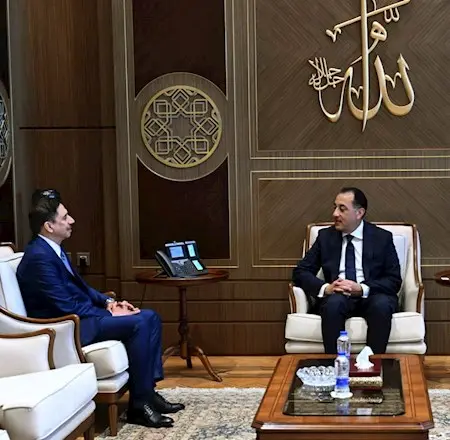
The talks followed a meeting between Saudi Ports Authority President Suliman Al-Mazroua and Indian ports minister Sarbananda Sonowal.
New Delhi used Sagarmanthan: The Great Oceans Dialogue 2026 as the setting for the discussion, with the maritime gathering closing Friday after more than 1,200 speakers and participants from over 70 countries attended.
Sonowal used the meeting to frame the relationship as broader than a single investment pitch.
He described historical trade links between the two countries as a modern maritime partnership and pointed to a possible joint working group covering maritime energy, port investment and seafarer capacity building.
The concrete projects under discussion are Vadhavan and Galathea Bay.
The Indian Shipping Ministry identified Saudi participation in those port projects as part of the conversation and suggested that the Kingdom could take part through India's Maritime Development Fund.
Vadhavan would sit roughly a four-hour drive from Mumbai and is being positioned as a deep-draft hub for cargo moving between India and Gulf markets.
Its ability to handle ultra-large container vessels would help relieve limits at older ports and could connect with the proposed IMEC corridor, where Saudi Arabia is one of the participating countries.
Galathea Bay carries a different strategic role.
The port is tied to India's Great Nicobar Project, a plan meant to expand New Delhi's reach around the Andaman Sea and Southeast Asia while cutting dependence on transshipment hubs such as Singapore, Colombo and Port Klang.
For Saudi Arabia, the same two projects fit a diversification strategy that extends beyond energy exports.
Greater involvement in Indian ports would give the Kingdom a route into international container transshipment and associated terminal infrastructure, while also linking Saudi logistics ambitions to India's long-term maritime corridor planning.
The opportunity still depends on project economics and domestic safeguards.
India would need to keep the developments financially sustainable, environmentally defensible and aligned with its own maritime interests, especially because both projects involve large greenfield infrastructure and possible private participation.
Al-Mazroua also highlighted Saudi Arabia's experience in supply-chain resilience and maritime-passage security during the conference.
After the meeting, he wrote that he wanted to strengthen the maritime partnership with India, improve cooperation in port investments and capacity building, and create new opportunities for a more connected and sustainable future.