Even Realities Raises $150 Million For Display-First Smart Glasses
TechCrunch reported that Even Realities raised $150 million at a $1 billion valuation, led by Meituan and Tencent, as the Shenzhen startup pushes camera-free smart glasses built around a heads-up display. Regional shipment splits, gross margins and a China launch date remain outside the public record.
Even Realities has raised $150 million in a pre-Series B round led by Meituan and previous backer Tencent, valuing the three-year-old Shenzhen startup at $1 billion.
The funding backs a display-first approach to smart glasses as Meta and Snap push camera-equipped devices with AI assistants, TechCrunch reported.
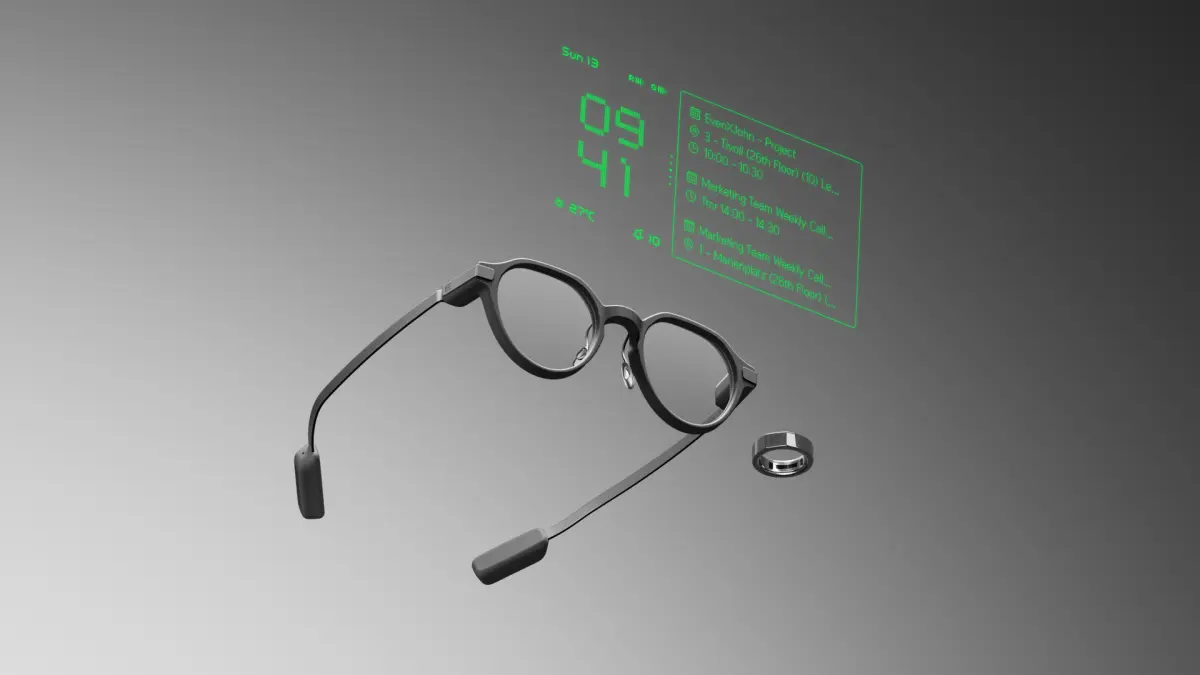
Founder and CEO Will Wang said Even is building glasses that place information directly in the wearer’s line of sight rather than centering the product on camera capture.
The company’s earlier backers include Sequoia China.
The display-first bet
Even’s latest flagship, the Even G2, reached the market last November without a camera.
A heads-up display built into the frames feeds information to the wearer, while the companion Even R1 ring lets users tap and swipe to navigate.
The camera-free design is part of Even’s privacy approach.
Wang said smart glasses may be the most personal computing device people wear, making comfort and privacy important for both the wearer and people nearby.
Voice features such as translation transcribe audio into text instead of storing recordings.
User data is encrypted, and the infrastructure is designed to meet Europe’s strict privacy standards.
Some power users rely on Conversate, a copilot that reads conversations in real time, explains unfamiliar jargon and supplies follow-up information.
It then syncs a summary to the user’s phone.
Building the optical stack
Even was founded in 2023 by former Apple engineers and luxury-eyewear specialists.
Wang worked on the Apple Watch and iPhone, while other co-founders came from technology companies and luxury eyewear companies, including Lindberg.
The startup launched its first product, the Even G1, in 2024.
Wang described it as the lightest waveguide smart glasses on the market at the time.
Even has invested most heavily in optics, including the display and overall optical performance.
Wang said smart glasses require the microchip, optics and waveguide to be designed together, unlike the conventional OLED or LCD displays used in phones and watches.
The company’s proprietary system, Even HAO, or Holistic Adaptive Optics, integrates the microchip, waveguide and prescription support from the start instead of combining separately designed components.
Early sales and expansion
Even surpassed its own 10,000-unit target and became the first company in the category to sell more than 10,000 pairs, Wang said.
The company grew from 30–40 staff in 2024 to 300–400 today, and the latest financing arrived faster than expected.
More than half of Even’s users are in the U.S., its fastest-growing market, and most of its developer community is there as well.
The company manufactures in China across several factories but does not yet sell in the country.
Its main markets are the U.S., Japan, South Korea, the Middle East and Europe.
Wang said demand in China is significant, but Even wants to prepare before entering that market.
The frames retail for $599 before tax; prescription lenses or the R1 ring add another $200–$300, bringing the average order to roughly $1,000.
Most customers are male professionals between 30 and 50, and a company survey found that about a third are executives.