OpenAI IPO Faces C-Suite Exodus After Revenue Chief Exit
CNBC reported that Denise Dresser and Brad Lightcap have left OpenAI as the company prepares for an expected IPO, leaving investors to weigh enterprise growth against governance and management stability.

OpenAI's expected IPO now has to carry a new management-stability question after three senior commercial executives left within months, CNBC reported, adding governance pressure to a company already trying to defend an $852 billion valuation.
Revenue chief Denise Dresser announced her departure on Thursday, two days after former operating chief Brad Lightcap said he was leaving after eight years.
Fidji Simo, who had praised Dresser's appointment when OpenAI hired her from Slack in December, also stepped away in July because of a severe exacerbation of a chronic illness.
OpenAI confidentially filed its IPO prospectus in June and has not set a timetable for the offering.
Investors are weighing that filing against competition from Google and Anthropic, wider use of lower-cost open-weight models and volatility in SpaceX's stock after its market debut.
Dresser had been given more responsibility in April when Lightcap moved from operating chief duties to a role focused on special projects.
Her exit leaves the enterprise business, one of OpenAI's higher-margin growth lines, under new leadership just as the company is trying to turn ChatGPT demand into durable corporate revenue.
Dresser joined OpenAI after senior enterprise roles at Salesforce and Slack, giving the company a commercial operator for a unit that competes directly with Anthropic for corporate AI accounts.
The short tenure now leaves Rajic to inherit both sales execution and investor confidence work before OpenAI has opened its IPO documents to public scrutiny.
OpenAI named Dali Rajic, former chief operating officer of Wiz, as chief revenue officer.
Google acquired Wiz earlier this year for $32 billion, and Rajic was introduced to OpenAI through Thrive founder Josh Kushner.
Brockman's Slack note shared with CNBC put July monthly run-rate expansion above 20%, while business-customer revenue rose 32%.
OpenAI also announced Thursday that enterprise customers doubled from a year earlier to 2 million under Dresser's leadership.
Those numbers sit beside a thinner disclosure record for public-market investors.
In April, Dresser put enterprise at 40% of OpenAI revenue and expected the business line to match consumer revenue by the end of 2026, but the company has not published IPO timing, full financial statements or a formal governance structure for public-market buyers.
Sarah Friar, OpenAI's chief financial officer, planned to meet investors on Friday at a previously scheduled event.
Friar was expected to address the C-suite changes, while Brockman was set to discuss company strategy.
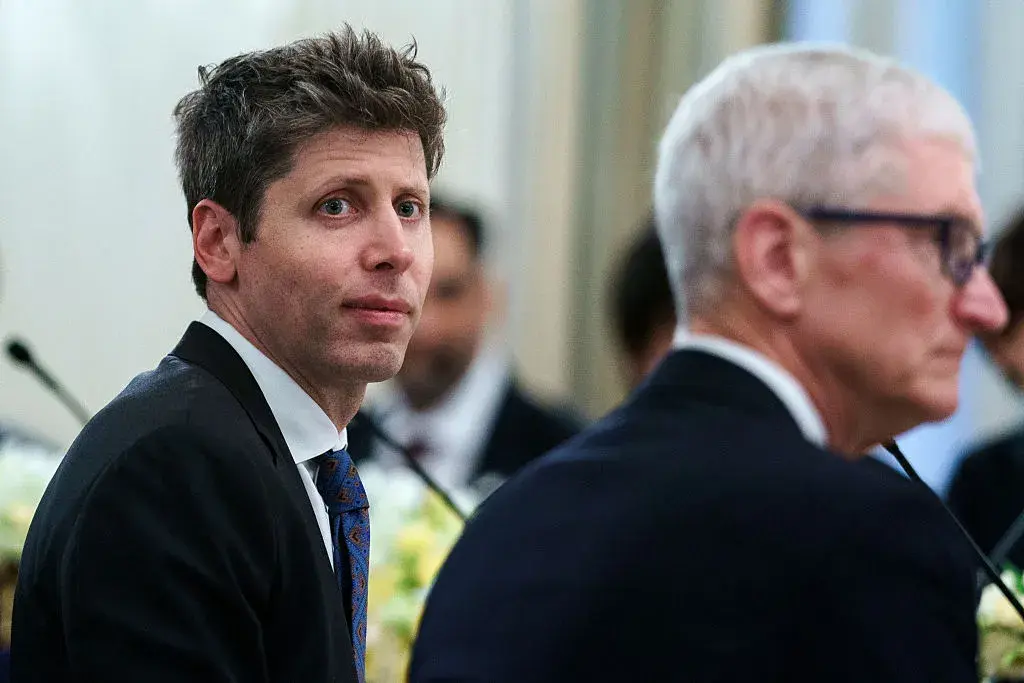
The departures revive an older governance overhang around Sam Altman.
In 2023, OpenAI's board briefly removed him as chief executive after determining that he had not been consistently candid in communications with directors, before investor pressure and employee threats of mass resignation helped restore him days later.
That episode returned during Elon Musk's lawsuit over OpenAI's corporate structure.
Lawyers for Musk used the board fight to question Altman's character during a federal trial in Oakland, California, and also pressed Brockman about criticism of his management style.
An advisory jury later found that Musk waited too long to bring the suit, though Musk planned an appeal.
Kevin McCormick, founder of AI startup SignAudit.AI, called the executive departures before an IPO a "huge red flag" in a post on X. OpenAI's own response focused on the replacement appointment, with Brockman framing Dresser's tenure as a formative period for the revenue group and Rajic's job as turning those lessons into repeatable execution.
The next investor test is not model speed or user growth alone.
OpenAI must show that its commercial leadership, revenue controls and corporate governance can hold together before a listing that would ask public-market buyers to underwrite one of the highest private valuations in artificial intelligence.