SendTech Times
News
SUPPLY CHECK:

Nvidia ‘likely the most concerned’ as Huawei bets on new chip architecture law

Newsroom brief

Huawei says its new Tau Scaling Law could support transistor density equivalent to a 1.4-nanometre process in high-end chips by 2031. Analysts said the move could weaken US-led export-control leverage as China pushes semiconductor self-sufficiency under sanctions. Omdia said Nvidia is likely the most concerned, while Chinese state media cast the effort as a technological Long March.
Verified against source materialEdited by SendTech Times Chips & Compute DeskSource: Scmp
Nvidia ‘likely the most concerned’ as Huawei bets on new chip architecture law
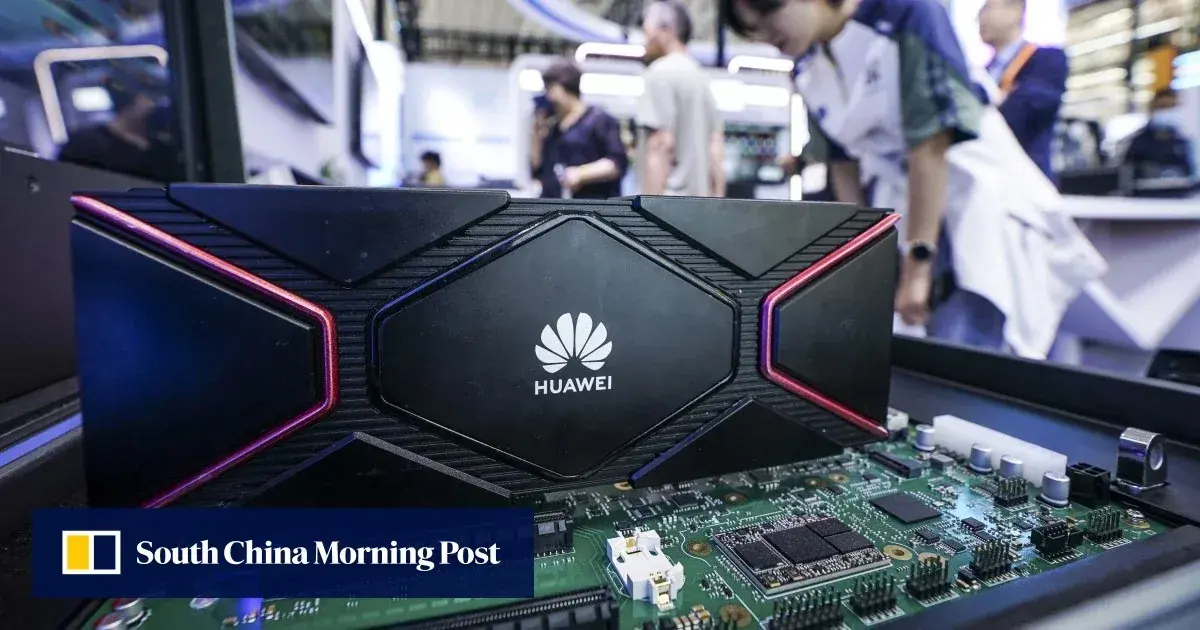
Image source: South China Morning Post

Huawei Technologies’ new chip architecture law is being read by analysts as a fresh test of whether China can push past US-led technology restrictions — and as a development that may worry Nvidia more than any other company.

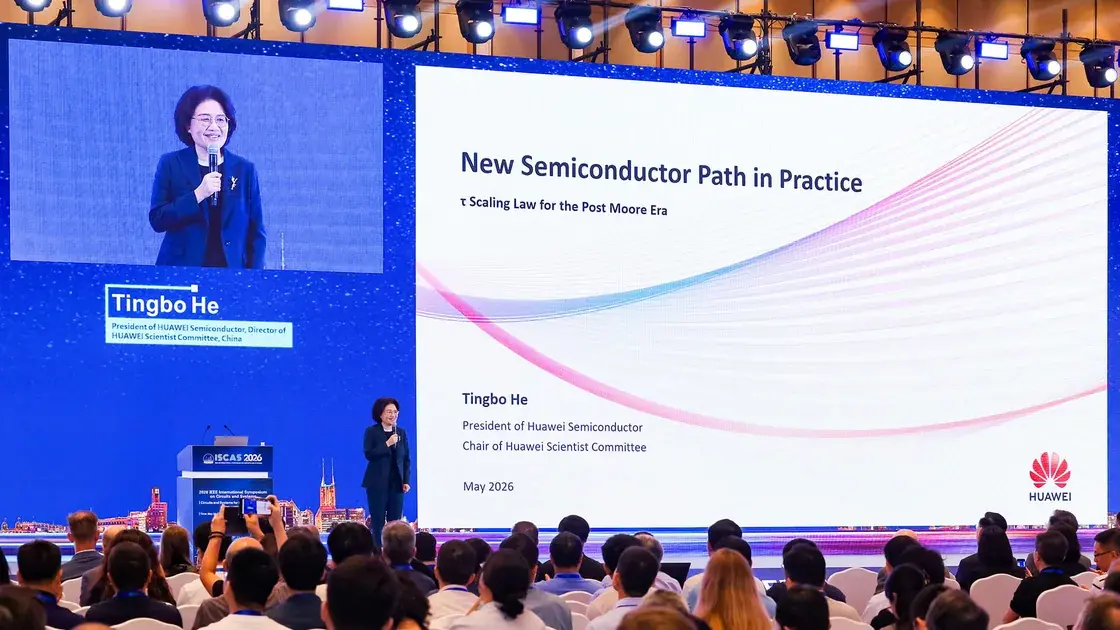
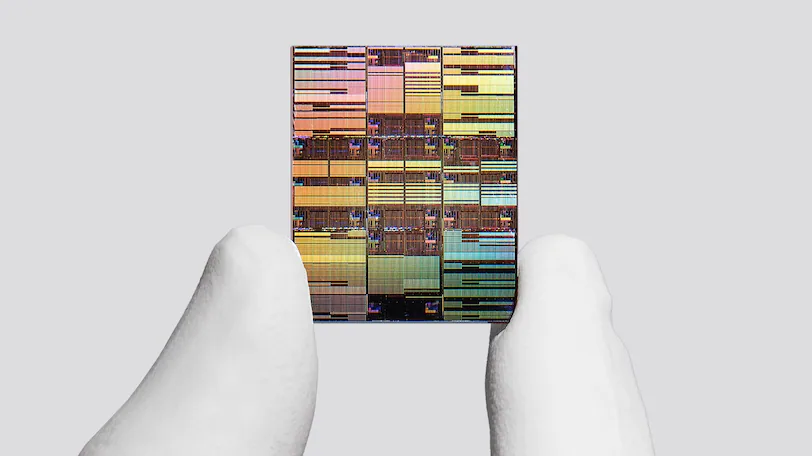
On Monday, Huawei introduced its Tau (τ) Scaling Law, which it said lays the groundwork to reach transistor density equivalent to a 1.4-nanometre process in high-end chips by 2031.

If that holds up in practice, it would narrow the gap with leading semiconductor companies and offer a new route around a manufacturing bottleneck created by sanctions.

Huawei’s case for a new path

Huawei said the new law could deliver performance gains in both smartphone chips and artificial intelligence computing systems.

US-led sanctions block China’s semiconductor industry from accessing the most advanced chipmaking technologies, including extreme ultraviolet lithography machines required for 3nm nodes and below.

He Tingbo, chairwoman of the Huawei Scientist Committee and president of Huawei’s semiconductor business department, said new EUV tools would no longer be necessary to reach these advanced nodes.

Liao Heng, chief scientist at Huawei’s semiconductor department, tied the approach to rising demand for computing power in the AI race.

“By 2035, our single chip module performance can be expected to increase by 100-fold, and system level performance can be expected to increase by 1,000 times,” Liao said.

He added that the path had “effectively tackled” the challenge of computing power availability, which he said was an anxiety in China and around the world.

Analysts link the move to export controls and Nvidia

Gary Ng, senior economist at Natixis Corporate and Investment Bank, said “the US will have less leverage over export control as China becomes more self-sufficient”, while cautioning that the Tau law still needed to be “tested in practice”.

James Lambert, head of Asia consulting at Oxford Economics, said the development pointed to China’s broader adaptation to Western technology restrictions.

He said Chinese firms were increasingly investing in alternative domestic AI and semiconductor pathways rather than depending on Western ones.

Wall Street research firm Bernstein called the announcement “another DeepSeek moment”.

Analyst Lin Qingyuan wrote that, if executed successfully, it could give the Chinese semiconductor industry more confidence to invest locally and build a fuller domestic semiconductor stack.

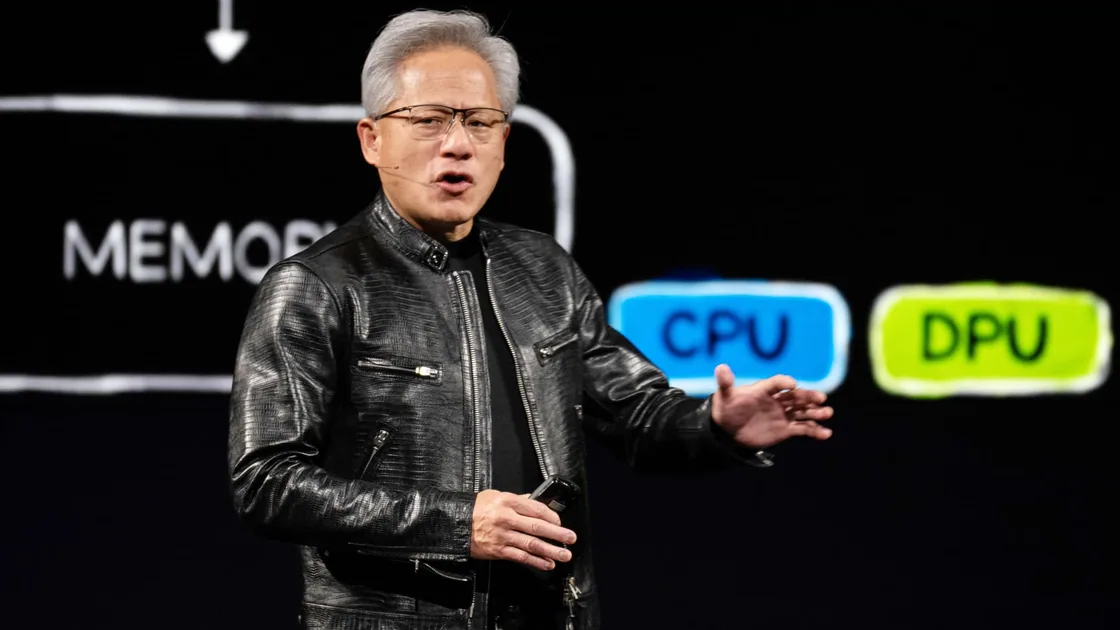
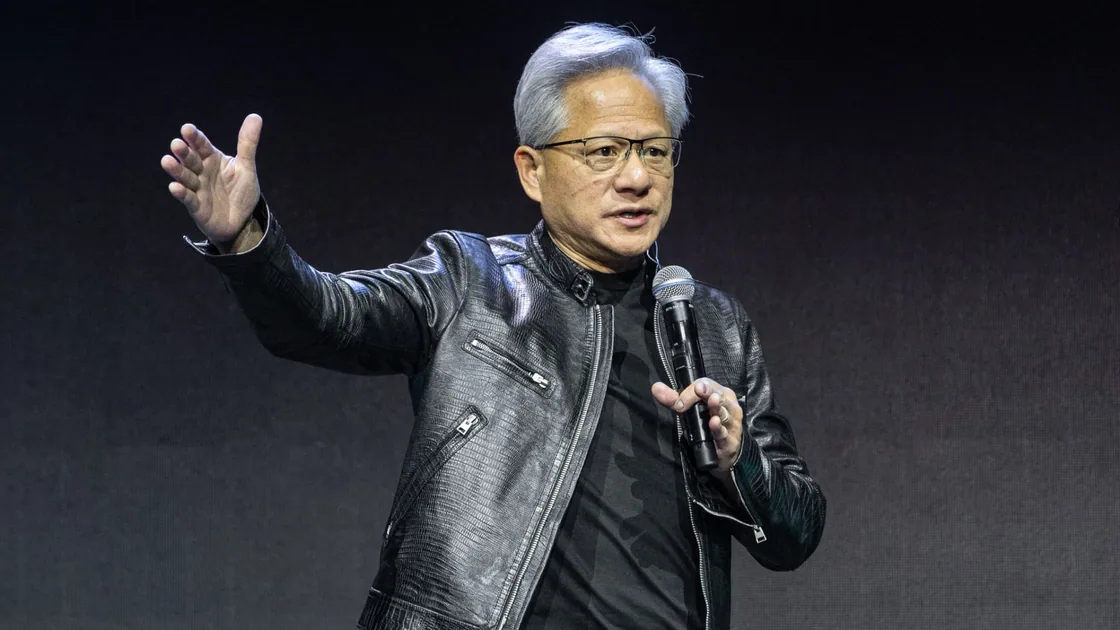
He Hui, director of semiconductor research at Omdia, said “Nvidia is likely the most concerned by this development”.

He said Nvidia had already lost half of its market share in China and now faced domestic chips that had nearly closed the gap with the H200.

The report also noted that China has yet to approve domestic sales of Nvidia’s H200 AI chips.

State media frames the effort as a Long March

Chinese state media welcomed the announcement in political terms.

Communist Party newspaper People’s Daily compared the struggle against US sanctions to “the most tragic and brave Long March in the history of science and technology”.

“Instead of getting stuck in a rut, why not try a different approach?” the paper wrote.
Share this article
inXf

Related articles

More
Huawei's Tau Law redefines chip scaling with logic folding as the post-Dennard path to 1.4nm
Chips & Semiconductors

Huawei's Tau Law redefines chip scaling with logic folding as the post-Dennard path to 1.4nm

Huawei introduced the Tau Scaling Law at ISCAS 2026 in Shanghai as a semiconductor scaling framework built around temporal minimization through logic folding. The company said the approach could deliver transistor densities equivalent to 1.4nm by 2031, offering a path beyond geometric shrinking alone. Huawei also said it has already designed and shipped 381 chips using this architectural approach, with a new Kirin processor set to be the first commercial product with full logic folding technology.

Huawei's Tau scaling puts architecture at the center of China's AI-chip push
Chips & Semiconductors

Huawei's Tau scaling puts architecture at the center of China's AI-chip push

Huawei proposed Tau scaling, a framework focused on shorter signal paths rather than only smaller transistors. LogicFolding is planned for Kirin chips in fall and winter 2026, with Huawei claiming a density jump to 238 million transistors per square millimeter. The test is whether architecture-led gains can be validated in commercial chips amid export-control limits on advanced tools.

Taiwan AI Chip Control Plan Tests Asia's Semiconductor Enforcement Gap
Chips & Semiconductors

Taiwan AI Chip Control Plan Tests Asia's Semiconductor Enforcement Gap

Taiwan is weighing stricter AI chip export controls that could criminalize smuggling of Nvidia-class hardware to China, raising compliance pressure on server assemblers and deepening Asia's split over US-aligned semiconductor enforcement.

Nvidia's RTX Spark Turns AI PCs Into the Next Chip Battleground
Chips & Semiconductors

Nvidia's RTX Spark Turns AI PCs Into the Next Chip Battleground

Nvidia is entering the AI PC market with RTX Spark, a MediaTek-linked SoC that combines Blackwell GPU technology with a CPU on a single chip. The move shifts Nvidia's AI strategy closer to edge devices, where agentic AI could run locally instead of relying only on cloud infrastructure. Analysts cited in the source said the PC opportunity is still small compared with Nvidia's data center and networking businesses.

Huawei’s Kirin 9050 highlights 3D stacking and Tau Law ahead of the Mate 90 launch
Chips & Semiconductors

Huawei’s Kirin 9050 highlights 3D stacking and Tau Law ahead of the Mate 90 launch

Huawei plans to introduce the Kirin 9050 with the Mate 90 series this fall, with September 2026 indicated for the phone launch window. Reports tied to industry channels and an ISCAS 2026 conference presentation describe the chip as moving past Apple’s A18 while nearing first-generation 3nm-class density. The central issue is whether 3D IC stacking and Tau Law can deliver high-end results without relying on the most advanced EUV lithography tools.

Warren Hearing Request Puts Nvidia China Chip Sales Under Export-Control Scrutiny
Chips & Semiconductors

Warren Hearing Request Puts Nvidia China Chip Sales Under Export-Control Scrutiny

Sen. Elizabeth Warren invited Nvidia CEO Jensen Huang to testify before the Senate Banking Committee on June 11 over China chip sales and export controls. The request focuses on Nvidia's views on U.S. export control laws and its business in China as lawmakers scrutinize advanced AI chip flows. The next signal is whether Huang appears and gives senators enough detail on Nvidia's China strategy and national-security posture.

Chinese Brain-Mapping Chip Claims 478 Times NVIDIA A100 Speed Without Clinical Proof
Chips & Semiconductors

Chinese Brain-Mapping Chip Claims 478 Times NVIDIA A100 Speed Without Clinical Proof

A Peking University and Chinese Academy of Sciences team reported a 40-nanometre computing-in-memory chip that maps the brain’s folded cortex in less than 0.5 seconds, while the public record still lacks clinical validation or a commercial release plan.

IBM Claims Sub-1 Nanometre Chip Path With Production Still Five Years Away
Chips & Semiconductors

IBM Claims Sub-1 Nanometre Chip Path With Production Still Five Years Away

IBM says its nanostack architecture can put nearly 100 billion transistors on a fingernail-sized chip and move sub-1 nanometre technology into production within five years. The claim targets AI efficiency, but IBM has not named customers or manufacturing partners for the process.

Keep Reading

More Stories

Latest
Ethereum Testnet Update Targets 200 Million-Gas BlocksCrypto/Web3Oct 6, 2026Ethereum Testnet Update Targets 200 Million-Gas BlocksEthereum developers released Prysm 7.2.1 so the Sepolia trial of Glamsterdam can test 200 million-gas blocks, more than three times the prior 60 million setting, before any main-network change.Kepler Targets 2027 Production for HBM Replacement MemoryCloud & Data CentersOct 6, 2026Kepler Targets 2027 Production for HBM Replacement MemoryEE Times reports that Kepler Computing is preparing 3D ferroelectric memory for 2027 production, promising higher capacity and bandwidth per watt while limiting reliance on advanced-node lithography.Yokogawa Opens Singapore Hub For Industrial Cyber ResilienceCapital & PolicyOct 6, 2026Yokogawa Opens Singapore Hub For Industrial Cyber ResilienceYokogawa Engineering Asia has launched a Singapore center focused on OT cyber resilience, training, response planning and recovery coordination for Southeast Asia, Oceania and Taiwan.ClickFix Attack Uses Browser Cache To Hide Malware PayloadCybersecurityOct 6, 2026ClickFix Attack Uses Browser Cache To Hide Malware PayloadMicrosoft Threat Intelligence traced a ClickFix cache-smuggling method that preloads malware into browser caches, then uses file size checks and a pasted Run command to launch later credential-theft stages.VOA Tests Six-Month Startup Buildout Before Funding DecisionsFintech & Digital PaymentsOct 6, 2026VOA Tests Six-Month Startup Buildout Before Funding DecisionsTechCabal’s interview with VOA Venture Partners founder Victoria Olayide Adesanya describes a six-month build programme that lets the firm work inside African financial-infrastructure startups before deciding whether to invest.Bitcoin Holds $86,000 As Dollar Index Hits 18-Month HighCrypto/Web3Oct 6, 2026Bitcoin Holds $86,000 As Dollar Index Hits 18-Month HighCoinDesk reported that bitcoin stayed near $86,000 while the U.S. Dollar Index reached about 102.5, with U.S. rate expectations and European political risks strengthening the dollar backdrop.Google Freezes OSS Bug Bounty Reports After AI Submission FloodCybersecurityOct 6, 2026Google Freezes OSS Bug Bounty Reports After AI Submission FloodGoogle has stopped accepting new product vulnerability reports in its OSS VRP after invalid automated submissions swamped reviewers, while older reports and some Cloud VRP routes remain open.Fleuret AI Raises €4M For Continuous AI Pentesting PlatformCybersecurityOct 6, 2026Fleuret AI Raises €4M For Continuous AI Pentesting PlatformTech.eu reported that French startup Fleuret AI raised €4 million in pre-seed funding to develop an agentic-AI platform that turns penetration testing into a continuous security process.GFT Analysis Says AI Documentation Can Cut Maintenance Work 30%Fintech & Digital PaymentsOct 6, 2026GFT Analysis Says AI Documentation Can Cut Maintenance Work 30%A GFT Technologies analysis says AI-linked software documentation can cut maintenance effort and speed developer onboarding when knowledge assets stay synchronized with code changes.Schneider Electric Lines Up $22.6 Billion PTC DealAIOct 5, 2026Schneider Electric Lines Up $22.6 Billion PTC DealSchneider Electric plans to buy PTC in a cash transaction valuing the US engineering software provider’s equity at about $22.6 billion, adding product-lifecycle software to its industrial AI push.Aggarwal Pledges Ola Electric Stake To Fund ₹1,000 Cr Rights IssueCapital & PolicyOct 5, 2026Aggarwal Pledges Ola Electric Stake To Fund ₹1,000 Cr Rights IssueOla Electric founder Bhavish Aggarwal pledged 20 Cr shares to finance his participation in a rights issue that forms part of a larger ₹1,500 Cr fundraising plan.Natrona Schools AI Review Puts Student Privacy Ahead Of Classroom Tool UseAIOct 5, 2026Natrona Schools AI Review Puts Student Privacy Ahead Of Classroom Tool UseNatrona County trustees questioned whether teacher AI tools expose student data, even as existing district rules already ban unauthorized generative AI use by students.