SendTech Times
News
MARKET SIGNAL:

Huawei’s Kirin 9050 highlights 3D stacking and Tau Law ahead of the Mate 90 launch

Newsroom brief

Huawei plans to introduce the Kirin 9050 with the Mate 90 series this fall, with September 2026 indicated for the phone launch window. Reports tied to industry channels and an ISCAS 2026 conference presentation describe the chip as moving past Apple’s A18 while nearing first-generation 3nm-class density. The central issue is whether 3D IC stacking and Tau Law can deliver high-end results without relying on the most advanced EUV lithography tools.
Verified against source materialEdited by SendTech Times Chips & Compute DeskSource: Pandaily
Huawei’s Kirin 9050 highlights 3D stacking and Tau Law ahead of the Mate 90 launch
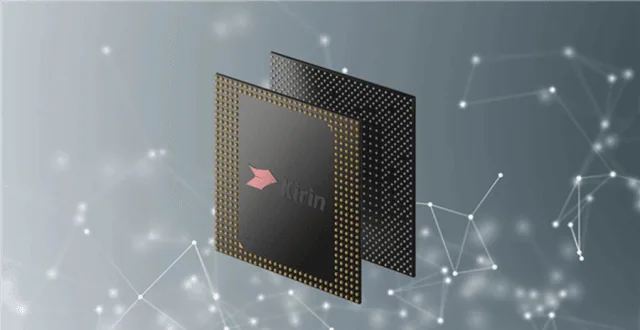
Image source: pandaily.com

Huawei’s next flagship chip

Huawei is preparing to launch the Kirin 9050 together with the Mate 90 smartphone series this fall, and the Mate 90 line is expected in September 2026.

Pre-launch reporting around the processor says its overall performance exceeds Apple’s A18.

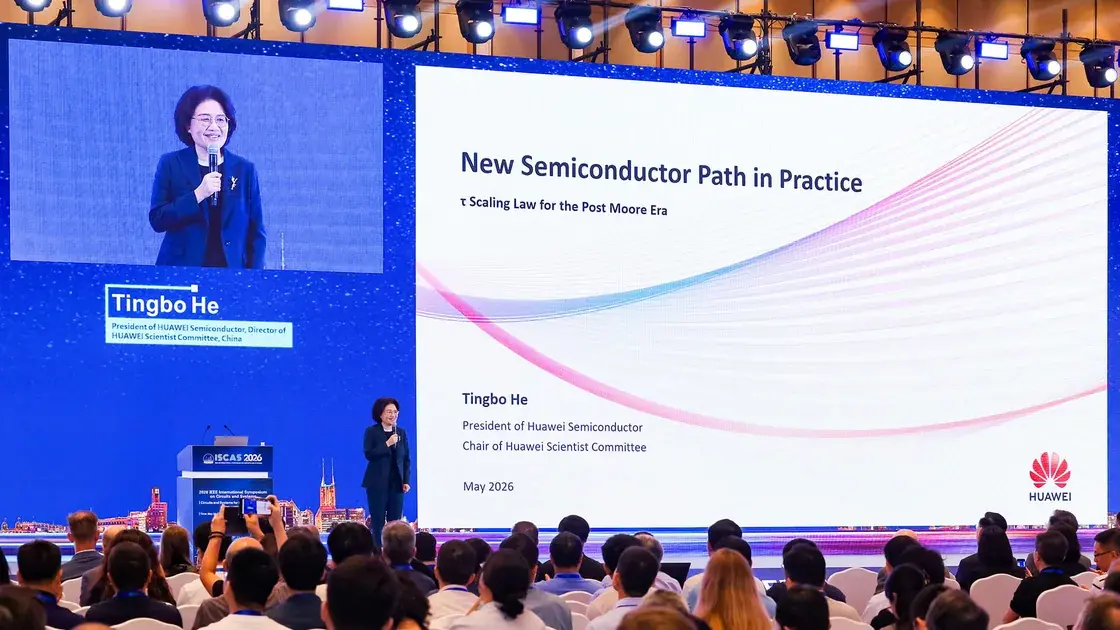
Those claims are linked to industry reporting as well as a presentation delivered at ISCAS 2026, the International Symposium on Circuits and Systems, held in Geneva.

The importance of the Kirin 9050 is tied not just to the performance comparison with Apple’s chip, but also to the method Huawei is using to get there.

The company’s upcoming flagship processor is described as reaching a level close to TSMC’s first-generation 3nm technology while avoiding dependence on the most advanced EUV lithography systems, which remain affected by export restrictions.

3D IC stacking as the core change

At the center of the design is a 3D IC stacking approach.

Instead of relying only on the standard progression toward smaller process nodes, this method raises transistor density by placing components in vertical layers.

That shift reduces the importance of traditional geometric scaling, which has long defined progress in semiconductor manufacturing.

In this case, the reported gain comes from architecture and integration.

By increasing density through vertical design, Huawei is said to improve performance without requiring the newest EUV tools.

That makes the Kirin 9050 notable as an example of an alternate engineering route rather than a direct replication of the conventional 3nm manufacturing path.

This approach is presented as a way to keep advancing performance under manufacturing constraints.

Rather than focusing solely on access to the smallest process technology, Huawei is described as using packaging and chip architecture to push its flagship processor closer to the performance class associated with much more advanced fabrication methods.

Tau Law and density gains

The theoretical basis for that strategy is Huawei’s proprietary Tau Law, developed by the company’s semiconductor research division.

Tau Law replaces conventional geometric miniaturization with what Huawei describes as temporal miniaturization.

In practical terms, the framework shifts the scaling problem away from feature-size reduction and toward better circuit timing and more efficient interconnect behavior.

Combined with 3D IC stacking, that approach is said to let Huawei work around EUV-related constraints through a different engineering method.

The claim is not simply that the company has matched an established process node by using the same route.

Instead, it is presented as achieving similar territory in density and performance through a different combination of design and manufacturing choices.

Huawei’s reported figures say transistor density on the Kirin 9050 is up 53.5% from the prior generation, reaching 238 million transistors per square millimeter.

That density is described as approaching the level of TSMC’s first-generation 3nm process technology while using manufacturing techniques that are more accessible.

The chip is also expected to deliver performance comparable to TSMC’s N31, a 3nm-class chip, while being built through a different manufacturing path based on legacy processes more widely available to Chinese semiconductor fabs.

What the Mate 90 launch may confirm

The Mate 90 series will be the first commercial test of these claims when it arrives this fall.

Huawei is positioning the next generation of flagship devices as part of a broader effort to rebuild its standing among leading smartphone vendors after several years of restrictions on access to advanced semiconductor manufacturing.

The main question for the launch is whether the reported specifications and conference-presented results hold up in production silicon.

If they do, Huawei would become the first Android smartphone maker to move ahead of Apple’s A-series chips in comprehensive benchmark performance, reversing a competitive gap that has lasted for years.

That puts the Kirin 9050 story in a broader context.

It is not only about one flagship processor, but about whether architecture, stacking, and interconnect optimization can sustain semiconductor progress when access to the newest lithography tools is limited.

Share this article
inXf

Related articles

More
Huawei's Tau scaling puts architecture at the center of China's AI-chip push
Chips & Semiconductors

Huawei's Tau scaling puts architecture at the center of China's AI-chip push

Huawei proposed Tau scaling, a framework focused on shorter signal paths rather than only smaller transistors. LogicFolding is planned for Kirin chips in fall and winter 2026, with Huawei claiming a density jump to 238 million transistors per square millimeter. The test is whether architecture-led gains can be validated in commercial chips amid export-control limits on advanced tools.

Taiwan Visit Highlights How AI Demand Is Pulling Chip Power, Capacity and Pricing Into One Orbit
Chips & Semiconductors

Taiwan Visit Highlights How AI Demand Is Pulling Chip Power, Capacity and Pricing Into One Orbit

Jensen Huang’s Taiwan visit was centered on partner meetings, a planned discussion with TSMC Chairman C.C. Wei, and Nvidia appearances tied to the Computex cycle. The episode points to a broader market phase in which AI chip demand is increasingly shaped by foundry access, packaging readiness, memory costs and ecosystem coordination. Investors, suppliers and device makers should watch whether Taiwan-related expansion signals translate into concrete capacity, site, and pricing outcomes.

Huawei's Tau Law redefines chip scaling with logic folding as the post-Dennard path to 1.4nm
Chips & Semiconductors

Huawei's Tau Law redefines chip scaling with logic folding as the post-Dennard path to 1.4nm

Huawei introduced the Tau Scaling Law at ISCAS 2026 in Shanghai as a semiconductor scaling framework built around temporal minimization through logic folding. The company said the approach could deliver transistor densities equivalent to 1.4nm by 2031, offering a path beyond geometric shrinking alone. Huawei also said it has already designed and shipped 381 chips using this architectural approach, with a new Kirin processor set to be the first commercial product with full logic folding technology.

Nvidia ‘likely the most concerned’ as Huawei bets on new chip architecture law
Chips & Semiconductors

Nvidia ‘likely the most concerned’ as Huawei bets on new chip architecture law

Huawei says its new Tau Scaling Law could support transistor density equivalent to a 1.4-nanometre process in high-end chips by 2031. Analysts said the move could weaken US-led export-control leverage as China pushes semiconductor self-sufficiency under sanctions. Omdia said Nvidia is likely the most concerned, while Chinese state media cast the effort as a technological Long March.

Huawei Uses Mate XT 2 Launch To Put New Kirin Chip Back On Flagship Stage
Chips & Semiconductors

Huawei Uses Mate XT 2 Launch To Put New Kirin Chip Back On Flagship Stage

Huawei introduced the Kirin 9050 Pro in the Mate XT 2 Ultimate, pairing a tri-folding smartphone launch with claims on chip density, CPU performance, ray tracing and battery life.

Apple Puts New Mac Desktops on Sale With Local AI as the Divide
Chips & Semiconductors

Apple Puts New Mac Desktops on Sale With Local AI as the Divide

Apple’s new Mac mini and Mac Studio desktops are now available, with M6, M5 Pro, M5 Max and M5 Ultra configurations spanning compact AI workflows and high-memory professional workloads.

AMD Prices 256-Core EPYC 9996 At $14,904 For Server Buyers
Chips & Semiconductors

AMD Prices 256-Core EPYC 9996 At $14,904 For Server Buyers

TechRadar reports that AMD’s 6th Gen EPYC 9006 “Venice” lineup includes a 256-core EPYC 9996 with 512 threads, 1GB of L3 cache, a 600W default power rating and a $14,904 list price for 1,000-unit orders.

Nexstrom Raises $12M To Push 2D Wafers Toward Chip Foundries
Chips & Semiconductors

Nexstrom Raises $12M To Push 2D Wafers Toward Chip Foundries

SiliconANGLE reported that Singapore startup Nexstrom raised $12 million to commercialize a 2D semiconductor wafer platform designed for 12-inch production and existing foundry workflows.

Keep Reading

More Stories

Latest
Ethereum Testnet Update Targets 200 Million-Gas BlocksCrypto/Web3Oct 6, 2026Ethereum Testnet Update Targets 200 Million-Gas BlocksEthereum developers released Prysm 7.2.1 so the Sepolia trial of Glamsterdam can test 200 million-gas blocks, more than three times the prior 60 million setting, before any main-network change.Kepler Targets 2027 Production for HBM Replacement MemoryCloud & Data CentersOct 6, 2026Kepler Targets 2027 Production for HBM Replacement MemoryEE Times reports that Kepler Computing is preparing 3D ferroelectric memory for 2027 production, promising higher capacity and bandwidth per watt while limiting reliance on advanced-node lithography.Yokogawa Opens Singapore Hub For Industrial Cyber ResilienceCapital & PolicyOct 6, 2026Yokogawa Opens Singapore Hub For Industrial Cyber ResilienceYokogawa Engineering Asia has launched a Singapore center focused on OT cyber resilience, training, response planning and recovery coordination for Southeast Asia, Oceania and Taiwan.ClickFix Attack Uses Browser Cache To Hide Malware PayloadCybersecurityOct 6, 2026ClickFix Attack Uses Browser Cache To Hide Malware PayloadMicrosoft Threat Intelligence traced a ClickFix cache-smuggling method that preloads malware into browser caches, then uses file size checks and a pasted Run command to launch later credential-theft stages.VOA Tests Six-Month Startup Buildout Before Funding DecisionsFintech & Digital PaymentsOct 6, 2026VOA Tests Six-Month Startup Buildout Before Funding DecisionsTechCabal’s interview with VOA Venture Partners founder Victoria Olayide Adesanya describes a six-month build programme that lets the firm work inside African financial-infrastructure startups before deciding whether to invest.Bitcoin Holds $86,000 As Dollar Index Hits 18-Month HighCrypto/Web3Oct 6, 2026Bitcoin Holds $86,000 As Dollar Index Hits 18-Month HighCoinDesk reported that bitcoin stayed near $86,000 while the U.S. Dollar Index reached about 102.5, with U.S. rate expectations and European political risks strengthening the dollar backdrop.Google Freezes OSS Bug Bounty Reports After AI Submission FloodCybersecurityOct 6, 2026Google Freezes OSS Bug Bounty Reports After AI Submission FloodGoogle has stopped accepting new product vulnerability reports in its OSS VRP after invalid automated submissions swamped reviewers, while older reports and some Cloud VRP routes remain open.Fleuret AI Raises €4M For Continuous AI Pentesting PlatformCybersecurityOct 6, 2026Fleuret AI Raises €4M For Continuous AI Pentesting PlatformTech.eu reported that French startup Fleuret AI raised €4 million in pre-seed funding to develop an agentic-AI platform that turns penetration testing into a continuous security process.GFT Analysis Says AI Documentation Can Cut Maintenance Work 30%Fintech & Digital PaymentsOct 6, 2026GFT Analysis Says AI Documentation Can Cut Maintenance Work 30%A GFT Technologies analysis says AI-linked software documentation can cut maintenance effort and speed developer onboarding when knowledge assets stay synchronized with code changes.Schneider Electric Lines Up $22.6 Billion PTC DealAIOct 5, 2026Schneider Electric Lines Up $22.6 Billion PTC DealSchneider Electric plans to buy PTC in a cash transaction valuing the US engineering software provider’s equity at about $22.6 billion, adding product-lifecycle software to its industrial AI push.Aggarwal Pledges Ola Electric Stake To Fund ₹1,000 Cr Rights IssueCapital & PolicyOct 5, 2026Aggarwal Pledges Ola Electric Stake To Fund ₹1,000 Cr Rights IssueOla Electric founder Bhavish Aggarwal pledged 20 Cr shares to finance his participation in a rights issue that forms part of a larger ₹1,500 Cr fundraising plan.Natrona Schools AI Review Puts Student Privacy Ahead Of Classroom Tool UseAIOct 5, 2026Natrona Schools AI Review Puts Student Privacy Ahead Of Classroom Tool UseNatrona County trustees questioned whether teacher AI tools expose student data, even as existing district rules already ban unauthorized generative AI use by students.