Nokia’s Mining AI Edge Launch Tests Boundary With Campus 5G Exit
Nokia’s Cognitive Operations launch pairs AI and edge computing for mining and mission-critical field work while the company moves to sell its campus private wireless business.

Nokia has introduced a Cognitive Operations platform and rugged edge node for mining sites, emergency services and defense users, a launch that RCR Wireless says raises a strategic question as the company prepares to sell its enterprise campus edge business.
The new package brings operational AI, edge computing and multi-access communications into a field-deployable system for sites that cannot rely on stable central infrastructure.
Cognitive Operations can run on premises or in cloud environments, while the Cognitive Edge Node is described as a rugged router with embedded GPU acceleration for vehicles and remote locations.
The unresolved issue is how far the offer overlaps with assets Nokia is moving out of its own portfolio.
Nokia is in the process of selling its enterprise campus edge unit, the business linked to its Digital Automation Cloud private 4G and 5G system and the MX Industrial Edge compute platform.
That sale is expected to close by the end of the year.
Mining makes the boundary harder to draw.
The sector has been one of the classic campus private-network use cases for Nokia, not simply a wide-area network market.
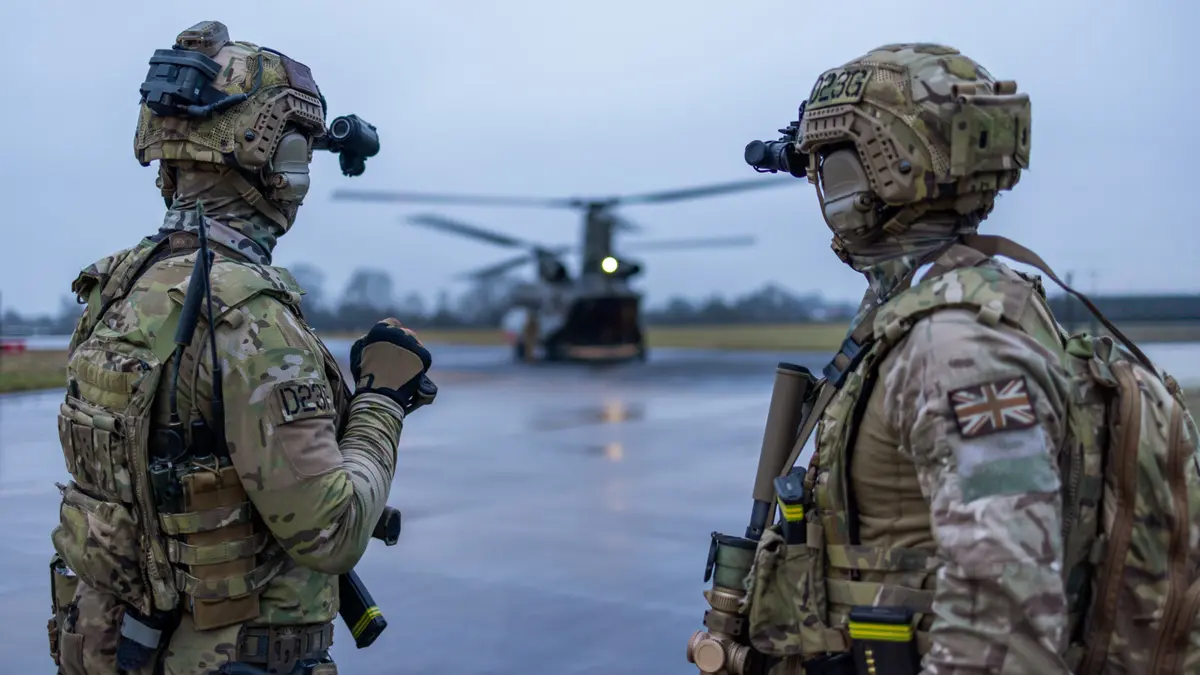
Yet the first version of Cognitive Operations is pitched at mining customers, with public-safety and tactical defense versions planned later.
Nokia has framed its private wireless reset around macro-scale 5G opportunities in energy, transport, public safety and defense.
The new launch keeps industrial edge computing and mission-critical communications in focus, but separates the AI and compute layer from the campus 5G business that is being transferred to a future owner.
That separation may explain the role of Rajant.
Nokia is integrating Rajant’s InstaMesh technology directly into the Cognitive Edge Node instead of presenting the product as a bundle around Nokia’s own campus private 5G system.
Mesh networking can suit highly mobile or disrupted sites, and the edge node is positioned as access-agnostic rather than tied to one radio layer.
The product brief describes a control layer for operational-technology teams that can combine AI guidance, digital site models, video analysis, maintenance forecasting and mixed connectivity options.
The platform can be installed with local IT systems or obtained through Microsoft Azure Marketplace for private-cloud deployment.
Lelio Di Martino, general manager of Cognitive Operations at Nokia, called the launch a defining step in the company’s connected-intelligence promise.
Omdia analyst Ildefonso de la Cruz Morales, quoted in the release, linked the product to demand for converged AI, edge computing and mission-critical communications.