SendTech Times
Analysis
MARKET SIGNAL:

Isar’s Spectrum Reaches Orbit And Tests Europe’s Private Launch Ambition

Newsroom brief

Isar Aerospace’s Spectrum rocket reached orbit from Norway, giving Europe a privately led launch milestone and shifting the test to production scale.

Verified against source materialEdited by SendTech Times Science & Technology DeskSource: Ars Technica
Isar’s Spectrum Reaches Orbit And Tests Europe’s Private Launch Ambition
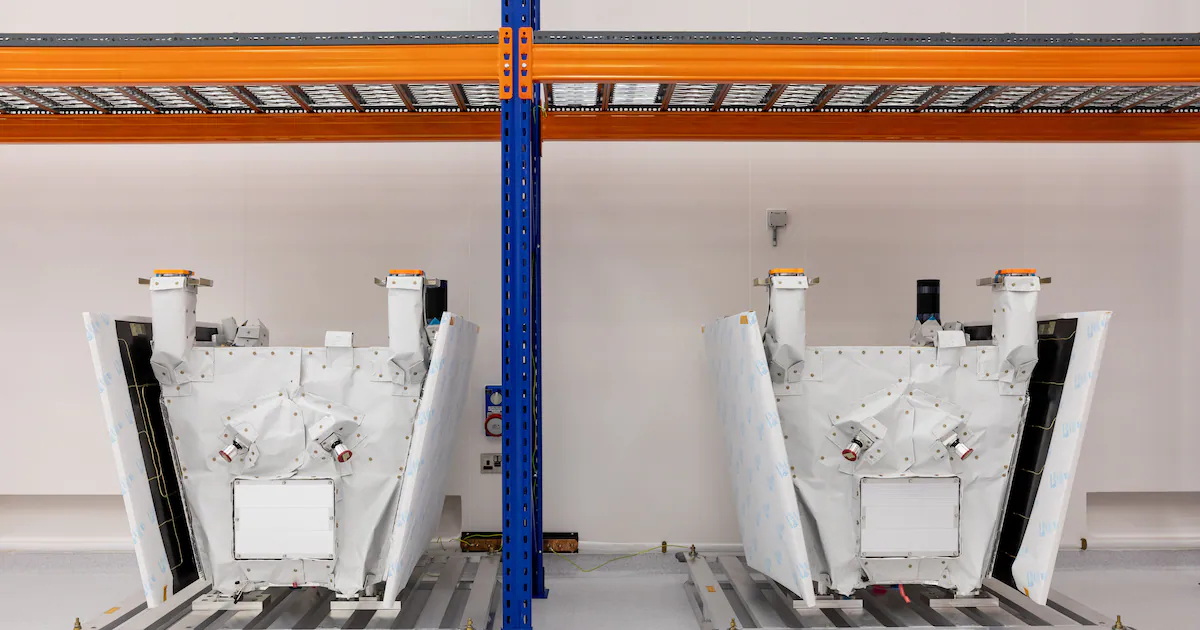
Image source: Ars Technica

Isar Aerospace put Europe’s commercial launch market on a new footing after its Spectrum rocket reached low-Earth orbit from Andøya Spaceport in northern Norway, giving the continent its first fully commercial orbital launch vehicle.

Ars Technica described the Saturday flight as a milestone for a privately developed European rocket and for a company founded in 2018 by three Technical University of Munich students.

Spectrum lifted off at 20:12 UTC from the Arctic Circle launch site and reached orbit about seven minutes later.

The flight moved Isar ahead of a group of European launch startups trying to bring private-sector pressure into a market long shaped by government-backed rockets.

Europe already has Ariane 6 and Vega-C, but those vehicles come from incumbent providers that depend heavily on public funding and national industrial policy.

Spectrum gives commercial and institutional satellite operators another route to orbit if Isar can turn a successful test into repeatable service.

The rocket itself sits in the small-launch segment.

Spectrum is 92 feet, or 28 meters, tall and is designed to carry up to one metric ton, about 2,200 pounds, to low-Earth orbit.

That puts it above Rocket Lab’s Electron in lift capacity, close to Firefly Aerospace’s Alpha and below Italy’s Vega-C.

Saturday’s second test flight corrected the failure of Spectrum’s first attempt in March 2025, when the vehicle veered out of control shortly after leaving the pad and came down nearby.

Engineers traced that failure to the unintentional opening of a vent valve.

The second mission carried five small CubeSats and a non-separating technology experiment, a shift from the payload-free first test.

The vehicle’s nine Aquila main engines burned propane and liquid oxygen to generate more than 150,000 pounds of thrust at liftoff.

The first stage fired for about two and a half minutes before separating over a planned downrange zone.

A single Aquila engine on the second stage then accelerated the vehicle to roughly 5 miles per second, with a later burn expected to circularize the orbit near 300 miles, or 500 kilometers, in altitude.

Isar had not immediately disclosed the final orbital altitude and inclination.

At least one CubeSat deployed from Spectrum’s upper stage contacted ground teams, providing an early sign that the rocket delivered a usable orbital result rather than merely crossing a boundary.

The business context is as important as the engineering.

According to Ars Technica, Isar has raised roughly $1 billion, employs nearly 500 people and is Europe’s best-funded private launch company.

Its progress arrives as European officials seek strategic autonomy in space without relying only on legacy procurement models or overseas launch capacity.

Germany’s role also changed with the mission.

No mostly German-built launcher had previously achieved orbit, and German and European officials framed the launch as evidence that independent access to space can come from a privately led company.

Germany’s space industry has historically focused more on satellites, scientific missions and components for broader European programmes than on domestic orbital launchers.

Public support is still part of the picture.

Germany’s DLR awarded Isar 11 million euros in 2021, and the European Space Agency added 197.8 million euros last month through the European Launcher Challenge.

That ESA contract was the largest of three awards meant to support commercial launcher development, and the challenge requires participants to reach orbit no later than 2027.

Isar cleared that benchmark within days of receiving the contract.

The next competitive test is cadence.

Rocket Factory Augsburg and Spain’s PLD Space, the other two ESA launcher-challenge awardees, are targeting first orbital attempts by the end of the year.

MaiaSpace, an ArianeGroup subsidiary, is negotiating to become a fourth participant.

Isar now has the advantage of a demonstrated orbital flight, but new rockets often need years before they can launch routinely.

Production will decide whether Spectrum becomes a market alternative or a one-off milestone.

Isar has five more Spectrum rockets in production, customers including ESA and commercial satellite companies, and a 10-acre factory near Munich designed for up to 40 vehicles a year.

The company is also studying launch operations in Canada and may eventually use Kourou in French Guiana.

For now, the documented next step is industrial rather than ceremonial: simplify the design, standardize manufacturing and repeat the Andøya result often enough to make Europe’s new commercial launch option dependable.

Share this article
inXf

Related articles

More
U.S. Space Force Tests Faster Orbital Threat Inspection Payload
Science & Tech

U.S. Space Force Tests Faster Orbital Threat Inspection Payload

The VICTUS HAZE demonstration paired Rocket Lab, LLNL and the U.S. Space Force to test a responsive imaging payload for inspecting objects in orbit within a faster space-domain-awareness workflow.

STR8 Tests Ghostwake USV as Taiwan Pushes Autonomous Maritime Supply Chain
Science & Tech

STR8 Tests Ghostwake USV as Taiwan Pushes Autonomous Maritime Supply Chain

STR8 Industries is testing its Ghostwake unmanned surface vessel in Taiwan, combining high-speed autonomy, a 350 kg payload and local manufacturing capacity for civilian and defense uses.

Isar Launch Success Tests Demand For Dedicated Satellite Servicing Rides
Economy

Isar Launch Success Tests Demand For Dedicated Satellite Servicing Rides

Astroscale’s two Isar launch contracts show why satellite-servicing missions still need dedicated rockets, even as global launch activity rises.

Starship Flight 14 Tests Starlink V3 Satellites With 26-Tbit/s Target
Telco & Connectivity

Starship Flight 14 Tests Starlink V3 Satellites With 26-Tbit/s Target

SpaceX’s planned Flight 14 would attempt to place 26 Starlink V3 satellites into orbit, adding about 26 Tbit/s of capacity while testing Starship’s first upper-stage orbital mission.

Orbitworks Sets UAE Satellite Launch With Nvidia AI But No Named Western Buyer
Chips & Semiconductors

Orbitworks Sets UAE Satellite Launch With Nvidia AI But No Named Western Buyer

Abu Dhabi-based Orbitworks plans to ship the UAE-built Altair satellite to California this autumn, with Nvidia-powered on-board image processing and a 10-satellite target, but it has not named its first European customer.

Engine Scare Fails To Stop 26-Satellite Starlink V3 Orbital Test
Telco & Connectivity

Engine Scare Fails To Stop 26-Satellite Starlink V3 Orbital Test

Light Reading reports that SpaceX sent Starship to orbit and deployed 26 V3 Starlink satellites after an ascent engine loss briefly put the mission’s orbital burn in doubt.

Space42 Turns Five SAR Satellites Into A Sovereign Data Test
Politics

Space42 Turns Five SAR Satellites Into A Sovereign Data Test

Space42 says three more Foresight SAR satellites are fully operational, bringing the constellation to five and moving Abu Dhabi’s Earth-observation work toward commercial geospatial use.

Japan's H3 Rocket Review Turns A Successful Flight Into A Data Test
Science & Tech

Japan's H3 Rocket Review Turns A Successful Flight Into A Data Test

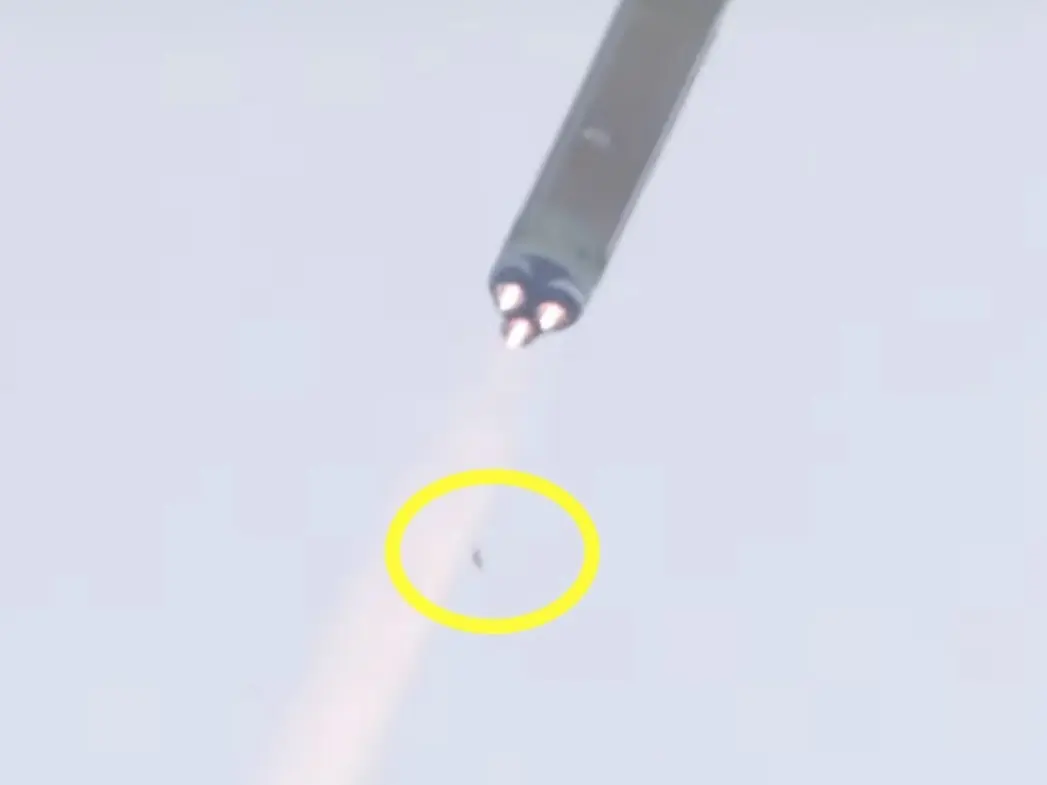
JAXA and Mitsubishi Heavy Industries say Japan's H3 No. 6 flight met key mission goals after video showed an object near the first-stage engine, but telemetry and imagery still have to determine whether the 30 configuration needs follow-up action.

Keep Reading

More Stories

Latest
Kepler Targets 2027 Production for HBM Replacement MemoryCloud & Data CentersOct 6, 2026Kepler Targets 2027 Production for HBM Replacement MemoryEE Times reports that Kepler Computing is preparing 3D ferroelectric memory for 2027 production, promising higher capacity and bandwidth per watt while limiting reliance on advanced-node lithography.Yokogawa Opens Singapore Hub For Industrial Cyber ResilienceCapital & PolicyOct 6, 2026Yokogawa Opens Singapore Hub For Industrial Cyber ResilienceYokogawa Engineering Asia has launched a Singapore center focused on OT cyber resilience, training, response planning and recovery coordination for Southeast Asia, Oceania and Taiwan.ClickFix Attack Uses Browser Cache To Hide Malware PayloadCybersecurityOct 6, 2026ClickFix Attack Uses Browser Cache To Hide Malware PayloadMicrosoft Threat Intelligence traced a ClickFix cache-smuggling method that preloads malware into browser caches, then uses file size checks and a pasted Run command to launch later credential-theft stages.VOA Tests Six-Month Startup Buildout Before Funding DecisionsFintech & Digital PaymentsOct 6, 2026VOA Tests Six-Month Startup Buildout Before Funding DecisionsTechCabal’s interview with VOA Venture Partners founder Victoria Olayide Adesanya describes a six-month build programme that lets the firm work inside African financial-infrastructure startups before deciding whether to invest.Bitcoin Holds $86,000 As Dollar Index Hits 18-Month HighCrypto/Web3Oct 6, 2026Bitcoin Holds $86,000 As Dollar Index Hits 18-Month HighCoinDesk reported that bitcoin stayed near $86,000 while the U.S. Dollar Index reached about 102.5, with U.S. rate expectations and European political risks strengthening the dollar backdrop.Google Freezes OSS Bug Bounty Reports After AI Submission FloodCybersecurityOct 6, 2026Google Freezes OSS Bug Bounty Reports After AI Submission FloodGoogle has stopped accepting new product vulnerability reports in its OSS VRP after invalid automated submissions swamped reviewers, while older reports and some Cloud VRP routes remain open.Fleuret AI Raises €4M For Continuous AI Pentesting PlatformCybersecurityOct 6, 2026Fleuret AI Raises €4M For Continuous AI Pentesting PlatformTech.eu reported that French startup Fleuret AI raised €4 million in pre-seed funding to develop an agentic-AI platform that turns penetration testing into a continuous security process.GFT Analysis Says AI Documentation Can Cut Maintenance Work 30%Fintech & Digital PaymentsOct 6, 2026GFT Analysis Says AI Documentation Can Cut Maintenance Work 30%A GFT Technologies analysis says AI-linked software documentation can cut maintenance effort and speed developer onboarding when knowledge assets stay synchronized with code changes.Schneider Electric Lines Up $22.6 Billion PTC DealAIOct 5, 2026Schneider Electric Lines Up $22.6 Billion PTC DealSchneider Electric plans to buy PTC in a cash transaction valuing the US engineering software provider’s equity at about $22.6 billion, adding product-lifecycle software to its industrial AI push.Aggarwal Pledges Ola Electric Stake To Fund ₹1,000 Cr Rights IssueCapital & PolicyOct 5, 2026Aggarwal Pledges Ola Electric Stake To Fund ₹1,000 Cr Rights IssueOla Electric founder Bhavish Aggarwal pledged 20 Cr shares to finance his participation in a rights issue that forms part of a larger ₹1,500 Cr fundraising plan.Natrona Schools AI Review Puts Student Privacy Ahead Of Classroom Tool UseAIOct 5, 2026Natrona Schools AI Review Puts Student Privacy Ahead Of Classroom Tool UseNatrona County trustees questioned whether teacher AI tools expose student data, even as existing district rules already ban unauthorized generative AI use by students.AMD Prices 256-Core EPYC 9996 At $14,904 For Server BuyersChips & SemiconductorsOct 5, 2026AMD Prices 256-Core EPYC 9996 At $14,904 For Server BuyersTechRadar reports that AMD’s 6th Gen EPYC 9006 “Venice” lineup includes a 256-core EPYC 9996 with 512 threads, 1GB of L3 cache, a 600W default power rating and a $14,904 list price for 1,000-unit orders.