Isar Launch Success Tests Demand For Dedicated Satellite Servicing Rides
Astroscale’s two Isar launch contracts show why satellite-servicing missions still need dedicated rockets, even as global launch activity rises.

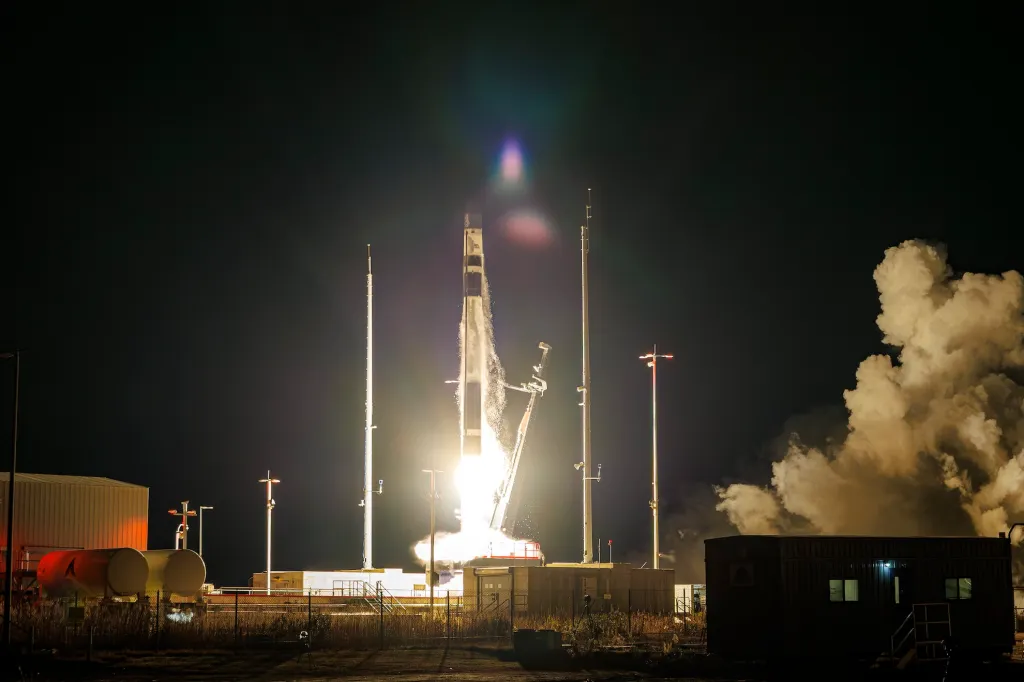
Astroscale's next debris-removal missions have turned Germany's Isar Aerospace into a live test of demand for small dedicated launchers, after Isar reached orbit with its Spectrum rocket from Norway, Ars Technica reported.
The launch matters because it gives satellite operators another route into a part of the market that has narrowed despite record global launch activity.
SpaceX still dominates cadence with Falcon 9, but the company is slowing that program and Starship has not yet carried third-party payloads to orbit.
For customers that cannot fit a routine rideshare, the practical question is not whether launches are abundant in aggregate, but whether the right rocket is available at the right mass, orbit and price.
Isar delivered CubeSats to low Earth orbit from a northern Norwegian spaceport on its second attempt, after a first Spectrum test flight failed last year.
The success gives Europe a new operational entrant alongside established providers such as Arianespace and Avio, while other European startups including Rocket Factory Augsburg and Spain's PLD Space are still working toward the same market.
Astroscale had already committed before that proof arrived.
The Japanese-headquartered satellite-servicing company signed two launch contracts with Isar, including one announced days before the successful flight and another disclosed in March.
Most of Isar's backlog comes from public-sector customers tied to ESA, the EU, Norway and Germany.
Astroscale is different: it is a commercial buyer using Isar for missions whose orbit and payload needs leave little room for a standard shared launch.
The two assigned spacecraft show why dedicated launch remains valuable.
ELSA-M, led by Astroscale's UK division, is designed to capture and deorbit a satellite from Eutelsat's OneWeb broadband constellation.
ADRAS-J2, partially funded by Japan's space agency, is intended to grab a defunct Japanese rocket body and remove it from orbit after the ADRAS-J demonstration inspected the same object in 2024.
Those missions do not behave like ordinary communications payloads waiting for a shared ride.
Astroscale chief operating officer Chris Blackerby told Ars that rideshare is possible but more complicated, because servicing missions must reach specific objects in specific orbits.
The newer spacecraft are also larger than the ADRAS-J satellite that flew on Rocket Lab's Electron; Blackerby said ADRAS-J2 and ELSA-M no longer fit that class, while Rocket Lab's larger Neutron is not ready.
That leaves a thin supply band.
Blackerby put the relevant payload range around 500 to 700 kilograms, under one ton, and said there are not many consistent options in that dedicated class.
Firefly Aerospace's Alpha is one proven vehicle near the segment but has had problems, while some companies that once pursued similar sizes have moved toward larger rockets.
The same constraint has already affected other servicing attempts.
U.S.-based Katalyst Space used Northrop Grumman's seldom-flown Pegasus XL in July for a spacecraft sent toward NASA's aging Swift observatory, because the mission needed a unique orbit.
Technical problems kept Katalyst from completing the rescue, underscoring that a specialized launch path is useful only if the provider can execute reliably.
For Astroscale, the launch choice sits inside a broader step-by-step plan for satellite servicing.
ADRAS-J showed a commercial spacecraft could approach and inspect an uncommunicative rocket body, producing images and data for the follow-on capture attempt.
Another JAXA-backed mission, ISSA-J1, is expected to inspect two decommissioned Japanese satellites whose solar arrays may make rendezvous more complex.
The company also has a U.S. Space Force refueling demonstration called Provisioner and sees interest in close inspection, life extension and deorbit services.
Blackerby said Astroscale has eight or nine missions in manufacturing around the world, with newer work moving closer to revenue-positive operations rather than one-off demonstrations.
Isar's first orbital success does not remove the risk from Astroscale's contracts, because Spectrum still has to prove repeatability.
It does, however, put a new supplier into a market where servicing companies need more than cheap volume.
Blackerby framed the core requirement more narrowly: for most Astroscale missions, the dedicated ride is not a luxury but a condition for reaching the assigned target.