SendTech Times
News
SYSTEMS SHIFT:

GoPro’s Slide Shows How AI Hardware Is Tilting Toward Chinese Brands

Newsroom brief

GoPro’s market-share collapse and iRobot’s loss of Roomba control show how Chinese hardware makers are challenging Western consumer-tech pioneers as AI features move into cameras and home robots.
Verified against source materialEdited by SendTech Times Chips & Compute DeskSource: Rest of World
GoPro’s Slide Shows How AI Hardware Is Tilting Toward Chinese Brands
Image source: Rest of World

GoPro’s Camera Lead Has Become A Hardware Warning

GoPro’s fall in action cameras is no longer only a story about one company missing a product cycle.

It has become a warning about how quickly Chinese consumer-hardware makers can turn a category pioneered in the United States into a tougher fight over manufacturing scale, product speed and AI-enabled features.

The source example is stark.

GoPro launched the action-camera category in 2002 and still held an estimated 75% of the global market in 2022.

In early June, the company warned in a regulatory filing that its future operations were in question.

Its share now sits near 18%, a three-year collapse that shows how little room was left after weaker sales, memory-cost pressure and rivals with faster hardware refresh cycles.

The shift is visible in the brands consumers now encounter.

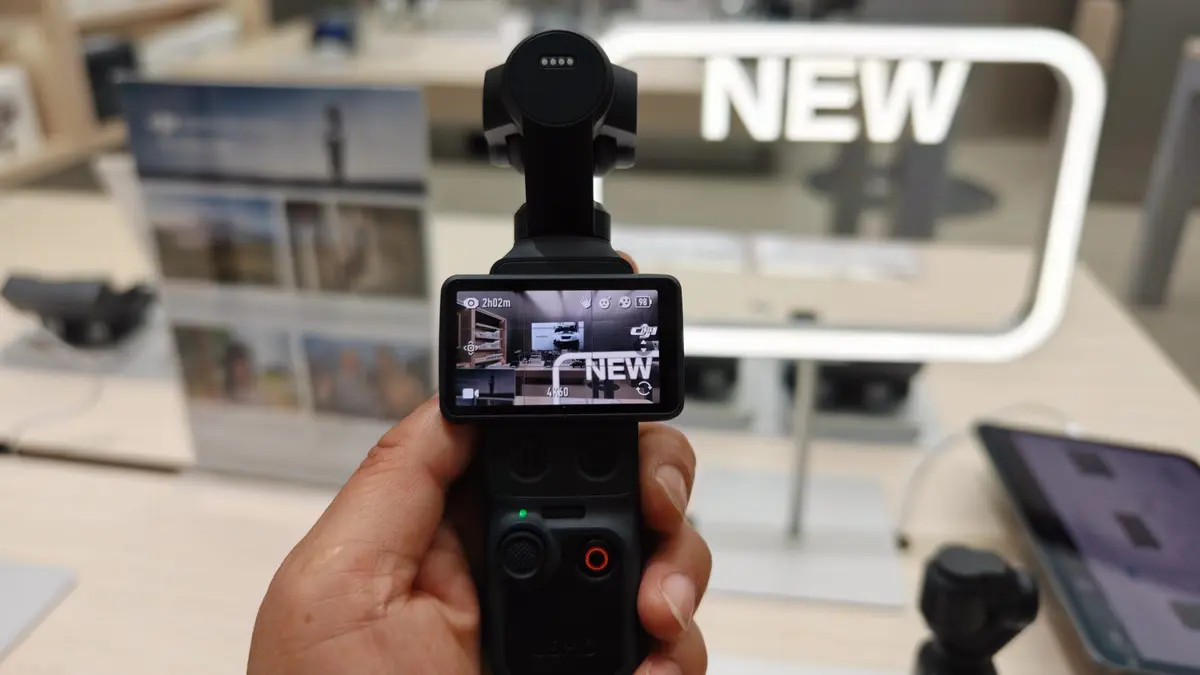
DJI and Insta360, both Chinese companies, are described as the two names repeatedly recommended by divers, travel creators and outdoor users.

Together, they now account for over 80% of the action-camera market.

The competitive lesson is not only price.

Faster model rollouts and AI-powered editing features make the camera category depend on software experience as much as rugged hardware.

For GoPro, that means the memory-chip shortage landed on a business that was already exposed.

The company’s own filing pointed to rising costs, but the market history shows a longer squeeze: smartphones reduced the need for a separate camera for many users, product bets failed to restore momentum, and Chinese brands kept improving the devices most visible to creators and outdoor buyers.

GoPro cited rising costs from the global memory chip shortage.

The broader pressure, however, is competition from DJI and Insta360 after years of sales declines and failed product bets.

GoPro peaked in 2015, DJI entered action cameras in 2019, and Insta360’s arrival in 2022 intensified the pressure as the Chinese companies moved faster with new models and AI-powered editing features.

Robot Vacuums Show The Same Competitive Pattern

The same pattern is appearing in home robotics.

Chinese robot-vacuum brands including Dreame and Roborock have become major players in a category once defined by iRobot and its Roomba line. iRobot, which invented the home cleaning robot that became Roomba, struggled to keep its lead, filed for bankruptcy in December last year and was acquired by its Chinese manufacturer, Picea Robotics.

That comparison matters because action cameras and robot vacuums are not identical products.

One is built around creators, sports and travel; the other around autonomous home cleaning.

Yet both markets show Western pioneers losing advantage as Chinese manufacturers compete through faster product cycles, lower-cost hardware execution and increasingly software-driven features.

The AI angle is not that every device becomes strategically important overnight.

It is that more consumer hardware now depends on cameras, sensors, microphones, mapping, editing tools and automated decision-making.

As these capabilities move into everyday devices, hardware competition starts to look less like a simple gadget fight and more like a contest over who controls intelligent products inside homes, vehicles and creative workflows.

Security Concerns May Become The Western Counterweight

Chinese consumer-tech gains are also running into policy and trust limits.

Robot vacuums have drawn data-security concerns because they use cameras, sensors, microphones and detailed maps of users’ homes.

The source also points to limits already placed on other China-made technology products in the United States, including drones and electric vehicles.

Those concerns create a possible opening for Western brands, but not an easy one.

GoPro is exploring a pivot toward defense and aerospace markets, a move that suggests security-sensitive buyers may value trusted hardware even when consumer buyers choose faster or cheaper products.

The unresolved test is whether that narrower trust advantage can compensate for lost consumer scale.

DJI, Insta360, Dreame and Roborock show that Chinese brands can compete beyond low-cost manufacturing when product cycles, sensors and AI features matter.

For Western consumer-tech pioneers, the harder question is whether security positioning is enough after the mainstream gadget market has already moved.

Share this article
inXf

Related articles

More
Apple's Memory Warning Shows AI Server Demand Reaching Consumer Devices
Chips & Semiconductors

Apple's Memory Warning Shows AI Server Demand Reaching Consumer Devices

Apple is preparing customers for higher prices as AI data-center demand tightens memory supply, exposing how HBM demand from Nvidia-class systems can raise costs for phones, PCs and tablets.

Apple Touchscreen MacBook Report Points To Late-October Hardware Slate
Chips & Semiconductors

Apple Touchscreen MacBook Report Points To Late-October Hardware Slate

Apple is reportedly preparing a late-October touchscreen MacBook debut alongside an OLED iPad Mini and M6 updates for the entry-level MacBook Pro and iMac.

Chinese Tech Groups Challenge Pentagon List Expansion After New 1260H Designations
Chips & Semiconductors

Chinese Tech Groups Challenge Pentagon List Expansion After New 1260H Designations

Alibaba, Baidu, BYD and NIO are challenging the Pentagon's expanded 1260H military-company list, turning a U.S. procurement restriction into a wider test of legal, commercial and diplomatic exposure for Chinese tech firms.

Lumio Raises $12 Million To Expand Its Consumer-Electronics Portfolio
Chips & Semiconductors

Lumio Raises $12 Million To Expand Its Consumer-Electronics Portfolio

Lumio raised a $12 million Series A led by Blume Ventures to add products, software, offline retail and support capacity for its smart TV, projector and speaker business.

UK Expands Semiconductor Catapult For AI Hardware Push
Chips & Semiconductors

UK Expands Semiconductor Catapult For AI Hardware Push

The UK has relaunched its chip applications catapult with a broader remit covering AI hardware, defence, advanced packaging and routes from prototype validation to small-volume production.

Apple Puts New Mac Desktops on Sale With Local AI as the Divide
Chips & Semiconductors

Apple Puts New Mac Desktops on Sale With Local AI as the Divide

Apple’s new Mac mini and Mac Studio desktops are now available, with M6, M5 Pro, M5 Max and M5 Ultra configurations spanning compact AI workflows and high-memory professional workloads.

IBM Shows Sub-1 Nanometer Chip Research, With Production Proof Still Missing
Chips & Semiconductors

IBM Shows Sub-1 Nanometer Chip Research, With Production Proof Still Missing

IBM unveiled a 0.7 nm nanostack chip technology with nearly 100 billion transistors, but the company has not announced a manufacturing partner, production date or customer design win.

Groq Raises $650 Million As Its AI Chip Story Turns Toward Neocloud Scale
Chips & Semiconductors

Groq Raises $650 Million As Its AI Chip Story Turns Toward Neocloud Scale

Groq announced a $650 million round after Nvidia licensed its technology and hired senior leaders, leaving the AI chip company to rebuild around a neocloud business spanning 13 data centers.

Keep Reading

More Stories

Latest
Upscale AI Pairs Nvidia Spectrum-X With Its Own SkyHammer FabricChips & SemiconductorsOct 11, 2026Upscale AI Pairs Nvidia Spectrum-X With Its Own SkyHammer FabricUpscale AI is building SkyHammer as a scale-up fabric for AI clusters while using Nvidia Spectrum-X for scale-out switches, a strategy that tests whether Ethernet-based designs can challenge proprietary accelerator domains.Anthropic Opens Free AI Vulnerability Scanner For Open SourceCybersecurityOct 11, 2026Anthropic Opens Free AI Vulnerability Scanner For Open SourceAnthropic is offering open-source projects free AI security scans, with model-generated reports that may speed vulnerability checks but arrive without human triage.Vatar Raises $500,000 After Lagos Life Browser Game Surges to 4.3 Million UsersAIOct 11, 2026Vatar Raises $500,000 After Lagos Life Browser Game Surges to 4.3 Million UsersVatar Inc. has raised a $500,000 angel round at a $10 million valuation after Lagos Life reached 4.3 million registered users, giving the young Nigerian browser-game company capital for product, marketing and hiring.Anthropic Program Pairs Claude With Infrastructure Security TeamsAIOct 10, 2026Anthropic Program Pairs Claude With Infrastructure Security TeamsAnthropic is pairing Claude models, its engineers and outside cybersecurity firms to scan critical infrastructure and open-source software for vulnerabilities, with an opt-in service for maintainers.ABC Shareholders Seek Board Seats After South Africa Market SanctionsPoliticsOct 10, 2026ABC Shareholders Seek Board Seats After South Africa Market SanctionsShareholders holding about 76% of Africa Bitcoin Corporation want a meeting to appoint two non-executive directors after South Africa's FSCA sanctioned three former Altvest executives.Morocco King Defends Spain Partnership After Ceuta Migrant RushPoliticsOct 10, 2026Morocco King Defends Spain Partnership After Ceuta Migrant RushKing Mohammed VI said Morocco’s partnership with Spain remains a sovereign choice after more than 70,000 migrants crossed into Ceuta, while promising partners a strategic vision for co-development and stability.Atlassian AMP Targets AI Code Attribution Across Enterprise WorkflowsAIOct 10, 2026Atlassian AMP Targets AI Code Attribution Across Enterprise WorkflowsAtlassian’s Agentic Multiplayer Protocol links agent identity, code attribution, Rovo Work oversight and EU-hosted inference controls to help enterprises track mixed human and AI software work.Unpatched AhsayCBS Flaws Used to Deploy Webshells and Crypto MinersCybersecurityOct 10, 2026Unpatched AhsayCBS Flaws Used to Deploy Webshells and Crypto MinersThreat actors are chaining two AhsayCBS vulnerabilities to bypass authentication, execute commands, install webshells and hide XMRig mining activity on backup management servers.Australian Security Teams Know Passkeys Are Safer, But Passwords Still DominateAIOct 10, 2026Australian Security Teams Know Passkeys Are Safer, But Passwords Still DominateYubico and Okta’s authentication survey found Australian technical teams recognise passkey security while legacy onboarding, fragmented MFA and AI phishing keep passwords embedded in enterprise access.Nasuni Adds Governed AI Access to File Data Platform After DryvIQ and Resilio DealsCloud & Data CentersOct 10, 2026Nasuni Adds Governed AI Access to File Data Platform After DryvIQ and Resilio DealsNasuni has folded DryvIQ governance and Resilio edge delivery into its file data platform, adding MCP-based AI access, enterprise search and a PSYCHIC framework for AI-ready data.Universal Quantum Raises $100 Million for Trapped-Ion Computing ExpansionChips & SemiconductorsOct 10, 2026Universal Quantum Raises $100 Million for Trapped-Ion Computing ExpansionUniversal Quantum raised more than $100 million in a Series A round to commercialise trapped-ion quantum products and expand in Singapore, the US, Japan and Germany.Neela Raises £2.1M To Pilot Waste-To-SAF BiotechEconomyOct 10, 2026Neela Raises £2.1M To Pilot Waste-To-SAF BiotechCambridge startup Neela Biotech raised £2.1m to move its AI-guided microbial waste-to-SAF process from lab work into pilot trials at an existing biogas plant over the next two years.