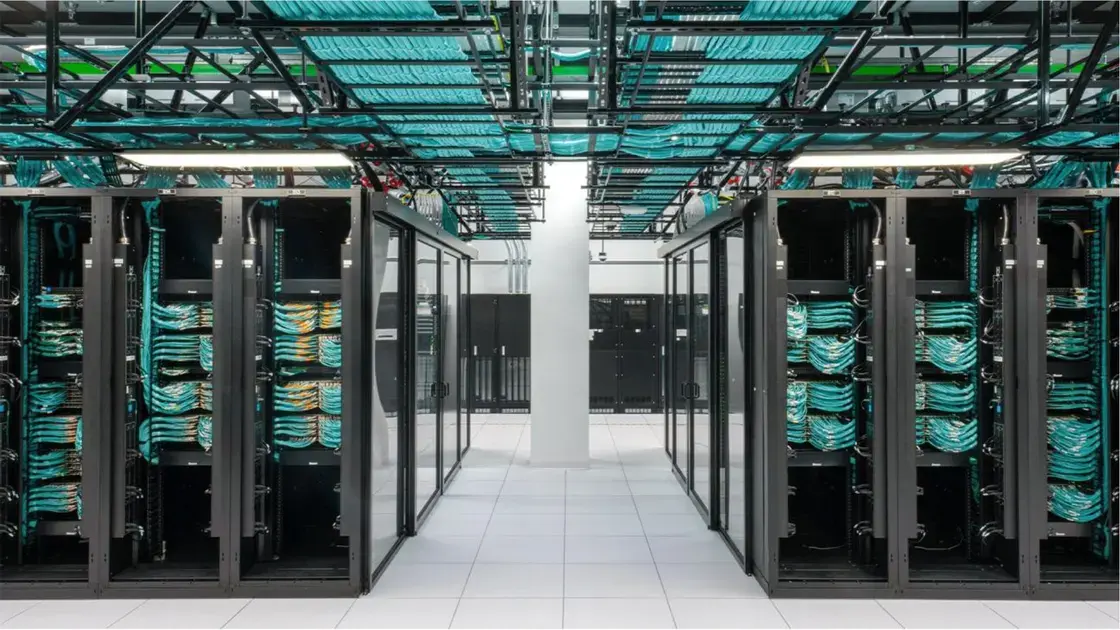
Firebird Plans 70,000 GPUs For Armenia AI Factory By 2027
NVIDIA's newsroom detailed Firebird's Armenia AI factory launch, including plans for more than 70,000 Rubin and Blackwell GPUs and 300 megawatts of AI infrastructure capacity by 2027.

NVIDIA's newsroom detailed Firebird's launch of an AI factory in Armenia, framing the Hrazdan facility as a regional compute hub for companies and local institutions building AI systems closer to their own markets.
The site gives the CIS region a more visible place in the global race to convert energy, accelerated computing and facility engineering into usable AI capacity.
Firebird is positioning the project as both a commercial cloud resource and a national infrastructure asset for Armenia's developers, startups, enterprises, universities and public institutions.
Armenia Gets A Local AI Factory
AI factories package compute, networking, power, cooling and software into systems designed to train, tune and run AI models at scale.
The Armenia launch moves that model beyond the largest U.S., Gulf and East Asian buildouts, giving a smaller market a dedicated facility tied to global AI supply chains.
By the end of 2027, Firebird's Armenia plan calls for over 70,000 NVIDIA Rubin and Blackwell GPUs, supported by 300 megawatts of AI infrastructure capacity.
The roadmap is larger than one campus: Firebird is pursuing about 2 gigawatts of AI infrastructure across Armenia, Kazakhstan and additional markets.
That geographic spread is the strategic hook.
Frontier markets can attract workloads when power, land, deployment speed and regional demand align.
For Armenia, the facility offers a way to host AI development at home rather than relying only on remote cloud regions built around other languages, industries and policy priorities.
Power And Cooling Shape The Build
The project also shows how AI factories are becoming industrial systems rather than simple server rooms.
Schneider Electric is supplying the Hrazdan site's electrical layer: switchgear for medium and low voltages, three-phase backup power systems and enclosures for racks.
Vertiv is handling thermal infrastructure through chilled-water technology, advanced controls and TrimCooler equipment.
Its iCOM CWM Chilled Water Manager coordinates cooling resources as workloads shift, which is important because dense AI clusters can move quickly between training, inference and lower-utilisation periods.
NVIDIA's DSX platform ties the compute and facility layers together.
The public material gives the platform a density gain of up to 40% more GPUs on the same footprint, linking infrastructure density directly to tokens per dollar and value extracted from every megawatt.
Customers And Investors Give The Site Momentum
Early demand includes Perplexity, which is using Firebird as an access route to high-performance infrastructure for its AI agent platform and answer engine.
That customer signal gives the new regional AI cloud more than an inventory story; Firebird needs workloads that can fill capacity as systems come online.
The financing picture also connects Firebird to larger AI infrastructure players.
NVIDIA is lined up as an investor, and CoreWeave had already backed the company earlier this year.
Those backers give Firebird stronger links to the accelerated-computing ecosystem and to customers already accustomed to buying AI capacity from specialized cloud providers.
Political visibility around the opening underlined the project’s regional profile.
Armenian Prime Minister Nikol Pashinyan, Kazakhstan Deputy Prime Minister Zhaslan Madiyev and U.S. chargé d'affaires David Allen attended the ceremony, placing the facility at the intersection of compute infrastructure, national development and cross-border technology policy.
Utilisation Will Set The Outcome
The public material did not disclose total project cost, electricity pricing, grid upgrade requirements, contract lengths, revenue commitments or detailed capacity reservations beyond early demand from Perplexity.
Those details remain outside the public record, leaving Firebird's Armenia launch dependent on whether it can turn a fast buildout into sustained utilisation across regional and global AI customers.