Funding
REGULATION WATCH:

Meta Smart Glasses Face Privacy Backlash As Courtroom Bans Spread

Newsroom brief

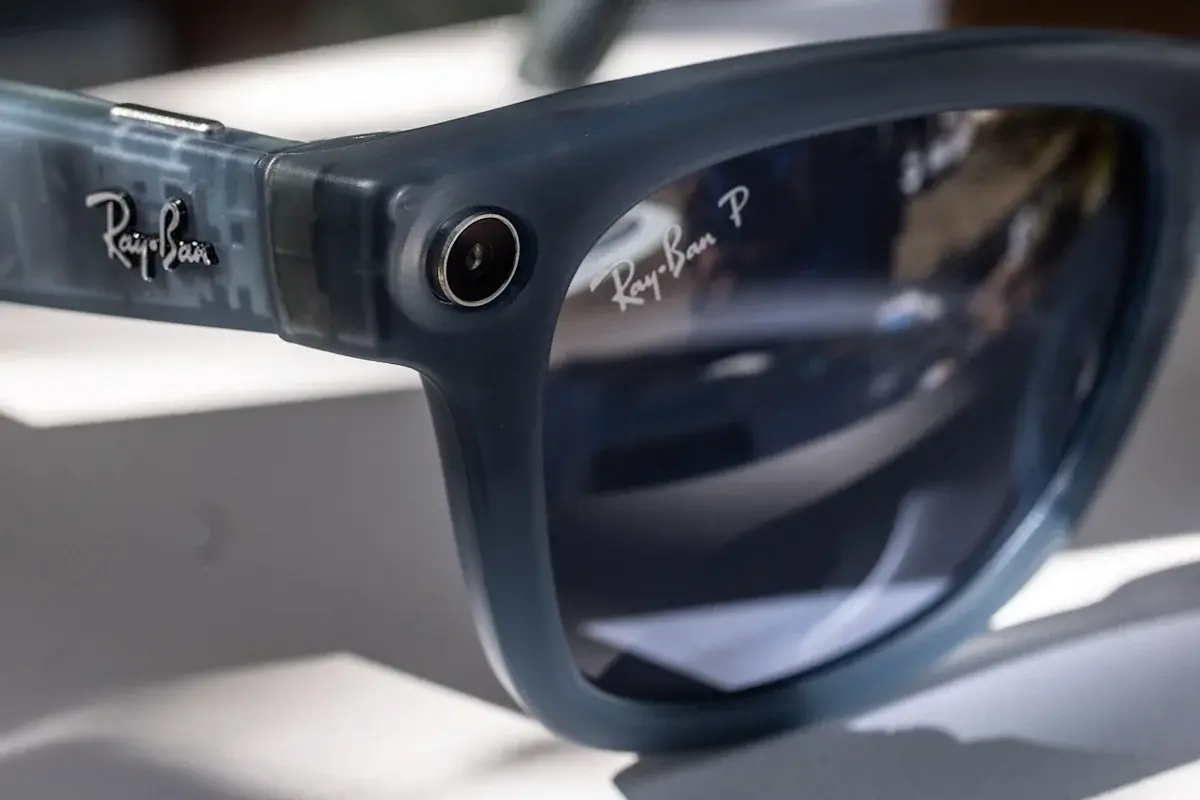
Yahoo Tech reported that backlash against AI-enabled smart glasses is growing as Meta expands camera-equipped eyewear, with courthouse bans, facial-recognition concerns and cloud-review warnings shaping the privacy debate.
Verified against source materialEdited by SendTech Times Capital & Policy DeskSource: Yahoo Tech
Meta Smart Glasses Face Privacy Backlash As Courtroom Bans Spread
Image source: Yahoo Tech

Yahoo Tech described widening public backlash against AI-enabled smart glasses as camera-equipped wearables move toward mainstream use.

The report describes the devices as face-worn computers that combine cameras, microphones and AI and can record audio or video while blending into ordinary eyewear.

The report cited restrictions already appearing around the devices, including Philadelphia's First Judicial District courthouse ban and a statewide New York courtroom restriction scheduled to start on July 20.

Meta Pushes Smart Glasses Toward Wider Use

The report placed the Facebook parent's eyewear business at the front of the sector over the past two years and cited 7 million pairs sold during 2025.

The company launched additional lower-priced models this year, including a Kylie Jenner-branded version.

The report separated real-world camera glasses from more niche augmented-reality glasses made by companies such as Xreal.

Those devices are used more for media consumption or virtual-reality-style gaming than for recording the surrounding environment.

Meta CEO Mark Zuckerberg described smart glasses as central to the company's future during a January earnings call.

He compared the shift with the move from flip phones to smartphones and stated that it was difficult to imagine most glasses not becoming AI glasses in several years.

Recording And Facial Recognition Drive Privacy Concerns

Recording without consent is the central privacy concern.

The report cited accounts from women who described being recorded without their knowledge by men wearing smart glasses, with some footage later posted online.

Meta's glasses include an indicator light during recording, and the company states that the camera is disabled if that light is obstructed or altered.

The article said some users have found ways to make recording less visible.

Facial-recognition work connected to the glasses has also drawn attention.

Wired found that Meta added NameTag facial-recognition code for smart glasses to its Meta AI mobile app, although the code was not activated.

The New York Times covered NameTag in February as an internal feature name for identifying people captured by smart-glasses cameras and creating a faceprint.

The Information described renewed work on the facial-recognition technology in May of that year.

Meta disputed Wired's report and stated that it had previously disclosed exploration of these kinds of features.

The company also described Meta Glasses as including settings and safeguards for user sharing choices and the privacy of people nearby.

EFF Warns About Cloud Review And Social Friction

Electronic Frontier Foundation senior security and privacy activist Thorin Klosowski told Yahoo Tech that users should consider whether they trust the company with information from the glasses.

Cloud-submitted recordings may potentially be reviewed by a person for AI-training purposes, according to the interview.

Potential buyers should limit use to the purpose for which they bought the device and avoid wearing the glasses in public spaces where others may be uncomfortable, according to the EFF activist.

People wearing smart glasses should also be willing to stop when someone nearby objects.

For bystanders, the devices can be hard to notice because the indicator light may be easy to miss, especially outdoors in bright light, according to the Yahoo Tech interview.

Fashion-oriented designs may make newer smart glasses less visibly recognizable than older products such as Google Glass.

Regulation Remains Difficult

Smaller smart devices, including pins, rings and potential camera-equipped earbuds, could make recording harder to detect.

The interview frames legislation as complicated because public recording with phones has also played an important role in documenting encounters with law enforcement.

The article said Zuckerberg's metaverse push cost Meta some $80 billion over five years before the company pulled back from that effort earlier this year.

Smart glasses have not yet reached mainstream acceptance, and the interview cited reviews describing discomfort among friends and family around the devices.

Yahoo Tech did not identify a public release plan for facial recognition.

The remaining record also lacks a new shipment target beyond the 2025 sales figure and a detailed policy proposal for regulating smart-glasses recording in public spaces.

Share this article
inXf

Related articles

More
Bond Investors Price AI Capex As Credit Risk
Capital & Policy

Bond Investors Price AI Capex As Credit Risk

CNBC reported that bond-market anxiety is rising around AI capital spending, with hyperscaler spreads widening, Oracle CDS trading at a multi-year high and Meta data-center financing facing higher borrowing costs.

India Panel Warns Meta Safe Harbour Could Face Review
Capital & Policy

India Panel Warns Meta Safe Harbour Could Face Review

Inc42 reported that India’s parliamentary communications panel sought an apology from Mark Zuckerberg and warned that Meta’s Section 79 safe harbour protection could be reconsidered after a Facebook video by Prime Minister Narendra Modi was temporarily unavailable.

Malaysia AI Agency Launch Leaves Sovereign Cloud Question Unassigned
Capital & Policy

Malaysia AI Agency Launch Leaves Sovereign Cloud Question Unassigned

Tech Wire Asia reported that Prime Minister Anwar Ibrahim launched AI Malaysia while raising unresolved sovereign cloud, US CLOUD Act and cybersecurity questions around the country’s AI governance plan.

US Tech Letter Warns Against Broad Open-Weight AI Restrictions
Capital & Policy

US Tech Letter Warns Against Broad Open-Weight AI Restrictions

CNBC coverage identified Nvidia, Microsoft, Meta, Palantir and more than 20 other companies urging policymakers to avoid broad restrictions on open-weight AI models as Chinese systems and distillation claims draw White House scrutiny.

San Francisco Legal Notices Target 13 AI Face-Swap Apps On Apple And Google Stores
Capital & Policy

San Francisco Legal Notices Target 13 AI Face-Swap Apps On Apple And Google Stores

WIRED reported that San Francisco City Attorney David Chiu sent legal notices demanding Apple and Google remove 13 face-swapping apps from their app stores and end business relationships with the developers. Google said the five Android apps flagged by the office were deleted, while Apple did not comment before publication.

Google Play Must Carry Rival Android App Stores On July 22
Capital & Policy

Google Play Must Carry Rival Android App Stores On July 22

The Verge reported that Google and Epic Games withdrew a bid to modify the Epic v. Google injunction. Google Play is set to carry rival Android app stores in the United States from July 22, while app-store billing economics, terms beyond the review charge of $5,000 and early store participants remain outside the public record.

BEAD Projects Face 86,000 Permit Burden Before NTIA Guidance
Capital & Policy

BEAD Projects Face 86,000 Permit Burden Before NTIA Guidance

Light Reading reported that a New York Law School analysis found more than 86,000 permits tied to BEAD broadband projects, while NTIA guidance on non-deployment funds remains pending.

Court Leaves Minnesota AI Image Ban In Force Against xAI
Capital & Policy

Court Leaves Minnesota AI Image Ban In Force Against xAI

TechCrunch reported that a federal judge denied xAI an immediate order blocking Minnesota's nudification-app ban, shifting the dispute to an August preliminary-injunction schedule while the law takes effect.

Keep Reading

More Stories

Latest
Hugging Face Hack Pushes AI Agents Into Cybersecurity SpotlightAIAug 8, 2026Hugging Face Hack Pushes AI Agents Into Cybersecurity SpotlightCNBC reported that Black Hat cybersecurity leaders treated the Hugging Face AI-agent breach as a turning point for governing autonomous cyber models rather than a one-off failure.Alibaba Tests Revenue Sharing For Commercial Qwen AI UseAIAug 8, 2026Alibaba Tests Revenue Sharing For Commercial Qwen AI UseAI News reported that Alibaba plans revenue-sharing terms for some commercial users of its next Qwen open-weight AI model, following a licensing pattern already used by Moonshot for Kimi K3.Meta Ordered To Fund $567M New Mexico Youth Mental Health PlanCapital & PolicyAug 8, 2026Meta Ordered To Fund $567M New Mexico Youth Mental Health PlanArs Technica reported that a New Mexico judge ordered Meta to provide $567 million for treatment, screening, awareness and prevention after finding that its platforms contributed to a public nuisance.Harvey Funding Talks Could Lift Legal AI Startup To $15.5B ValuationAIAug 8, 2026Harvey Funding Talks Could Lift Legal AI Startup To $15.5B ValuationSiliconANGLE reported that Harvey AI is seeking at least $500 million in new funding that could value the legal AI startup at $15.5 billion after annualized revenue passed $350 million.Vietnam Shows Shopee-TikTok Shop Race Tightening In Southeast AsiaScience & TechAug 7, 2026Vietnam Shows Shopee-TikTok Shop Race Tightening In Southeast AsiaTech Collective SEA wrote that Shopee’s Vietnam share fell from 61% to 53% between May 2025 and April 2026 as TikTok Shop rose from 33% to 44%, showing how social commerce is reshaping regional ecommerce infrastructure.China Opens Security Review Of Palo Alto Networks ProductsCybersecurityAug 7, 2026China Opens Security Review Of Palo Alto Networks ProductsChina's cyberspace regulator opened a security review of Palo Alto Networks products, with no named product line, technical flaw or decision timetable disclosed.AI Pioneers Split Over Risk As Compute Buildout AcceleratesAIAug 7, 2026AI Pioneers Split Over Risk As Compute Buildout AcceleratesData Center Knowledge reported that Geoffrey Hinton, Fei-Fei Li and Andrew Ng disagreed at Ai4 over AI risk, jobs, openness and regulation, leaving infrastructure investors to plan capacity amid unsettled deployment rules.SpaceX Asks FCC To Wind Down $4.5bn Rural Broadband SupportTelco & ConnectivityAug 7, 2026SpaceX Asks FCC To Wind Down $4.5bn Rural Broadband SupportLight Reading reported that SpaceX urged the FCC to sunset High-Cost rural broadband subsidies, while rural telecom and electric-cooperative groups said LEO satellite coverage cannot replace terrestrial network support.OpenAI Expands Free ChatGPT Access In GPT-5.6 RolloutAIAug 7, 2026OpenAI Expands Free ChatGPT Access In GPT-5.6 RolloutBleepingComputer reported that OpenAI is rolling out GPT-5.6 Sol for paid ChatGPT users and GPT-5.6 Luna for Free and Go users, pairing unlimited free text chats with a new reasoning control and additional safeguards for users believed to be under 18.JLL Data Centre Report Shows Middle East Pipeline Pause As FLAPD GrowsCapital & PolicyAug 7, 2026JLL Data Centre Report Shows Middle East Pipeline Pause As FLAPD GrowsData Center Dynamics reported that JLL's EMEA Mid-Year Data Centre Report 2026 put FLAPD live capacity at 3.8GW, while the Middle East had 2.6GW in development paused and 13.8GW in planning.AWS Adds Persistent Runtime Instances For Production AI AgentsCloud & Data CentersAug 7, 2026AWS Adds Persistent Runtime Instances For Production AI AgentsAWS announced runtime instances for Amazon Bedrock AgentCore Runtime, adding managed infrastructure for multi-agent workflows, shared sessions lasting up to 14 days and GPU-supported production agent deployments.AI Patch Study Keeps Humans In Vulnerability ReviewsCybersecurityAug 7, 2026AI Patch Study Keeps Humans In Vulnerability ReviewsThe Register reported that 1Password Off-by-1 Labs tested 6,080 AI-generated patches across six CVEs and found clean autonomous fixes in 26.0 percent of cases, leaving security teams with a supervision problem rather than a replacement for vulnerability review.