CXMT’s 4.13 Trillion Yuan Rally Puts AI Memory Supply In Focus
South China Morning Post reported that CXMT’s market value reached 4.13 trillion yuan after a record close, as investors priced in tight memory supply tied to AI data-centre demand.

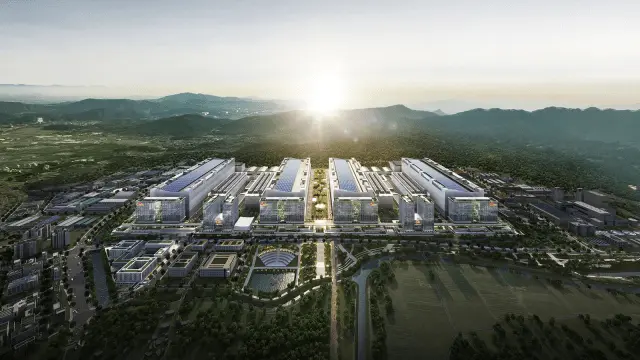
ChangXin Memory Technologies’ market value climbed to 4.13 trillion yuan after a record Monday close, the South China Morning Post reported, turning AI-driven memory shortages into the clearest public-market signal yet for China’s domestic chip supply chain.
The Hefei-based DRAM maker’s shares rose 12 per cent to 61.80 yuan, or US$9.16, extending a run that has made CXMT China’s most valuable listed company.
The closing price sits above seven multiples of the 8.66 yuan IPO level, after the company’s July 27 market debut delivered a 466 per cent first-day increase.
AI Data Centres Pull Memory Into The Lead
The rally followed stronger global memory sentiment after SanDisk’s investor day and Micron Technology’s share gains.
SanDisk shares rose nearly 30 per cent over Thursday and Friday, while Micron gained 6.7 per cent last Friday, as investors priced in tighter supply from AI data-centre demand.
Nomura’s readout from SanDisk pointed to a longer view on NAND demand, with AI data-centre solid-state-drive volumes forecast at 1,200 exabytes for 2030.
Bernstein argued that AI architecture is shifting from compute-centric to more memory-centric systems as larger models and longer context windows raise storage and memory requirements.
That backdrop matters for CXMT because DRAM supply has become part of the same data-centre hardware cycle as processors, accelerators and server power.
If training and inference systems need larger pools of high-performance memory, domestic Chinese suppliers gain pricing leverage while Beijing continues to press for semiconductor self-sufficiency.
UBS Sees DRAM Undersupply Lasting Into 2028
UBS put a Buy rating on CXMT earlier this month and set a 70 yuan target price.
Its model keeps the global DRAM market short of supply through at least the second quarter of 2028, with CXMT moving from 240,000 wafers per month at the end of 2025 to 466,000 monthly wafers three years later.
That production path would move CXMT’s global DRAM bit-supply share from 7 per cent to roughly 10 per cent.
Data-centre applications were projected to supply 54 per cent of revenue in 2028, tying the company’s valuation directly to data-centre expansion and memory-supply pricing rather than only consumer electronics cycles.
The operating numbers already show the scale of the turn.
CXMT’s first-quarter revenue rose 719 per cent from a year earlier to 50.8 billion yuan, while net profit reached 24.8 billion yuan after a loss in the year-earlier period.
Samsung Electronics, SK Hynix and Micron still sit ahead of CXMT in the DRAM producer ranking.
SenseTime added a separate China AI-market signal on Sunday: the company expects first-half results to show a profit.
Confirmation in the official earnings release would give SenseTime its first consolidated profit since the 2021 listing; its Hong Kong shares climbed 8.9 per cent on Monday.
CXMT’s valuation now depends on whether AI demand keeps memory supply tight long enough for planned capacity growth to convert into durable data-centre revenue.