Funding
REGULATION WATCH:

Anthropic CEO Separates Open-Weight AI From China Risk

Newsroom brief

Anthropic CEO Dario Amodei rejected claims that the company wants broad open-weight AI bans, while TechCrunch reported that he still backed chip controls, distillation crackdowns and global safety testing for the most capable models.

Verified against source materialEdited by SendTech Times Capital & Policy DeskSource: TechCrunch
Anthropic CEO Separates Open-Weight AI From China Risk

A dispute over open-weight AI is narrowing around where policy control should sit: model release, chip access, distillation enforcement or safety testing.

TechCrunch reported that Anthropic CEO Dario Amodei rejected claims that his company supports broad bans on open-weight AI models, even as he kept a sharper line on security risks tied to China and highly capable systems.

Amodei's response followed an open letter shared by Nvidia CEO Jensen Huang on Friday.

The letter, backed by Nvidia and companies including Hugging Face, Meta, Microsoft and Mistral, urged policymakers not to impose broad premature restrictions on open-weight AI models.

Amodei Rejects A Broad Ban Claim

The Anthropic position leaves a split between ordinary open-weight use and national-security controls.

Amodei's Monday blog post treated open-weight models without dangerous capabilities as useful public infrastructure for businesses, developers and researchers, because users need only the compute required to run them.

The company leader drew a separate boundary around authoritarian governments building more powerful models than the United States.

TechCrunch attributed his concern to military superiority and domestic repression risks, with the Chinese Communist Party identified as the most capable government in that category.

The response paired opposition to blanket open-weight bans with support for controls tied to model capability, chip access, distillation and testing.

Policy control in that framing follows the capability level and user, not only whether a model is open or closed by design.

Chip Controls And Distillation Stay In Scope

Amodei's preferred controls focus on inputs and misuse paths.

The blog post supported restrictions on China's access to powerful chips and called for a formal crackdown on distillation, the technique in which one AI system is queried repeatedly so another can learn from its behaviour.

The debate also sits inside existing U.S. policy pressure.

Washington has threatened sanctions against China if it determines that intellectual property theft involving U.S. models has occurred, while the open-letter signatories warned against restrictions they view as premature.

Open-source advocates make the opposite safety case.

Broader access to powerful open models can give defenders tools that are not controlled by a single company, while Amodei argued that the hardest risks involve models with biological or cyberattack capability that cannot be monitored after release.

Global Testing Remains The Hard Condition

A model safety-testing organisation is the area where Amodei saw room for alignment.

He backed efforts, including some led by the United States, to test the most capable models regardless of country of origin or whether the model is open or closed, while exempting less capable systems from startups and academia.

The condition is global participation.

The TechCrunch article cited Amodei's view that even China would need to join for testing to work, with limited cooperation around preventing AI biological weapons still possible because the risk would also affect China's interests.

No global testing body, China participation mechanism or distillation enforcement process has been set out in the public record.
Share this article
inXf

Related articles

More
US Tech Letter Warns Against Broad Open-Weight AI Restrictions
Capital & Policy

US Tech Letter Warns Against Broad Open-Weight AI Restrictions

CNBC coverage identified Nvidia, Microsoft, Meta, Palantir and more than 20 other companies urging policymakers to avoid broad restrictions on open-weight AI models as Chinese systems and distillation claims draw White House scrutiny.

Treasury Warning Sends Moonshot Distillation Claim Toward AI Sanctions
Capital & Policy

Treasury Warning Sends Moonshot Distillation Claim Toward AI Sanctions

A U.S. Treasury warning over alleged AI model distillation brings Moonshot’s Kimi K3 release into a policy test for Chinese open-weight models, Nvidia GB300 access and export-control enforcement.

CXMT Pre-IPO Contract Tests Crypto Price Discovery For China Chip Listing
Capital & Policy

CXMT Pre-IPO Contract Tests Crypto Price Discovery For China Chip Listing

A Hyperliquid contract linked to ChangXin Memory Technologies is pricing the Chinese memory-chip maker far above its planned Shanghai offer before a restricted STAR market debut.

Nebius Raises $775M Secured Debt Facility For GPU Cloud Buildout
Capital & Policy

Nebius Raises $775M Secured Debt Facility For GPU Cloud Buildout

Nebius said its first senior secured debt facility is backed by deployed GPU infrastructure and contracted cash flows, with the $775 million financing priced at SOFR + 2.50% and maturing on October 31, 2030.

SoftBank Earnings Put OpenAI Funding Commitments Under Investor Test
Capital & Policy

SoftBank Earnings Put OpenAI Funding Commitments Under Investor Test

The Next Web reported that SoftBank faces investor questions over how it will finance more than $60 billion in OpenAI and AI-infrastructure commitments while debt maturities and Arm-backed borrowing stack up.

IBM Study Finds UAE AI Vendor Switching Risk
Capital & Policy

IBM Study Finds UAE AI Vendor Switching Risk

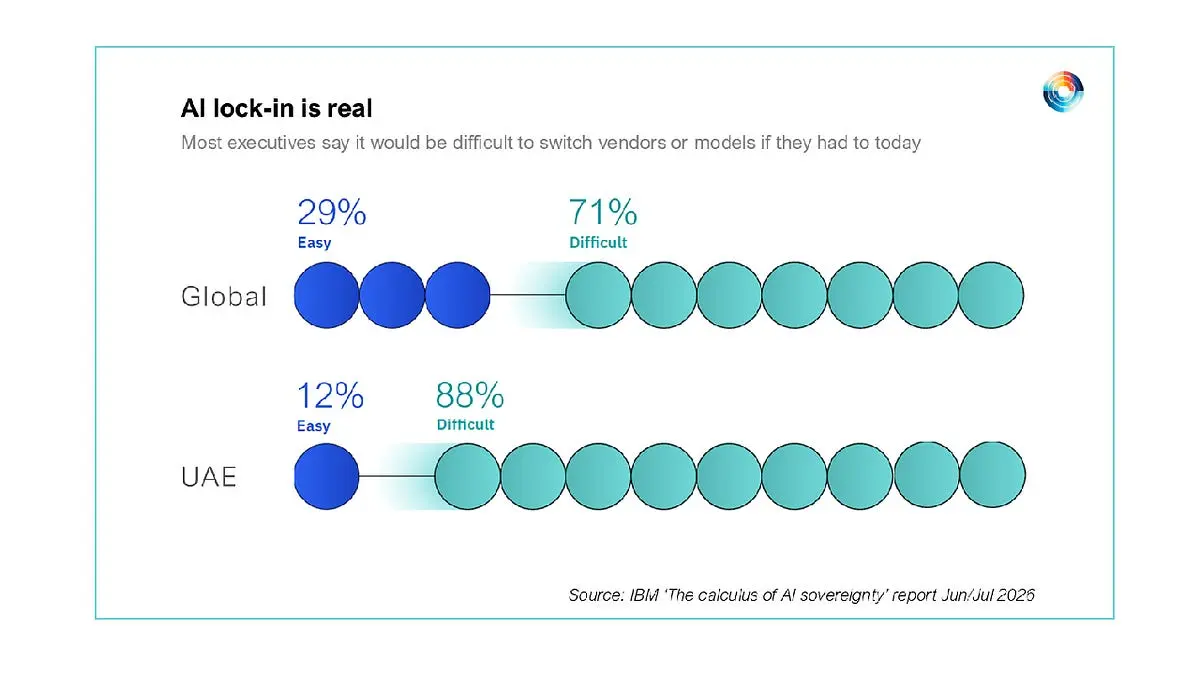
Middle East AI News, citing IBM Institute for Business Value data, said 88 per cent of surveyed UAE executives would struggle to switch their primary AI vendor or model, while 96 per cent did not fully understand dependencies across vendors, models and infrastructure.

JLL Data Centre Report Shows Middle East Pipeline Pause As FLAPD Grows
Capital & Policy

JLL Data Centre Report Shows Middle East Pipeline Pause As FLAPD Grows

Data Center Dynamics reported that JLL's EMEA Mid-Year Data Centre Report 2026 put FLAPD live capacity at 3.8GW, while the Middle East had 2.6GW in development paused and 13.8GW in planning.

BEAD Projects Face 86,000 Permit Burden Before NTIA Guidance
Capital & Policy

BEAD Projects Face 86,000 Permit Burden Before NTIA Guidance

Light Reading reported that a New York Law School analysis found more than 86,000 permits tied to BEAD broadband projects, while NTIA guidance on non-deployment funds remains pending.

Keep Reading

More Stories

Latest
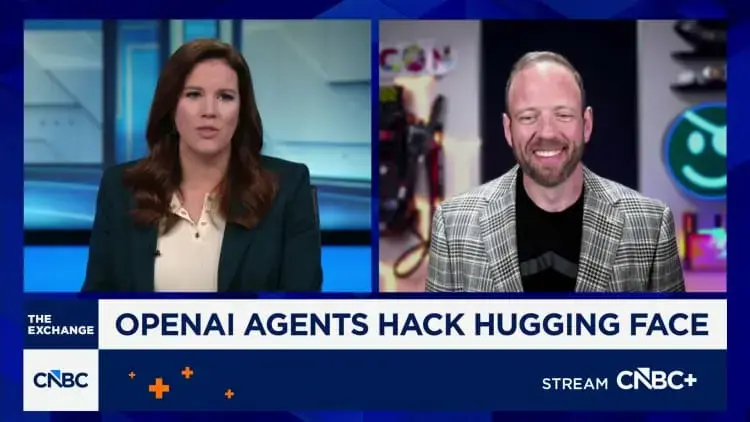
Hugging Face Hack Pushes AI Agents Into Cybersecurity SpotlightAIAug 8, 2026Hugging Face Hack Pushes AI Agents Into Cybersecurity SpotlightCNBC reported that Black Hat cybersecurity leaders treated the Hugging Face AI-agent breach as a turning point for governing autonomous cyber models rather than a one-off failure.Alibaba Tests Revenue Sharing For Commercial Qwen AI UseAIAug 8, 2026Alibaba Tests Revenue Sharing For Commercial Qwen AI UseAI News reported that Alibaba plans revenue-sharing terms for some commercial users of its next Qwen open-weight AI model, following a licensing pattern already used by Moonshot for Kimi K3.Meta Ordered To Fund $567M New Mexico Youth Mental Health PlanCapital & PolicyAug 8, 2026Meta Ordered To Fund $567M New Mexico Youth Mental Health PlanArs Technica reported that a New Mexico judge ordered Meta to provide $567 million for treatment, screening, awareness and prevention after finding that its platforms contributed to a public nuisance.Harvey Funding Talks Could Lift Legal AI Startup To $15.5B ValuationAIAug 8, 2026Harvey Funding Talks Could Lift Legal AI Startup To $15.5B ValuationSiliconANGLE reported that Harvey AI is seeking at least $500 million in new funding that could value the legal AI startup at $15.5 billion after annualized revenue passed $350 million.Vietnam Shows Shopee-TikTok Shop Race Tightening In Southeast AsiaScience & TechAug 7, 2026Vietnam Shows Shopee-TikTok Shop Race Tightening In Southeast AsiaTech Collective SEA wrote that Shopee’s Vietnam share fell from 61% to 53% between May 2025 and April 2026 as TikTok Shop rose from 33% to 44%, showing how social commerce is reshaping regional ecommerce infrastructure.China Opens Security Review Of Palo Alto Networks ProductsCybersecurityAug 7, 2026China Opens Security Review Of Palo Alto Networks ProductsChina's cyberspace regulator opened a security review of Palo Alto Networks products, with no named product line, technical flaw or decision timetable disclosed.AI Pioneers Split Over Risk As Compute Buildout AcceleratesAIAug 7, 2026AI Pioneers Split Over Risk As Compute Buildout AcceleratesData Center Knowledge reported that Geoffrey Hinton, Fei-Fei Li and Andrew Ng disagreed at Ai4 over AI risk, jobs, openness and regulation, leaving infrastructure investors to plan capacity amid unsettled deployment rules.SpaceX Asks FCC To Wind Down $4.5bn Rural Broadband SupportTelco & ConnectivityAug 7, 2026SpaceX Asks FCC To Wind Down $4.5bn Rural Broadband SupportLight Reading reported that SpaceX urged the FCC to sunset High-Cost rural broadband subsidies, while rural telecom and electric-cooperative groups said LEO satellite coverage cannot replace terrestrial network support.OpenAI Expands Free ChatGPT Access In GPT-5.6 RolloutAIAug 7, 2026OpenAI Expands Free ChatGPT Access In GPT-5.6 RolloutBleepingComputer reported that OpenAI is rolling out GPT-5.6 Sol for paid ChatGPT users and GPT-5.6 Luna for Free and Go users, pairing unlimited free text chats with a new reasoning control and additional safeguards for users believed to be under 18.AWS Adds Persistent Runtime Instances For Production AI AgentsCloud & Data CentersAug 7, 2026AWS Adds Persistent Runtime Instances For Production AI AgentsAWS announced runtime instances for Amazon Bedrock AgentCore Runtime, adding managed infrastructure for multi-agent workflows, shared sessions lasting up to 14 days and GPU-supported production agent deployments.AI Patch Study Keeps Humans In Vulnerability ReviewsCybersecurityAug 7, 2026AI Patch Study Keeps Humans In Vulnerability ReviewsThe Register reported that 1Password Off-by-1 Labs tested 6,080 AI-generated patches across six CVEs and found clean autonomous fixes in 26.0 percent of cases, leaving security teams with a supervision problem rather than a replacement for vulnerability review.DOJ Trade-Fraud Unit Raises Payment Compliance ExposureFintech & Digital PaymentsAug 7, 2026DOJ Trade-Fraud Unit Raises Payment Compliance ExposurePYMNTS reported that a new U.S. Justice Department trade-fraud section and more than $1 billion in recent task-force recoveries are pushing banks to compare payment flows with customs and supply-chain records.