Policy
REGULATION WATCH:

AI Distillation Debate Moves From Labs To Washington

Newsroom brief

CNBC reported that AI distillation has become a policy fight after Moonshot AI's Kimi K3 raised questions about open-weight models, proprietary model output and U.S. restrictions.
Verified against source materialEdited by SendTech Times AI & Enterprise DeskSource: CNBC
AI Distillation Debate Moves From Labs To Washington
Image source: CNBC

Distillation moves from lab method to policy fight

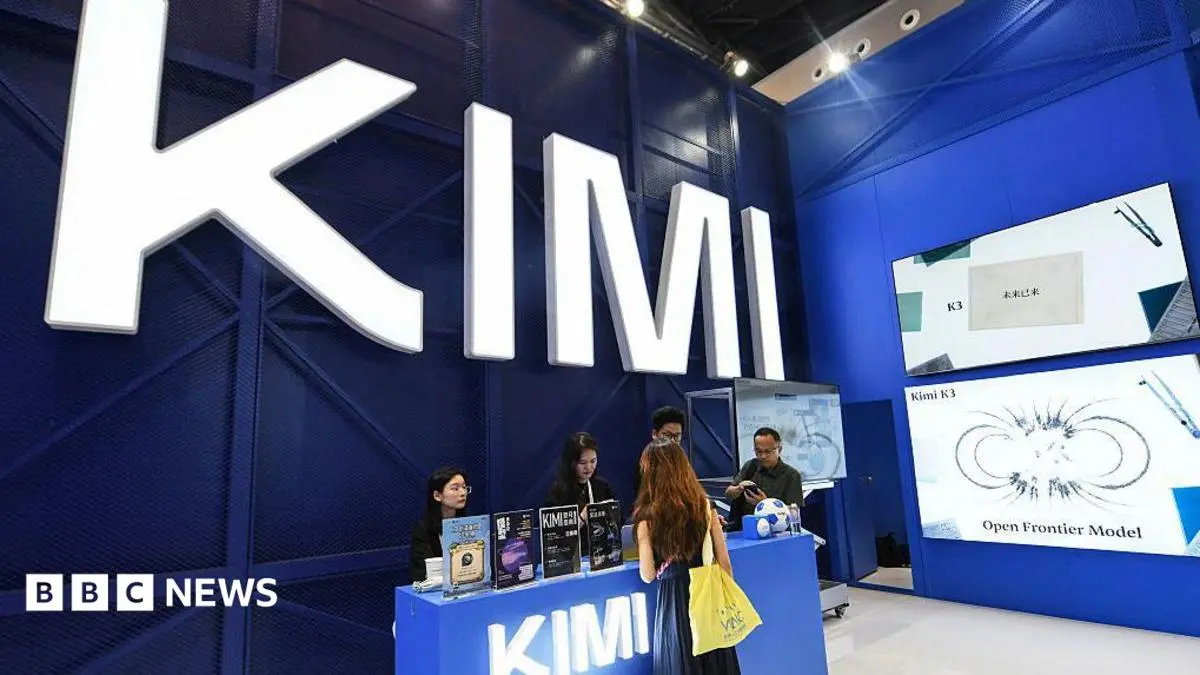
CNBC reported that AI distillation has moved from a specialist model-training technique into a Washington and Silicon Valley policy dispute after Moonshot AI's Kimi K3 became a new flashpoint in the open-weight model debate.

The article defines distillation as using the answers or work product of an advanced AI system to help train another model.

In the February podcast cited by the article, Google AI lead Jeff Dean said the method helped Google improve smaller systems by drawing on a frontier model first.

That technical framing now sits beside a political one: officials and AI vendors are asking when model-improvement practice becomes unauthorized extraction of a proprietary system's capabilities.

Moonshot allegation resets the stakes

According to the report, White House adviser Michael Kratsios wrote on X that the administration had information that Moonshot AI distilled Anthropic's Fable model to develop Kimi K3.

Kratsios alleged that Moonshot used a sophisticated internal platform for large-scale distillation against U.S. models and switched among access methods to avoid detection.

The article says Kimi K3 belongs to a wider wave of Chinese open-weight models that users can download, modify and run independently, unlike the closed commercial systems sold by leading U.S. AI firms.

For enterprise buyers, that distinction turns the story from model performance into procurement risk: security and legal teams have to ask whether the model's training history, license posture and deployment location create compliance or security exposure.

Open-weight backers push against early restrictions

The policy debate widened when Nvidia, Microsoft, Meta, Palantir and more than 20 other companies released a Friday letter urging policymakers not to impose premature restrictions on open-weight AI models.

The companies argued that early limits could weaken competition or move innovation outside the United States.

The signatories presented distillation as a normal engineering tool used to improve, test and evolve models rather than as a practice that should automatically trigger a ban.

Box CEO Aaron Levie, one of the signatories, told the outlet that U.S. companies need access to the best technology regardless of where it is developed, because more AI progress should generally push systems toward lower cost and greater efficiency over time.

Open-weight systems can be hosted on a customer's own infrastructure after review, reducing vendor lock-in and giving security teams more direct control over where inference runs.

That deployment route creates a policy problem: if a model's capability came from restricted access to another system, customers may inherit governance and reputational risk even when the downloadable weights appear operationally attractive.

Frontier vendors draw a boundary

Anthropic and OpenAI are taking the opposite line in their terms of service by banning distillation of their models.

The dispute gives frontier-model vendors a direct business incentive to detect and block large-scale output harvesting, while open-weight advocates argue that efficient model improvement is a normal part of AI development.

The report cited Anthropic's February statement alleging that DeepSeek, Moonshot and MiniMax drew Claude-like capabilities through a large coordinated campaign that used about 24,000 fake accounts and produced 16 million exchanges.

Anthropic characterized illicit distillation as a national security issue, saying its systems include safeguards against uses such as bioweapons development and malicious cyber activity.

The enforcement problem is partly technical.

Providers can watch for unusual account creation, high-volume prompt patterns and repeated attempts to extract similar capabilities, but the same models also serve legitimate developers who benchmark systems, validate outputs and build smaller internal tools.

A simple model-access rule may be hard to turn into a durable enforcement regime across APIs, resellers and enterprise accounts.

The unresolved issue is proof that can travel across policy, contract enforcement and customer due diligence.

The central evidence gap is whether buyers and regulators can verify when a downloadable model's capability came from authorized distillation, ordinary open research or prohibited large-scale output harvesting.

Until audit evidence for model lineage and API-output use is clearer, AI customers may need to treat open-weight adoption as a governance decision rather than only a cost-performance choice.

Share this article
inXf

Related articles

More
US Tech Letter Warns Against Broad Open-Weight AI Restrictions
Capital & Policy

US Tech Letter Warns Against Broad Open-Weight AI Restrictions

CNBC coverage identified Nvidia, Microsoft, Meta, Palantir and more than 20 other companies urging policymakers to avoid broad restrictions on open-weight AI models as Chinese systems and distillation claims draw White House scrutiny.

Anthropic CEO Separates Open-Weight AI From China Risk
Capital & Policy

Anthropic CEO Separates Open-Weight AI From China Risk

Anthropic CEO Dario Amodei rejected claims that the company wants broad open-weight AI bans, while TechCrunch reported that he still backed chip controls, distillation crackdowns and global safety testing for the most capable models.

Treasury Warning Sends Moonshot Distillation Claim Toward AI Sanctions
Capital & Policy

Treasury Warning Sends Moonshot Distillation Claim Toward AI Sanctions

A U.S. Treasury warning over alleged AI model distillation brings Moonshot’s Kimi K3 release into a policy test for Chinese open-weight models, Nvidia GB300 access and export-control enforcement.

Moonshot Sets 27 July Open-Source Release For Kimi K3 AI Model
AI

Moonshot Sets 27 July Open-Source Release For Kimi K3 AI Model

BBC reported that Moonshot AI launched Kimi K3, a 2.8 trillion-parameter model scheduled for open-source release on 27 July. The Chinese startup says the model can rival OpenAI and Anthropic systems, but exact hardware requirements and enterprise customers remain undisclosed.

Sapiom Raises $35M As AI Agent Costs Face First Hard Audit
AI

Sapiom Raises $35M As AI Agent Costs Face First Hard Audit

TNW reported that Sapiom raised a $35 million Series A for software that routes AI-agent calls to lower-cost models and tools, turning agent deployment from a capability race into a budget-control problem.

Xi Backs Shanghai AI Governance Body After 29-Country Deal
AI

Xi Backs Shanghai AI Governance Body After 29-Country Deal

CNBC reported that Xi Jinping used a Shanghai AI speech to position China as a Global South technology partner after 29 countries signed an agreement to establish the World Artificial Intelligence Cooperation Organization. The address named cooperation with ASEAN, the African Union and BRICS, but did not identify WAICO members, funding or enforcement powers.

ChatGPT Takes Early Lead In Congress AI Spending
AI

ChatGPT Takes Early Lead In Congress AI Spending

CNBC found ChatGPT captured about 88% of identifiable House AI-vendor spending in the year to 31 March 2026, even as Congress weighs AI purchasing and regulation.

Open-Weight AI Safety Gap Widens As GLM-5.2 Nears Frontier Models
Capital & Policy

Open-Weight AI Safety Gap Widens As GLM-5.2 Nears Frontier Models

SaferAI found Z.ai GLM-5.2 close to frontier cyber and biology capabilities while lacking published safety commitments, making release controls part of the AI risk debate.

Keep Reading

More Stories

Latest
Hugging Face Hack Pushes AI Agents Into Cybersecurity SpotlightAIAug 8, 2026Hugging Face Hack Pushes AI Agents Into Cybersecurity SpotlightCNBC reported that Black Hat cybersecurity leaders treated the Hugging Face AI-agent breach as a turning point for governing autonomous cyber models rather than a one-off failure.Alibaba Tests Revenue Sharing For Commercial Qwen AI UseAIAug 8, 2026Alibaba Tests Revenue Sharing For Commercial Qwen AI UseAI News reported that Alibaba plans revenue-sharing terms for some commercial users of its next Qwen open-weight AI model, following a licensing pattern already used by Moonshot for Kimi K3.Meta Ordered To Fund $567M New Mexico Youth Mental Health PlanCapital & PolicyAug 8, 2026Meta Ordered To Fund $567M New Mexico Youth Mental Health PlanArs Technica reported that a New Mexico judge ordered Meta to provide $567 million for treatment, screening, awareness and prevention after finding that its platforms contributed to a public nuisance.Harvey Funding Talks Could Lift Legal AI Startup To $15.5B ValuationAIAug 8, 2026Harvey Funding Talks Could Lift Legal AI Startup To $15.5B ValuationSiliconANGLE reported that Harvey AI is seeking at least $500 million in new funding that could value the legal AI startup at $15.5 billion after annualized revenue passed $350 million.Vietnam Shows Shopee-TikTok Shop Race Tightening In Southeast AsiaScience & TechAug 7, 2026Vietnam Shows Shopee-TikTok Shop Race Tightening In Southeast AsiaTech Collective SEA wrote that Shopee’s Vietnam share fell from 61% to 53% between May 2025 and April 2026 as TikTok Shop rose from 33% to 44%, showing how social commerce is reshaping regional ecommerce infrastructure.China Opens Security Review Of Palo Alto Networks ProductsCybersecurityAug 7, 2026China Opens Security Review Of Palo Alto Networks ProductsChina's cyberspace regulator opened a security review of Palo Alto Networks products, with no named product line, technical flaw or decision timetable disclosed.AI Pioneers Split Over Risk As Compute Buildout AcceleratesAIAug 7, 2026AI Pioneers Split Over Risk As Compute Buildout AcceleratesData Center Knowledge reported that Geoffrey Hinton, Fei-Fei Li and Andrew Ng disagreed at Ai4 over AI risk, jobs, openness and regulation, leaving infrastructure investors to plan capacity amid unsettled deployment rules.SpaceX Asks FCC To Wind Down $4.5bn Rural Broadband SupportTelco & ConnectivityAug 7, 2026SpaceX Asks FCC To Wind Down $4.5bn Rural Broadband SupportLight Reading reported that SpaceX urged the FCC to sunset High-Cost rural broadband subsidies, while rural telecom and electric-cooperative groups said LEO satellite coverage cannot replace terrestrial network support.OpenAI Expands Free ChatGPT Access In GPT-5.6 RolloutAIAug 7, 2026OpenAI Expands Free ChatGPT Access In GPT-5.6 RolloutBleepingComputer reported that OpenAI is rolling out GPT-5.6 Sol for paid ChatGPT users and GPT-5.6 Luna for Free and Go users, pairing unlimited free text chats with a new reasoning control and additional safeguards for users believed to be under 18.JLL Data Centre Report Shows Middle East Pipeline Pause As FLAPD GrowsCapital & PolicyAug 7, 2026JLL Data Centre Report Shows Middle East Pipeline Pause As FLAPD GrowsData Center Dynamics reported that JLL's EMEA Mid-Year Data Centre Report 2026 put FLAPD live capacity at 3.8GW, while the Middle East had 2.6GW in development paused and 13.8GW in planning.AWS Adds Persistent Runtime Instances For Production AI AgentsCloud & Data CentersAug 7, 2026AWS Adds Persistent Runtime Instances For Production AI AgentsAWS announced runtime instances for Amazon Bedrock AgentCore Runtime, adding managed infrastructure for multi-agent workflows, shared sessions lasting up to 14 days and GPU-supported production agent deployments.AI Patch Study Keeps Humans In Vulnerability ReviewsCybersecurityAug 7, 2026AI Patch Study Keeps Humans In Vulnerability ReviewsThe Register reported that 1Password Off-by-1 Labs tested 6,080 AI-generated patches across six CVEs and found clean autonomous fixes in 26.0 percent of cases, leaving security teams with a supervision problem rather than a replacement for vulnerability review.