SendTech Times
News
SYSTEMS SHIFT:

RideFlux Turns Korea’s Driverless Permits Into A Physical-AI Test

Newsroom brief

RideFlux is pushing Level 4 autonomous-driving software from Korea’s driverless passenger permits into paid freight operations, using urban edge-case data, faster inference and licensing partnerships as its commercialization proof points.
Verified against source materialEdited by SendTech Times AI & Enterprise DeskSource: AI Times Korea
RideFlux Turns Korea’s Driverless Permits Into A Physical-AI Test
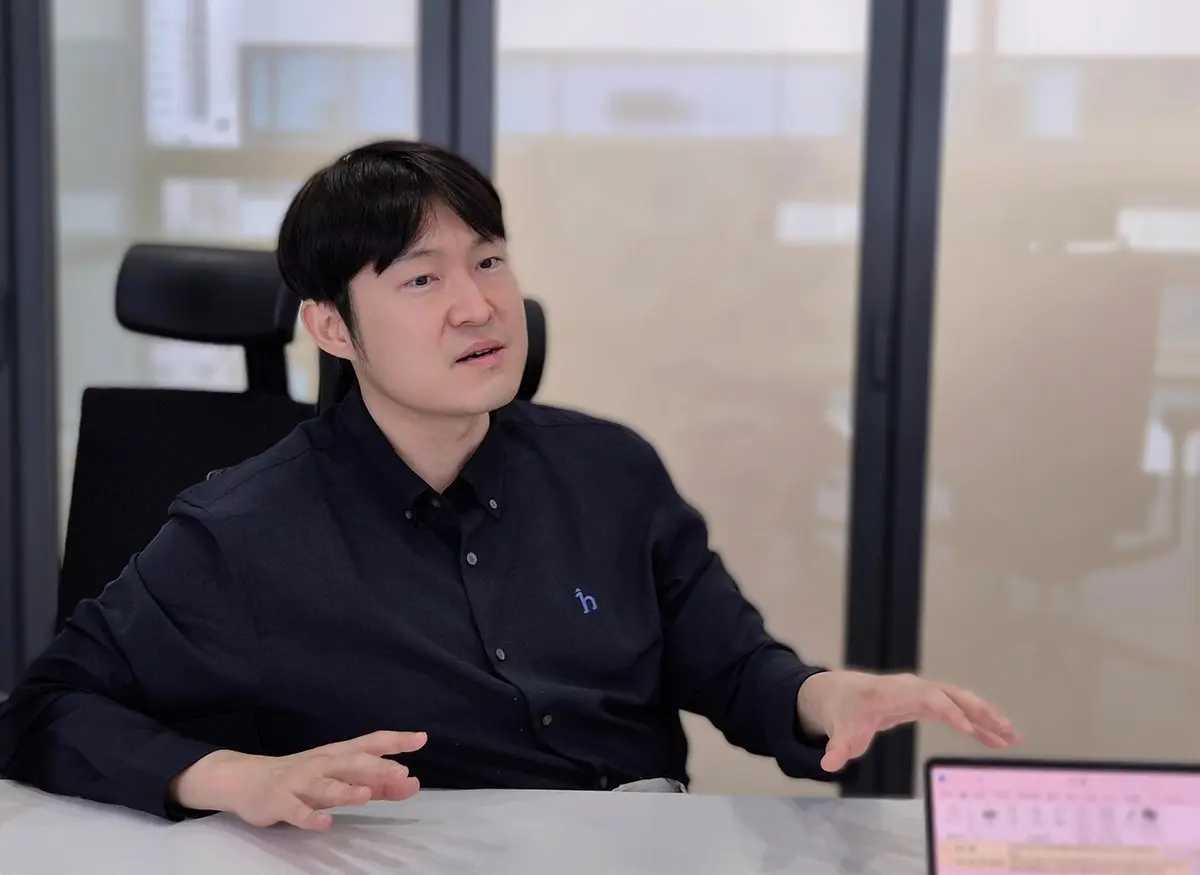
Image source: AI Times Korea

Driverless Approval Moves From Cars To Freight

RideFlux is trying to move Korean autonomous driving beyond controlled demonstrations.

The company, led by CEO Park Jung-hee, has secured Korea's only unmanned permit in passenger transport and received the country's first approval to carry paid freight with a large self-driving truck.

That combination makes the company a test case for whether Level 4 software can operate across both passenger mobility and logistics.

The commercial claim rests on more than a route trial.

RideFlux says its technology has been trained around driverless operation in dense urban conditions, rather than simply expanding distance with a safety operator on board.

Park's argument is that mileage alone can hide the hardest part of autonomy: rare road behavior that forces the system to decide quickly without human rescue.

Jeju Data Gives The System Harder Road Cases

The company uses Jeju as a proving ground because the island offers weather and road conditions that are more difficult than a straight highway route.

RideFlux has collected cases from mountain roads, roundabouts, unsignalized intersections and construction zones, alongside urban hazards such as jaywalking pedestrians, birds entering the road and illegally parked vehicles.

That emphasis matters for Level 4 deployment because predictable route repetition can make a system look safer than it is.

RideFlux combines rule-based logic with AI judgment through a hybrid structure that selects the safer and more accurate output.

It also uses model-lightening and knowledge-quantization techniques to preserve accuracy while reducing computation demands to a one-tenth level.

The company's operating claim is specific: its urban driverless record now exceeds 3,000 hours, and it says that record has produced zero accidents.

That figure does not prove broad national readiness, but it gives regulators and fleet partners a measurable operating record under fully driverless conditions.

Inference Speed Becomes The Competitive Metric

RideFlux's clearest external benchmark came at the CVPR 2025 E2E Autonomous Driving Challenge.

The field included 29 teams, with Nvidia, Xiaomi and the Swiss Federal Institute of Technology Lausanne among the competitors, and RideFlux finished third overall.

In the inference-speed category for unexpected situations, it ranked first with 14 ms.

For autonomous driving, speed is not a cosmetic benchmark.

Park says a correct decision can still be unsafe if it arrives late, and he links delayed judgment to the sudden braking that passengers often feel in autonomous vehicles.

The company's pitch is that faster inference supports both emergency response and ride comfort, which are essential if unmanned mobility is to leave pilot zones.

Freight Could Be The First Scale Opening

RideFlux sees freight as the less crowded commercialization route.

Park says unmanned taxi services have already reached thousands of vehicles, while large autonomous trucks remain below 100 vehicles worldwide.

Park set a year-end goal of building a fleet above 20 large freight trucks, which he said would represent about 25% of that market.

That target is ambitious, but the business model is clearer than a one-off vehicle trial.

RideFlux says the same software can be adapted across vehicle types through parameter tuning, and it is widening its portfolio through ADAS software-licensing work with domestic and foreign automakers.

It also has partnerships with Kakao Mobility, Socar and Tada, giving it links to platform operators that already understand fleet deployment.

The Watchpoint Is Licensing Proof

The next test is whether RideFlux can turn permits and benchmarks into repeatable software revenue.

The company has received all-A grades in a technology assessment for a special technology listing and has attracted cumulative investment of 80 billion won, but investors and customers will still look for deployment evidence beyond the current operating record.

the larger signal is physical AI moving into regulated transport.

RideFlux's case shows how autonomy vendors are trying to prove reliability through edge-case data, inference latency and software licensing rather than headline mileage alone.

If its freight plan advances, Korea could become a more visible test market for Level 4 autonomous logistics.

Share this article
inXf

Related articles

More
ORBBEC Pushes 3D Vision Deeper Into Physical AI
AI

ORBBEC Pushes 3D Vision Deeper Into Physical AI

ORBBEC is expanding from robot vision into physical AI, general AI vision, 3D printing and 3D data acquisition. The company reports more than 70% service robot market share in China and South Korea and has entered supply chains for AgiBot, UBTech and Unitree. Q1 2026 revenue reached RMB 203 million, while net profit after deductions rose 531.01% year on year.

Nota Runs VLA Robotics Model in Real Time on Qualcomm Edge AI Hardware
AI

Nota Runs VLA Robotics Model in Real Time on Qualcomm Edge AI Hardware

Nota demonstrated real-time operation of a vision-language-action robotics model on Qualcomm Dragonwing edge AI hardware. The company reduced the model action-head processing time from 218 milliseconds to 31 milliseconds while keeping task success nearly unchanged. The demo points to a path for physical AI systems that can run closer to robots rather than relying mainly on GPU servers or cloud infrastructure.

BMW i Ventures Puts $300 Million Fund Behind Physical AI Startups
AI

BMW i Ventures Puts $300 Million Fund Behind Physical AI Startups

BMW i Ventures said Fund III has $300 million for physical AI, agentic AI, industrial software, manufacturing technology and advanced materials, lifting total capital under management to $1.1 billion.

AIVEX Brings Physical AI Into Korean Battery-Plant Packaging Work
AI

AIVEX Brings Physical AI Into Korean Battery-Plant Packaging Work

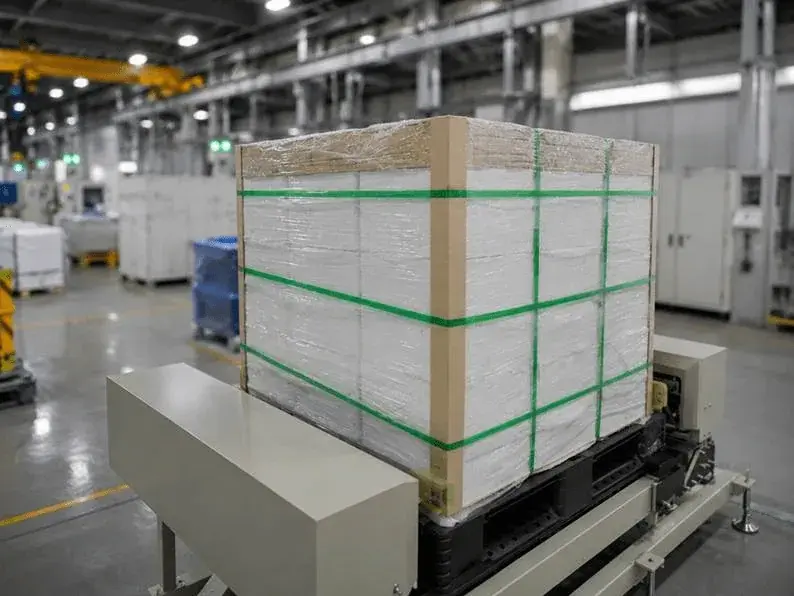
AIVEX said its AIbot platform automated a crucible packaging-removal process at a leading Korean battery-materials company. The system combines AI vision, 3D optics, 6D pose estimation and automatic path planning to handle irregular ropes and wrapping film. The deployment points to physical AI moving into factory tasks that are repetitive but too variable for simple fixed automation.

Huawei’s Smart-Car Stack Becomes A Dependency For China’s EV Makers
AI

Huawei’s Smart-Car Stack Becomes A Dependency For China’s EV Makers

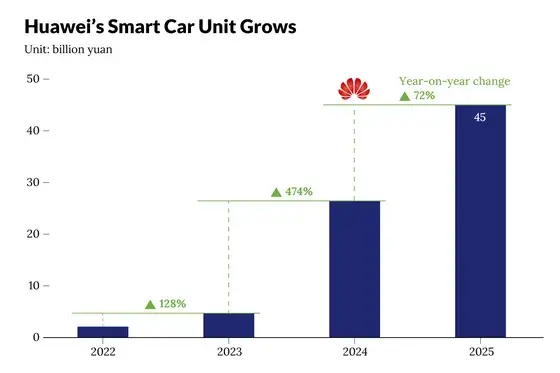
Huawei introduced Qiankun ADS 5, HarmonySpace 6 and Qiankun OS as Chinese automakers deepen reliance on its smart-driving technology. Its intelligent automotive solutions unit generated 45 billion yuan in 2025, up 72%, with 18 billion yuan planned for smart-driving R&D in 2026. The central risk for automakers is whether Huawei’s technology advantage turns into strategic lock-in as the EV market consolidates.

Naver And KAI Sign Defence AI MOU Without Weapons-Control Timeline
AI

Naver And KAI Sign Defence AI MOU Without Weapons-Control Timeline

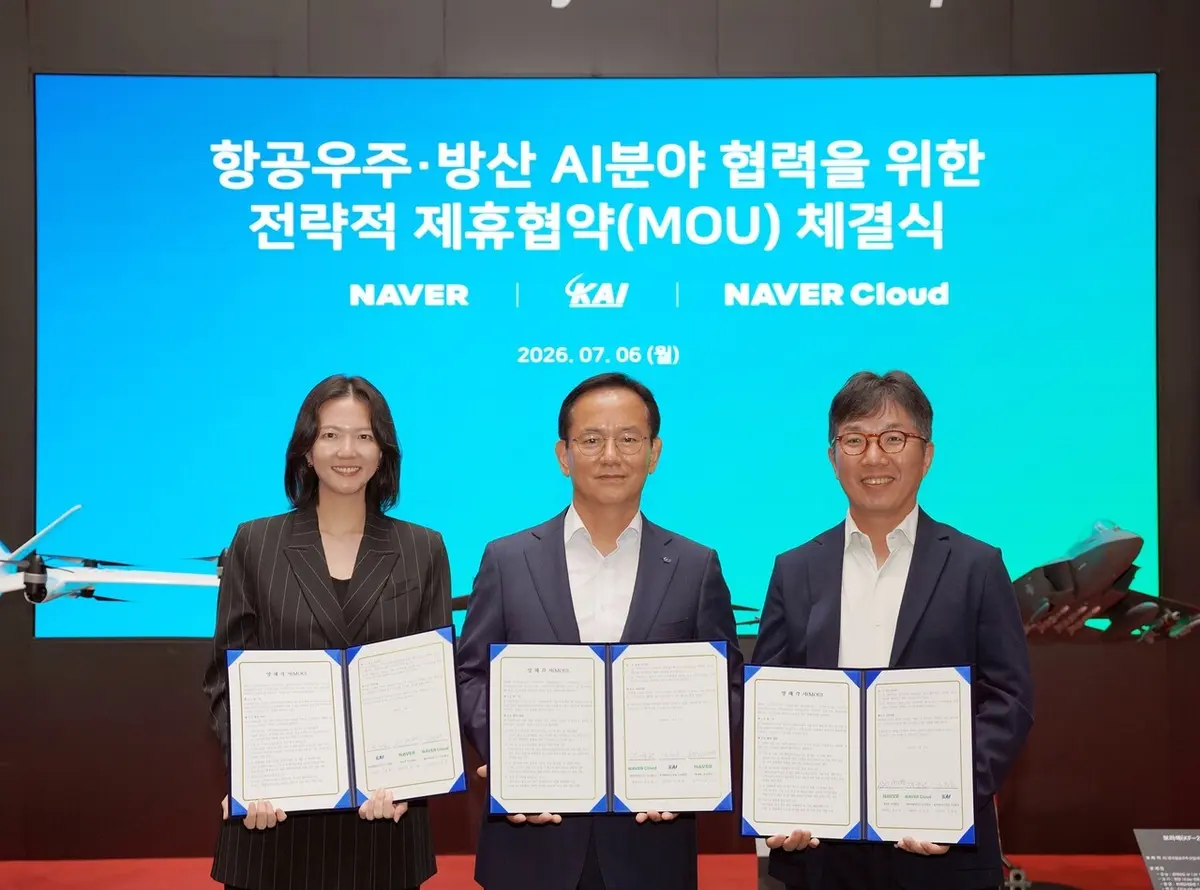
Naver, Naver Cloud and KAI signed a defence AI MOU for sovereign models and physical AI combat platforms, The public record still lacks budget, deployment timing, test results or weapons-control approvals.

Ropedia Raises US$22 Million For Physical AI Data Layer
AI

Ropedia Raises US$22 Million For Physical AI Data Layer

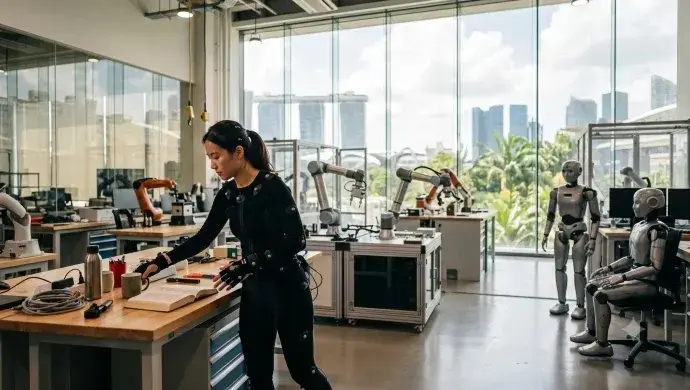
Singapore-based Ropedia has raised US$22 million in pre-Series A funding, e27 reported, as robotics developers look for data that records motion, depth, audio and human interaction rather than only online text.

Encord Tests Brain-Wave Data For Physical AI Training
AI

Encord Tests Brain-Wave Data For Physical AI Training

Encord is testing brain-wave sensors with Zander Labs for robotics training data, TechCrunch reported, as physical AI developers look beyond video toward signals that capture intent, error and surprise.

Keep Reading

More Stories

Latest
Ethereum Testnet Update Targets 200 Million-Gas BlocksCrypto/Web3Oct 6, 2026Ethereum Testnet Update Targets 200 Million-Gas BlocksEthereum developers released Prysm 7.2.1 so the Sepolia trial of Glamsterdam can test 200 million-gas blocks, more than three times the prior 60 million setting, before any main-network change.Kepler Targets 2027 Production for HBM Replacement MemoryCloud & Data CentersOct 6, 2026Kepler Targets 2027 Production for HBM Replacement MemoryEE Times reports that Kepler Computing is preparing 3D ferroelectric memory for 2027 production, promising higher capacity and bandwidth per watt while limiting reliance on advanced-node lithography.Yokogawa Opens Singapore Hub For Industrial Cyber ResilienceCapital & PolicyOct 6, 2026Yokogawa Opens Singapore Hub For Industrial Cyber ResilienceYokogawa Engineering Asia has launched a Singapore center focused on OT cyber resilience, training, response planning and recovery coordination for Southeast Asia, Oceania and Taiwan.ClickFix Attack Uses Browser Cache To Hide Malware PayloadCybersecurityOct 6, 2026ClickFix Attack Uses Browser Cache To Hide Malware PayloadMicrosoft Threat Intelligence traced a ClickFix cache-smuggling method that preloads malware into browser caches, then uses file size checks and a pasted Run command to launch later credential-theft stages.VOA Tests Six-Month Startup Buildout Before Funding DecisionsFintech & Digital PaymentsOct 6, 2026VOA Tests Six-Month Startup Buildout Before Funding DecisionsTechCabal’s interview with VOA Venture Partners founder Victoria Olayide Adesanya describes a six-month build programme that lets the firm work inside African financial-infrastructure startups before deciding whether to invest.Bitcoin Holds $86,000 As Dollar Index Hits 18-Month HighCrypto/Web3Oct 6, 2026Bitcoin Holds $86,000 As Dollar Index Hits 18-Month HighCoinDesk reported that bitcoin stayed near $86,000 while the U.S. Dollar Index reached about 102.5, with U.S. rate expectations and European political risks strengthening the dollar backdrop.Google Freezes OSS Bug Bounty Reports After AI Submission FloodCybersecurityOct 6, 2026Google Freezes OSS Bug Bounty Reports After AI Submission FloodGoogle has stopped accepting new product vulnerability reports in its OSS VRP after invalid automated submissions swamped reviewers, while older reports and some Cloud VRP routes remain open.Fleuret AI Raises €4M For Continuous AI Pentesting PlatformCybersecurityOct 6, 2026Fleuret AI Raises €4M For Continuous AI Pentesting PlatformTech.eu reported that French startup Fleuret AI raised €4 million in pre-seed funding to develop an agentic-AI platform that turns penetration testing into a continuous security process.GFT Analysis Says AI Documentation Can Cut Maintenance Work 30%Fintech & Digital PaymentsOct 6, 2026GFT Analysis Says AI Documentation Can Cut Maintenance Work 30%A GFT Technologies analysis says AI-linked software documentation can cut maintenance effort and speed developer onboarding when knowledge assets stay synchronized with code changes.Schneider Electric Lines Up $22.6 Billion PTC DealAIOct 5, 2026Schneider Electric Lines Up $22.6 Billion PTC DealSchneider Electric plans to buy PTC in a cash transaction valuing the US engineering software provider’s equity at about $22.6 billion, adding product-lifecycle software to its industrial AI push.Aggarwal Pledges Ola Electric Stake To Fund ₹1,000 Cr Rights IssueCapital & PolicyOct 5, 2026Aggarwal Pledges Ola Electric Stake To Fund ₹1,000 Cr Rights IssueOla Electric founder Bhavish Aggarwal pledged 20 Cr shares to finance his participation in a rights issue that forms part of a larger ₹1,500 Cr fundraising plan.Natrona Schools AI Review Puts Student Privacy Ahead Of Classroom Tool UseAIOct 5, 2026Natrona Schools AI Review Puts Student Privacy Ahead Of Classroom Tool UseNatrona County trustees questioned whether teacher AI tools expose student data, even as existing district rules already ban unauthorized generative AI use by students.