Microsoft Says AI Datacentres Drove 25 Percent Emissions Rise
Microsoft said total Scope 1, Scope 2 and Scope 3 emissions rose 25 percent year over year in FY25, driven primarily by datacentre infrastructure expansion. The company matched 100 percent of annual global electricity consumption with renewable energy, but said AI infrastructure demand for energy, water, land and materials is still outpacing sustainability solutions.
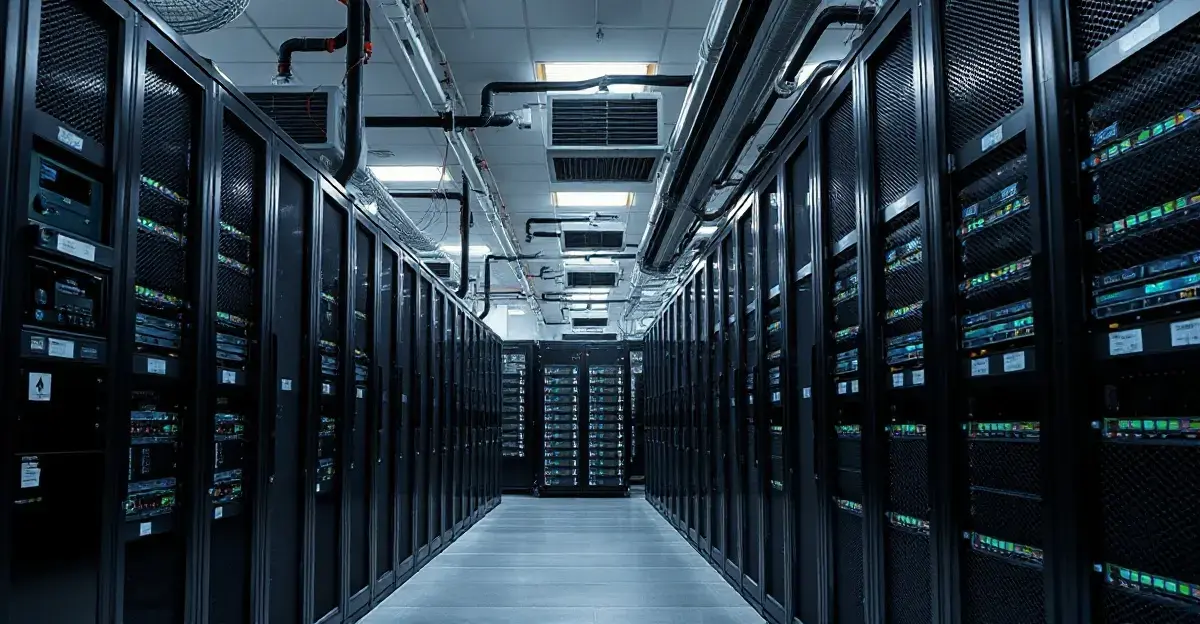
Microsoft's total greenhouse-gas emissions rose 25 percent year over year in FY25 as the company expanded its datacenter infrastructure, even as selected interventions helped hold reported emissions below an estimated level of 34 million metric tons.
Actual reported emissions were 20 million metric tons, according to Microsoft's 2026 Environmental Sustainability Report.
The report links the increase to datacenter growth and to the company's decision to stop using non-additional, unbundled renewable-energy certificates while prioritizing investments that add new power to electricity grids.
That change raised Microsoft's reported emissions in the near term, the company said, but was intended to support the development of new carbon-free electricity rather than relying on certificates alone.
Emissions and datacenter growth
Scope 3 remained Microsoft's largest emissions category.
Scope 2, which covers emissions associated with purchased electricity, represented 13 percent of the total footprint in FY25, up from nearly 2 percent the previous year.
The shift reflects the growing role of electricity systems as cloud and AI capacity expands.
Microsoft matched 100 percent of its annual global electricity consumption with renewable energy in FY25.
Its agreements now encompass up to 40 gigawatts of new renewable energy across 26 countries, including a 2024 agreement with Brookfield for up to 10.5 gigawatts.
Nineteen gigawatts of that total are now online.
The company reported more than 690 megawatts of power harvested within existing datacenters, allowing additional workloads to run without new infrastructure.
Its datacenters delivered a global average power usage effectiveness score of 1.17 in FY25, while nearly 4 million servers had been placed in low-power operating states by the end of 2025.
Energy and water systems
Microsoft describes AI infrastructure as increasing demand for electricity, water, land and materials faster than sustainability solutions are scaling.
Cooling is one of the most resource-intensive parts of datacenter operations, and the company is shifting some sites toward chip-level liquid cooling.
A system introduced in 2024 circulates coolant in a closed loop between servers and chillers, avoiding evaporative cooling.
Microsoft expects it to avoid more than 125 million liters of water per year, per datacenter.
The company also continued work on microfluidics, which uses silicon-etched channels to direct liquid toward a chip's warmest areas, with AI helping optimize the channel pattern for different chips.
Microsoft's global average water usage effectiveness was 0.27 liters per kilowatt-hour in FY25, a 25 percent reduction from its 2022 baseline and progress toward a 40 percent reduction target by 2030.
In Phoenix, Arizona, datacenters, internal cooling changes improved water usage effectiveness by 23 percent from the previous year.
The company replenished more than 14 million cubic meters of water globally in FY25, exceeding its total withdrawals for the first time.
It funded 24 new replenishment projects expected to provide more than 29 million cubic meters of benefit over their lifetimes.
Microsoft said the next operating challenge is to focus that work watershed by watershed, particularly in priority regions where local water conditions are stressed.
Construction and circularity
Microsoft's datacenter design target is a 30 percent reduction in embodied carbon from its baseline design.
Multi-story datacenters can reduce embodied carbon by 15 percent to 25 percent, while hybrid mass-timber designs have demonstrated up to 35 percent lower structural embodied carbon than conventional steel-frame designs.
Twenty-five Microsoft datacenter projects achieved LEED Gold certification in 2025, bringing the global total to 80 certified projects.
Construction and demolition waste diversion reached 90.5 percent, exceeding the company's target for the second consecutive year.
The company also reported a 92 percent reuse and recycling rate for decommissioned servers and components, above its 90 percent target for the second year in a row.
Its Circular Centers program had expanded to seven facilities globally.
Microsoft's results therefore combine a measurable efficiency gain with a larger infrastructure footprint: selected interventions reduced emissions relative to the company's modeled 34-million-metric-ton baseline, but datacenter expansion and the electricity required to support AI continued to push total emissions higher.