SendTech Times
News
MARKET SIGNAL:

GCC Sukuk Liquidity Nears Conventional Bond Levels After March Stress

Newsroom brief

Fitch data show GCC sukuk trading close to conventional bond liquidity in dollar markets, with rating, currency and geopolitical exposure still shaping execution costs.

Verified against source materialEdited by SendTech Times Capital & Policy DeskSource: Economy Middle East
GCC Sukuk Liquidity Nears Conventional Bond Levels After March Stress
Image source: Economy Middle East

Dollar sukuk from the GCC are trading close to conventional bond liquidity again, Economy Middle East reported from Fitch data, narrowing one of the practical costs investors watch when they compare Islamic and conventional fixed-income instruments.

The August 12 snapshot put outstanding GCC U.S.-dollar sukuk at an average Bloomberg Liquidity Assessment score of roughly 50, almost level with comparable conventional bonds.

When every currency was included, the regional sukuk average rose to 57, while conventional bonds stood at 53.

Liquidity Scores Rebuild After March Trough

The Fitch analysis uses Bloomberg's 1-to-100 liquidity scale, where higher readings point to lower estimated liquidation costs for a security.

The reviewed universe excludes locally rated sukuk and instruments without Bloomberg score coverage, so the numbers describe tradable securities with daily liquidity readings rather than the whole Islamic debt market.

By August 4, more than three quarters of the Fitch-rated sukuk universe had crossed the 50-point threshold.

The comparable share was 64 percent on March 23 and 81 percent in January.

The median score moved to 64 from 55 in March, leaving the market improved but not fully restored to the pre-war level of 68.

Fitch's table split the recovery by credit tier.

Investment-grade sukuk reached an average score of 69, five points above March and close to the January level of 72.

Lower-rated sukuk improved to 40 from 33 over the same period, but that segment still lagged its January reading of 48.

Country And Currency Effects Keep The Recovery Uneven

Market location changed the results as much as the headline regional average.

Hong Kong, Malaysia, Indonesia, Egypt and supranational issuers sat at the top of the Fitch-rated liquidity table.

Egypt, Oman, Malaysia and Ireland were already above their own pre-war scores in August, with Egypt standing 11 points higher.

The currency mix strengthened the case for GCC sukuk.

Once dollar issues were removed, sukuk averaged 68 and conventional bonds averaged 57.

Oman, Bahrain and Saudi Arabia showed a sukuk advantage on that all-currency measure, Qatar and the UAE were level, and Kuwait remained the market where conventional bonds kept the edge.

Ringgit-denominated Malaysian sukuk produced the strongest currency-level result and were the only currency group above the pre-war benchmark.

Euro sukuk also held high liquidity scores.

Dollar sukuk were recovering, but the improvement was slower and closer to the stress period than to the strongest domestic-currency markets.

Recent Issuance Shows Demand Beyond Secondary Trading

Primary-market transactions supplied a second signal that Islamic liquidity is functioning again.

The International Islamic Liquidity Management Corporation sold $1.475 billion of short-term sukuk in May, its biggest single auction since inception.

The sale offered six maturities in one auction, from two weeks through one, two, three, six and nine months.

The Islamic Development Bank followed with a five-year dollar benchmark of $1 billion.

Investor orders exceeded $2.65 billion, producing 2.65-times coverage, and the certificates priced with a 4.227 percent profit rate.

The allocation profile showed official and bank demand rather than only asset-manager buying.

Central banks and official institutions received 49 percent of the deal, banks and private banks took 42 percent, and the remaining 9 percent went to asset and fund managers.

Those allocations matter because official institutions and banks are often core buyers for high-grade Islamic liquidity instruments, especially when market stress makes secondary trading more expensive.

Their participation gives issuers a deeper anchor book while longer-term investors decide how much geopolitical risk to hold.

By geography, the Middle East and Africa took 52 percent, Asia took 24 percent, the United Kingdom and Europe took 19 percent, and offshore U.S. investors took 5 percent.

For Gulf issuers, the liquidity recovery is positive but conditional.

Sukuk liquidity is no longer moving as a single block after the conflict shock; rating strength, currency depth, domestic investor bases and geopolitical exposure now decide which instruments can trade near conventional bond conditions and which still carry higher execution friction.

Share this article
inXf

Related articles

More
UAE Debt Market Reaches $320 Billion As Fitch Flags Iran Risk
Capital & Policy

UAE Debt Market Reaches $320 Billion As Fitch Flags Iran Risk

Zawya cited Fitch Ratings research showing the UAE debt capital market grew 3 percent to about USD 320 billion in the first half of 2026, with dollar issuance rising but spreads and sukuk liquidity pressured by geopolitical risk.

Bond Investors Price AI Capex As Credit Risk
Capital & Policy

Bond Investors Price AI Capex As Credit Risk

CNBC reported that bond-market anxiety is rising around AI capital spending, with hyperscaler spreads widening, Oracle CDS trading at a multi-year high and Meta data-center financing facing higher borrowing costs.

SoftBank Tests Retail Debt Market With One Trillion Yen AI Bond Plan
Capital & Policy

SoftBank Tests Retail Debt Market With One Trillion Yen AI Bond Plan

SoftBank plans a record one trillion yen Japanese retail bond to refinance debt and fund OpenAI-related AI investments, with retail investors taking a larger role as banks weigh credit and duration risk.

Gulf Sovereign AI Plans Face Control Test Beyond Data Residency
Capital & Policy

Gulf Sovereign AI Plans Face Control Test Beyond Data Residency

Gulf governments are building sovereign AI programmes around local hosting, but control over access, agents, encryption keys and workload portability is becoming the harder policy test.

slice Adds SBI And ICICI Veterans After RBI Approval
Capital & Policy

slice Adds SBI And ICICI Veterans After RBI Approval

Inc42 reported that slice Small Finance Bank appointed Samir Sawhney and Ramesh Kumar to its board, adding banking, treasury and digital-platform experience after its merger with North East Small Finance Bank.

Burjeel Sukuk Draws $1.6 Billion Order Book As Proceeds Cover Expansion And Digital Projects
Capital & Policy

Burjeel Sukuk Draws $1.6 Billion Order Book As Proceeds Cover Expansion And Digital Projects

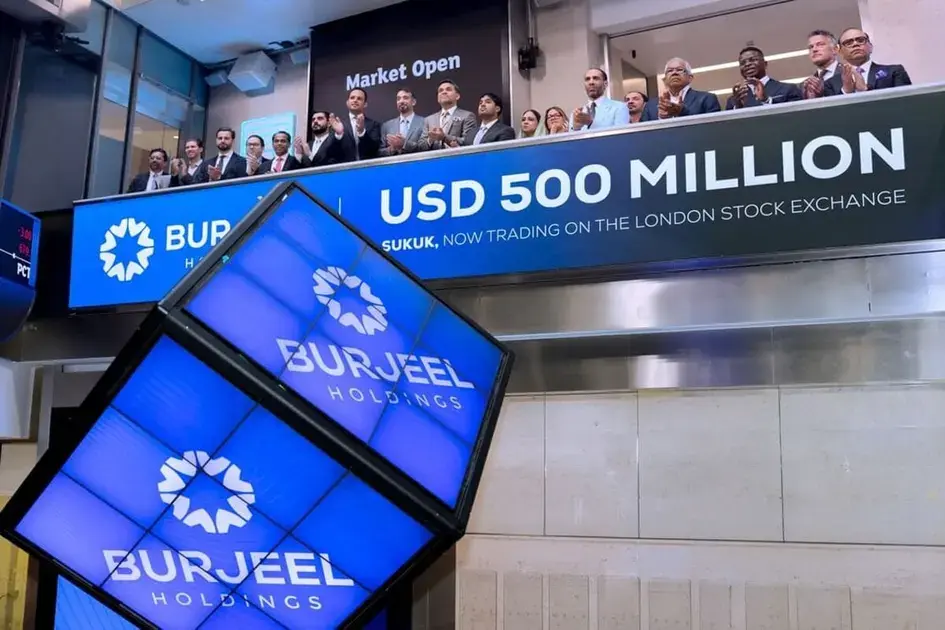
Burjeel Holdings listed a $500 million sukuk on the London Stock Exchange after a $1.6 billion order book. The company said proceeds will refinance debt and support expansion, digital transformation and AI-enabled healthcare work, with project budgets, suppliers and deployment dates outside the public record.

Malaysia AI Agency Launch Leaves Sovereign Cloud Question Unassigned
Capital & Policy

Malaysia AI Agency Launch Leaves Sovereign Cloud Question Unassigned

Tech Wire Asia reported that Prime Minister Anwar Ibrahim launched AI Malaysia while raising unresolved sovereign cloud, US CLOUD Act and cybersecurity questions around the country’s AI governance plan.

Treasury Warning Sends Moonshot Distillation Claim Toward AI Sanctions
Capital & Policy

Treasury Warning Sends Moonshot Distillation Claim Toward AI Sanctions

A U.S. Treasury warning over alleged AI model distillation brings Moonshot’s Kimi K3 release into a policy test for Chinese open-weight models, Nvidia GB300 access and export-control enforcement.

Keep Reading

More Stories

Latest
Kepler Targets 2027 Production for HBM Replacement MemoryCloud & Data CentersOct 6, 2026Kepler Targets 2027 Production for HBM Replacement MemoryEE Times reports that Kepler Computing is preparing 3D ferroelectric memory for 2027 production, promising higher capacity and bandwidth per watt while limiting reliance on advanced-node lithography.Yokogawa Opens Singapore Hub For Industrial Cyber ResilienceCapital & PolicyOct 6, 2026Yokogawa Opens Singapore Hub For Industrial Cyber ResilienceYokogawa Engineering Asia has launched a Singapore center focused on OT cyber resilience, training, response planning and recovery coordination for Southeast Asia, Oceania and Taiwan.ClickFix Attack Uses Browser Cache To Hide Malware PayloadCybersecurityOct 6, 2026ClickFix Attack Uses Browser Cache To Hide Malware PayloadMicrosoft Threat Intelligence traced a ClickFix cache-smuggling method that preloads malware into browser caches, then uses file size checks and a pasted Run command to launch later credential-theft stages.VOA Tests Six-Month Startup Buildout Before Funding DecisionsFintech & Digital PaymentsOct 6, 2026VOA Tests Six-Month Startup Buildout Before Funding DecisionsTechCabal’s interview with VOA Venture Partners founder Victoria Olayide Adesanya describes a six-month build programme that lets the firm work inside African financial-infrastructure startups before deciding whether to invest.Bitcoin Holds $86,000 As Dollar Index Hits 18-Month HighCrypto/Web3Oct 6, 2026Bitcoin Holds $86,000 As Dollar Index Hits 18-Month HighCoinDesk reported that bitcoin stayed near $86,000 while the U.S. Dollar Index reached about 102.5, with U.S. rate expectations and European political risks strengthening the dollar backdrop.Google Freezes OSS Bug Bounty Reports After AI Submission FloodCybersecurityOct 6, 2026Google Freezes OSS Bug Bounty Reports After AI Submission FloodGoogle has stopped accepting new product vulnerability reports in its OSS VRP after invalid automated submissions swamped reviewers, while older reports and some Cloud VRP routes remain open.Fleuret AI Raises €4M For Continuous AI Pentesting PlatformCybersecurityOct 6, 2026Fleuret AI Raises €4M For Continuous AI Pentesting PlatformTech.eu reported that French startup Fleuret AI raised €4 million in pre-seed funding to develop an agentic-AI platform that turns penetration testing into a continuous security process.GFT Analysis Says AI Documentation Can Cut Maintenance Work 30%Fintech & Digital PaymentsOct 6, 2026GFT Analysis Says AI Documentation Can Cut Maintenance Work 30%A GFT Technologies analysis says AI-linked software documentation can cut maintenance effort and speed developer onboarding when knowledge assets stay synchronized with code changes.Schneider Electric Lines Up $22.6 Billion PTC DealAIOct 5, 2026Schneider Electric Lines Up $22.6 Billion PTC DealSchneider Electric plans to buy PTC in a cash transaction valuing the US engineering software provider’s equity at about $22.6 billion, adding product-lifecycle software to its industrial AI push.Aggarwal Pledges Ola Electric Stake To Fund ₹1,000 Cr Rights IssueCapital & PolicyOct 5, 2026Aggarwal Pledges Ola Electric Stake To Fund ₹1,000 Cr Rights IssueOla Electric founder Bhavish Aggarwal pledged 20 Cr shares to finance his participation in a rights issue that forms part of a larger ₹1,500 Cr fundraising plan.Natrona Schools AI Review Puts Student Privacy Ahead Of Classroom Tool UseAIOct 5, 2026Natrona Schools AI Review Puts Student Privacy Ahead Of Classroom Tool UseNatrona County trustees questioned whether teacher AI tools expose student data, even as existing district rules already ban unauthorized generative AI use by students.AMD Prices 256-Core EPYC 9996 At $14,904 For Server BuyersChips & SemiconductorsOct 5, 2026AMD Prices 256-Core EPYC 9996 At $14,904 For Server BuyersTechRadar reports that AMD’s 6th Gen EPYC 9006 “Venice” lineup includes a 256-core EPYC 9996 with 512 threads, 1GB of L3 cache, a 600W default power rating and a $14,904 list price for 1,000-unit orders.