SendTech Times
News
INFRASTRUCTURE CONSTRAINT:

FuriosaAI and Broadcom Target the Next Layer of AI Inference Infrastructure

Newsroom brief

FuriosaAI said it will work with Broadcom on a next-generation AI inference platform built around its TCP architecture and Broadcom networking and packaging technologies. The planned third-generation accelerator will use a 2-nanometer compute die, HBM4/HBM4E memory and multi-die packaging, with sampling planned for the first half of 2028. The deal points to AI infrastructure competition shifting from single-chip performance toward memory, networking, power efficiency and rack-level system design.

Verified against source materialEdited by SendTech Times Chips & Compute DeskSource: Aitimes
FuriosaAI and Broadcom Target the Next Layer of AI Inference Infrastructure
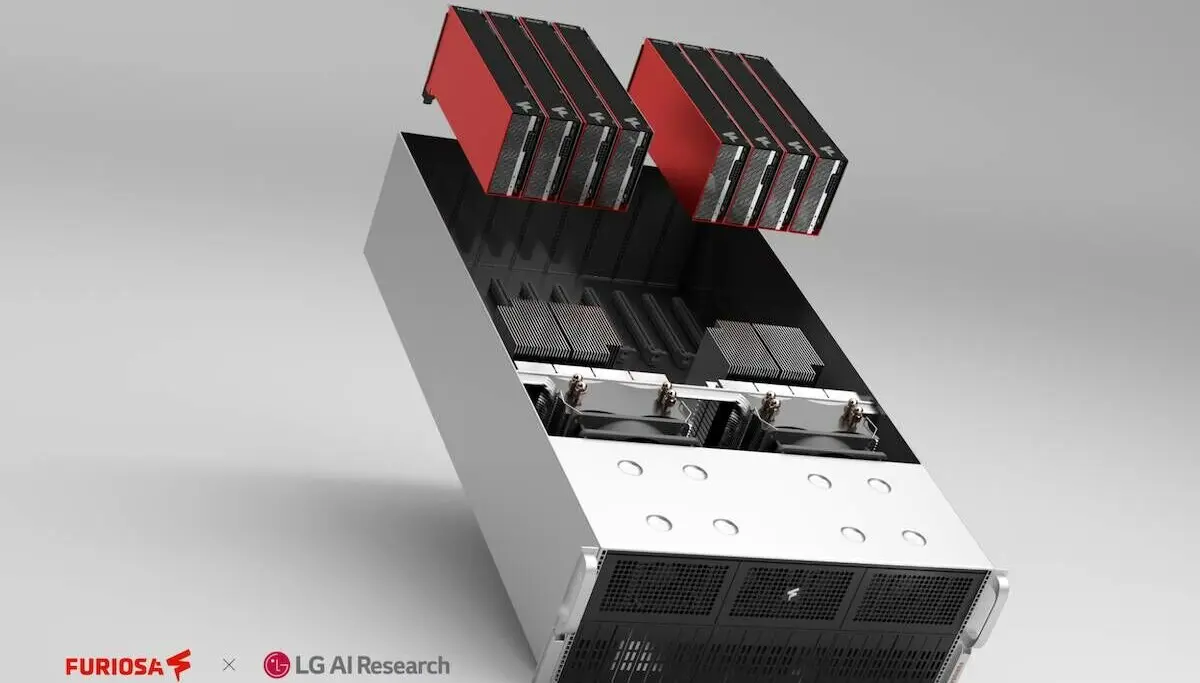
Image source: 인공지능신문

What happened

FuriosaAI said it has formed a strategic partnership with Broadcom to co-develop a next-generation AI inference platform.

The Korean AI chip company said the project will move its Tensor Contraction Processor architecture into a multi-die chiplet system for hyperscale AI environments where token-processing demand is rising.

The planned platform combines FuriosaAI architecture with Broadcom AI networking, high-bandwidth Ethernet switching and advanced packaging.

The source says the goal is an integrated AI computing, networking and software platform for large inference clusters, not only a standalone accelerator.

The work builds on FuriosaAI RNGD, or Renegade, accelerator.

The source describes RNGD as a 180W PCIe AI accelerator in mass production using TSMC 5-nanometer process and SK hynix HBM3, optimized for large language model and agentic AI workloads.

FuriosaAI said it has been validated in customer environments including Samsung SDS and LG AI Research.

Why it matters

The announcement points to AI infrastructure competition moving beyond single-chip performance.

If inference demand keeps expanding, buyers may place more weight on memory bandwidth, interconnect, rack-level networking and power efficiency.

That matters for Korean AI semiconductor companies because it puts system design and global infrastructure partnerships at the center of the market.

FuriosaAI is positioning its TCP architecture alongside Broadcom networking and packaging assets to address bottlenecks in large agentic AI deployments.

Who is affected

The most direct audience is hyperscale AI infrastructure buyers, cloud providers and enterprises planning larger inference workloads.

It also matters for AI chip startups trying to compete in markets shaped by GPU-based infrastructure.

For Korean technology readers, the signal is that a domestic AI semiconductor company is working with a global chip and networking supplier on a platform aimed at frontier model and agentic AI inference.

What to watch next

FuriosaAI said the third-generation accelerator will use a 2-nanometer compute die, HBM4 and HBM4E memory, and Broadcom packaging to combine multiple silicon dies into one high-performance chip.

The companies plan to begin sampling in the first half of 2028.

Readers should watch whether the partnership moves from architecture plans to working silicon, whether customer adoption follows current RNGD deployments, and whether rack-scale networking becomes a clearer differentiator in AI inference infrastructure.


Share this article
inXf

Related articles

More
Korean NPU Makers Target Inference Niches as Nvidia Dominance Deepens
Chips & Semiconductors

Korean NPU Makers Target Inference Niches as Nvidia Dominance Deepens

Executives from Rebellions, FuriosaAI and Mobilint said Korean NPU vendors see openings in inference, power efficiency and total cost despite Nvidia technical advantages. The panel highlighted Nvidia’s Groq deal, software ecosystems, interconnects and packaging as the main competitive barriers for domestic AI chip firms. Rebellions and FuriosaAI are focused on data-center inference, while Mobilint is positioning around edge and on-device AI where power and cost limits are tighter.

Arm and Supermicro Put Agentic AI Servers to a CPU Test
Chips & Semiconductors

Arm and Supermicro Put Agentic AI Servers to a CPU Test

Supermicro has introduced new server platforms built around Arm’s AGI CPU for inference-heavy and agentic AI workloads across cloud, enterprise and edge deployments. Arm says the AGI CPU includes up to 136 Arm Neoverse V3 cores, 12 DDR5 memory channels running at up to 8800 MT/s and PCIe Gen6 connectivity within a 300W power envelope. The key test is whether operators can use these CPU-heavy designs to add inference capacity without creating new pressure on power and cooling.

Samsung Sets HBM And Server SSD Efficiency Targets With Fab Water Gap Still Open
Chips & Semiconductors

Samsung Sets HBM And Server SSD Efficiency Targets With Fab Water Gap Still Open

Samsung’s 2026 Sustainability Report says lower-power HBM and server SSD targets support AI infrastructure, while its semiconductor division still has a 2050 net-zero timetable and limited product-level commercial detail.

FuriosaAI Starts RNGD Accelerator Deployment At Equinix Lisbon Datacenter
Chips & Semiconductors

FuriosaAI Starts RNGD Accelerator Deployment At Equinix Lisbon Datacenter

FuriosaAI has begun deploying its RNGD AI accelerators at Equinix’s LS2 datacenter in Lisbon as the South Korean chip startup looks for European sovereign AI demand. The company describes 48 GB of HBM3, 1.5 TB/s memory bandwidth and 512 teraFLOPS of dense FP8 performance per card, but its Broadcom-linked next-generation accelerator still depends on HBM4 and HBM4e timing.

KAIST Simulator Tests LLM Infrastructure Before AI Server Buildouts
Cloud & Data Centers

KAIST Simulator Tests LLM Infrastructure Before AI Server Buildouts

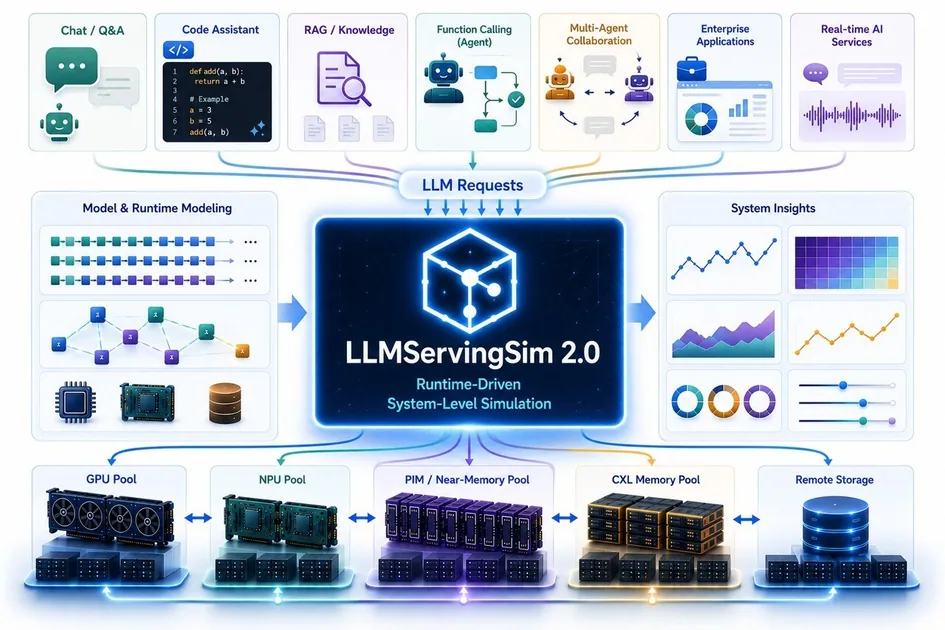
KAIST researchers developed LLMServingSim 2.0 to test LLM serving infrastructure before large deployments. The simulator models GPUs, NPUs, PIM devices, memory behavior, routing, power use and serving policies. The team plans to open-source the tool and validate it with real LLM serving frameworks.

FERC Grid Rule Makes Power Flexibility An AI Infrastructure Test
Chips & Semiconductors

FERC Grid Rule Makes Power Flexibility An AI Infrastructure Test

FERC’s large-load interconnection action gives AI factories and advanced manufacturing sites a faster grid path when they bring generation, fund upgrades and can reduce demand during peaks.

AI Compute Scarcity Is Redrawing The Infrastructure Map
AI

AI Compute Scarcity Is Redrawing The Infrastructure Map

AI infrastructure projects in India, Africa, Brazil and the UAE show how power, chip access, data location and inference demand are pushing compute beyond the traditional U.S. hyperscale cloud map.

CAS Star’s Photonics Bet Turns Into an AI Infrastructure Test
Cloud & Data Centers

CAS Star’s Photonics Bet Turns Into an AI Infrastructure Test

CAS Star founder Mi Lei says the AI boom has validated a decade-long investment thesis around photonics and other hard-tech fields. The firm has more than 200 photonics-related companies among roughly 600 portfolio companies, spanning sensing, communications, computing, storage and display. The next test is whether optical links, laser chips and photonic computing companies can turn AI data-centre demand into durable commercial scale.

Keep Reading

More Stories

Latest
Kepler Targets 2027 Production for HBM Replacement MemoryCloud & Data CentersOct 6, 2026Kepler Targets 2027 Production for HBM Replacement MemoryEE Times reports that Kepler Computing is preparing 3D ferroelectric memory for 2027 production, promising higher capacity and bandwidth per watt while limiting reliance on advanced-node lithography.Yokogawa Opens Singapore Hub For Industrial Cyber ResilienceCapital & PolicyOct 6, 2026Yokogawa Opens Singapore Hub For Industrial Cyber ResilienceYokogawa Engineering Asia has launched a Singapore center focused on OT cyber resilience, training, response planning and recovery coordination for Southeast Asia, Oceania and Taiwan.ClickFix Attack Uses Browser Cache To Hide Malware PayloadCybersecurityOct 6, 2026ClickFix Attack Uses Browser Cache To Hide Malware PayloadMicrosoft Threat Intelligence traced a ClickFix cache-smuggling method that preloads malware into browser caches, then uses file size checks and a pasted Run command to launch later credential-theft stages.VOA Tests Six-Month Startup Buildout Before Funding DecisionsFintech & Digital PaymentsOct 6, 2026VOA Tests Six-Month Startup Buildout Before Funding DecisionsTechCabal’s interview with VOA Venture Partners founder Victoria Olayide Adesanya describes a six-month build programme that lets the firm work inside African financial-infrastructure startups before deciding whether to invest.Bitcoin Holds $86,000 As Dollar Index Hits 18-Month HighCrypto/Web3Oct 6, 2026Bitcoin Holds $86,000 As Dollar Index Hits 18-Month HighCoinDesk reported that bitcoin stayed near $86,000 while the U.S. Dollar Index reached about 102.5, with U.S. rate expectations and European political risks strengthening the dollar backdrop.Google Freezes OSS Bug Bounty Reports After AI Submission FloodCybersecurityOct 6, 2026Google Freezes OSS Bug Bounty Reports After AI Submission FloodGoogle has stopped accepting new product vulnerability reports in its OSS VRP after invalid automated submissions swamped reviewers, while older reports and some Cloud VRP routes remain open.Fleuret AI Raises €4M For Continuous AI Pentesting PlatformCybersecurityOct 6, 2026Fleuret AI Raises €4M For Continuous AI Pentesting PlatformTech.eu reported that French startup Fleuret AI raised €4 million in pre-seed funding to develop an agentic-AI platform that turns penetration testing into a continuous security process.GFT Analysis Says AI Documentation Can Cut Maintenance Work 30%Fintech & Digital PaymentsOct 6, 2026GFT Analysis Says AI Documentation Can Cut Maintenance Work 30%A GFT Technologies analysis says AI-linked software documentation can cut maintenance effort and speed developer onboarding when knowledge assets stay synchronized with code changes.Schneider Electric Lines Up $22.6 Billion PTC DealAIOct 5, 2026Schneider Electric Lines Up $22.6 Billion PTC DealSchneider Electric plans to buy PTC in a cash transaction valuing the US engineering software provider’s equity at about $22.6 billion, adding product-lifecycle software to its industrial AI push.Aggarwal Pledges Ola Electric Stake To Fund ₹1,000 Cr Rights IssueCapital & PolicyOct 5, 2026Aggarwal Pledges Ola Electric Stake To Fund ₹1,000 Cr Rights IssueOla Electric founder Bhavish Aggarwal pledged 20 Cr shares to finance his participation in a rights issue that forms part of a larger ₹1,500 Cr fundraising plan.Natrona Schools AI Review Puts Student Privacy Ahead Of Classroom Tool UseAIOct 5, 2026Natrona Schools AI Review Puts Student Privacy Ahead Of Classroom Tool UseNatrona County trustees questioned whether teacher AI tools expose student data, even as existing district rules already ban unauthorized generative AI use by students.AMD Prices 256-Core EPYC 9996 At $14,904 For Server BuyersChips & SemiconductorsOct 5, 2026AMD Prices 256-Core EPYC 9996 At $14,904 For Server BuyersTechRadar reports that AMD’s 6th Gen EPYC 9006 “Venice” lineup includes a 256-core EPYC 9996 with 512 threads, 1GB of L3 cache, a 600W default power rating and a $14,904 list price for 1,000-unit orders.