SendTech Times
News
INFRASTRUCTURE CONSTRAINT:

AI Compute Scarcity Is Redrawing The Infrastructure Map

Newsroom brief

AI infrastructure projects in India, Africa, Brazil and the UAE show how power, chip access, data location and inference demand are pushing compute beyond the traditional U.S. hyperscale cloud map.

Verified against source materialEdited by SendTech Times AI & Enterprise DeskSource: Rest of World
AI Compute Scarcity Is Redrawing The Infrastructure Map
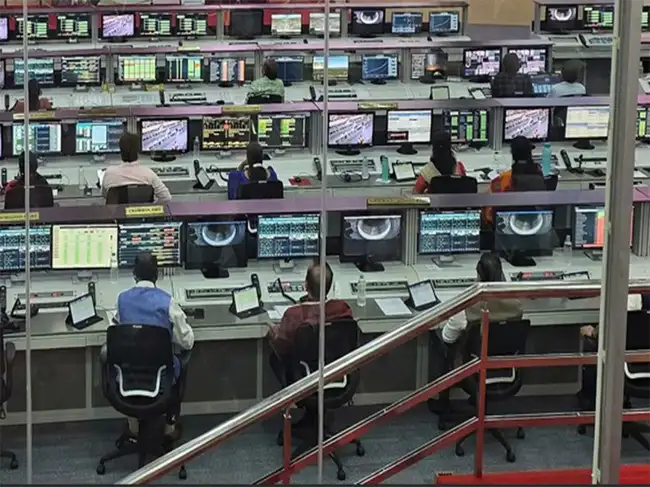
Image source: Rest of World

Scarcity Is Becoming An Architecture Choice

AI infrastructure is no longer only a story about adding larger cloud contracts in the same established markets.

A different pattern is emerging: compute, power, chip access and data control are becoming design constraints for countries and companies that cannot assume easy access to U.S. or European hyperscale capacity.

That shift starts with concentration.

The concentration is already measurable: nearly two-thirds of global enterprise cloud infrastructure spending sits with Amazon, Microsoft and Google.

Energy is becoming just as visible.

In 2024, data centers used about 1.5% of global electricity, and the forecast for 2030 is just under 3%.

Those figures make energy and jurisdiction part of the AI stack, not background utilities.

The affected market is especially visible outside Silicon Valley.

Builders in India, Africa, Brazil and the UAE are not presenting local AI infrastructure as a smaller copy of hyperscale cloud.

They are designing around constraints that include power availability, data governance, latency, chip supply and national control.

India And Africa Turn Compute Access Into Local Capacity

India's example is Shakti Cloud.

Yotta Data Services has built the platform with more than 16,000 Nvidia H100 graphics processing units and plans to expand it.

The IndiaAI Mission relies on Yotta hardware for more than half of its compute, and Bhashini shifted real-time translation across 11 Indian languages away from foreign hyperscalers and onto Shakti Cloud.

That move shows why sovereign AI is partly an infrastructure question.

If a public-language platform depends on compute that a government cannot govern, the model may work technically while failing the control test.

India's case ties model development, language coverage and hardware location into one operational decision.

Africa's constraint is different but related.

Cassava Technologies is placing 12,000 Nvidia GPUs in data centers across South Africa, Egypt, Kenya, Morocco and Nigeria.

Nvidia's earlier estimate put only about 80 of its GPUs across the African continent before this build-out.

Cassava's answer is a pan-African network on its own fiber backbone, aimed at keeping AI training and deployment from routing through Europe or the U.S.

Brazil And The UAE Add Power And Sovereignty

Brazil is using renewable power as the anchor.

Under SoberanIA, 500 megawatts are reserved for a sovereign AI factory in Piaui, with Scala Data Centers as lead infrastructure partner.

The country's data center investment target is up to $370 billion over the next decade, linked to tax incentives for projects that source 100% renewable power.

That approach responds to a data-location gap as well as an energy opportunity.

Roughly 65% of Brazilian data is still stored abroad, so the sovereign-compute argument is about where data resides, how facilities are powered and whether local infrastructure can support national AI systems.

The UAE is taking a more capital-intensive route.

Core42, part of G42, sells inference capacity using Nvidia and Qualcomm chips.

A separate UAE-U.S. commitment covers an AI campus of 10 square miles and 5 gigawatts, with partial operation expected by the end of the decade.

The pitch is that countries needing sovereign AI can rent capacity from a government-aligned stack in Abu Dhabi.

Inference Changes The Geography

Large-model training still favors dense clusters, deep capital and access to advanced chips.

The more immediate geographic change may come from inference, because models are used continuously by customers, devices, agents and enterprise systems.

By 2030, McKinsey expects inference to become larger than training inside AI data centers.

Its forecast gives inference a majority share of AI compute; for total data center demand, the cited range is roughly 30%-40%.

That makes location a performance and governance issue: where compute sits, how quickly workloads respond, and whose laws apply to the data all become part of deployment planning.

What matters now is whether regional GPU capacity in Mumbai, Nairobi, Sao Paulo and Abu Dhabi becomes a durable layer alongside hyperscale cloud.

These systems are not shown to replace the largest cloud providers.

The evidence points instead to AI infrastructure becoming broader than those providers alone can serve.

Share this article
inXf

Related articles

More
Marvell Teralynx T100 Puts AI Data-Center Switching Into the Chip Race
Chips & Semiconductors

Marvell Teralynx T100 Puts AI Data-Center Switching Into the Chip Race

Marvell announced planned availability of its Teralynx T100 switch chip for AI training and inference infrastructure. The 102.4 Tbps chip is built on a 3nm process, supports up to a 512-port radix and is claimed to use 25 percent lower power than competitive solutions. The practical question is whether data-center customers use lower-power, high-radix switching to ease latency and power constraints in larger AI clusters.

Core42's 42MW Lake Mariner Expansion Turns US Power Capacity Into a Gulf AI Cloud Signal
Cloud & Data Centers

Core42's 42MW Lake Mariner Expansion Turns US Power Capacity Into a Gulf AI Cloud Signal

Core42 expanded its AI cluster at TeraWulf's Lake Mariner site in Buffalo, raising compute capacity there by 42MW to 60MW. The UAE-headquartered G42 company's AI cloud platform has ten global sites operational, with additional deployments planned for 2026. The practical question is whether Core42 exercises further Lake Mariner capacity and turns the expanded US footprint into durable hyperscale and enterprise workloads.

CAS Star’s Photonics Bet Turns Into an AI Infrastructure Test
Cloud & Data Centers

CAS Star’s Photonics Bet Turns Into an AI Infrastructure Test

CAS Star founder Mi Lei says the AI boom has validated a decade-long investment thesis around photonics and other hard-tech fields. The firm has more than 200 photonics-related companies among roughly 600 portfolio companies, spanning sensing, communications, computing, storage and display. The next test is whether optical links, laser chips and photonic computing companies can turn AI data-centre demand into durable commercial scale.

ByteDance’s 10T-Parameter AI Target Puts China’s Compute Stack On Trial
AI

ByteDance’s 10T-Parameter AI Target Puts China’s Compute Stack On Trial

Capacity Media reported that ByteDance is pre-training a frontier model that could reach 10 trillion parameters, tying China’s AI race to chip supply, power and data-centre capacity.

India's 8.33 GW Data-Center Pipeline Tests AI Infrastructure Readiness
Cloud & Data Centers

India's 8.33 GW Data-Center Pipeline Tests AI Infrastructure Readiness

Knight Frank India says the country's data-center development pipeline has reached 8.33 GW, with Mumbai, Hyderabad and Chennai showing how AI demand is turning capacity, power, fibre and subsea links into strategic constraints.

Data Centers Have A Climate-Risk Problem. The Map Is Uneven.
Cloud & Data Centers

Data Centers Have A Climate-Risk Problem. The Map Is Uneven.

A First Street study puts 79% of global data center capacity at elevated risk from acute climate hazards. The findings make resilience, power access and water systems part of the AI infrastructure buildout test.

Phoenix Group Takes UAE AI Data-Center Capital Into Europe With DC Max Deal
Cloud & Data Centers

Phoenix Group Takes UAE AI Data-Center Capital Into Europe With DC Max Deal

Abu Dhabi-based Phoenix Group is partnering with France’s DC Max on an 18MW AI-ready data center in Lyon, using the project as the first step in a platform targeting more than 1GW of AI and HPC capacity across Europe and the GCC. The deal centers on land, permits, grid access and the speed required to meet AI compute demand.

Meta-Reliance Jamnagar Deal Tests India’s AI Data Center Ambition
Cloud & Data Centers

Meta-Reliance Jamnagar Deal Tests India’s AI Data Center Ambition

Meta and Reliance will collaborate on a 168-megawatt AI-enabled data center in Jamnagar, moving their partnership from digital services into infrastructure and testing India as a global AI compute hub.

Keep Reading

More Stories

Latest
Kepler Targets 2027 Production for HBM Replacement MemoryCloud & Data CentersOct 6, 2026Kepler Targets 2027 Production for HBM Replacement MemoryEE Times reports that Kepler Computing is preparing 3D ferroelectric memory for 2027 production, promising higher capacity and bandwidth per watt while limiting reliance on advanced-node lithography.Yokogawa Opens Singapore Hub For Industrial Cyber ResilienceCapital & PolicyOct 6, 2026Yokogawa Opens Singapore Hub For Industrial Cyber ResilienceYokogawa Engineering Asia has launched a Singapore center focused on OT cyber resilience, training, response planning and recovery coordination for Southeast Asia, Oceania and Taiwan.ClickFix Attack Uses Browser Cache To Hide Malware PayloadCybersecurityOct 6, 2026ClickFix Attack Uses Browser Cache To Hide Malware PayloadMicrosoft Threat Intelligence traced a ClickFix cache-smuggling method that preloads malware into browser caches, then uses file size checks and a pasted Run command to launch later credential-theft stages.VOA Tests Six-Month Startup Buildout Before Funding DecisionsFintech & Digital PaymentsOct 6, 2026VOA Tests Six-Month Startup Buildout Before Funding DecisionsTechCabal’s interview with VOA Venture Partners founder Victoria Olayide Adesanya describes a six-month build programme that lets the firm work inside African financial-infrastructure startups before deciding whether to invest.Bitcoin Holds $86,000 As Dollar Index Hits 18-Month HighCrypto/Web3Oct 6, 2026Bitcoin Holds $86,000 As Dollar Index Hits 18-Month HighCoinDesk reported that bitcoin stayed near $86,000 while the U.S. Dollar Index reached about 102.5, with U.S. rate expectations and European political risks strengthening the dollar backdrop.Google Freezes OSS Bug Bounty Reports After AI Submission FloodCybersecurityOct 6, 2026Google Freezes OSS Bug Bounty Reports After AI Submission FloodGoogle has stopped accepting new product vulnerability reports in its OSS VRP after invalid automated submissions swamped reviewers, while older reports and some Cloud VRP routes remain open.Fleuret AI Raises €4M For Continuous AI Pentesting PlatformCybersecurityOct 6, 2026Fleuret AI Raises €4M For Continuous AI Pentesting PlatformTech.eu reported that French startup Fleuret AI raised €4 million in pre-seed funding to develop an agentic-AI platform that turns penetration testing into a continuous security process.GFT Analysis Says AI Documentation Can Cut Maintenance Work 30%Fintech & Digital PaymentsOct 6, 2026GFT Analysis Says AI Documentation Can Cut Maintenance Work 30%A GFT Technologies analysis says AI-linked software documentation can cut maintenance effort and speed developer onboarding when knowledge assets stay synchronized with code changes.Schneider Electric Lines Up $22.6 Billion PTC DealAIOct 5, 2026Schneider Electric Lines Up $22.6 Billion PTC DealSchneider Electric plans to buy PTC in a cash transaction valuing the US engineering software provider’s equity at about $22.6 billion, adding product-lifecycle software to its industrial AI push.Aggarwal Pledges Ola Electric Stake To Fund ₹1,000 Cr Rights IssueCapital & PolicyOct 5, 2026Aggarwal Pledges Ola Electric Stake To Fund ₹1,000 Cr Rights IssueOla Electric founder Bhavish Aggarwal pledged 20 Cr shares to finance his participation in a rights issue that forms part of a larger ₹1,500 Cr fundraising plan.Natrona Schools AI Review Puts Student Privacy Ahead Of Classroom Tool UseAIOct 5, 2026Natrona Schools AI Review Puts Student Privacy Ahead Of Classroom Tool UseNatrona County trustees questioned whether teacher AI tools expose student data, even as existing district rules already ban unauthorized generative AI use by students.AMD Prices 256-Core EPYC 9996 At $14,904 For Server BuyersChips & SemiconductorsOct 5, 2026AMD Prices 256-Core EPYC 9996 At $14,904 For Server BuyersTechRadar reports that AMD’s 6th Gen EPYC 9006 “Venice” lineup includes a 256-core EPYC 9996 with 512 threads, 1GB of L3 cache, a 600W default power rating and a $14,904 list price for 1,000-unit orders.