Anthropic Opus 5 Cuts AI Model Price With Longer-Answer Risk
The Register reported that Anthropic released Opus 5 with token prices below Fable 5, while Artificial Analysis task-cost data and Anthropic guidance leave enterprise buyers with model-choice trade-offs.

Opus 5 costs half as much per token as Anthropic’s Fable 5, but longer default answers could narrow the savings on completed enterprise work.
The Register put Opus 5 at $5 per million input tokens and $25 per million output tokens, against $10 and $50 for Fable 5.
Buyers still have to account for how many tokens each task consumes.
Artificial Analysis Task Costs Narrow The Gap
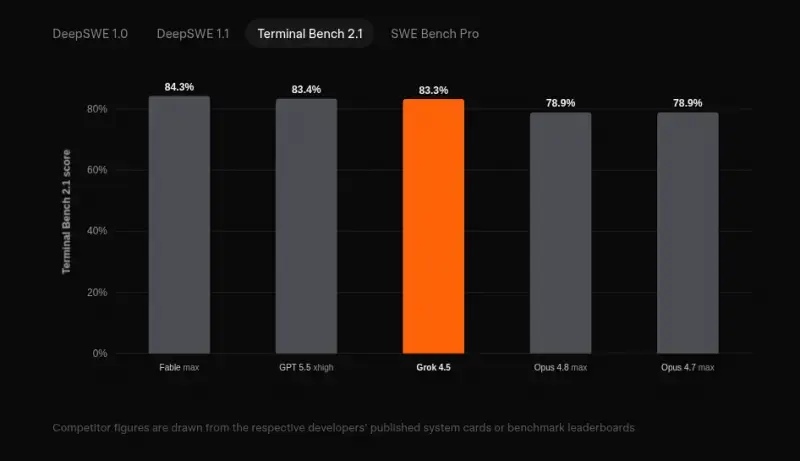
Artificial Analysis reported a weighted average cost per Intelligence Index task of $2.03 for Opus 5 max, compared with $2.75 for Fable, $0.95 for Kimi K3, and $1.04 for GPT-5.6 Sol max; the Intelligence Index ranked Opus 5 at 61, one point ahead of Fable.
This task-level comparison provides buyers with a procurement view beyond headline token prices.
A company choosing between frontier models must consider output length, task mix, and whether a model requires more tokens to achieve the same result.
Prompt Changes Affect Enterprise Controls
Anthropic has also changed the prompt environment around its latest models.
Claude Code engineer Thariq Shihipar noted that the latest models cut the Claude Code system prompt by 80 percent, and Anthropic's guidance now advises users to simplify system prompts, skills, and CLAUDE.md files.
The guidance directs customers toward a command called claude doctor for automatic optimization of some prompts and skills.
Consequently, enterprise rollout includes prompt-maintenance work across internal coding workflows, documentation, and automation scripts.
Cyber Controls Remain Model-Specific
The system card assigns Opus 5 a different cybersecurity profile from Anthropic's other models.
Anthropic's system card recorded an OSS-Fuzz score of 80 percent for Opus 5 in finding open-source code security flaws, compared with 79.4 percent for Mythos, while Opus 5 succeeded in 4 out of 14 exploitation attempts compared with 13 out of 14 for Mythos.
Anthropic's cyber controls also separate vulnerability discovery from higher-risk activity.
The company states that Opus 5 cyber classifiers are less restrictive than those on Fable 5 for identifying source-code vulnerabilities, while blocking binary-based vulnerability scanning, penetration testing, and exploit generation.
An automated fallback function is being added to the API so requests deemed too risky for Opus 5 or Fable 5 can be routed to a lower-capability model rather than being outright blocked.
This safety layer affects which model handles a request, not only whether the request fails.
Data Retention Becomes A Selling Point
The Register framed the absence of a data-retention requirement as a potential business advantage for Opus 5.
For companies sending code, prompts, or internal workflow material into a hosted model, retention rules can be as significant as price when legal, security, and procurement teams review deployment.
Anthropic has not disclosed customer adoption numbers for Opus 5 or independent enterprise cost studies linked to the new model.
The public record also does not yet indicate whether longer default answers offset the lower token price in production workloads.