SendTech Times
News
SYSTEMS SHIFT:

AMD Unveils US$10 Billion Taiwan AI Investment, Ramps Up TSMC 2nm Chip Production

Newsroom brief

AMD will invest over US$10 billion in Taiwan's AI supply chain. The investment focuses on advanced packaging technology and partnerships with local firms. Production of next-generation EPYC processors will utilize TSMC's 2nm technology.
Verified against source materialEdited by SendTech Times Chips & Compute DeskSource: Focus Taiwan
AMD Unveils US$10 Billion Taiwan AI Investment, Ramps Up TSMC 2nm Chip Production
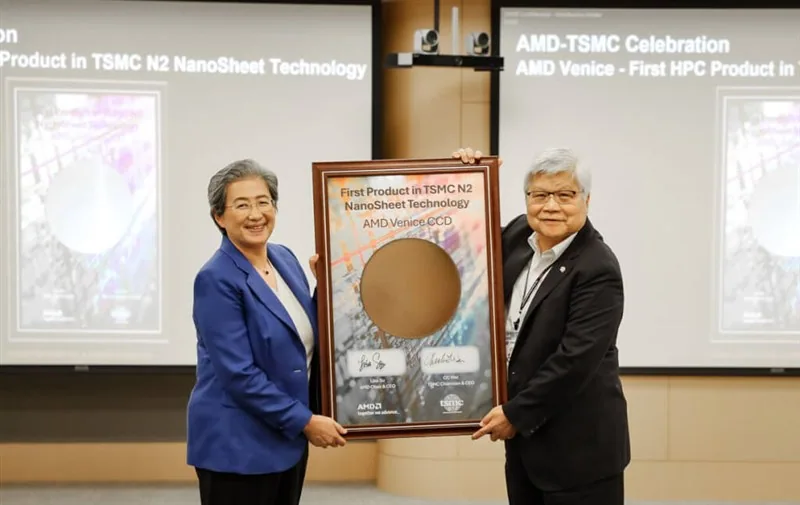
Image source: AMD Chair and CEO Lisa Su (left) and TSMC Chairman C.C. Wei. Photo courtesy of AMD

AMD's Investment in Taiwan

U.S. semiconductor company AMD will invest more than US$10 billion in Taiwan's AI supply chain while ramping up production of its next-generation server processors using Taiwan Semiconductor Manufacturing Co's (TSMC) advanced 2-nanometer process technology.

This investment aims to expand partnerships with Taiwanese chip packaging, substrate, and server manufacturing companies as global demand for AI infrastructure continues to surge.

AMD Chair and CEO Lisa Su stated, "By combining AMD leadership in high-performance computing with the Taiwan ecosystem and our strategic global partners, we are enabling integrated, rack-scale AI infrastructure." This highlights AMD's commitment to leveraging Taiwan's manufacturing capabilities alongside its own high-performance computing technologies to create advanced AI systems.

Focus on Advanced Packaging Technology

A major focus of the investment plan is advanced packaging technology for AI chips, including next-generation 2.5D bridge interconnect technology known as Elevated Fanout Bridge (EFB).

AMD is collaborating with Taiwan-based ASE Technology Holding Co. and Siliconware Precision Industries Co. (SPIL) to develop EFB packaging, which aims to improve chip interconnect bandwidth and power efficiency for future EPYC processors.

AMD has also achieved a milestone with Powertech Technology Inc. (PTI) by qualifying the industry's first 2.5D panel-based EFB interconnect, enabling more scalable and cost-efficient AI chip production.

Upcoming Helios AI Platform

The investments are also tied to AMD's upcoming Helios AI platform, described as a production-ready rack-scale AI infrastructure system scheduled for deployment beginning in the second half of 2026.

This platform is expected to play a crucial role in meeting the growing demand for AI capabilities across various sectors.
Share this article
inXf

Related articles

More
AMD Links $10bn Taiwan Investment To AI Rack Deployments
Chips & Semiconductors

AMD Links $10bn Taiwan Investment To AI Rack Deployments

AMD says more than $10 billion in Taiwan ecosystem investments will expand packaging partnerships and support Helios rack-scale AI systems planned for multi-gigawatt deployments beginning 2H 2026.

AMD Ramps Venice EPYC CPUs On TSMC 2nm Process
Chips & Semiconductors

AMD Ramps Venice EPYC CPUs On TSMC 2nm Process

AMD says its 6th Gen EPYC processor, codenamed Venice, has entered production ramp on TSMC 2nm technology, with future plans for TSMC Arizona production.

Warren Hearing Request Puts Nvidia China Chip Sales Under Export-Control Scrutiny
Chips & Semiconductors

Warren Hearing Request Puts Nvidia China Chip Sales Under Export-Control Scrutiny

Sen. Elizabeth Warren invited Nvidia CEO Jensen Huang to testify before the Senate Banking Committee on June 11 over China chip sales and export controls. The request focuses on Nvidia's views on U.S. export control laws and its business in China as lawmakers scrutinize advanced AI chip flows. The next signal is whether Huang appears and gives senators enough detail on Nvidia's China strategy and national-security posture.

Taiwan Visit Highlights How AI Demand Is Pulling Chip Power, Capacity and Pricing Into One Orbit
Chips & Semiconductors

Taiwan Visit Highlights How AI Demand Is Pulling Chip Power, Capacity and Pricing Into One Orbit

Jensen Huang’s Taiwan visit was centered on partner meetings, a planned discussion with TSMC Chairman C.C. Wei, and Nvidia appearances tied to the Computex cycle. The episode points to a broader market phase in which AI chip demand is increasingly shaped by foundry access, packaging readiness, memory costs and ecosystem coordination. Investors, suppliers and device makers should watch whether Taiwan-related expansion signals translate into concrete capacity, site, and pricing outcomes.

Malaysia Chip Outlook Rides AI Demand But Advanced Packaging Gap Remains
Chips & Semiconductors

Malaysia Chip Outlook Rides AI Demand But Advanced Packaging Gap Remains

Maybank, Kenanga, MBSB and TA Securities said AI and data centre demand is supporting Malaysia’s technology sector, while Kenanga said exposure to higher-value advanced packaging remains limited. TA cited MYR 59.9 billion in semiconductor-related investments under the National Semiconductor Strategy.

QIA Joins $380 Million Nearfield Round For AI Chip Metrology
Chips & Semiconductors

QIA Joins $380 Million Nearfield Round For AI Chip Metrology

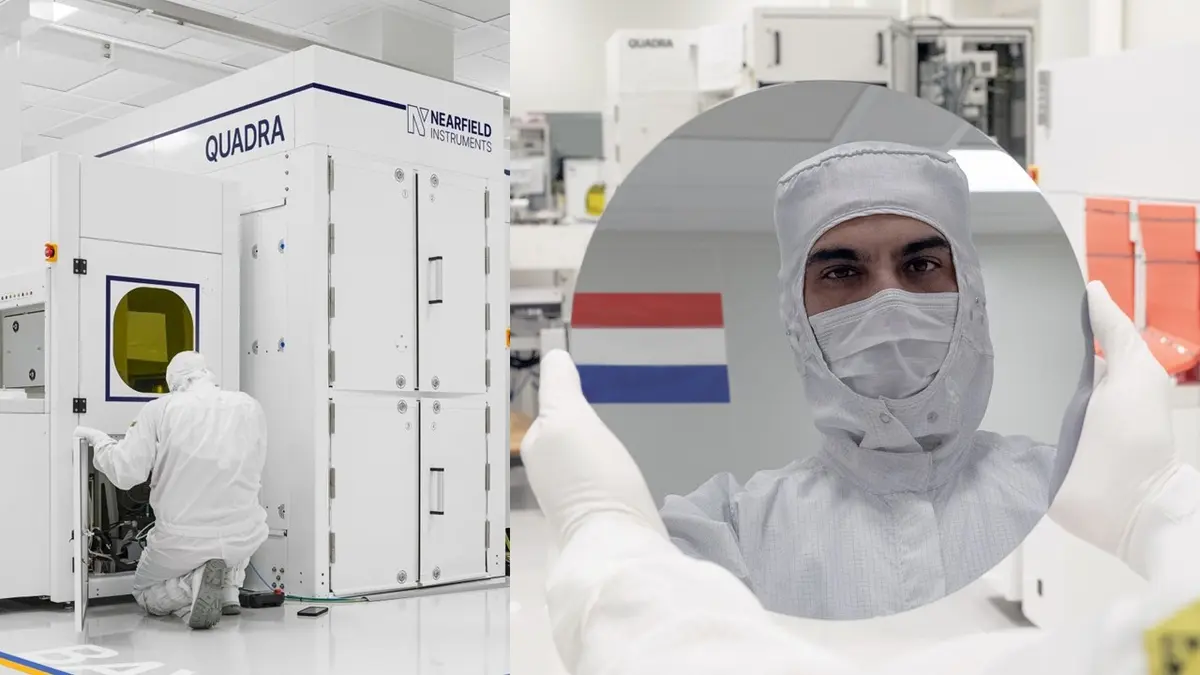
Nearfield Instruments raised $380 million at a $1.6 billion valuation, with Qatar Investment Authority joining a semiconductor metrology round aimed at advanced AI chip manufacturing.

South Korea Chip Plan Names 800 Trillion Won Without Funding Split
Chips & Semiconductors

South Korea Chip Plan Names 800 Trillion Won Without Funding Split

South Korea announced an 800 trillion won ($520 billion) public-private semiconductor investment plan with Samsung Electronics and SK Hynix. The plan centers on four production facilities and HBM capacity, but it does not specify how much money will come from the state, Samsung or SK Hynix.

IBM Claims Sub-1 Nanometre Chip Path With Production Still Five Years Away
Chips & Semiconductors

IBM Claims Sub-1 Nanometre Chip Path With Production Still Five Years Away

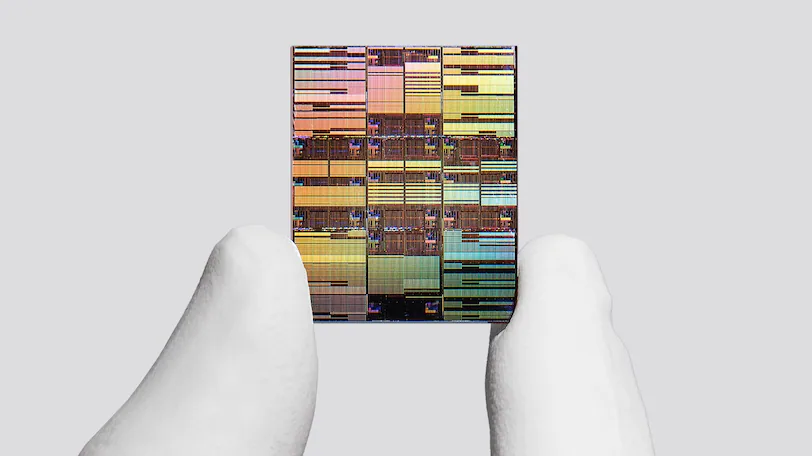
IBM says its nanostack architecture can put nearly 100 billion transistors on a fingernail-sized chip and move sub-1 nanometre technology into production within five years. The claim targets AI efficiency, but IBM has not named customers or manufacturing partners for the process.

Keep Reading

More Stories

Latest
Anthropic Adds AI Cruelty Ban To Claude Usage RulesAIOct 12, 2026Anthropic Adds AI Cruelty Ban To Claude Usage RulesBBC Technology details Anthropic’s new rule against sustained abuse of Claude, a policy shift that has revived debate over AI anthropomorphism, user conduct and chatbot boundaries.MSI Brings RTX Spark To A 16-Inch Convertible With 128 GB OptionCloud & Data CentersOct 12, 2026MSI Brings RTX Spark To A 16-Inch Convertible With 128 GB OptionTechRadar reports that MSI has opened preorders for the Prestige N16 Flip AI+, a 16-inch RTX Spark convertible with a 20-core Nvidia N1X processor, OLED display and up to 128 GB of RAM.ASUS Expands Zenbook 14 Line With Intel, AMD And Snapdragon AI PCsChips & SemiconductorsOct 12, 2026ASUS Expands Zenbook 14 Line With Intel, AMD And Snapdragon AI PCsASUS Philippines introduced Zenbook 14 models built around Intel, AMD and Snapdragon processors, using Copilot+ certification and NPUs as the core differentiator for mobile AI work.CDC Funding Plan Revives Fight Over Guinea-Bissau Vaccine TrialLifestyleOct 12, 2026CDC Funding Plan Revives Fight Over Guinea-Bissau Vaccine TrialCDC staff were told to reserve $1.6 million for a suspended hepatitis B vaccine trial in Guinea-Bissau, renewing objections over a study design that would leave some newborns unvaccinated.Buntar Aerospace Raises $16 Million To Expand Combat Drone AutonomyPoliticsOct 11, 2026Buntar Aerospace Raises $16 Million To Expand Combat Drone AutonomyUkrainian defense-tech company Buntar Aerospace raised $16 million to expand manufacturing, engineering hiring and autonomous drone systems beyond its reconnaissance hardware and combat software base.Vijil DART Tests Enterprise AI Agents With Adaptive Red TeamingCybersecurityOct 11, 2026Vijil DART Tests Enterprise AI Agents With Adaptive Red TeamingHelp Net Security reported that Vijil released DART, an adaptive red-teaming system that uses adversarial agents to test enterprise AI agents across tools, memory and multi-turn behavior.UK Fibre Deals Face Split Tests As Nexfibre And BT Reviews DivergePoliticsOct 11, 2026UK Fibre Deals Face Split Tests As Nexfibre And BT Reviews DivergeCapacity Media reported that UK regulators are applying competition and public-interest tests to separate broadband consolidation deals involving nexfibre, Netomnia, BT and TalkTalk.Enveda Raises $311M To Push AI-Discovered Medicines Deeper Into TrialsAIOct 11, 2026Enveda Raises $311M To Push AI-Discovered Medicines Deeper Into TrialsFrontier Enterprise reported that Enveda closed a $311 million round led by Catalio Capital Management after two early clinical readouts for PRISM-discovered medicines.Indian Startup Funding Falls To $122.9 Million Despite More DealsFintech & Digital PaymentsOct 11, 2026Indian Startup Funding Falls To $122.9 Million Despite More DealsIndian startups raised $122.9 million across 25 deals in the first week of October, led by DailyObjects, Lumio, Beyond Appliances and StockGro, while IPO and acquisition moves kept the pipeline active.Oxide Raises $445M to Scale Rack-Level Cloud HardwareChips & SemiconductorsOct 11, 2026Oxide Raises $445M to Scale Rack-Level Cloud HardwareOxide Computer raised $445 million in Series D funding led by Eclipse Capital as demand for its pre-integrated data centre racks exceeds supply and the company prepares GPU-capable hardware upgrades.IBM and Red Hat Backport Fixes for 400-Plus Open Source BugsCybersecurityOct 11, 2026IBM and Red Hat Backport Fixes for 400-Plus Open Source BugsIBM and Red Hat say Lightwell has remediated more than 400 previously unknown vulnerabilities in Java libraries, while the new Clearinghouse gives customers a way to submit dependencies for priority review and fixes.Upscale AI Pairs Nvidia Spectrum-X With Its Own SkyHammer FabricChips & SemiconductorsOct 11, 2026Upscale AI Pairs Nvidia Spectrum-X With Its Own SkyHammer FabricUpscale AI is building SkyHammer as a scale-up fabric for AI clusters while using Nvidia Spectrum-X for scale-out switches, a strategy that tests whether Ethernet-based designs can challenge proprietary accelerator domains.