Xiaomi Miloco 2.0 Connects Mijia Devices To Local Smart Home AI Agent
Xiaomi has released and open-sourced Xiaomi Miloco 2.0, a smart-home AI framework that connects Mijia devices, OpenClaw and household memory while keeping raw sensor data local and isolated from the agent, Zhidx reported.
Mijia Devices Serve As Inputs For Xiaomi Miloco 2.0
Xiaomi has released and open-sourced Xiaomi Miloco 2.0, a whole-home AI framework designed to make Mijia smart-home devices act as sensing and execution points for an AI agent, Zhidx reported.
The system gives the smart home an AI layer that can recognise household context, retain home memory and trigger services without relying only on manual automation rules.
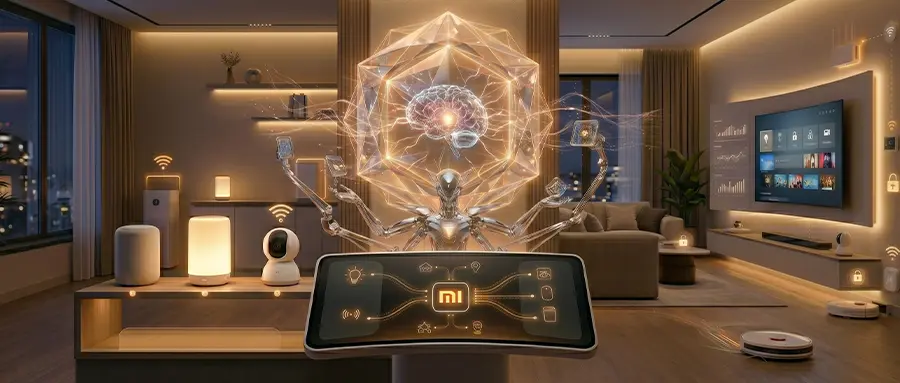
The Miloco 2.0 system uses Mijia devices as multimodal inputs, according to Zhidx.
Cameras, audio sensors and environmental devices can help Miloco understand what is happening in a room, convert that event into structured information and pass the result to the main AI agent.
The agent then plans the task and calls Miloco again so lights, speakers, televisions or other Mijia devices can carry out the response.
The system can detect boiling water when the user is not in the kitchen, identify that the user is watching television, and choose a nearby speaker to issue a reminder, according to Zhidx.
Other described scenarios include birthday greetings, posture reminders, child-safety monitoring and alerts for elderly people at home.
Night movement monitoring for older people and television-time reminders for children can run as persistent tasks that wait for a household trigger before acting.
OpenClaw Setup Requires A PC, Xiaomi Account, Mijia Camera And API Key
Miloco 2.0 has been connected to OpenClaw, with Xiaomi saying additional Claw-style products will be supported later, Zhidx reported.
The minimum setup described in the report includes a computer capable of running OpenClaw across Mac, Windows or Linux, a Xiaomi account bound to home Mijia devices, a Mijia camera as the visual input and a multimodal model API key.
The outlet said Xiaomi recommends its own MiMo model, but the setup is framed around an agent layer rather than a single fixed appliance.
The deployment flow is also part of the product claim.
Users can send instructions to OpenClaw and have the system prepare the environment, bind the account and connect the model with less manual configuration, according to Zhidx.
Xiaomi framed Miloco 2.0 as a consumer smart-home route as well as a developer project, with OpenClaw setup designed to reduce manual configuration.
How Xiaomi Miloco 2.0 Keeps Camera Data Local For 30 Days
Privacy is one of the main boundaries in the report.
Raw data gathered by cameras and sensors is stored locally, is not retained in the cloud and can be cleared by the user, Zhidx said.
Miloco automatically clears the raw data after 30 days if the user does not remove it earlier, according to Zhidx.
Raw household data is also isolated from OpenClaw, according to Zhidx.
The agent does not receive the original camera or sensor material directly; it receives Miloco's semantic judgement about what happened.
Users can also set camera blacklists and household whitelists, giving them control over which home contexts are used by the system.
Xiaomi Smart Home Agent Uses Memory For Active Reminders
The major functional upgrades identified by Zhidx are multimodal perception, proactive intelligence, persistent tasks and household memory.
Miloco 1.0 focused on end-cloud cooperation and cross-device natural-language interaction, while Miloco 2.0 pushes the system further toward agent-style home services, according to Zhidx.
The household-memory feature is used to explain why the system can respond differently to different people or routines.
Zhidx's examples include a camera recognising that the user came home later than usual and the system offering a workday greeting, or a birthday reminder triggering lights, television and speakers when a family member returns home.
Persistent tasks allow the system to wait for a trigger and then run an arranged plan, rather than execute a one-time command immediately.
Commercial launch dates for consumer packages, pricing for Miloco-based services, a final supported device list, third-party model compatibility terms, independent security-audit results, or measured reliability rates for household recognition and reminders remain outside the public record.