Satellite service growth draws more component makers into LEO supply chains
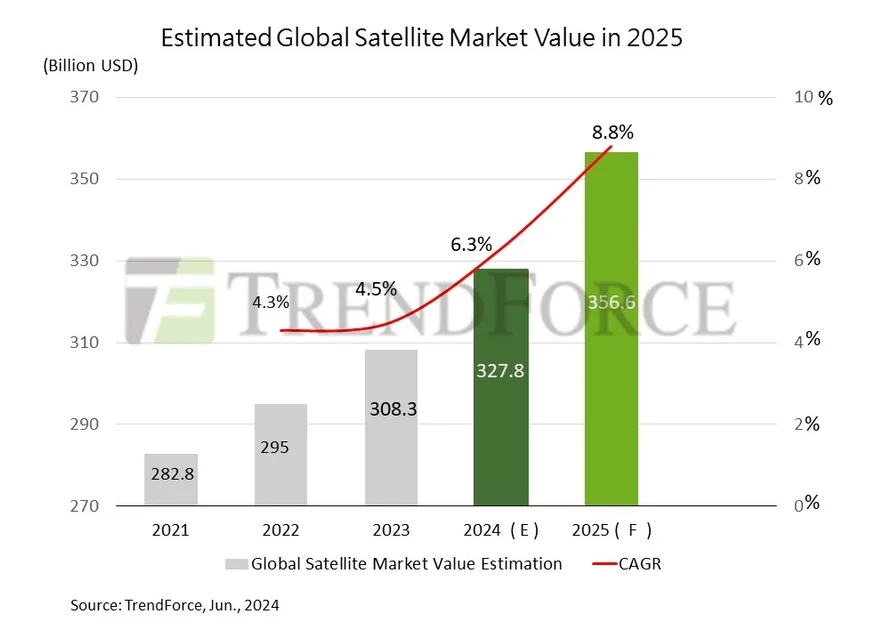
TrendForce said wider adoption of LEO satellite services is pushing component makers toward the supply chains of Starlink and OneWeb. TrendForce said the global satellite market would rise from US$283 billion in 2021 to US$357 billion by 2025, a CAGR of 2.6% (about AED 1,309.69 billion). Starlink relies on vertical integration, while OneWeb uses an outsourced model that broadens participation across suppliers.
Market Growth Pulls More Suppliers Toward LEO Systems
TrendForce said wider use of LEO satellite services is drawing component manufacturers into the supply chains of Starlink and OneWeb.
TrendForce said the global satellite market would rise from US$283 billion in 2021 to US$357 billion by 2025, a CAGR of 2.6%, or about AED 1,309.69 billion.
The two sourcing models differ.
Starlink keeps more production inside its own operations, while OneWeb relies more heavily on outside component and subsystem suppliers.
Starlink Keeps More Production In-House
Starlink currently uses a vertical integration strategy for its supply chain, according to the research firm.
It produces and assembles key satellite components at its own factory in Washington, USA.
The named components include payload channel elements, Ka-band antenna elements, filters and separators.
Internal production gives Starlink more direct control over manufacturing conditions and reduces supply-chain management complexity, according to the research firm.
Larger Taiwanese manufacturers entering Starlink's supply chain usually have the resources and organisational systems needed for strict space testing, including random vibration tests and separation shock tests, according to the report.
Smaller Taiwanese satellite component makers face greater difficulty joining that supplier network because their resources are more limited.
OneWeb Uses A More Open Supplier Network
OneWeb takes a highly outsourced approach to its supply chain, according to the report.
The company assigns production of key satellite components to regional Tier 2 parts manufacturers, then subsystem factories complete part of the assembly process before components are delivered to OneWeb Satellite for final assembly.
That structure gives outside suppliers a more accessible route than a tightly controlled in-house model.
The approach enables a wider range of component makers to work with OneWeb and supports their move into the LEO satellite sector, according to the research firm.
Small and medium-sized Taiwanese satellite component manufacturers are expected to seek partnerships with satellite companies that use open supply-chain arrangements such as OneWeb.
The outsourced route may be a more practical entry point for firms that cannot easily meet the demands of a vertically integrated supplier system.
Taiwan Projects Aim To Lower Entry Risk
Cooperation between OneWeb and Taiwanese key component manufacturers is being promoted through government project plans and field-verification models, according to TrendForce.
Support from LEO satellite projects can help Taiwanese satellite component makers reduce some of the risks of entering a newer market.
The projects can also give manufacturers an initial view of how target markets are accepting LEO satellite services and help them judge future investment levels, according to the research firm.
The remaining public-record gaps are named supplier contracts, order volumes, Starlink and OneWeb component allocations, Taiwanese manufacturer revenue from LEO projects and field-verification outcomes for the government-backed collaboration efforts.