Sakana Marlin Tests Whether AI Agents Can Handle Strategy Research, Not Just Chat
Sakana AI has launched Sakana Marlin as an enterprise research agent that can spend up to 8 hours preparing a 100-page strategy report, while the public record still lacks customer evidence or details on data handling.

Sakana Turns Strategy Research Into an Agent Workflow
Sakana AI has launched Sakana Marlin, an autonomous enterprise research agent built for strategy planning, market research, and competitor analysis.
The Tokyo-based company is positioning the product as a virtual chief strategy officer rather than a quick-response chatbot because the agent is designed to work through a research assignment over several hours instead of returning an instant answer.
The operating model is the central point.
A user enters a single research topic, and Sakana Marlin can spend up to 8 hours forming hypotheses, gathering material, and checking information before producing a long strategy document.
The described output is a 100-page report for executive decision-making, which places the product closer to a strategy team workflow than a standard enterprise search tool.
The Product Claim Focuses on Process, Not Chat Speed
Sakana Marlin is described as running multiple research steps rather than relying on a single generated response.
It builds intermediate hypotheses, collects related information, compares evidence, and revises its research path.
Strategy work often fails when the evidence trail is weak, not when the first draft is slow.
The stated use cases are corporate strategy, market-entry planning, competitor monitoring, technology-trend analysis, financial-data checks, and investment-news review.
Those are higher-risk tasks than summarizing meeting notes.
Sakana AI is testing whether an agent can make the research process visible enough for executives to use before a decision, not simply whether it can write a polished memo.
The design also separates Sakana Marlin from consumer AI assistant launches.
Its value proposition is not personal productivity or a better chat interface.
It is the ability to keep a research process running long enough to collect evidence, revisit assumptions, and organize material into a document that senior management can inspect.
That workflow is more relevant to corporate planning teams than to individual users looking for a fast answer.
Research Reputation Moves Toward Enterprise Software
The launch also moves Sakana AI from research reputation into enterprise software.
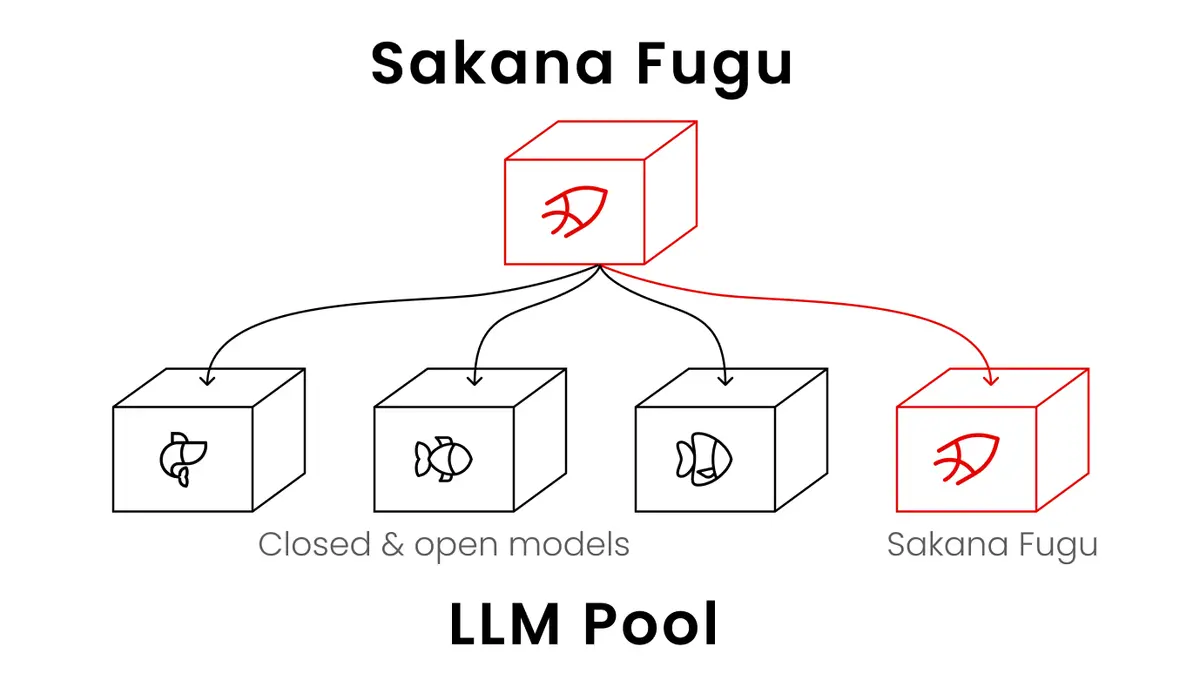
The company has been associated with evolutionary AI and model-composition work, while Sakana Marlin applies that technical direction to business-to-business strategy teams and senior management users.
That shift raises a different standard of proof.
A research lab can show technical novelty through model behavior, but a strategy platform must earn trust inside planning cycles where mistakes can affect market-entry choices, competitor response, or investment priorities.
Sakana Marlin's multi-step research flow gives the company a concrete product story, but enterprise buyers will still look for evidence of adoption and operational controls.
Trust and Data Handling Are the Next Checkpoints
The public record leaves pricing, named enterprise customers, adoption figures, or benchmark comparisons with other research agents undisclosed.
The launch material also does not explain how the product handles confidential company data during research.
Those omissions do not erase the product launch, but they define the next test: whether companies trust an autonomous agent enough to feed it strategic questions and use its 100-page outputs in actual planning cycles.
The watchpoint is therefore narrower than the usual question of whether an AI agent can write a long report.
For Sakana AI, the harder test is whether Sakana Marlin can turn an 8-hour autonomous research run into evidence that executives can audit before making a strategy decision.