Pool Turns Screenshots Into A Searchable AI Memory Layer
Pool is launching a free iOS app that organizes screenshots into personalized pools, retrieves original links and tests whether personal image clutter can become a useful AI assistant surface.
Screenshots Become A Personal AI Dataset
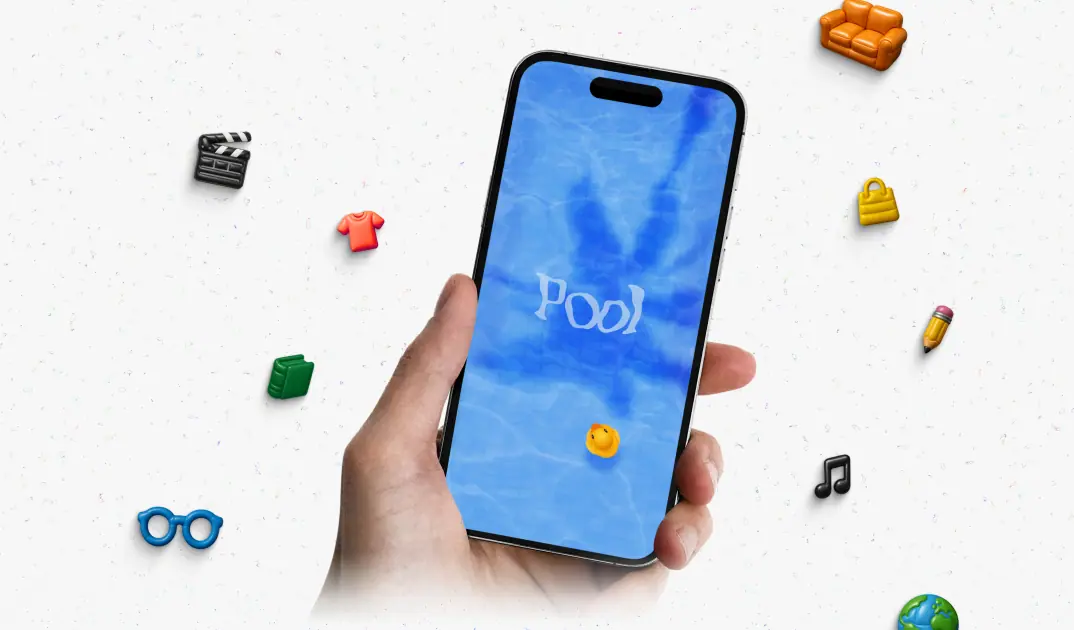
Pool is launching an iOS app built around a habit that standard bookmarking tools rarely capture cleanly: the screenshot.
Instead of treating camera-roll clutter as disposable storage, the app imports saved images and groups them into personalized categories it calls pools, based on the products, places, ideas and references each user has kept over time.
The product sits in the same broad market as AI-era bookmarking services such as mymind, Fabric and Raindrop, but Pool is narrower by design.
Its starting point is not a browser tab or a pasted link.
It is the screenshots people already use for recipes, fashion ideas, travel plans, quotes, social posts and product research, then forget inside their photo library.
The first test is accuracy.
Pool has to recover links, products and context from screenshots often enough that users trust it as more than a cleaner gallery.
The source does not describe error rates, link-recovery accuracy or how the app handles screenshots whose original source has disappeared.
Privacy is the other unresolved issue.
Pool asks for access to personal screenshots, but the source does not specify whether analysis runs on-device or in the cloud, how long imported images are retained, or what controls users have over deleting processed data.
From Saved Images To Recoverable Intent
Pool asks users for photo access, then uses AI to interpret what is inside the screenshots and help users find the original context again.
A saved product image can point back to a retailer.
A recipe screenshot from Instagram can surface ingredients and instructions.
A flyer for an upcoming event can lead toward a ticketing site.
The founders, Maxime Junique and Piet Terheyden, built the idea around a common behavior they saw in themselves and friends: saving something for later by taking a screenshot, then failing to locate it when it mattered.
The first version of Pool came out of Spinoff Studio around three years ago, after a short build in Lisbon, but the team paused it while working on revenue-generating B2B SaaS products.
The studio later built Waitless, a CRM product acquired last year.
Pool returned after AI tools made the original premise more practical: personal screenshots are messy, visual and highly specific, but they also contain intent that productivity datasets such as emails, bank transactions or chat logs do not fully capture.
The Assistant Ambition Extends Beyond Search
Pool is available now as a free iOS download.
The current app supports search and a built-in AI assistant, while also treating some screenshots as time-sensitive memories.
An event-ticket barcode may become less relevant after the event, while an event flyer may still need a purchase link before the date arrives.
The company is already pointing beyond screenshot organization.
The founders plan a second, separate app that uses Pool’s rubber-duck mascot as part of a broader agentic AI assistant brand.
That makes the launch an early product proof for a larger personal-assistant direction, not just a utility for cleaning up photos.
The financing gives Pool room to test that path, but it does not prove adoption.
Its earlier pre-seed financing brought in just over $2 million, with General Catalyst, Kima Ventures, Paris-based Source Ventures and angel investors including Winston Du, Julian Blessin and Thomas Ricouard among the backers.
The next evidence gap is whether users will keep granting photo access and return often enough for screenshot search to become a daily workflow.