Saudi DISAI 2026 Turns AI Startup Support Into An Edge-Prototype Test
Qualcomm, Aramco, RDIA and HUMAIN have selected ten startups for DISAI 2026, giving Saudi Arabia's AI and deep-tech accelerator a second-year test built around edge AI platforms, infrastructure access, IP training and prototype delivery.
Saudi AI Cohort Moves From Showcase To Prototype Discipline
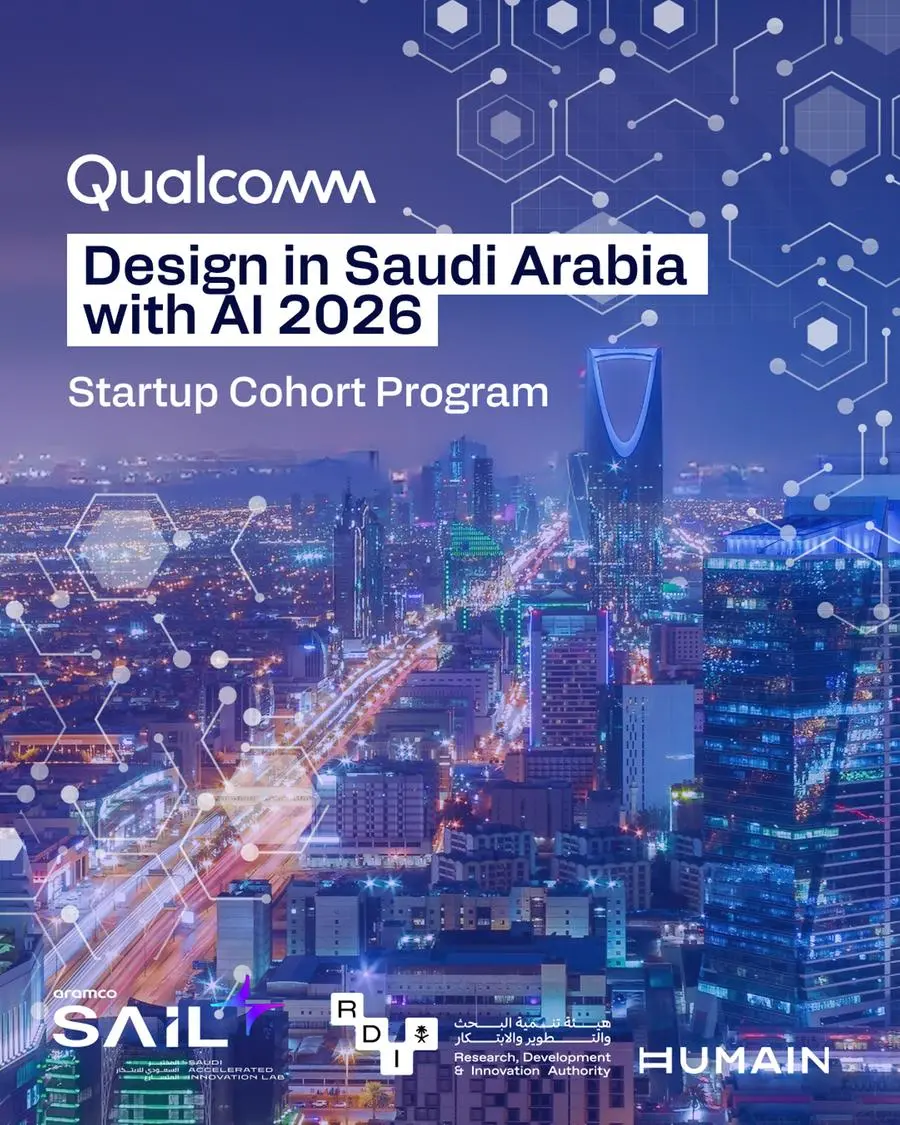
Qualcomm, Aramco, Saudi Arabia's Research, Development and Innovation Authority and HUMAIN have named the ten startups chosen for the 2026 Design in Saudi Arabia with AI program.
The selection turns DISAI from a LEAP 2025 launch into a second-year execution track, with the new cohort expected to work on AI, Internet of Things and advanced wireless products inside the Kingdom's startup ecosystem.
The program drew more than 124 applications from across Saudi Arabia.
That applicant pool gives the initiative a broader funnel than a single corporate accelerator and makes the selected group a test of whether Saudi deep-tech support can move beyond workshops into product readiness, prototyping and intellectual property planning.
Edge AI Is The Program's Operating Lane
DISAI 2026 is built around hands-on product design, development and IP strategy.
The technical stack has been widened for the new edition, giving startups access to Arduino UNO Q, the recently announced Arduino VENTUNO JQ, Qualcomm AIC200 accelerators and industrial AI gateway platforms.
That mix points to a practical emphasis on edge AI rather than only cloud-hosted models.
The selected projects include industrial waste recovery and compliance automation, worker-safety trackers for 450 MHz industrial networks, enterprise automation, drone-based industrial security, smart-intersection traffic systems, industrial IoT retrofits, edge-based quality inspection and predictive maintenance, medical-imaging diagnostics and Arabic-first document intelligence for Saudi data-sovereignty requirements.
HUMAIN Adds Infrastructure To The Partnership
HUMAIN's inclusion changes the support model.
The national AI company may provide inference cloud credits and capacity for larger-model hosting, while also making AI-enabled PCs, on-device acceleration and technical support available to participants.
For startups trying to test locally relevant AI products, infrastructure access can matter as much as mentorship because it affects model deployment, latency, data handling and prototype costs.
Aramco, through aramcoSAIL, brings industrial expertise to the program.
Qualcomm contributes technical and IP mentorship, while RDIA provides strategic guidance tied to Saudi Arabia's innovation ecosystem.
Local registration and standard program requirements remain part of participation, which keeps the accelerator linked to domestic operating conditions.
The November Finale Will Test Commercial Readiness
The program runs from April through November 2026 and ends with a finale where participants are expected to showcase prototypes and services.
During that period, the startups are scheduled to receive mentorship from Qualcomm and Aramco, use technical platforms and tools, take entrepreneurship coaching, receive IP and patenting training and engage with potential investors and industry partners.
The immediate watchpoint is not the number of participants, but how much technical proof emerges by the finale.
The announcement supports a clear claim that Saudi Arabia is organizing corporate, national AI and RDIA resources around deep-tech startups.
It still does not show customer adoption, revenue traction or production deployments for the ten selected companies.