SendTech Times
Analysis
DEPLOYMENT WATCH:

Google Tests Local AI Demand With Gemma 4 12B Release

Newsroom brief

Google released Gemma 4 12B as an open-weights multimodal AI model designed to run locally on a standard enterprise laptop. The model is described as an 11.95-billion-parameter system with an Apache 2.0 license, 16GB memory target, 256K context window and immediate availability through Google AI Edge Gallery. The practical question is whether enterprises use local multimodal inference when cloud access, latency or data handling are constraints.

Verified against source materialEdited by SendTech Times AI & Enterprise DeskSource: Venturebeat
Google Tests Local AI Demand With Gemma 4 12B Release
Image source: VentureBeat / OpenAI ChatGPT-Images-2.0

Local Multimodal AI Moves Into View

Google released Gemma 4 12B as an open-weights multimodal model aimed at enterprise users who want AI systems to run locally rather than depend entirely on cloud-hosted inference.

The model is described as an 11.95-billion-parameter system under an Apache 2.0 license.

It is optimized to run on a standard enterprise laptop using 16GB of VRAM or unified memory, and it is available immediately for download through Google AI Edge Gallery.

That gives the release a practical enterprise angle: local inference could matter when teams need to work offline, reduce cloud dependence, or keep some AI workloads closer to the device.

Google did not name enterprise customers, deployments or shipment volumes for the model, so the commercial signal remains early.

Why The Architecture Matters

Gemma 4 12B uses an encoder-free "Unified" architecture for audio and vision input.

The model projects visual patches and raw audio waveforms directly into the large language model embedding space through lightweight linear layers, rather than using separate encoder modules.

The source describes the vision path as a 35-million-parameter module using a single matrix multiplication, while the audio encoder is eliminated.

For enterprise engineering teams, the claimed benefit is lower latency and reduced memory demand for multimodal workloads.

Those claims should still be treated as Google-linked model claims rather than independently verified enterprise performance data.

The model also includes a 256K token context window, native tool-use capabilities, system-prompt support and a step-by-step reasoning mode.

Those features make the release relevant for agent-style software, long-document analysis, code repositories and meeting-transcript workflows.

The model sits between mobile edge systems and heavier data-center infrastructure.

That distinction is important for buyers that need enough multimodal capability for controlled internal use, but do not want every workflow to depend on a remote model endpoint.

The Adoption Test

The release points to a narrower but important question in enterprise AI: whether smaller open-weights multimodal models can cover enough work to reduce reliance on heavier data-center infrastructure.

Gemma 4 12B is not presented as a replacement for larger cloud models.

Its value is more specific: it gives developers another option when privacy, offline use, latency or device-level deployment matter more than maximum model scale.

The next signal is whether enterprise developers move from experimentation to real deployments on laptops, edge devices or controlled internal systems.

Without named customers, the release is a technical milestone first and a market adoption story only if usage follows.

Share this article
inXf

Related articles

More
CoRover’s Offline AI Push Tests India’s Edge Deployment Case
AI

CoRover’s Offline AI Push Tests India’s Edge Deployment Case

CoRover AI is pitching on-device and on-premise deployment as a practical answer for banks, hospitals, defense users and rural infrastructure, with CEO Ankush Sabharwal arguing that narrower models can improve reliability when cloud connectivity, compliance or latency become constraints.

Meta Muse Glimmer Brings Local Agent Workloads To Consumer GPUs
AI

Meta Muse Glimmer Brings Local Agent Workloads To Consumer GPUs

AI News covered Meta’s Muse Glimmer release as an Apache 2.0, 30-billion-parameter model for local coding, function-calling and personal-agent workflows on consumer-class memory envelopes.

Apple AI Architecture Puts Google And Nvidia Inside Its Privacy Test
AI

Apple AI Architecture Puts Google And Nvidia Inside Its Privacy Test

Apple is using Google and Nvidia to support its most advanced cloud AI model while trying to keep Apple Intelligence centered on private orchestration, proprietary models and on-device context.

AMD AI Forecast Tests Investor Trust In Helios Demand
Chips & Semiconductors

AMD AI Forecast Tests Investor Trust In Helios Demand

AMD told investors that data centre revenue should more than double in 2027 as Helios and MI450 deployments expand, but its shares fell after the results as AI demand concentration remained a concern.

IMEC Outlines CMOS 2.0 Path As AI Compute Demand Rises
AI

IMEC Outlines CMOS 2.0 Path As AI Compute Demand Rises

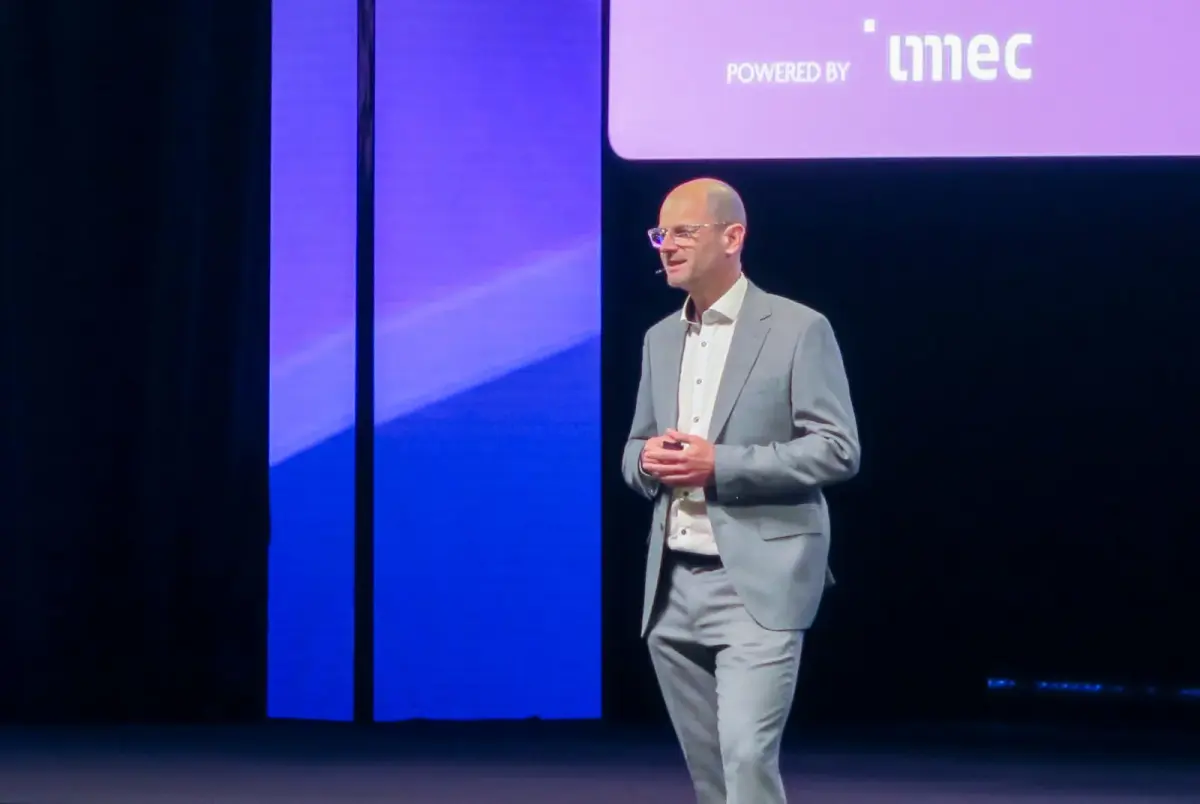
CommonWealth Magazine English reported that IMEC's new CEO Patrick Vandenameele outlined semiconductor roadmap work tied to AI inference demand, CMOS 2.0 stacking, memory placement and optical interconnects. CommonWealth reported that Vandenameele estimated a 150-fold workload increase as AI shifts from training to inference, while TSMC's Kevin Zhang pointed to nanosheet, CFET and 3D stacking work.

Meta Compute Prepares AI Cloud Push Against AWS And Google
Cloud & Data Centers

Meta Compute Prepares AI Cloud Push Against AWS And Google

Meta is considering external sales of AI compute and model access through Meta Compute. Zuckerberg said the idea is on the table, but customer names, pricing, GPU inventory and a Muse Spark release date remain undisclosed.

MRAgent Cuts Long-Memory Agent Queries To 118k Tokens In Benchmark Tests
AI

MRAgent Cuts Long-Memory Agent Queries To 118k Tokens In Benchmark Tests

National University of Singapore researchers built MRAgent to reconstruct memory through a Cue-Tag-Content graph, with VentureBeat citing LongMemEval prompt use of 118k tokens per sample versus 632k for A-Mem and 3.26 million for LangMem.

Vercel’s Eve Framework Tests Whether Agent Tools Can Escape Shadow AI
Cloud & Data Centers

Vercel’s Eve Framework Tests Whether Agent Tools Can Escape Shadow AI

Vercel introduced the open-source eve agent framework and Passport controls for employee-built AI apps, putting its developer platform strategy up against enterprise concerns over unmanaged agents, data exposure and cloud cost premiums.

Keep Reading

More Stories

Latest
Yokogawa Opens Singapore Hub For Industrial Cyber ResilienceCapital & PolicyOct 6, 2026Yokogawa Opens Singapore Hub For Industrial Cyber ResilienceYokogawa Engineering Asia has launched a Singapore center focused on OT cyber resilience, training, response planning and recovery coordination for Southeast Asia, Oceania and Taiwan.ClickFix Attack Uses Browser Cache To Hide Malware PayloadCybersecurityOct 6, 2026ClickFix Attack Uses Browser Cache To Hide Malware PayloadMicrosoft Threat Intelligence traced a ClickFix cache-smuggling method that preloads malware into browser caches, then uses file size checks and a pasted Run command to launch later credential-theft stages.VOA Tests Six-Month Startup Buildout Before Funding DecisionsFintech & Digital PaymentsOct 6, 2026VOA Tests Six-Month Startup Buildout Before Funding DecisionsTechCabal’s interview with VOA Venture Partners founder Victoria Olayide Adesanya describes a six-month build programme that lets the firm work inside African financial-infrastructure startups before deciding whether to invest.Bitcoin Holds $86,000 As Dollar Index Hits 18-Month HighCrypto/Web3Oct 6, 2026Bitcoin Holds $86,000 As Dollar Index Hits 18-Month HighCoinDesk reported that bitcoin stayed near $86,000 while the U.S. Dollar Index reached about 102.5, with U.S. rate expectations and European political risks strengthening the dollar backdrop.Google Freezes OSS Bug Bounty Reports After AI Submission FloodCybersecurityOct 6, 2026Google Freezes OSS Bug Bounty Reports After AI Submission FloodGoogle has stopped accepting new product vulnerability reports in its OSS VRP after invalid automated submissions swamped reviewers, while older reports and some Cloud VRP routes remain open.Fleuret AI Raises €4M For Continuous AI Pentesting PlatformCybersecurityOct 6, 2026Fleuret AI Raises €4M For Continuous AI Pentesting PlatformTech.eu reported that French startup Fleuret AI raised €4 million in pre-seed funding to develop an agentic-AI platform that turns penetration testing into a continuous security process.GFT Analysis Says AI Documentation Can Cut Maintenance Work 30%Fintech & Digital PaymentsOct 6, 2026GFT Analysis Says AI Documentation Can Cut Maintenance Work 30%A GFT Technologies analysis says AI-linked software documentation can cut maintenance effort and speed developer onboarding when knowledge assets stay synchronized with code changes.Schneider Electric Lines Up $22.6 Billion PTC DealAIOct 5, 2026Schneider Electric Lines Up $22.6 Billion PTC DealSchneider Electric plans to buy PTC in a cash transaction valuing the US engineering software provider’s equity at about $22.6 billion, adding product-lifecycle software to its industrial AI push.Aggarwal Pledges Ola Electric Stake To Fund ₹1,000 Cr Rights IssueCapital & PolicyOct 5, 2026Aggarwal Pledges Ola Electric Stake To Fund ₹1,000 Cr Rights IssueOla Electric founder Bhavish Aggarwal pledged 20 Cr shares to finance his participation in a rights issue that forms part of a larger ₹1,500 Cr fundraising plan.Natrona Schools AI Review Puts Student Privacy Ahead Of Classroom Tool UseAIOct 5, 2026Natrona Schools AI Review Puts Student Privacy Ahead Of Classroom Tool UseNatrona County trustees questioned whether teacher AI tools expose student data, even as existing district rules already ban unauthorized generative AI use by students.AMD Prices 256-Core EPYC 9996 At $14,904 For Server BuyersChips & SemiconductorsOct 5, 2026AMD Prices 256-Core EPYC 9996 At $14,904 For Server BuyersTechRadar reports that AMD’s 6th Gen EPYC 9006 “Venice” lineup includes a 256-core EPYC 9996 with 512 threads, 1GB of L3 cache, a 600W default power rating and a $14,904 list price for 1,000-unit orders.New Relic Reports US$18 Million GreenOps Savings After AI CertificationCloud & Data CentersOct 5, 2026New Relic Reports US$18 Million GreenOps Savings After AI CertificationA New Relic company news item carried by iTWire says the observability vendor has earned ISO/IEC 42001 certification, joined the EU AI Pact and reported US$18 million in GreenOps savings from more than 80 engineering initiatives.