UAE Agentic AI Push Enters A 90-Day Federal Execution Test
The UAE Government has opened a 90-day implementation cycle for Agentic AI across federal entities, requiring each entity to select a service or operation for rollout under a two-year target to convert 50 percent of government workstreams.
A 90-Day Test For Agentic Government
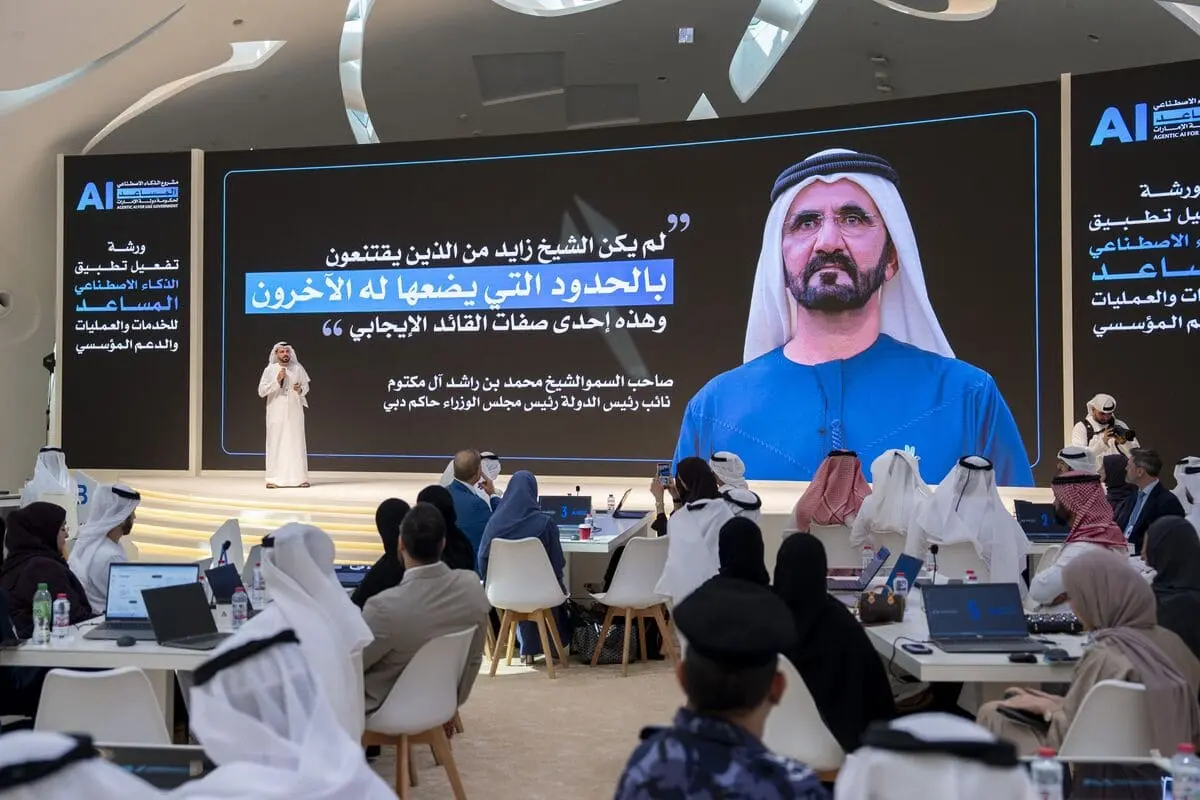
The UAE Government has moved its Agentic AI program from ambition into execution by convening a Dubai workshop for federal entities that must now choose services or operations for early deployment.
The initiative follows President Sheikh Mohamed bin Zayed Al Nahyan’s announcement of a new government system.
Its benchmark is explicit: 50 percent of government sectors, services and operations are to shift to Agentic AI models over two years.
More than 300 participants from 50 federal entities joined the Ministry of Cabinet Affairs workshop.
Its immediate purpose was not a broad technology showcase; it was to open implementation tracks, map services and operations across federal bodies, and establish a 90-day monitoring window for the first rollout cycle.
That short timetable matters because the project is being framed around operational conversion rather than experimentation alone.
Each entity is expected to identify one service or operation for Agentic AI implementation and move it through exploration, design and implementation planning before launch.
What Federal Teams Have To Convert
The most concrete workstream starts with government operations.
Maryam bint Ahmed Al Hammadi leads the operations and institutional support track while also serving as Minister of State and Secretary General of the Cabinet.
She outlined the starting point: federal ministries and entities mapped their operations, chose priority processes for conversion, and catalogued applications already in use or development for a federal implementation plan.
The sessions brought together more than 140 officials and specialists.
Their 10-area scope reaches personnel functions, buying and contracts, finance and administration, legislation, audit, digital transformation, technical support, communications, media, facilities maintenance and shared operating processes across ministries and federal entities.
For technology suppliers and public-sector digital teams, that list is important because it points to back-office functions where agentic systems may be asked to coordinate tasks, surface data, prepare workflows or support service delivery.
The source material does not name vendors, contracts, budgets or specific software tools, so the commercial opportunity remains undefined at this stage.
Services Are Being Ranked Before Deployment
Mohamed Rashid bin Taliah, who heads the services track and serves as Assistant Minister of Cabinet Affairs for Government Knowledge Exchange, presented the next-phase model for helping entities choose priority services and operations.
The selection criteria include volume and frequency, annual transaction numbers, the number and nature of beneficiaries, and readiness factors such as documented procedures, current data, automation level and expected impact on service quality, cost efficiency and customer satisfaction.
That screening process gives the program a governance layer before agencies launch implementations.
It also signals that the UAE is trying to tie Agentic AI adoption to measurable service effects rather than allowing fragmented pilots to spread without a common selection standard.
Mohammad bin Abdullah Al Gergawi chairs the Agentic AI Project Executive Committee and serves as Minister of Cabinet Affairs.
He linked the effort to directives from Sheikh Mohammed bin Rashid Al Maktoum to accelerate adoption across government functions.
He described Agentic AI as a way to support employees, accelerate task completion, improve productivity and strengthen data-driven decision-making.
The Watchpoint Is Launch Discipline
The next proof point is the 90-day execution cycle.
Under the workshop framework, federal entities must select a service or operation, design the target journey and define application requirements and initial execution plans.
Government work teams will monitor implementation over the three-month period to check whether support is available, targets are being met and selected services or operations are launched within the timeframe.
The source establishes the governance structure, participant scale and timeline.
It does not yet establish whether the first deployments will produce cost savings, service-quality gains or citizen-facing improvements.
Those outcomes will depend on which services are selected, how much data is ready for use, and whether agencies can convert planning sessions into live operations without diluting accountability.