Listen Labs Raises $69 Million For AI Interview Platform
VentureBeat reported that Listen Labs raised $69 million in Series B funding at a $500 million valuation after completing more than one million AI-powered customer interviews.

Listen Labs raised $69 million in Series B funding to expand an AI customer-interview platform and build its team after completing more than one million AI-powered interviews, VentureBeat reported after speaking with founder Alfred Wahlforss.
Ribbit Capital led the round, joined by Evantic and existing investors Sequoia Capital, Conviction and Pear VC.
The financing values Listen at $500 million and brings its total capital raised to $100 million.
Funding follows a hiring gambit
The company first drew attention with a $5,000 San Francisco billboard displaying five strings of numbers.
The numbers were AI tokens that decoded into a coding challenge: build an algorithm that could act as a digital bouncer at Berlin nightclub Berghain.
Thousands attempted the puzzle, 430 solved it, and the winner flew to Berlin with expenses paid.
The stunt generated about 5 million social-media views and helped Listen compete for engineers in a market where Mark Zuckerberg was reportedly making $100 million offers.
Listen’s annualized revenue has grown 15 times to an eight-figure level in the nine months since launch.
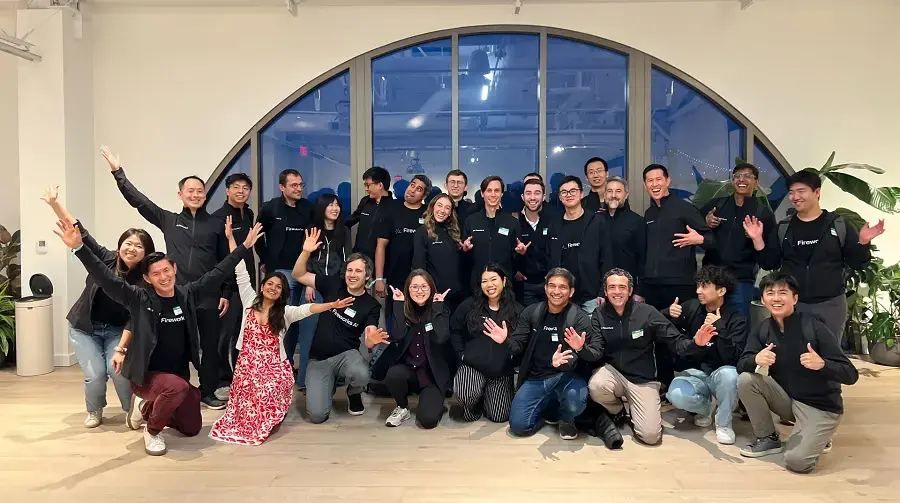
The startup grew from 5 employees to 40 in 2024 and plans to reach 150 this year, including engineers working across marketing, growth and operations.
AI interviews and fraud controls
Listen replaces the traditional choice between quantitative surveys and qualitative interviews.
Users create a study with AI assistance, the company recruits participants from a global network of 30 million people, an AI moderator conducts open-ended video interviews with follow-up questions, and the platform returns themes, highlight reels and presentation material.
Wahlforss said surveys can create false precision by limiting respondents to predetermined choices, while human interviews provide depth but cannot scale.
Listen’s system is designed to make customer research faster without reducing it to multiple-choice responses.
Participant quality is a central operating challenge.
Listen’s “quality guard” cross-references LinkedIn profiles with video responses, checks consistency across answers and flags suspicious patterns.
Emeritus, an online education company, reported that about 20% of its survey responses had previously been fraudulent or low quality.
With Listen, the company reduced that figure to almost zero and did not need to replace responses because of fraud or gibberish information.
Customer deployments
Microsoft previously needed four to six weeks to generate customer-research insights.
With Listen, insight can arrive in days and sometimes within hours.
Microsoft used the platform to collect customer stories for its 50th anniversary and Copilot-related material in one day, compared with the six to eight weeks that work might have required through a traditional process.
Simple Modern, an Oklahoma-based drinkware company, spent about an hour writing questions, an hour launching a study and 2.5 hours receiving feedback from 120 people across the country.
Chubbies increased youth research participation from 5 to 120 participants by avoiding the scheduling constraints of conventional focus groups.
Listen also identified scratchy lining in a Chubbies shorts product through interviews with children.
The company redesigned the product, which Wahlforss described as a “blockbuster hit.”
Synthetic customers and governance
Listen is building tools to simulate customers from previous interviews and to trigger follow-up actions through agents, including code changes or customer-retention workflows.
Wahlforss acknowledged ethical concerns around automated decisions and said companies would remain in the loop.
The company says it does not train models on customer data, automatically removes sensitive personally identifiable information and can detect material non-public information mentioned during research.
The new funding gives Listen room to pursue a research market that Wahlforss, citing Andreessen Horowitz research, estimated at roughly $140 billion a year.
Listen’s disclosed next steps are to expand its team and continue building faster customer-research tools, with the company planning to grow to 150 employees this year.