SendTech Times
News
DEPLOYMENT WATCH:

India AI Compute Buyers Face 36-To-52-Week GPU Lead Times

Newsroom brief

Indian AI infrastructure buyers are still reserving GPU capacity months ahead. NeevCloud cofounder Narendra Sen said next-generation enterprise AI GPU lead times now range between 36 and 52 weeks, while named Indian startups are shifting training and inference around scarce capacity.
Verified against source materialEdited by SendTech Times Chips & Compute DeskSource: Inc42
India AI Compute Buyers Face 36-To-52-Week GPU Lead Times
Image source: Inc42

India’s AI infrastructure market is still operating against a large supply gap: global data centres added 8.9 GW of capacity in 2025, compared with nearly 21.1 GW of demand, leaving a shortfall of about 12 GW, according to cited Jefferies figures.

For Indian buyers, that imbalance now reaches beyond GPUs.

Delivery schedules depend on memory, networking, packaging and power systems as well as the chips themselves.

The early generative-AI shortage has eased from its most severe point, but the latest accelerators remain difficult to secure.

NeevCloud cofounder Narendra Sen said lead times for next-generation enterprise AI GPUs now range from 36 to 52 weeks, with some new orders pushed into 2027.

Dedicated cluster setups that once took about two months have stretched to roughly four months.

Yotta cofounder and chief executive Sunil Gupta said large deployments took between 6 and 15 months to deliver in 2024.

The process is now more predictable, he said, but large builds still require early reservations and close coordination among original equipment manufacturers, system integrators and GPU vendors.

Supply Gap And Delivery Timelines

India Electronics and Semiconductor Association president Ashok Chandak described the situation as a structural imbalance rather than a temporary squeeze.

Delivery timelines have improved since the peak of the shortage, he said, while global data-centre demand continues to outpace supply.

The hardware available to buyers is also changing.

Neysa chief product officer Karan Kirpalani said NVIDIA is concentrating on its newest architectures and retiring the Hopper generation, with the H100 already declared end-of-sale.

Older-generation chips are therefore becoming easier to source, while newer high-performance GPUs remain constrained.

Hyperscalers are adding to that pressure.

Microsoft, Amazon, Google and Meta are committing hundreds of billions of dollars to AI infrastructure and locking up much of NVIDIA’s latest shipment through long-term purchase agreements.

The Jefferies figures also put expected hyperscaler investment at $770 Bn in 2026, up 74% year on year.

The Components Behind The Queue

The constraint has spread into the rest of the AI server.

Sen pointed to CoWoS chip packaging, high-bandwidth memory and the power infrastructure required to run large clusters.

For NVIDIA’s B200 and B300 accelerators, he said, memory and networking components can now take longer to arrive than the chips they support.

That means a processor can be available while the rest of the system is not.

New factories planned by SK Hynix, Samsung and Micron are not expected to add substantial memory capacity until 2027 or 2028, limiting expectations of a quick recovery.

Geopolitics is reinforcing the hierarchy of access.

Nearly 90% of advanced logic-chip production at the 2 nm, 3 nm and 5 nm nodes is concentrated in Taiwan, while China dominates critical minerals.

Export controls, tariffs and compliance requirements are pushing chipmakers to diversify capacity into the US, Europe, India and other Southeast Asian nations, while vendors prioritise strategic markets, sovereign AI programmes and hyperscalers.

How Indian Companies Ration Compute

The queue is changing how companies plan workloads.

Gupta said large enterprises, model builders and AI-platform companies are planning compute requirements several quarters ahead.

Indian cloud providers are reserving capacity years in advance and keeping older hardware in service while they wait for newer clusters, moving away from a purely pay-as-you-go model.

Murf.AI separates scheduled training from continuous real-time inference for its live voice traffic, according to cofounder and chief executive Ankur Edkie.

The company reserves guaranteed capacity before training runs instead of relying on the unpredictable spot market.

Nurix operates a fleet of 15 to 22 GPUs, running real-time inference during high-throughput hours and shifting fine-tuning to off-peak windows.

It uses NVIDIA H100 GPUs for heavier inference and older T4 and L4 architectures for lighter models, while spreading workloads across hyperscalers and neoclouds.

CoRover uses a composite AI architecture that routes only its most demanding workloads to large language models.

Cofounder Ankush Sabharwal said nearly 80% of the company’s tasks avoid GPU-heavy inference.

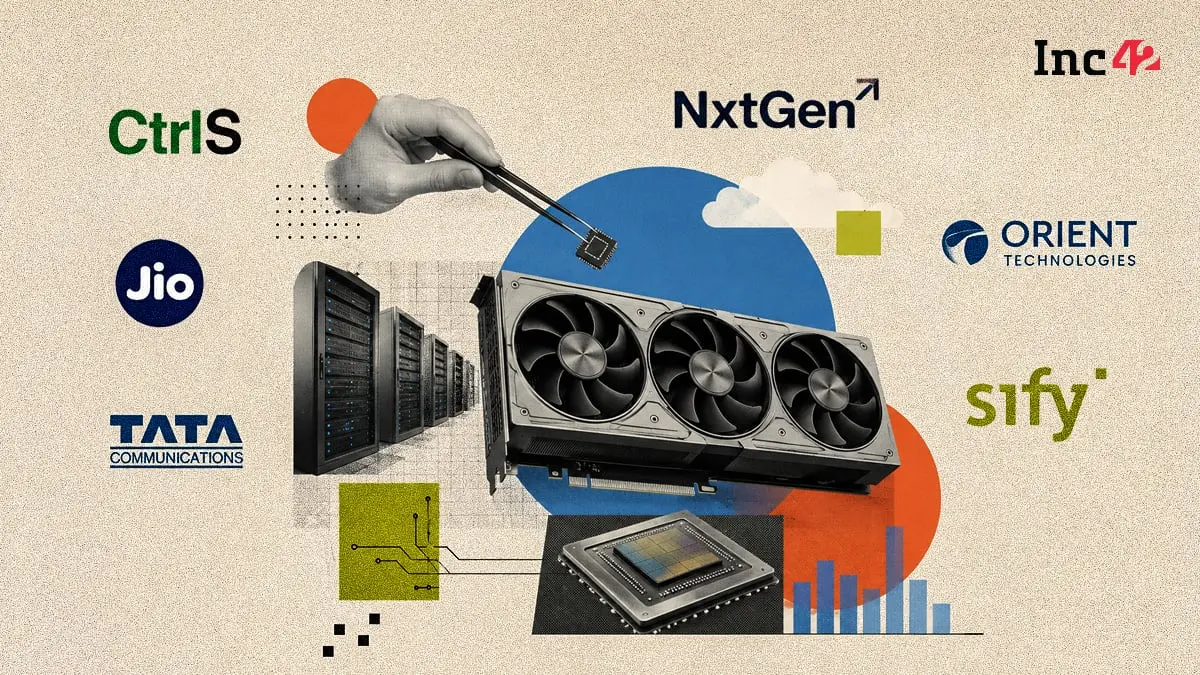
CoRover sources capacity from Google Cloud, Yotta, NxtGen and the IndiaAI Mission, with peak usage reaching around 1,200-1,250 GPUs.

India’s Strategic Exposure

India imports almost all of its high-end chips, making access to compute a strategic issue as the country expands private AI investment and the IndiaAI Mission.

Chandak called GPU allocation a sovereign security concern and argued that India must manufacture its own compute.

For now, the practical response is earlier procurement and tighter utilisation.

Indian startups are scheduling training, prioritising inference, combining new and old hardware, and routing workloads across providers while the supply chain catches up.

The shortage is no longer only a question of how many GPUs a company can buy; it determines how much work that company can reliably run on the capacity it secures.

Share this article
inXf

Related articles

More
Qualcomm AI250 Stacks DRAM Over Compute But Leaves FLOPS Undisclosed
Chips & Semiconductors

Qualcomm AI250 Stacks DRAM Over Compute But Leaves FLOPS Undisclosed

Qualcomm is pitching high-bandwidth compute for AI inference, with AI250 cards claiming 768 GB of memory and 133 TB/s of effective bandwidth, while the public record still lacks peak FLOPS or named customers.

Micron And Anthropic Put AI Memory Supply Inside Claude’s Compute Plan
Chips & Semiconductors

Micron And Anthropic Put AI Memory Supply Inside Claude’s Compute Plan

Micron and Anthropic signed a strategic agreement covering AI memory and storage architecture, supply, Claude adoption inside Micron and a Series H investment.

AI Compute Shortage Shifts Chip Strategy Towards Efficiency
Capital & Policy

AI Compute Shortage Shifts Chip Strategy Towards Efficiency

Semiconductor Engineering analysed how AI data-centre growth is being shaped by foundry, memory, power and optical-link bottlenecks as chip buyers look for more tokens from scarce capacity.

Compute Exchange Opens Used Nvidia H100 And A100 GPU Marketplace
Chips & Semiconductors

Compute Exchange Opens Used Nvidia H100 And A100 GPU Marketplace

SiliconANGLE reported that Compute Exchange has launched a marketplace for used and refurbished Nvidia H100 and A100 GPUs. Compute Exchange said requests range from hundreds to tens of thousands of GPUs, but the public launch did not name suppliers, customers or pricing benchmarks.

AMD And Imperial Target UK Sovereign AI Without Naming Compute Capacity
Chips & Semiconductors

AMD And Imperial Target UK Sovereign AI Without Naming Compute Capacity

AMD and Imperial College London plan to work on AI-enabled scientific discovery, sovereign AI infrastructure and HPC systems in the UK, but the announcement gives no GPU count, funding amount or deployment timetable.

AMD Helios AI Racks Bring Epyc CPUs To Nvidia Compute Challenge
Chips & Semiconductors

AMD Helios AI Racks Bring Epyc CPUs To Nvidia Compute Challenge

Data Center Knowledge reported that AMD moved Helios into production with MI455X GPUs, Epyc processors, Pensando networking and ROCm software, while vendor performance claims still lack third-party benchmark validation.

Kospi Drops 7.89 Percent As Samsung And SK hynix Lead Chip Sell-Off
Chips & Semiconductors

Kospi Drops 7.89 Percent As Samsung And SK hynix Lead Chip Sell-Off

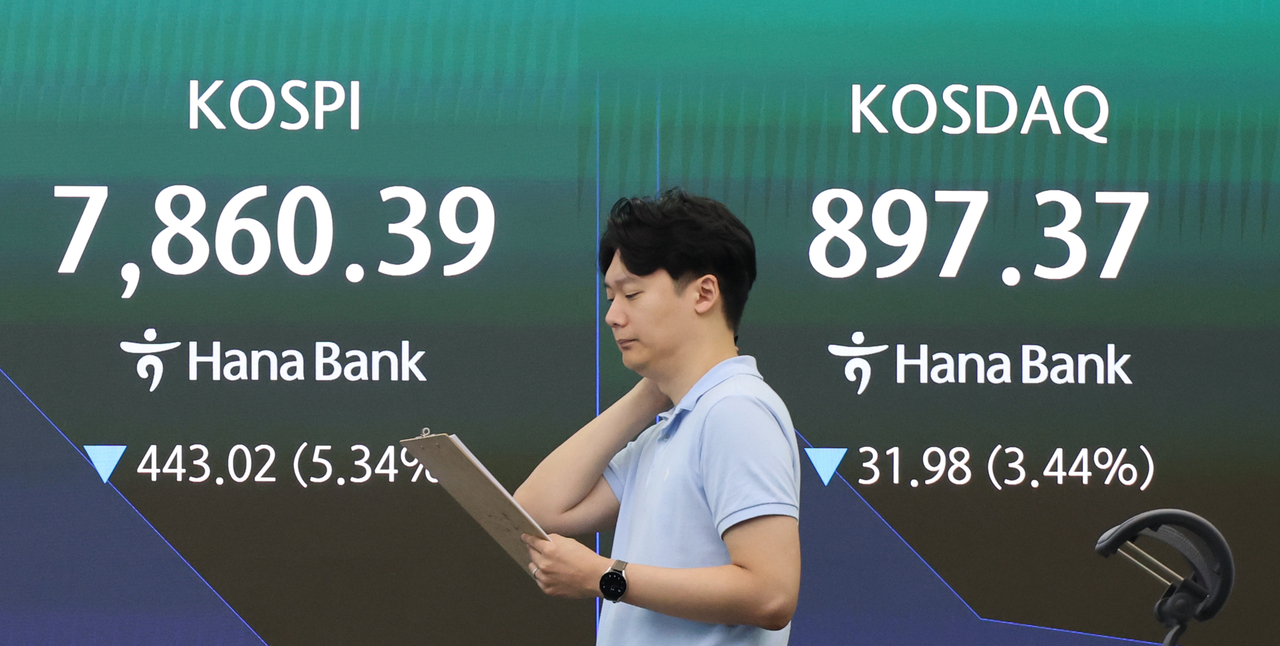
The Korea Herald reported that the Kospi fell 7.89 percent on Thursday as Samsung Electronics and SK hynix led a semiconductor sell-off tied to renewed AI-capacity and chip-competition concerns. The report cited a Korea Exchange sell-side sidecar, heavy foreign and institutional selling and 48.86 trillion won in trading value, but it did not report confirmed order cuts, revised chipmaker forecasts or measured AI-capacity utilisation.

Onsemi Synaptics Deal Adds Edge AI Compute With Approval Still Pending
Chips & Semiconductors

Onsemi Synaptics Deal Adds Edge AI Compute With Approval Still Pending

Onsemi is buying Synaptics in an all-stock deal valued at about $7 billion to add edge AI compute, wireless connectivity and human-machine interface assets. The transaction is expected to close in mid-2027 if regulators approve it, but customer deployments and integration milestones remain undisclosed.

Keep Reading

More Stories

Latest
Ethereum Testnet Update Targets 200 Million-Gas BlocksCrypto/Web3Oct 6, 2026Ethereum Testnet Update Targets 200 Million-Gas BlocksEthereum developers released Prysm 7.2.1 so the Sepolia trial of Glamsterdam can test 200 million-gas blocks, more than three times the prior 60 million setting, before any main-network change.Kepler Targets 2027 Production for HBM Replacement MemoryCloud & Data CentersOct 6, 2026Kepler Targets 2027 Production for HBM Replacement MemoryEE Times reports that Kepler Computing is preparing 3D ferroelectric memory for 2027 production, promising higher capacity and bandwidth per watt while limiting reliance on advanced-node lithography.Yokogawa Opens Singapore Hub For Industrial Cyber ResilienceCapital & PolicyOct 6, 2026Yokogawa Opens Singapore Hub For Industrial Cyber ResilienceYokogawa Engineering Asia has launched a Singapore center focused on OT cyber resilience, training, response planning and recovery coordination for Southeast Asia, Oceania and Taiwan.ClickFix Attack Uses Browser Cache To Hide Malware PayloadCybersecurityOct 6, 2026ClickFix Attack Uses Browser Cache To Hide Malware PayloadMicrosoft Threat Intelligence traced a ClickFix cache-smuggling method that preloads malware into browser caches, then uses file size checks and a pasted Run command to launch later credential-theft stages.VOA Tests Six-Month Startup Buildout Before Funding DecisionsFintech & Digital PaymentsOct 6, 2026VOA Tests Six-Month Startup Buildout Before Funding DecisionsTechCabal’s interview with VOA Venture Partners founder Victoria Olayide Adesanya describes a six-month build programme that lets the firm work inside African financial-infrastructure startups before deciding whether to invest.Bitcoin Holds $86,000 As Dollar Index Hits 18-Month HighCrypto/Web3Oct 6, 2026Bitcoin Holds $86,000 As Dollar Index Hits 18-Month HighCoinDesk reported that bitcoin stayed near $86,000 while the U.S. Dollar Index reached about 102.5, with U.S. rate expectations and European political risks strengthening the dollar backdrop.Google Freezes OSS Bug Bounty Reports After AI Submission FloodCybersecurityOct 6, 2026Google Freezes OSS Bug Bounty Reports After AI Submission FloodGoogle has stopped accepting new product vulnerability reports in its OSS VRP after invalid automated submissions swamped reviewers, while older reports and some Cloud VRP routes remain open.Fleuret AI Raises €4M For Continuous AI Pentesting PlatformCybersecurityOct 6, 2026Fleuret AI Raises €4M For Continuous AI Pentesting PlatformTech.eu reported that French startup Fleuret AI raised €4 million in pre-seed funding to develop an agentic-AI platform that turns penetration testing into a continuous security process.GFT Analysis Says AI Documentation Can Cut Maintenance Work 30%Fintech & Digital PaymentsOct 6, 2026GFT Analysis Says AI Documentation Can Cut Maintenance Work 30%A GFT Technologies analysis says AI-linked software documentation can cut maintenance effort and speed developer onboarding when knowledge assets stay synchronized with code changes.Schneider Electric Lines Up $22.6 Billion PTC DealAIOct 5, 2026Schneider Electric Lines Up $22.6 Billion PTC DealSchneider Electric plans to buy PTC in a cash transaction valuing the US engineering software provider’s equity at about $22.6 billion, adding product-lifecycle software to its industrial AI push.Aggarwal Pledges Ola Electric Stake To Fund ₹1,000 Cr Rights IssueCapital & PolicyOct 5, 2026Aggarwal Pledges Ola Electric Stake To Fund ₹1,000 Cr Rights IssueOla Electric founder Bhavish Aggarwal pledged 20 Cr shares to finance his participation in a rights issue that forms part of a larger ₹1,500 Cr fundraising plan.Natrona Schools AI Review Puts Student Privacy Ahead Of Classroom Tool UseAIOct 5, 2026Natrona Schools AI Review Puts Student Privacy Ahead Of Classroom Tool UseNatrona County trustees questioned whether teacher AI tools expose student data, even as existing district rules already ban unauthorized generative AI use by students.